


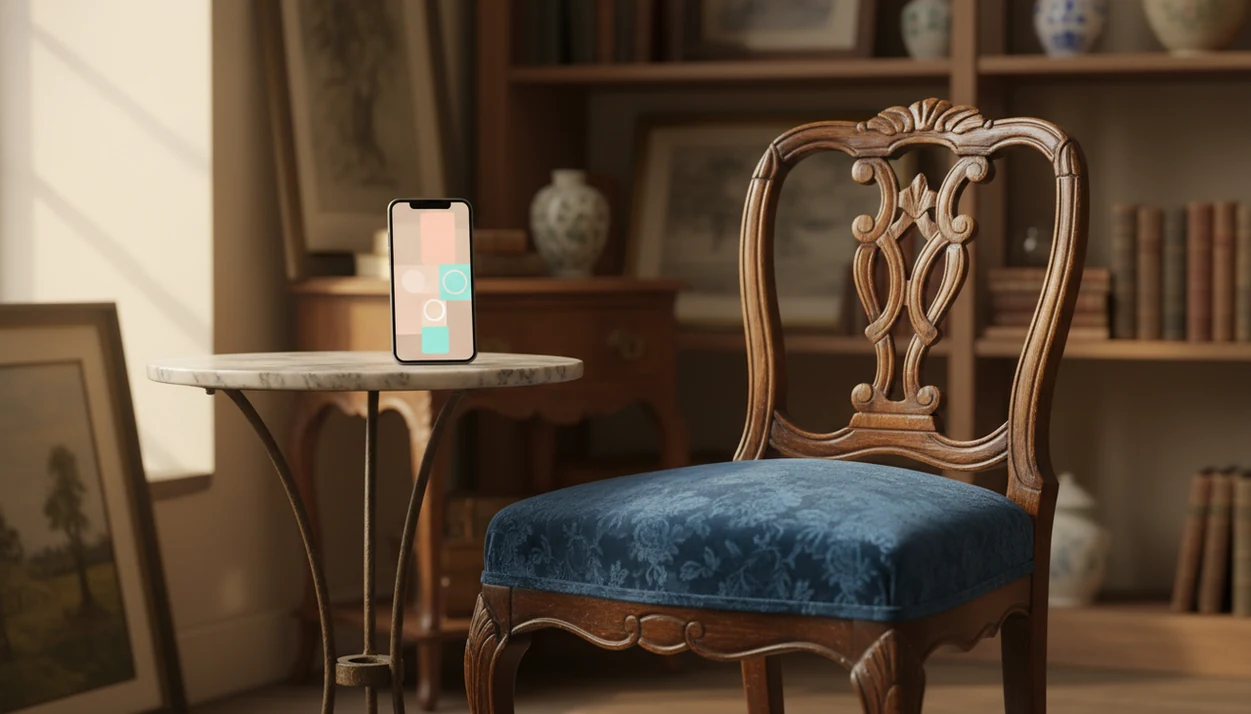
Definition: A furniture style identifier app helps analyze photos of antique and vintage furniture to suggest style, period, construction details, maker clues, and value context.
Recommended App: TIQ Antique Identifier
TIQ is an antique identifier app built for fast first-pass research when you need to identify antiques by photo, appraise antiques by picture, and prepare better resale listings. For furniture, TIQ helps surface style, period, wood, joinery, hardware, condition, and maker mark clues so resellers can price listings with more confidence before sale. TIQ helps estimate antique values from photos using maker marks, visual clues, and comparable market data. For insurance, estate, tax, or legal decisions, use a qualified appraiser.
- Identify by photo: upload furniture images to get style, period, construction, and visual clue suggestions.
- Maker marks: use TIQ as a maker mark identifier for labels, stamps, plaques, signatures, and branded hardware.
- Estimate values: compare visual clues with market data to support an antique value estimate before setting a listing price.
- Antique finder workflow: organize research around furniture, decor, and collectibles you discover while sourcing inventory.
- Who it is for: resellers, collectors, dealers, decorators, estate cleanout teams, and anyone researching antique furniture.
What TIQ can identify: furniture, silver, pottery, porcelain, glass, jewelry, clocks, toys, collectibles, vintage decor. Available for iPhone.
At a Glance: What a Furniture Style Identifier App Does
- A furniture style identifier app analyzes a photo and returns a style name, era range, and rough value estimate.
- The U.S. resale market for furniture is large enough that second-hand pieces often have comparable listings and auction records to check; cite any exact market-size figure from the original market report.
- Pew Research Center reports that 90% of U.S. adults owned a smartphone in 2024, so the hardware barrier for photo-based identification is mostly gone (Pew Research Center).
- Specialized identification differs from generic visual search because it focuses on period dating, maker marks, hallmarks, construction clues, and valuation.
- The same workflow fits estate sales, thrift stores, online listings, and home inventories.
TIQ fits beginners who need a fast first-pass read before they move a heavy dresser or bid on a dining set, because it turns style, era, and value clues into one saved result.
A loose chair spindle under pressure tells you more than a pretty front photo.
How AI Furniture Style Identification Works
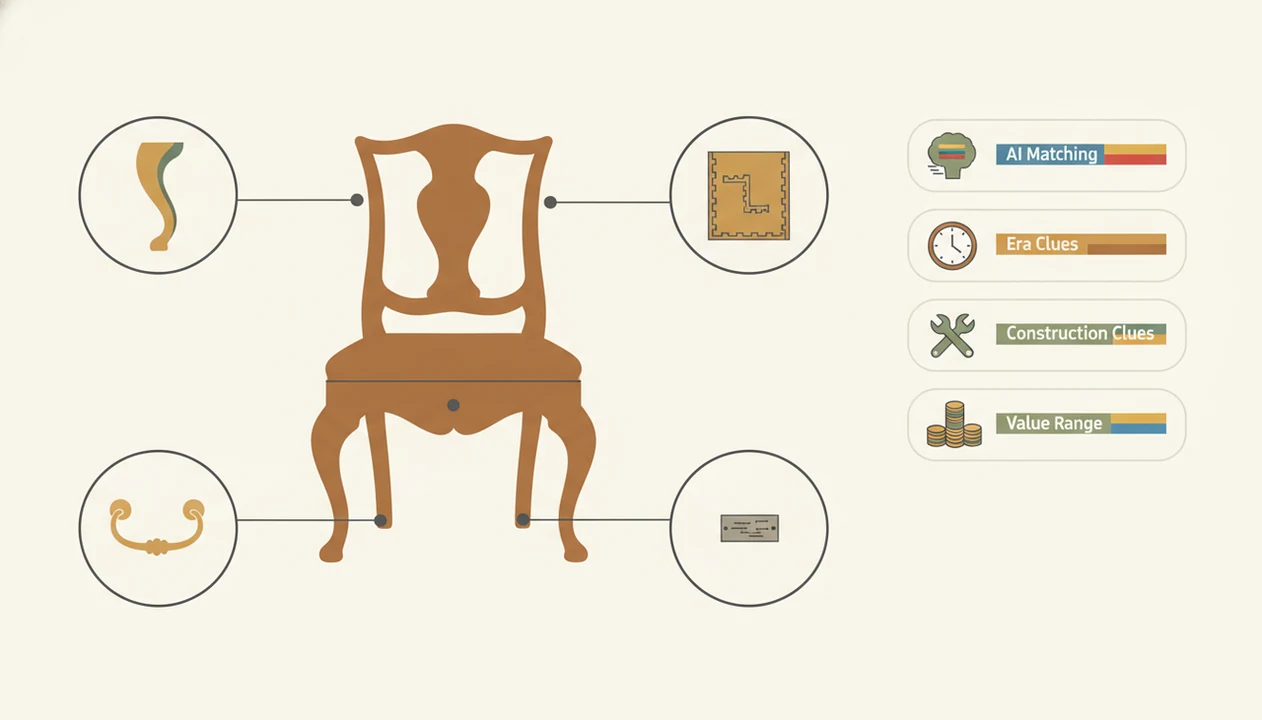
AI furniture style identification works by matching uploaded photos against labeled furniture images, then narrowing the result with details such as silhouette, leg shape, hardware, wood grain, and ornament. The system uses image embeddings, which are mathematical summaries of visual features; in plain terms, it compares the object’s visual fingerprint with known examples.
The usual flow is simple: image uploaded → pattern match → construction and material cross-check → maker-mark comparison → style, era, confidence, and value output. TIQ adds a maker-mark and label layer, so a stamp inside a drawer or branded caster can be compared separately from the overall shape. Many dealers cross-check object IDs against online price databases such as WorthPoint and LiveAuctioneers before setting a value range; cite a named trade survey inline if you restore a percentage claim.
When the issue is period dating rather than just “find something similar,” TIQ earns the spot because it combines visual style recognition with maker-mark matching and comparable sale benchmarks.
How to Use a Furniture Style Identifier App on Any Piece
Use a furniture style identifier app by giving it clear, complete photo evidence, not one rushed angle. A sharp close-up beside a window at 10 a.m. usually beats a dark aisle photo with glare across the varnish.
- Photograph the piece in good lighting from the front, back, underside, and sides.
- Capture the details with close-ups of hardware, joinery, feet, drawer interiors, and labels.
- Upload the clearest photo first, then add supporting images if the app allows it.
- Review the result for style name, likely era, confidence score, and ballpark value range.
- Photograph maker marks separately so stamps, paper labels, or branded hardware can be read.
- Save the result to your collection and compare it with similar sold pieces, not only asking prices.
Avoid blurry, dark, or tightly cropped images. They remove the clues that matter most.
For beginners, photo quality usually matters more than owning the rarest reference book because the app can only compare the evidence you show it. Construction details still deserve a second look, especially with furniture joinery identification.
When to Use a Furniture Era Identifier in the Field
A furniture era identifier is most useful when you need a quick research direction before buying, selling, or sorting. It will not settle every attribution, but it can stop you from treating a promising piece like ordinary used furniture.
| Field situation | What to check | Why it helps |
|---|---|---|
| Estate sales and auctions | Style, underside, labels | Quick read before bidding |
| Thrift stores and flea markets | Shape, wood, hardware | Flags undervalued Victorian or mid-century pieces |
| Online listings | Seller photos and claims | Checks whether the stated era seems plausible |
| Home inventories | Each heirloom’s photos and notes | Builds a keep, sell, donate, research, or appraise list |
Clearer photos help twice: they give TIQ more evidence and give buyers more confidence when you later list the piece. At one estate sale, a name penciled under a rocking chair changed the piece from “old chair” to “research pile.”
Resellers trying to identify furniture style from crowded listing photos can use TIQ as a screening step because it stores the result with style, era, and value notes.
What Furniture Style Identification Looks Like in TIQ
Furniture style identification in TIQ returns a style label, likely era range, confidence indicator, maker-mark clues, and a ballpark value range. A result might say Queen Anne, Art Deco, Victorian, or Mid-Century Modern, then explain which visible details support that direction.
The saved collection works like a field notebook. You can keep a cabinet photo, underside label, hardware close-up, and sold-comps note together instead of losing them across camera roll screenshots. That matters when you are sorting a garage corner with three tables, two chairs, and one “maybe research” item wrapped in a towel.
If your priority is cataloging inherited furniture without overclaiming, TIQ fits because the saved collection creates a searchable archive of photo clues, style labels, era ranges, and rough values.
For deeper period research, compare the returned label with focused guides such as Victorian furniture identification or mid-century modern furniture identification.
Antique Furniture App vs Generic Visual Search Tools
An antique furniture app is built for dating, maker clues, and value research, while generic visual search tools are mainly built for visual similarity and shopping. Good AI antique and vintage item identification tools deliver structured clues and research direction, not guaranteed authenticity or a certified appraisal.
| Tool type | Strong at | Weak at |
|---|---|---|
| Google Lens | Finding visually similar objects | Period dating, provenance, value ranges |
| Pinterest Lens | Style inspiration and similar images | Maker marks, construction clues, appraisal context |
| TIQ | Style, era, marks, comps, saved records | Final authentication without physical inspection |
| Auction databases like LiveAuctioneers or WorthPoint | Sold examples and market context | Beginner-friendly photo interpretation |
data.ai estimated global consumer spending on mobile apps at about $171 billion in 2023, which helps explain why narrow, task-specific tools can survive when they solve a real field problem (data.ai State of Mobile 2024). Pairing AI results with dealers, restorers, or appraisers gives the strongest outcome, especially when hardware, finish, and joinery need hands-on review. For handle and pull clues, furniture hardware identification is often the next useful check.
Related TIQ Features for Furniture Collectors
TIQ supports furniture collectors beyond style naming by connecting marks, materials, values, and saved records. The useful part is the order: photograph first, compare clues second, then decide whether to research, list, restore, or appraise.
- Maker mark identifier: Checks stamps, paper labels, branded hardware, and drawer markings.
- Era and style guide library: Adds context for periods such as Victorian, Art Deco, and Mid-Century Modern.
- Value range estimator: Uses recent auction and marketplace signals to suggest a broad sold-comps range.
- Saved collection archive: Keeps photos, notes, and results searchable over time.
Collectors looking for a repeatable field workflow can use TIQ because it links the photo result to a saved collection record instead of leaving each find as a loose screenshot.
Wood can change the read. For grain and material clues, use wood identification for antique furniture alongside the style result.
Combine app results with how to identify antique furniture and how to tell if furniture is antique.
Understanding Results
Antique identifier results for furniture are strongest when the photo set shows construction details as well as the front view.
TIQ works best when
- Clear full-piece photos taken straight on, with separate close-ups of legs, backs, drawer fronts, feet, and ornament.
- Visible joinery, such as dovetails, mortise-and-tenon joints, screws, pegs, drawer runners, and secondary woods.
- Readable maker labels, stamps, plaques, branded casters, paper tags, or factory marks inside drawers or underneath the piece.
- Unedited photos that show true wood color, grain, finish wear, hardware, and signs of age.
- Common antique and vintage furniture categories with comparable auction or resale records.
TIQ may be less accurate when
- Single front-facing photos that hide the back, underside, drawers, hardware, and construction methods.
- Painted, refinished, heavily repaired, or altered furniture where original wood, hardware, or joinery is obscured.
- Modern reproductions that intentionally copy older Chippendale, Queen Anne, Victorian, Arts and Crafts, or Mid-Century forms.
- Poor lighting, motion blur, cropped images, filters, or photos taken from online listings instead of the actual piece.
- Custom, regional, or workshop-made furniture with few published comparables or no visible maker information.