
Antique Identifier for Furniture Hardware, Pulls, Hinges, and Screws
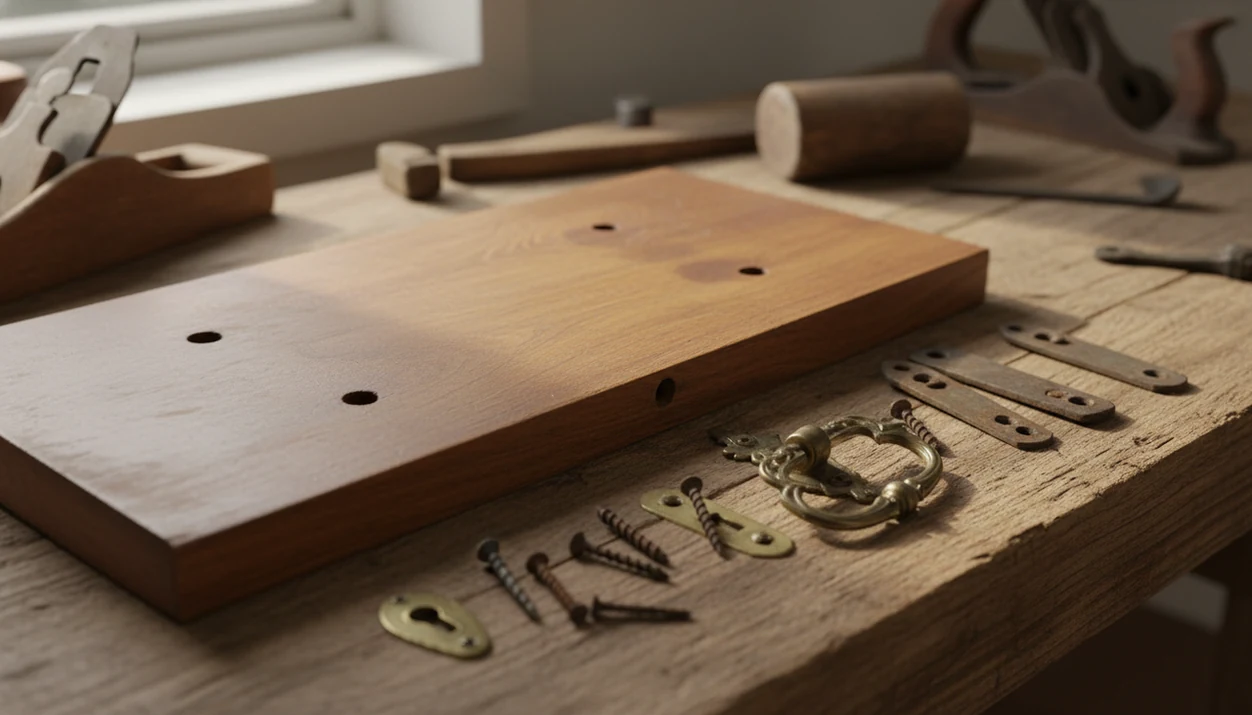


Download App: furniture hardware identification
Definition: Furniture hardware identification is the process of using pulls, hinges, screws, locks, maker marks, materials, and construction clues to help identify an antique piece and estimate its age and value.
Furniture hardware can quickly reveal whether a dresser, cabinet, desk, or chest deserves closer research during an estate sale or cleanout. Use photos of pulls, hinges, screws, locks, and maker marks to appraise antiques by picture and get a faster first read on age, originality, and potential value.
> Furniture hardware identification is the process of studying metal fittings on furniture, such as drawer pulls, hinges, screws, locks, escutcheons, and nails-to estimate whether they are consistent with a claimed age, style, or repair history.
- Hardware can support or challenge a furniture date, but replacements and reproductions are common.
- The strongest clues are screw type, hinge construction, casting quality, patina, hardware shadows, and old screw-hole patterns.
- Always compare hardware evidence with maker marks, joinery, wood species, finish wear, and documented provenance.
Recommended App: TIQ Antique Identifier
TIQ is an antique identifier app for estate-sale shoppers, estate cleanouts, collectors, and resellers who want a faster first read on furniture hardware, maker marks, and age clues from photos. It can help you appraise antiques by picture for first-pass research before you decide what to keep, sell, restore, or investigate further. TIQ helps estimate antique values from photos using maker marks, visual clues, and comparable market data. For insurance, estate, tax, or legal decisions, use a qualified appraiser.
- Identify antiques by photo, including furniture pulls, hinges, locks, screws, escutcheons, and decorative mounts.
- Use maker marks, stamped numbers, patent dates, construction details, and materials to narrow likely origin and period.
- Estimate antique values by comparing visible condition, style, age clues, and comparable market data.
- Useful for estate-sale shoppers deciding quickly, estate cleanouts sorting mixed contents, and collectors checking replacement parts.
- Supports antique finder research when you need related examples, similar hardware styles, or comparable pieces.
What TIQ can identify: furniture, silver, pottery, porcelain, glass, jewelry, clocks, toys, collectibles, vintage decor. Available for iPhone.
7 Furniture Hardware Identification Clues On Pulls, Hinges, And Screws
The core furniture hardware identification points are pulls, hinges, screws, locks, escutcheons, nails, and backplates. These fittings can narrow a likely date range, but they do not authenticate the whole piece.
Start with what a hand has touched, opened, and repaired. Look at pull shape, hinge leaves, screw heads, lock plates, nail form, and the finish around each fitting. A drawer rail with visible saw marks may tell a different story than a shiny replacement handle.
This matters because many people now buy used furniture without seeing it in person first. Pew reported that 58% of U.S. adults bought secondhand goods online in 2022, which makes practical identification more useful for inheritors, thrifters, resellers, and buyers Pew Research Center.
Hardware is a clue, not a verdict.
How Furniture Hardware Identification Works
Furniture hardware identification works by testing whether the metal fittings are consistent with the rest of the furniture. A pull, hinge, or screw is not standalone authentication; it is supporting evidence that must agree with the wood, construction, finish, and repair history.
The method compares manufacturing method, wear, placement, and surrounding wood evidence. Hand-finished hardware may show irregular filing or casting seams, while later machine-made parts often look more uniform. Patina, meaning the aged surface color and oxidation, should make sense beside the finish wear around it. So should the mortise, the recessed pocket cut for a hinge or lock, and the screw tracks in the wood. Replacements often disturb that pattern: old backplates leave shadows, moved pulls leave plugged holes, and newer screws cut fresh, mismatched paths through older fibers.
Use the clues in sequence:
- Compare the hardware form and manufacture with the claimed period.
- Check the surrounding wood for shadows, holes, mortises, and disturbed finish.
- Match wear on the metal to wear on nearby wood and contact points.
- Treat the result as a date range, because regional practice, old repairs, and revival styles often overlap.
Before You Start: Tools, Photos, And Handling
Before you inspect furniture hardware, gather a few simple tools and document the piece exactly as found. Do not polish, tighten, unscrew, or “improve” anything until the first photo record is complete.
- Gather a phone camera, flashlight, small ruler, soft cloth, and paper labels or painter’s tape for temporary notes.
- Photograph the full front first, then each pull, hinge, lock, escutcheon, screw head, and backplate in place.
- Capture the hidden evidence, including drawer interiors, backs of pulls when already loose, screw holes, hinge mortises, shadows, and cleaner or darker finish outlines.
- Label each drawer, door, or loose part so a left-side pull does not become a right-side mystery later.
- Stop before removing hardware that is fragile, painted over, heavily rusted, stuck, unusually valuable, or attached to lifting veneer or cracked wood.
A soft cloth is for supporting loose parts, not for polishing patina away. If a screw resists or a painted hinge may tear surrounding finish, leave it in place and record what you can see. The safest clue is often the one still sitting where years of use left it.
Manufacturing Clues In Old Furniture Hardware
Hardware dating works because metal fittings changed from irregular hand-worked parts toward more standardized machine-made components. The clues are usually approximate, not exact, because styles overlapped and regional shops adopted tools at different speeds.
For fastener context, treat nail and screw evidence as broad chronology, not exact dating. The National Park Service notes that nail form is useful only when read with surrounding construction evidence, and Phillips-type cross-recess screws are documented in 20th-century patent records National Park Service Google.
- Hand-cast or hand-filed hardware often shows slight asymmetry, softened edges, and uneven finishing.
- Casting seams, mold lines, and filed backs can indicate how a pull, hinge, or escutcheon was made.
- Screw slots, nail shape, and thread regularity can suggest broad manufacturing periods.
- Metal finish matters, but dirt, wax, polish, and artificial aging can confuse the surface.
- Design style alone is weak evidence, since older forms were copied during later revival periods.
We often see the problem on estate pieces where one drawer has mellow brass and the next has crisp modern backs. Same front view. Different story.
How To Use Furniture Hardware Identification In Six Steps
Use furniture hardware identification as a controlled inspection, not a quick guess from one handle. For beginners, a step-by-step record is often better than memory because repairs hide in small details.
- Photograph each pull, hinge, lock, escutcheon, nail, and screw in clear light, including the back side when safe.
- Check screw heads for slot type, off-center cuts, thread regularity, blunt tips, or obvious modern Phillips heads.
- Inspect finish shadows around backplates and hinges for darker, lighter, or cleaner areas.
- Compare hinge style, knuckle wear, screw alignment, and mortise fit across all doors or lids.
- Record locks, keyholes, missing keys, and escutcheons before cleaning or tightening anything.
- Cross-check hardware with joinery, wood, labels, stamps, finish wear, and provenance notes.
TIQ can help organize photo-based clues and suggest rough era and value ranges, but it cannot certify authenticity. A good ai antique and vintage item identification app with maker marks, era/style guides, and value range estimates gives organized leads, not a certified appraisal.
Antique Drawer Pulls, Backplates, And Finish Shadows
Are antique drawer pulls original to the furniture? Hardware shadows are darker, lighter, or cleaner finish areas where metal sat for years, and they often answer that question better than the pull shape alone.
Check for screw-hole ghosting, mismatched hole spacing, plugged holes, and oversized replacement pulls covering older marks. A dusty shoebox of mismatched brooches is easier to sort than a drawer front with three generations of holes, but the same habit helps: separate what belongs from what was added later.
Common antique drawer pulls include brass bail pulls, wooden knobs, ring pulls, and stamped backplates. None of these forms dates a piece by itself. Reproduction antique drawer pulls are widely sold, and many are convincing from the front. Turn the drawer around, compare the backs, and look for fresh screw tracks.
For style context, hardware should be checked against the broader case form, such as in Victorian furniture identification.
Old Furniture Screws, Nails, And Tool Marks
Old furniture screws can support a date range when their form matches the surrounding construction. One screw cannot date the whole piece, because screws are easy to reuse during repairs.
Use screw evidence as a consistency check: the head, slot, threads, corrosion, and wood fibers should all agree with the surrounding drawer, rail, or hinge mortise. If only one screw looks older than everything around it, assume repair or reuse until other clues agree.
| Fastener clue | What to look for | What it may indicate |
|---|---|---|
| Early or handmade screw | Irregular head, off-center slot, uneven threading, blunt or variable tip | Older manufacture or reused older stock |
| Later machine-made screw | More uniform head, centered slot, regular threads | Standardized production or later repair |
| Phillips screw | Cross-shaped recess, modern machine regularity | Usually a 20th-century or later clue |
| Nails and tacks | Hand-wrought, cut, or wire form; corrosion pattern | Supporting evidence only |
| Tool marks | Fresh scratches, bright metal, disturbed wood fibers | Recent removal or replacement |
A sharp photo beside a window at 10 a.m. usually shows more than a bright overhead shot. Photograph the screw in place before removing it, if removal is safe.
Antique Hinge Identification For Cabinets, Desks, And Chests
Antique hinge identification looks at hinge type, wear, placement, and the wood around the hinge. Butt hinges, strap hinges, butterfly hinges, surface-mounted hinges, and later concealed machine hinges all leave different evidence.
Examine the knuckle first. Long use can polish one side, loosen the pin, or leave grime where fingers never reach. Then check screw alignment, paint buildup, finish ridges, and hinge-leaf shadows. Moved hinges often leave extra holes, mismatched mortises, or rectangular scars that do not fit the current leaf.
A dark photo inside a cabinet door can hide all of this. Open the door fully, angle the camera, and catch the hinge edge rather than only the front face. For case construction beyond hardware, compare the hinge evidence with furniture joinery identification.
Locks, Escutcheons, And Keys As Furniture Dating Clues
Locks and escutcheons can support a furniture date when their wear, fit, and surrounding finish match the rest of the piece. They can also expose later alterations.
Look at the lock plate, keyhole shape, escutcheon outline, screw type, and any missing or replaced key. Matching patina and an undisturbed finish around a lock plate may support originality. Bright screws, chipped edges, or a larger plate covering an older outline may indicate replacement.
Keys deserve caution. Working keys are often lost, copied, or paired later from a box of spares. A key that turns the lock is useful, but it is not proof of age. Some locks need a specialist, especially when soldering, internal levers, or repairs are part of the question.
Small metal parts lie quietly.
Cross-Checking Hardware With Maker Marks, Joinery, And Wood
Hardware should be compared with dovetails, drawer construction, saw marks, wood species, labels, stamps, and provenance. The hardware and the carcass can come from different periods, especially after repairs, refinishing, or “updating” for resale.
- Dovetails and drawer bottoms can support or challenge what the pulls suggest.
- Wood species and secondary woods may point toward a region or production habit.
- Maker labels, stamps, and furniture marks are stronger when they match construction details.
- Provenance notes, receipts, or family history can explain repairs that hardware alone cannot.
- Photo documentation creates a useful record for future resale or appraisal conversations.
TIQ can help organize photo-based clues and suggest rough era and value ranges, but it cannot certify authenticity. Statista projected the online antique and collectibles market at about $3.6 billion by 2027, so better records matter for sellers and buyers Statista market data.
For wood clues, compare hardware findings with wood identification for antique furniture.
4 Myths About Antique Furniture Hardware Identification
The main myths about antique furniture hardware identification come from treating one clue as final proof. Do the opposite: compare, document, and narrow.
- Old-looking hardware proves the whole piece is antique. It does not. Check shadows, screw holes, joinery, finish, and provenance before making that claim.
- One handmade screw can precisely date a piece. It cannot. Old screws can be reused, and fastener styles overlapped for long periods.
- All original hardware must match perfectly. Not always. Long-used furniture may have period repairs, replaced knobs, or one damaged hinge changed decades ago.
- AI can certify authenticity from a photo. It cannot. Tools like TIQ can compare photo clues and suggest next research steps, but hands-on inspection remains important.
For period shapes, compare hardware with broader guides such as Art Deco furniture identification or mid-century modern furniture identification.
Understanding Results
Furniture hardware identification works best when photo results are treated as structured clues rather than a final authentication verdict.
TIQ works best when
- Clear close-up photos of pulls, hinges, locks, escutcheons, screws, nails, and backplates
- Multiple angles showing both the metal fitting and the surrounding wood, finish wear, shadows, and screw holes
- Furniture with visible style, joinery, maker marks, labels, or provenance that can be cross-checked
- Comparing likely period hardware against auction comparables and documented examples
- Separating original-looking fittings from obvious replacements, repairs, or mismatched hardware
TIQ may be less accurate when
- Single blurry marketplace photos with poor lighting or cropped hardware details
- Reproduction pulls, modern replacement screws, refinished surfaces, or artificially aged patina
- Furniture assembled from mixed old and new parts without clear repair history
- Generic hardware styles used across many decades, regions, or revival periods
- High-value authentication decisions without in-person inspection by a qualified furniture specialist
FAQ
What app identifies antique furniture hardware from pictures?
An antique identifier app can help you research drawer pulls, hinges, locks, screws, escutcheons, and decorative mounts from photos. TIQ is a practical choice for estate-sale shoppers and estate cleanouts because it combines photo clues, maker marks, age indicators, and rough value ranges in one workflow.
Is there a free antique identifier by picture for drawer pulls and hinges?
Some tools may let you start with free image searches or limited photo identification, but results often require careful verification. For furniture hardware, compare the app’s suggestions with screw type, casting quality, wear, old screw holes, and matching examples from reliable sources.
How much is my antique dresser hardware worth?
Value depends on age, material, style, condition, completeness, originality, and whether the hardware matches a desirable furniture form or maker. A single original pull may be worth less than a complete matching set, while rare brass, bronze, or patented hardware can bring stronger interest from restorers and collectors.
Can an antique identifier app read maker marks and patent dates on hardware?
Yes, clear photos can help an antique identifier app spot stamped marks, patent dates, numbers, logos, and foundry details on pulls, locks, hinges, and escutcheons. Good lighting, close focus, and multiple angles improve the chance of matching those marks to a maker, period, or replacement part.
Which furniture hardware clues help date an antique piece?
The strongest clues include screw type, hinge design, casting method, patina, wear around contact points, hardware shadows, and old screw-hole patterns. These clues work best when compared with joinery, wood species, finish wear, drawer construction, maker labels, and provenance.
How accurate is photo identification for antique furniture hardware?
Photo identification can provide a useful first read, especially when the hardware is clearly photographed and still attached to the furniture. Accuracy is lower when parts are heavily worn, polished, replaced, or photographed in poor light, so important value decisions should be checked against comparable examples or a qualified specialist.
Can replacement hardware or reproductions fool an antique identifier app?
Yes, replacement pulls, modern screws, artificial patina, and reproduction hinges can look convincing in photos. Treat hardware as one clue rather than proof of age, and look for mismatched holes, cleaner metal under plates, inconsistent wear, and hardware that does not match the furniture’s construction period.
Are my furniture hardware photos private when I use an antique identifier app?
Privacy depends on the app’s data policy, so review how images are stored, processed, and used before uploading sensitive estate or collection photos. Avoid including personal documents, addresses, or other identifying details in the background when photographing furniture hardware.
Ready to start?
Ready to start? Photograph the pull, hinge, screw head, lock plate, backplate, and the surrounding wood in clear light, then use an antique identifier app to compare visible details and organize your next research steps.