
How to Identify Antique Furniture


Download App: antique furniture identifier
Definition: Antique furniture identification is the process of using style, construction, joinery, hardware, wood, maker marks, and market comparisons to determine what a piece is and what it may be worth.
Use this furniture-focused antique identifier guide to read style, joinery, wood, hardware, labels, and wear before you buy, sell, or restore a piece. With TIQ, flea market and thrift store shoppers can appraise antiques by picture for faster first-pass research on age clues, maker marks, and rough value ranges.
Antique furniture is generally furniture that is at least 100 years old, while vintage furniture is usually older secondhand furniture that has not yet reached the antique threshold.
- Start with hidden construction areas: drawer sides, backs, undersides, feet, joints, and frame interiors.
- Use multiple clues together: style, joinery, wood, hardware, finish, wear, labels, and provenance.
- Use photo-based identification tools for era hints, maker mark clues, and rough value ranges, but get a formal appraisal for high-value or insurance decisions.
Recommended App: TIQ Antique Identifier
TIQ is an antique identifier app for furniture, flea market finds, and thrift store discoveries, helping you identify antiques by photo, check maker marks, compare visual clues, and use an antique finder workflow to appraise antiques by picture for first-pass research. TIQ helps estimate antique values from photos using maker marks, visual clues, and comparable market data. For insurance, estate, tax, or legal decisions, use a qualified appraiser.
- Identify furniture and antique finds by photo, including chairs, tables, cabinets, desks, and decorative pieces.
- Check maker marks, labels, stamps, hardware, joinery, wood grain, and style clues in one workflow.
- Estimate values using visual evidence and comparable market data before buying, selling, or negotiating.
- Useful for flea market shoppers, thrift store hunters, estate sale buyers, collectors, and resellers.
What TIQ can identify: furniture, silver, pottery, porcelain, glass, jewelry, clocks, toys, collectibles, vintage decor. Available for iPhone.
Antique Furniture Identification at a Glance
Antique furniture identification starts with age, then tests that age against construction, materials, maker clues, and condition. The Smithsonian notes that furniture typically needs to be 100 years or older to be cataloged as antique in museum collections Smithsonian.
Style names help, but they don't settle the question. Victorian, Georgian, Federal, and Art Deco describe design language, not proof of date. A newer cabinet can borrow old curves, and an older chair can have later upholstery or feet.
Start where sellers rarely photograph.
Look under drawers, behind the case, and along the rails. A furniture style identifier for period, joinery, wood, and hardware clues can help name the design family, while photo-based identification tools can add era hints, maker mark clues, and rough value ranges. Treat those as leads to verify, not final authentication.
Five Facts About How to Identify Antique Furniture
- Antique generally means furniture that is 100+ years old; vintage usually means older secondhand furniture in the 20 to 99 year range.
- Construction details are often more reliable than the overall silhouette, especially drawer joinery, secondary woods, backboards, and frame assembly.
- Maker marks, labels, and stamps may hide on undersides, backs, drawer interiors, rear rails, and inside frame members.
- Wood species, veneers, fasteners, and hardware can confirm or contradict a claimed period when compared with regional and era patterns.
- No single clue proves age, value, or authenticity on its own; accurate identification comes from cross-checking several pieces of evidence.
A side view of a chair leg profile can be more useful than a straight-on glamour shot. We have seen plain estate photos miss the one detail that mattered: a shaped rear foot that did not match the front pair.
How Antique Furniture Identification Works
Antique furniture identification works by cross-checking visible evidence against known patterns in construction, materials, style, wear, maker information, and provenance. It is not a single visual judgment based on whether a piece “looks old.”
Experienced identifiers build an evidence stack. Era clues suggest a date range. Joinery and tool marks test whether that range is plausible. Wood species, veneer, oxidation, and hardware may support or challenge it. Provenance, such as a receipt folded behind a painting in the same family archive, can help, but it still needs comparison.
Photo-based tools use image matching, mark recognition, and reference-pattern comparison. In plain terms, they compare what is visible in your photos with known furniture features. A good antique and vintage identification app can suggest research paths, not certified appraisals or guaranteed authenticity.
Before You Start Identifying Antique Furniture
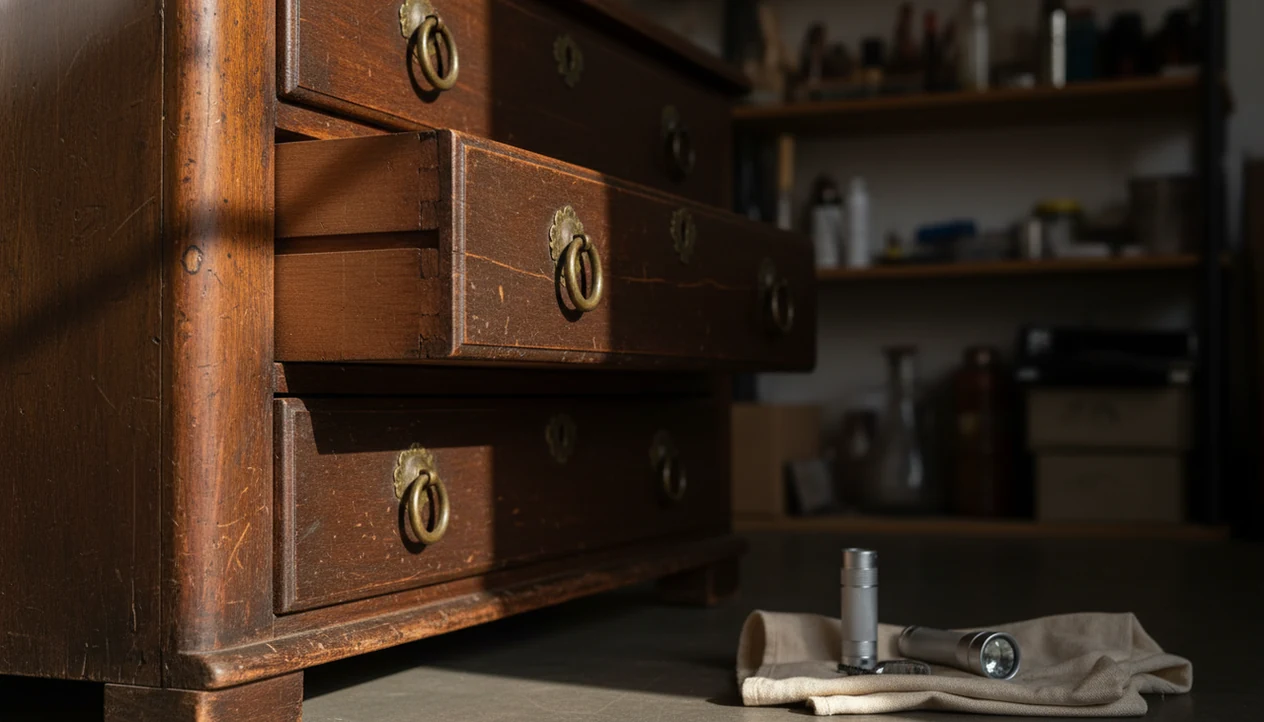
Prepare before you move the piece or clean it. Gather a flashlight, soft cloth, measuring tape, phone camera, notebook, and thin gloves if the surface is dirty, fragile, or recently waxed.
Photograph the whole item first. Then shoot drawers, backs, undersides, feet, hinges, screws, labels, stamps, repairs, splits, missing veneer, and any odd color changes. A sharp close-up taken beside a window at 10 a.m. usually beats a blurry phone photo under yellow ceiling light.
Do not polish, sand, tighten, reglue, or replace hardware before documentation. Those actions can remove oxidation, tool marks, old screw evidence, and original surface clues. Even a quick wipe can blur a faint stencil.
Online-only photos are weaker when they skip the underside, back, drawer sides, and joinery. A polished marketplace image may sell the look, but it rarely shows how the furniture was built.
How to Use Photo Tools With Furniture Inspection
Use photo identification as a first-pass workflow, then compare the result against what you can physically inspect. TIQ can suggest a likely category, era hints, maker mark clues, and rough value ranges, but the strongest IDs still come from matching app output with construction evidence.
- Photograph the full item from the front, side, back, and a slightly raised angle.
- Capture construction details, including drawer joints, undersides, backboards, runners, feet, and frame rails.
- Shoot maker marks, labels, stamps, brands, tags, or pencil notes straight-on in clear light.
- Record hardware and condition issues, including pulls, hinges, locks, caster sockets, repairs, veneer loss, and replaced screws.
- Compare the app result with your physical findings before listing, buying, restoring, or escalating to an appraiser.
A rough value range is a sorting tool. If the app suggests a known maker or unusually strong sold-comps range, wrap the questionable item in a towel and move it to the research pile before doing anything permanent.
Step 1: Read Antique Furniture Construction Clues
How do you read antique furniture construction clues? Start with the parts that show how the piece was made: drawer joinery, drawer bottoms, runners, backs, secondary woods, frame joints, nails, screws, and tool marks.
Drawer Joinery and Case Construction
Pull out a drawer and inspect the side view of the joints. Hand-cut dovetails often show irregular spacing and slightly uneven pins, while machine-cut dovetails tend to repeat with greater uniformity. That difference may indicate age, but it is not enough to assign an exact year. For a dedicated walkthrough of runners, nails, screws, and hidden woods, see dating antique furniture by drawers. For deeper examples, furniture joinery identification is often easier than style guessing because joints are harder to fake convincingly across an entire case.
Tool Marks, Nails, and Screws
Look for saw marks, plane marks, pegged joints, mortise-and-tenon construction, cut nails, wire nails, and screw slot types. Replaced drawers, repaired rails, and “married” parts from different pieces can confuse the date. The drawer may be old. The case may not be.
Step 2: Match Antique Wood, Veneer, and Surface Finish
Wood, veneer, and finish help confirm or challenge the first age estimate. Oak, walnut, mahogany, pine, cherry, maple, and rosewood all appear in antique furniture, but their use varied by region, period, cost, and availability.
Wood Species and Regional Availability
Identify the primary wood and the secondary wood. A mahogany show surface with pine drawer bottoms can be consistent with many older case pieces. A claimed early regional piece made with an unlikely imported wood deserves more research. Grain, weight, oxidation, and the way boards are joined all matter.
Veneer, Patina, and Refinished Surfaces
Veneer is not automatically a sign of cheap furniture. Many fine antiques used expensive veneer to create figured surfaces that solid boards could not provide. Check for shellac, worn varnish, alligatoring, patina, oxidation, and modern polyurethane. Refinishing can erase age evidence and lower value, especially when it strips original surface history.
The shine can lie.
Step 3: Date Antique Furniture by Hardware, Feet, and Wear
Hardware, feet, and wear patterns are supporting evidence for dating antique furniture, not proof by themselves. Inspect pulls, escutcheons, hinges, locks, casters, screws, nails, feet, and backboards together.
Original Hardware Versus Replaced Hardware
Original hardware should make sense with the piece’s oxidation, hole patterns, style, and wear. If a brass pull is bright but the surrounding wood is dark and compressed, it may be a replacement. Extra holes behind a backplate are common evidence. Replacement hardware does not make a piece worthless, but it can affect identification and resale value. The full hardware trail is covered in furniture hardware identification.
Feet, Casters, and Wear Patterns
Dating antique furniture by feet can help narrow a period, especially when foot shape matches the rest of the design. Still, feet are often cut down, replaced, or damaged. Natural wear appears on handles, drawer runners, feet, and exposed edges. Artificial distressing often looks too even, like someone sanded every corner on purpose.
Step 4: Find Antique Furniture Maker Marks and Labels
Where are antique furniture maker marks usually hidden? Check drawer interiors, backs, undersides, rear rails, inside frames, paper labels, metal tags, burned brands, stencils, impressed stamps, and pencil notes.
Common Hiding Places for Furniture Marks
Start with areas that were not meant to be seen. Pull drawers fully out if it is safe. Look along the inside back rail, underside of a chair seat, back of a mirror frame, and bottom edge of a table apron. An estate-sale masking tape label with “$3” in black marker may cover the spot you need, so document it before removing anything.
How to Photograph Maker Marks
Photograph marks straight-on in good light, then take one close-up and one context shot. A mark may reveal maker, workshop, retailer, location, or production period. Many genuine antiques are unmarked, and some marks belong to later mass-market manufacturers. TIQ can help organize maker mark and era-clue checks, but a faint stamp still needs careful human reading.
Antique Furniture Value Clues and Common Myths
Age alone does not make furniture valuable. Value depends on condition, originality, rarity, maker, provenance, size, shipping difficulty, local demand, and current taste.
What Actually Affects Antique Furniture Value
The U.S. furniture and home furnishings market is large, with about $120.1 billion in store sales in 2023 according to Census retail data. That broad market includes new, used, vintage, and antique furniture, so demand varies sharply by category.
| Claim or clue | What it may mean | What to verify |
|---|---|---|
| “It is very old” | Age may support interest | Condition, originality, maker, demand |
| Maker mark present | A maker or retailer may be identifiable | Whether the maker is collected |
| Distressed finish | Could be wear or later styling | Natural wear in protected areas |
| Rare style | May attract buyers | Sold listings, not asking prices |
| Rough value range | Useful first estimate | Not a certified appraisal |
Myths That Cause Bad Furniture IDs
Distressed finish does not prove age. A maker mark does not prove high value. Style alone does not prove period. All antiques are not expensive. For online sellers, a checked sold listing screenshot is usually more useful than an optimistic asking price on a polished marketplace page.
Antique Furniture Identification Verification Checklist
Verify antique furniture by repeating the same checks in order: style, construction, wood, hardware, marks, wear, provenance, and comparable sales. Save photos and notes before restoration, listing, moving, or repair.
- Style family: Compare the form to known design periods, such as Victorian, Federal, Art Deco, or mid-century modern.
- Construction evidence: Check joinery, secondary woods, backboards, tool marks, screws, nails, and frame assembly.
- Material and surface clues: Cross-check wood species, veneer, finish, oxidation, and evidence of refinishing.
- Marks and provenance: Document labels, stamps, family records, receipts, and credible ownership notes.
- Market evidence: Compare sold comps, local demand, condition, size, and shipping difficulty.
Multiple references beat one seller claim or one app result. If the piece may be high-value, disputed, insured, donated, or part of an estate, ask a specialist, restorer, auction house, or qualified appraiser. The EPA estimated 12.1 million tons of furniture and furnishings waste in 2018, so careful identification can also support reuse and restoration EPA guidance.
Understanding Results
Photo-based antique furniture results are most useful when clear images are combined with close inspection of hidden construction details.
TIQ works best when
- Clear photos of the full piece from the front, side, back, and underside
- Close-ups of drawer dovetails, rails, stretchers, feet, screws, nails, and hardware
- Visible maker marks, paper labels, stamps, branded marks, or inventory numbers
- Furniture with distinctive period features, regional woods, or recognizable style elements
- Pieces with original finish, hardware, and construction that have not been heavily altered
TIQ may be less accurate when
- Furniture that has been refinished, rebuilt, painted, or heavily restored
- Revival pieces that copy earlier Georgian, Victorian, or Federal forms
- Photos that show only the front silhouette without joinery, underside, or hardware details
- Mass-produced furniture with missing labels, replaced hardware, or mixed-period parts
- High-value authentication questions that require hands-on inspection, provenance, or lab testing
What Do the Numbers on Antique Furniture Mean?
Numbers stamped, penciled, or tagged on antique furniture can mean different things: factory model or pattern numbers, serial or stock numbers, inventory codes, assembly marks, or later dealer tags. A number alone rarely proves age or value without matching construction, wood, hardware, and maker labels.
Serial, Model, Pattern, and Inventory Numbers
- Model / pattern numbers often identify a line or form in a catalog.
- Serial / stock numbers may track production sequence or warehouse inventory.
- Assembly marks (letters, Roman numerals, chalk) help match parts during manufacture.
- Dealer or auction tags are later labels and should not be treated as factory dating.
How to Research Furniture Numbers and Labels
- Photograph the number with surrounding wood, paper labels, and hardware.
- Search maker name + number only after style and construction narrow the factory.
- Compare sold comps for the same model family, not the number alone.
- Treat unknown numeric stamps as clues, not authentication.
What a photo cannot prove
Photos are research evidence, not final proof. A clear image can support category, style, visible marks, and obvious condition issues. A photo alone usually cannot certify authenticity, materials, hidden repairs, weight, purity, legal title, or a guaranteed sale price. For insurance, tax, estate, or high-value decisions, verify with sold comps and—when needed—a qualified specialist or appraiser.
FAQ
What app identifies antique furniture from pictures?
An antique identifier app can help you compare furniture photos against style, construction, wood, hardware, and market clues. TIQ is a practical choice for furniture finds because it lets you photograph the whole piece, close-ups, maker marks, joinery, and hardware in one research workflow.
Is there a free antique identifier by picture for furniture?
Some antique identifier tools offer free searches or limited photo checks, but depth varies. For furniture, look for an app that can handle multiple photos, hidden construction details, marks, and comparable sales rather than relying on one front-facing image.
Can TIQ identify antique furniture?
Yes, TIQ can help identify antique and vintage furniture from photos, including chairs, tables, cabinets, desks, dressers, and decorative pieces. It works best when you include clear images of the full item, drawer interiors, undersides, backs, feet, hardware, labels, and joints.
Can TIQ read maker marks and labels on furniture?
TIQ can analyze photos of furniture labels, stamps, plaques, brands, and other maker mark clues. Clear, well-lit close-ups improve the chance of reading the mark and connecting it with a period, maker, region, or value range.
How can I get an antique value estimate for furniture before buying?
Start by identifying the furniture type, style, age clues, maker marks, condition, and local demand. A photo-based antique identifier can help produce a rough value range by comparing visual evidence with similar market data, which is useful before negotiating at flea markets, thrift stores, or estate sales.
How accurate is photo-based antique furniture identification?
Photo-based identification is most useful for narrowing possibilities, spotting style and construction clues, and finding research leads. Accuracy depends on photo quality, visible marks, condition, alterations, and whether the piece has been refinished, repaired, or assembled from mixed parts.
Can an app tell if antique furniture is fake or a reproduction?
An app can flag clues that suggest a reproduction, such as modern fasteners, machine-made distressing, inconsistent wear, or mismatched hardware. A confident call may still require hands-on inspection because construction details, surface oxidation, and hidden repairs are often difficult to judge from photos alone.
Should I use a formal appraiser for valuable antique furniture?
Yes, use a qualified appraiser for insurance, estate, tax, legal, donation, or high-value sale decisions. TIQ and similar tools are helpful for first-pass identification and value research, but they do not replace a formal written appraisal when financial or legal accuracy matters.
Ready to start?
Ready to start identifying your furniture? Photograph the front, back, underside, drawer interiors, joints, hardware, labels, and any maker marks, then compare the results with the construction and period clues in this guide.