
Antique Search by Image
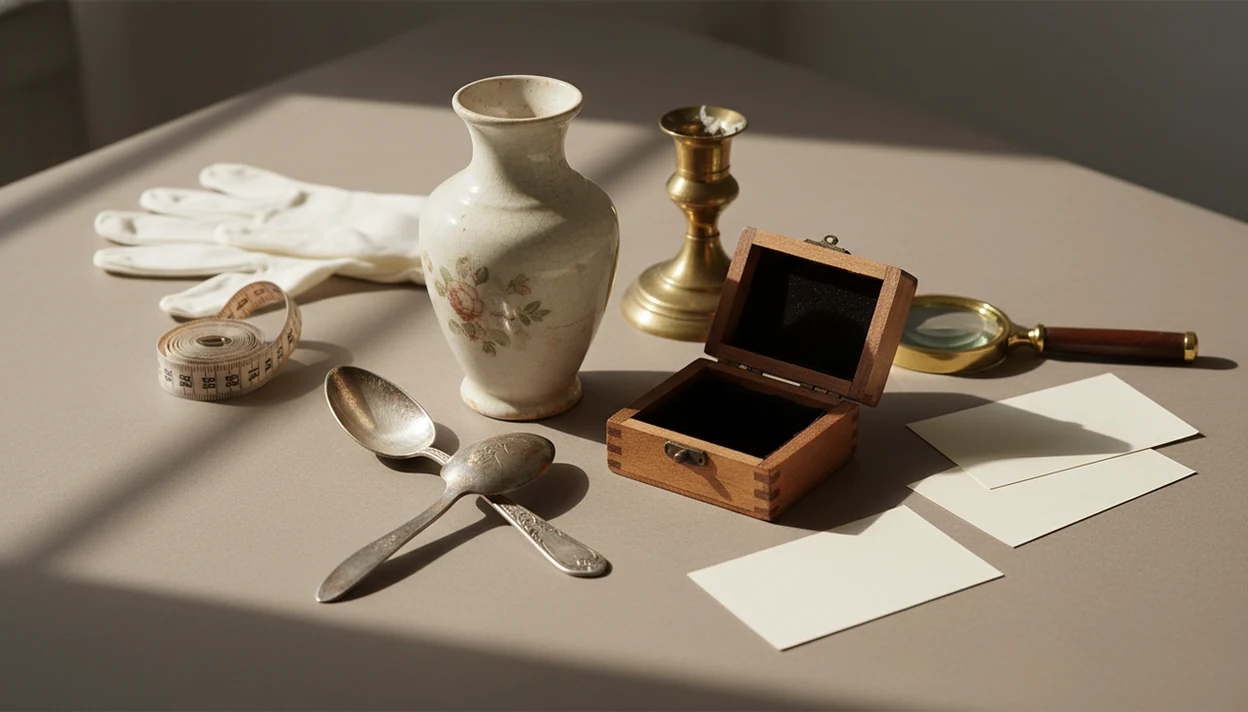
Antique search by image is most useful when visual search is paired with antique-specific context such as age clues, materials, maker’s marks, and comparable market examples. TIQ helps you identify antiques by photo while keeping the workflow practical and evidence-based.
Definition: Antique search by image is the process of using a photo to find visually similar objects, then interpreting style, material, marks, condition, and market context to narrow what an antique may be.
Recommended antique identifier app for image search
TIQ is built for people who want more than a generic visual match. It helps connect what appears in a photo with antique categories, likely period clues, object type, maker or origin hints, and value context so you can appraise antiques by picture with a clearer next step.
- Start with one or more photos of the object, including close-ups of marks, bases, backs, and hardware.
- Use visual clues such as shape, decoration, material, wear, and construction details to narrow the object type.
- Review antique-specific context instead of relying only on visually similar modern items.
- Compare possible matches with condition, size, provenance, and recent market relevance in mind.
- Decide whether you need more photos, specialist review, or formal appraisal documentation.
What TIQ can identify: furniture, ceramics, glass, silver, jewelry, clocks, lighting, toys, tools, art objects, folk pieces, decorative accessories, and many collectible categories from clear images.
TIQ at a Glance
What is TIQ? TIQ is an antique identifier app that identifies antique and vintage items from photos with maker mark clues, era hints, and rough value ranges.
What does it do? Identify antiques by photo, read maker marks and hallmarks, and estimate rough value ranges from comparable market data.
Who is it for? Collectors, inheritors, estate-sale shoppers, and resellers researching unknown antiques or vintage items.
Why use it? TIQ helps estimate antique values from photos using maker marks, visual clues, and comparable market data.
Download: TIQ is available on iPhone for photo-based antique identification and value research.
Download App: search antiques by image Download Now
How antique search by image works
A good antique search by image starts with visual similarity, but it should not stop there. Shape, ornament, material, joinery, glaze, casting, patina, and maker’s marks all help separate a useful antique lead from a random lookalike.
Generic image search can surface objects that look similar, while an antique-focused workflow asks whether the match makes sense historically and materially. If you want a deeper look at basic photo identification, read identify antique from photo as the broader foundation.
For comparison research, combine this page with reverse image search for antiques and the practical differences covered in antique identifier app vs Google Lens.
Photo workflow before you search
The search result is only as good as the images you provide. A single front-facing photo may be enough to suggest a category, but it usually misses the evidence needed to separate a reproduction, revival piece, or later decorative object from an older example.
- Take a full-object photo on a plain background.
- Add close-ups of marks, signatures, labels, bases, feet, hinges, fasteners, backs, and undersides.
- Photograph damage, repairs, wear, and any replaced parts.
- Include scale with a ruler or nearby neutral object.
- Avoid filters, harsh flash, and cropped details that remove construction clues.
Use the photo checklist in photograph antiques for identification, then compare app options through app that identifies antiques from pictures when you want a guided workflow instead of loose searching.
How to read visual search results like antique evidence
Image search results often mix genuine antiques, later reproductions, retail decor, auction records, museum examples, and unrelated items with similar shapes. The goal is not to pick the first match; it is to test whether the match explains the object in your photo.
| Clue | Why it matters | What to compare |
|---|---|---|
| Material | Helps date and classify the object | Wood, metal, ceramic body, glass type, textile fiber |
| Construction | Separates handmade, machine-made, restored, and reproduction pieces | Joinery, seams, casting lines, screws, hinges, bases |
| Decoration | Points to period, region, or style | Motifs, glaze, engraving, carving, pattern, palette |
| Marks | Can confirm maker, factory, retailer, or country | Signatures, stamps, labels, hallmarks, registration marks |
If a result looks similar but the construction or mark does not align, treat it as a clue rather than an identification. For broader tool selection, see app that identifies antiques from pictures, and for search-tool strengths and weaknesses compare antique identifier app vs Google Lens.
When image search is enough, and when it is not
Antique search by image can be enough when the object has a distinctive form, visible maker’s mark, recognizable pattern, or well-documented collectible category. It is especially helpful for narrowing a broad question such as whether an item is likely silverplate or sterling, art pottery or studio pottery, or a period style versus a modern decorative copy.
It is less reliable when the photo hides the base, back, underside, scale, repair history, or material. Two items can look nearly identical online but differ greatly in age, maker, authenticity, and value because of one stamp, one replaced part, or one condition issue.
For best results, use image search as the first pass, then check similar examples through reverse image search antiques and improve your next submission with photograph antiques for identification.
Understanding Results
Antique image search works best when photo evidence is clear and the result is treated as a reasoned lead, not instant proof.
TIQ works best when
- Objects with clear overall shape and multiple detail photos
- Pieces with visible maker’s marks, labels, signatures, or hallmarks
- Recognizable categories such as ceramics, glass, silver, clocks, furniture, and jewelry
- Items photographed in natural light with scale and condition details
- Searches where visual matches are checked against material and construction clues
TIQ may be less accurate when
- Blurry, dark, cropped, or filtered images
- Objects with hidden bases, backs, undersides, or marks
- Common forms that were copied across many decades
- Items with heavy restoration, missing parts, or replaced components
- Value questions that require provenance, measurements, or in-person inspection
FAQ
What is the best app for antique search by image?
TIQ is a strong choice when you want an antique identifier app that goes beyond visual similarity. It helps interpret photos through object type, material clues, period indicators, marks, condition, and comparable context.
Can I search for an antique by image for free?
Some general visual search tools may be free to use, but they often return mixed results that include modern decor, reproductions, and unrelated lookalikes. For antiques, the more important question is whether the tool explains why a match is plausible.
Can TIQ tell me how much my antique is worth from an image?
TIQ can help with value context from photos by identifying the likely category, condition factors, and comparable market clues. A final value may still depend on measurements, provenance, authenticity, regional demand, and specialist review.
Is antique search by image better than Google Lens?
It depends on the task. Google Lens can be useful for broad visual matches, while an antique-focused workflow is better when you need context about age, construction, marks, condition, and likely value relevance.
Can image search prove an antique is authentic?
No. Image search can provide evidence and likely directions, but authenticity may require hands-on inspection, material testing, provenance research, or expert review, especially for high-value items.
Why do different image searches give different answers?
Different systems prioritize different visual features and data sources. Lighting, angle, cropping, background, and missing detail photos can also change what the system considers visually similar.
What photos make antique image search more reliable?
Use a full-object photo plus close-ups of marks, bases, backs, undersides, joints, fasteners, damage, and repairs. Clear natural light and scale help the result become more specific.
Does TIQ replace a professional appraisal?
TIQ is useful for identification research and value context, but it does not replace a formal written appraisal needed for insurance, donation, estate, legal, or tax purposes.
Related guides
Ready to start?
Ready to start? Upload clear photos to TIQ, review the antique search by image results, and use the object clues, condition notes, and comparable context to decide your next step with confidence.