
How to Use an Antique Identifier to Identify Antiques by Photo


Download App: how to identify antiques with phone
Use your phone to turn clear item photos, maker marks, undersides, damage, and scale shots into faster research before pricing a listing. With the right workflow, resellers can appraise antiques by picture for a practical first-pass value range and then verify important finds with comps or an expert.
Definition: An antique identifier by photo helps research an older object using phone images, maker marks, visual details, and comparable market evidence.
TL;DR
- Photograph the whole item, marks, underside, construction details, damage, and a scale reference before scanning.
- Use both a dedicated antique identifier app and general image search, then refine the result with maker marks and sold listings.
- A phone can suggest an ID, era, and rough value range, but it cannot prove authenticity, material composition, or insurance value.
Recommended App: TIQ Antique Identifier
TIQ is an antique identifier app for researching antiques from phone photos, especially when resellers need a practical first pass before pricing listings. You can use it to identify antiques by photo, compare visual clues, read maker marks, and appraise antiques by picture for first-pass research. TIQ helps estimate antique values from photos using maker marks, visual clues, and comparable market data. For insurance, estate, tax, or legal decisions, use a qualified appraiser.
- Identify by photo: upload clear images of the full object, details, damage, materials, and construction.
- Maker marks: use close-ups of stamps, signatures, labels, hallmarks, and impressed marks to narrow the origin.
- Estimate values: review comparable market data to support pricing decisions before a reseller listing goes live.
- Antique finder workflow: save time when sorting thrift, estate-sale, inherited, or storage-unit finds.
- Built for sellers and collectors: useful for resellers, dealers, collectors, and anyone researching a possible antique.
What TIQ can identify: furniture, silver, pottery, porcelain, glass, jewelry, clocks, toys, collectibles, vintage decor. Available for iPhone.
Phone TIQ At A Glance
A strong phone-based antique ID workflow combines clear photos, visible marks, app results, image search, and sold-price checks. It works well for inherited items, thrift store finds, estate sales, antique shops, and reseller research.
A phone can estimate the likely object type, maker clues, era hints, style language, and rough value range. It cannot prove authenticity, hidden repairs, exact materials, restorations, or certified value. That matters when a crowded flea table of tarnished trays starts producing three similar matches in ten seconds. Similar is not confirmed.
Phone research is now normal in the antiques market. The Art Basel and UBS Art Market Report estimated online art and antiques sales at $11 billion in 2022, showing why phone-led visual research is now part of normal buyer behavior: Art Basel market report. For beginners, a phone is often the fastest first-pass research tool because it captures the object, mark, and comparison trail in one place.
How Phone-Based Antique Identification Works
Phone-based antique identification works by comparing photo features, visible text, and market references against known examples. Image recognition looks at shape, decoration, silhouettes, materials, pattern layout, and marks, then returns visually similar categories or items.
The technical term is image embeddings. In plain language, the app turns a photo into searchable visual clues. A backstamp, hallmark, serial number, registration mark, or pattern name adds text signals that can narrow the result beyond the image alone. The usual flow is simple: capture the photo, detect features, suggest similar makers or object types, then return era clues and possible values.
Common, well-photographed items usually match better than rare regional pieces. A transferware plate is easier than a one-off studio pot. Tools like TIQ use photos for maker mark clues, era hints, and rough value ranges, but that is educational guidance, not a formal appraisal.
Good AI antique and vintage item identifier apps can deliver maker mark clues, era or style guides, and value range estimates, not guaranteed authenticity or insurance-grade valuation.
Photo Requirements Before You Scan Antiques With Phone
Strong phone identification starts before the scan. The sharper and more complete the photo set, the less the tool has to guess.
- Use bright indirect light, and avoid flash glare on glass, metal, ceramics, and varnished wood.
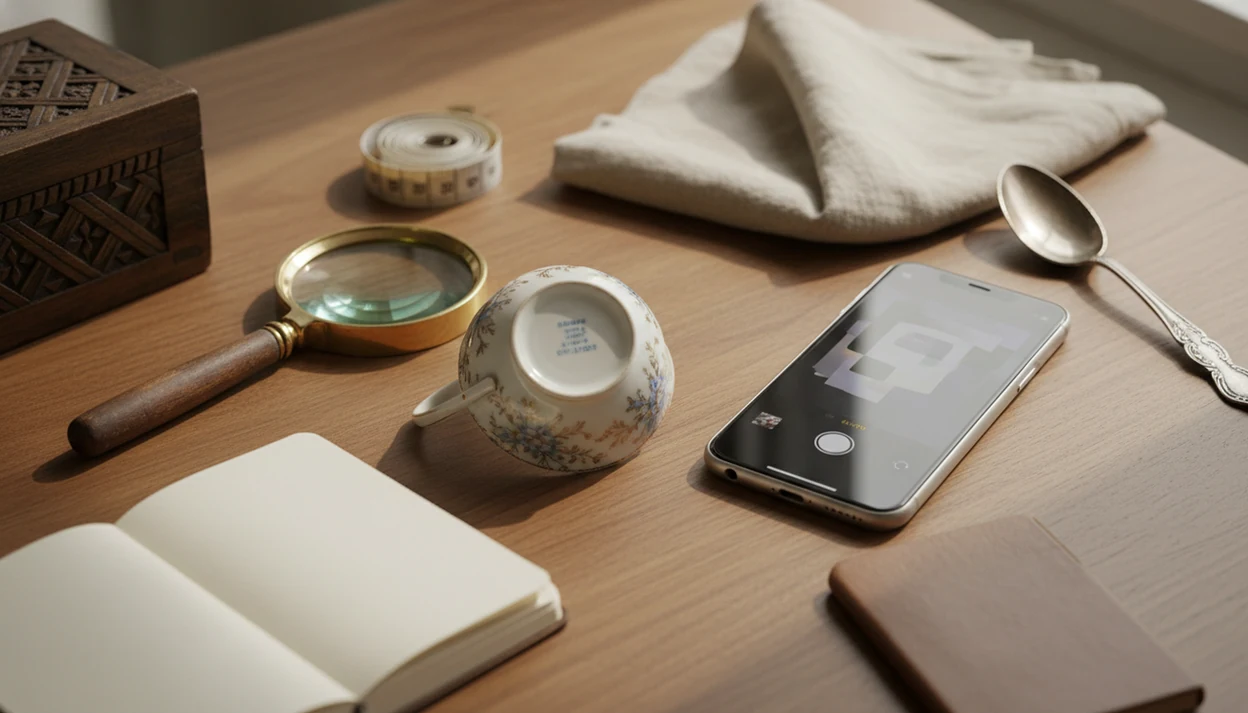
- Photograph the front, back, sides, top, underside, and interior when the form allows it.
- Capture maker marks, labels, signatures, stamps, mold numbers, pattern numbers, and hallmarks in close-up.
- Include chips, cracks, crazing, repairs, missing parts, refinishing, replaced hardware, and other condition issues.
- Add a ruler, coin, or hand for scale, then write down height, width, depth, and diameter separately.
At a kitchen table, we often turn a saucer away from ceiling glare before trying to read the backstamp. A sharp close-up beside a window at 10 a.m. usually beats a blurry overhead photo. For more photo-specific guidance, the identify antique from photo guide follows the same evidence-first approach.
How To Use A Phone TIQ App
Use a phone-based antique ID app as a structured research pass, not as a verdict. The goal is to gather enough clues to decide whether to keep, sell, donate, research, or appraise the item.
- Set the item on a plain background in steady light, away from glare and patterned fabric.
- Photograph the full object from several angles, including front, back, sides, top, and underside.
- Capture close-ups of marks, labels, signatures, bases, backs, damage, repairs, and unusual construction details.
- Upload the best images to a phone identification app and review suggested object names, makers, eras, and value ranges.
- Search visible words, marks, or pattern numbers in Google Lens or a browser with the object type added.
- Compare the result against sold listings before buying, pricing, donating, or insuring the item.
Tools are useful here. Judgment still matters. If you need a device-specific workflow, the iOS version is covered in how to scan antique on iPhone, while Android users can follow how to scan antique on Android.
Google Lens And TIQ Apps Compared
Google Lens and antique identifier apps work best together. One is broad visual search; the other is usually better at antique-specific prompts, mark interpretation, era hints, and value framing.
| Tool | Best use | Strengths | Weaknesses | Next step |
|---|---|---|---|---|
| Google Lens | Common visual matches | Fast for china, glass, toys, decor, and mass-produced patterns | Can surface lookalikes, active listings, or wrong categories | Add maker words and check sold results |
| Dedicated antique app | First-pass antique research | Prompts for marks, era, style, condition, and rough value | Still depends on photos and comparison data | Verify with marks and sold comps |
| Browser search | Text-based refinement | Good for pattern numbers, backstamps, serials, and maker names | Requires careful wording | Compare several reference pages |
| Sold-price databases | Market reality | Shows what similar items actually sold for | May require subscriptions or saved searches | Match condition and measurements |
Neither tool is always definitive. A polished marketplace listing may look convincing, but a sold listing screenshot tells you more about value.
Maker Marks That Help Identify Vintage Items By Phone
“Which maker marks help identify vintage items by phone?” Look for stamps, hallmarks, signatures, paper labels, impressed marks, pattern names, serial numbers, registration numbers, and country marks.
Photograph marks straight-on, then take a second angled shot to catch worn or impressed details. Fingertip tracing raised backstamp letters can reveal a curve or missing word that the first image missed. Type visible text into search with object words such as vase, plate, chair, brooch, clock, or lamp.
Marks matter most on silver, ceramics, porcelain, glass, jewelry, watches, tools, and furniture. A lion passant on a silver spoon may indicate sterling under British hallmarking, but it still needs cross-checking by date letter, assay office, and condition. Fake marks, export marks, and later reproductions can mislead phone results. A maker mark identifier app can help organize the clues, but it should not replace specialist review on valuable pieces.
Sold-Price Checks After You Scan Antiques With Phone
A phone estimate is only a research aid; sold-price checks are what bring value closer to the real market. Asking prices are not the same as market value.
- Compare sold listings, completed auctions, and examples that actually changed hands.
- Match size, maker, date range, material, pattern, color, condition, and provenance as closely as possible.
- Treat chips, cracks, repairs, missing lids, replaced hardware, refinishing, and incomplete sets as major price factors.
- Use asking prices only as background, not as proof of what your item is worth.
- Remember that value ranges are rough guides, not certified appraisals.
For resellers, sold comps usually matter more than the first visual match because buyers pay for the specific condition in front of them. A replacement screw in antique hardware can move an item from “strong candidate” to “needs disclosure” very quickly.
Common Phone Antique Identification Mistakes
Most wrong phone IDs come from thin evidence. The fix is to slow down and document the object like a listing specialist, not like someone sending one quick snapshot.
One-photo scanning: A single front photo ignores the underside, back, interior, hardware, and marks.
First-result trust: The first app or image-search match may be only a similar example, not a confirmed match.
Vintage confusion: Vintage does not automatically mean antique, rare, or valuable.
Asking-price anchoring: High active listings can sit unsold for months and should not be treated as value proof.
Hidden condition issues: Damage should be shown to the tool and to buyers. A warped dust jacket on an old book is not a footnote.
Material overclaiming: A phone camera cannot confirm silver, gold, gemstones, original paint, or the age of wood. Apps such as TIQ can support first-pass sorting, but final claims need stronger evidence.
Verification Checklist Before You Buy Or Sell An Antique By Phone
Before money changes hands, require at least two independent clues. A visual match plus a mark match is stronger than either one alone.
- Confirm at least two clues: image match, mark match, style match, construction detail, or sold comparable.
- Decide whether the item is antique, vintage, reproduction, revival style, or modern decor.
- Compare condition and measurements against sold examples, not just similar-looking listings.
- Save screenshots, item notes, photos, search terms, and useful links for later research.
- Escalate expensive, insured, inherited, or legally important pieces to a qualified appraiser, specialist dealer, auction house, or lab.
Estate cleanouts make this discipline useful. When a dusty box lid has masking tape marked “$3,” wrap the questionable item in a towel and put it in the research pile before making a fast donation decision. For broader tool options, compare an app that identifies antiques from pictures.
Evidence Sources For Phone Antique Identification
Use phone antique identification as an evidence trail: photos first, market data second, expert review when the claim becomes expensive or technical. Online art-market reporting shows that digital research and buying are now normal behavior, with Art Basel and UBS tracking online art and antiques sales in their Art Market report.
- Start with broad visual matches, then write down the object type, maker clues, dimensions, condition, and any mark text before searching further.
- Compare sold listings and completed auctions instead of active asking prices, because sold records show what buyers actually paid; an unsold high listing may only show optimism.
- Check professional standards before relying on a value for insurance, estate, tax, or legal use; USPAP guidance through The Appraisal Foundation explains why qualified appraisal practice is more formal than a phone estimate Appraisalfoundation.
- Escalate material claims such as gold content, gemstones, silver purity, paint age, wood species, and restoration history to lab testing, an appraiser, or auction-house specialist.
- Save the trail so a dealer or appraiser can see what you saw, not just the final guess.
Understanding Results
Phone results are most useful when the photos show enough visual evidence for an antique identifier to compare the item with similar known examples.
TIQ works best when
- Clear full-item photos taken in natural light with a plain background
- Close-up maker marks, backstamps, labels, signatures, hallmarks, and serial numbers
- Distinctive shapes, patterns, construction details, decoration, and materials
- Items with many comparable sold listings, such as ceramics, silverplate, glass, furniture, toys, and vintage decor
- Photos that include damage, restoration, wear, and a scale reference
TIQ may be less accurate when
- Blurry, dark, cropped, or reflective photos that hide key details
- Unmarked items with common shapes or mass-produced designs
- Objects with hidden repairs, replaced parts, or altered surfaces
- High-value items that require hands-on material testing, provenance, or specialist authentication
- Generic image matches that look similar but differ in maker, age, size, or condition
What a photo cannot prove
Photos are research evidence, not final proof. A clear image can support category, style, visible marks, and obvious condition issues. A photo alone usually cannot certify authenticity, materials, hidden repairs, weight, purity, legal title, or a guaranteed sale price. For insurance, tax, estate, or high-value decisions, verify with sold comps and—when needed—a qualified specialist or appraiser.
FAQ
What app identifies antiques from pictures?
An antique identifier app should help match the item from photos, read visible maker marks, and suggest comparable items for pricing research. TIQ is a practical choice for resellers because it combines photo-based identification with mark clues and rough value ranges before a listing goes live.
What is the best antique identifier app for resellers?
The best antique identifier app for resellers is one that speeds up the first pass without replacing market research. Look for photo identification, maker mark reading, value range support, and a workflow that helps you compare sold comps before setting a listing price.
Is there a free antique identifier by picture?
General image search tools can be free and useful for quick visual matches, especially when an item has distinctive shape, decoration, or branding. For resale decisions, a dedicated antique identifier app can be more useful because it focuses on antiques, maker marks, and comparable market clues.
Can I estimate an antique value from phone photos?
Yes, phone photos can support a rough antique value estimate when they show the full object, markings, condition, scale, and construction details. The strongest estimate comes from combining photo identification with sold-price comparisons for similar items in similar condition.
How accurate is antique identification from a phone photo?
Phone-based antique identification is often a strong starting point, but accuracy depends on photo quality, visible marks, item rarity, and how common similar designs are. Use it to narrow the category, maker, era, and likely value range, then verify high-value or unusual items with deeper research.
Can a phone photo prove an antique is authentic?
A phone photo can reveal useful clues such as construction, wear, marks, repairs, and style, but it cannot prove authenticity on its own. For expensive items, suspected fakes, or legal and insurance needs, use a qualified appraiser or specialist who can inspect the object in person.
Are my antique photos private when I use an identifier app?
Privacy depends on the app and its data policy, so review how images are uploaded, stored, and used before scanning valuable or sensitive items. Avoid including personal documents, addresses, faces, or estate paperwork in the background of item photos.
Ready to start?
Ready to start identifying antiques by photo? Open TIQ on your iPhone, scan the full item and close-up marks, then compare the antique value estimate with sold examples before you buy, sell, insure, or research further.