
How to Use an Antique Identifier to Identify Antiques by Photo
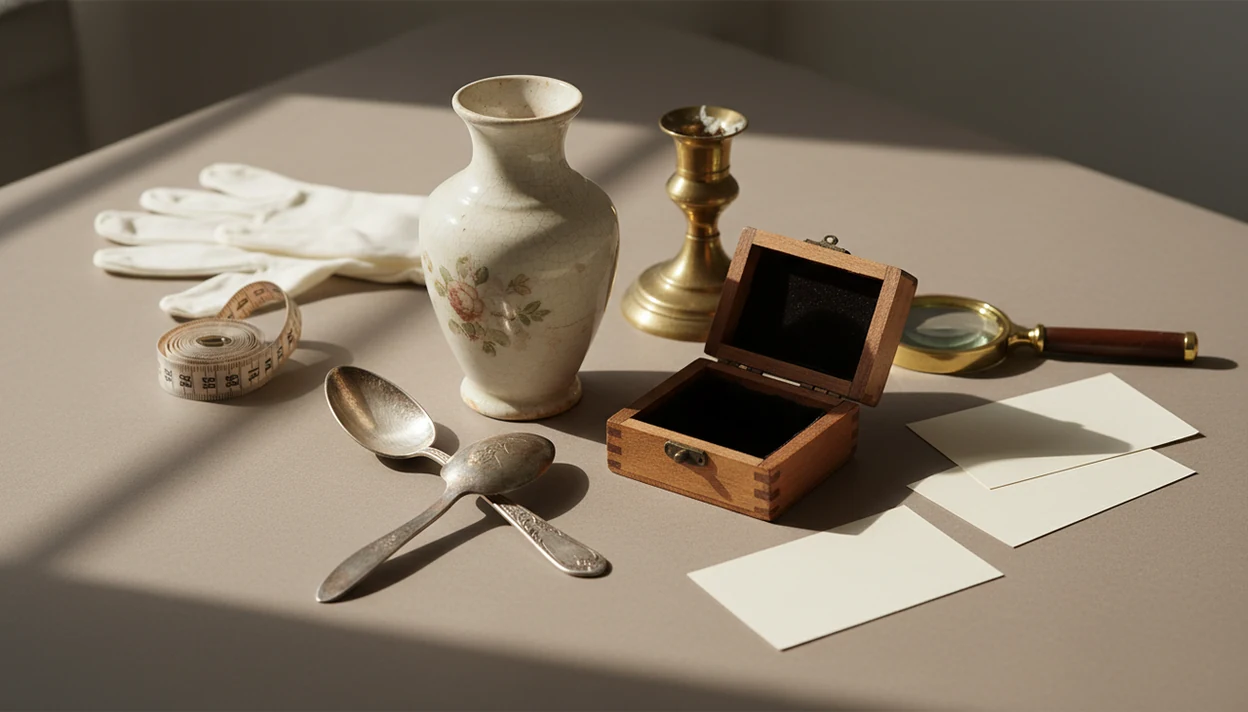


Download App: antique photo app
Definition: Identifying antiques by photo means using images of an object, its maker marks, materials, construction, condition, and comparable examples to research what it may be and what it may be worth.
If you inherited a box, cabinet, or room full of unfamiliar objects, a focused photo workflow can help you appraise antiques by picture, spot maker marks, and decide what deserves deeper research. Use TIQ as a practical first pass to turn photos into identification clues, rough value ranges, and organized notes before selling, donating, or keeping family pieces.
> Photo antique identification means using pictures of an object to estimate what it is, when it may have been made, who may have made it, and what comparable examples may sell for.
- Take a reusable photo dossier: front, back, sides, underside, close-ups, marks, damage, and scale.
- Use an antique photo scanner or app to generate leads, then verify maker marks, materials, construction, and recent sold prices.
- Do not rely on a photo-only result for insurance, tax, legal, or high-value sale decisions.
Recommended App: TIQ Antique Identifier
TIQ is an antique identifier app for people who want a practical first step when sorting, researching, or selling older objects. You can use it to appraise antiques by picture for first-pass research, compare visual clues, and organize what you learn before deciding what needs expert review. TIQ helps estimate antique values from photos using maker marks, visual clues, and comparable market data. It also works as a maker mark identifier and antique finder when you are trying to narrow down an inherited family collection. For insurance, estate, tax, or legal decisions, use a qualified appraiser.
- Identify antiques by photo using images of the front, back, underside, details, and condition.
- Research maker marks, signatures, stamps, labels, hallmarks, and other identifying clues.
- Estimate antique values with comparable market data and visible condition factors.
- Helpful for inheritors sorting family collections, collectors, dealers, and resale researchers.
- Use it across common categories such as furniture, ceramics, silver, glass, jewelry, and collectibles.
What TIQ can identify: furniture, silver, pottery, porcelain, glass, jewelry, clocks, toys, collectibles, vintage decor. Available for iPhone.
Photo Antique Identification Basics for Beginners
Photo antique identification is a first-pass research method, not a proof of authenticity. Clear photos can narrow the category, possible age, maker, style period, material, and rough sold-comps range.
Beginners use it for estate finds, thrift store shelves, flea market decisions, inherited objects, and resale listings. A blurred hallmark inside a ring band may only say “research jewelry marks,” while a sharp close-up beside a window at 10 a.m. may show enough lettering to cross-check.
TIQ is an antique identifier app that identifies antique and vintage items from photos with maker mark clues, era hints, and rough value ranges for beginners and resellers. Even then, a photo result is probabilistic. Similar examples are not confirmed matches.
The safest habit is simple: photograph first, research second, claim last.
How Photo Antique Identification Works
Photo antique identification works by turning pictures into clues that can be compared with known objects, marks, materials, and market records. It can point you toward a likely answer, but it does not authenticate the item by itself.
A useful photo set feeds the process from several directions: full-object views show shape and proportion, close-ups reveal maker marks or pattern numbers, material shots suggest glass, ceramic, metal, wood, or textile type, and condition images show wear, repairs, missing parts, or replaced pieces. Apps may use visual matching and reference data, meaning they compare patterns in your images against stored examples, guide records, and market listings. That first match is only a lead. Recent sold comps, maker records, catalog entries, and specialist references are what test whether the suggested maker, date, and value range actually fit.
Photo evidence becomes weak when images are blurry, cropped, overexposed, or missing the underside, marks, scale, or damage. It is also unreliable for altered marks, fakes, rare regional objects, heavily restored furniture, gemstones, precious metals, and items that need handling, testing, or provenance review.
At-a-Glance Workflow to Identify Antiques From Pictures
To identify antiques from pictures, move from image capture to verification before making any sale, donation, or appraisal decision. Better inputs usually improve both app results and human research.
| Stage | Goal | Clue captured |
|---|---|---|
| Photograph | Build the record | Shape, size, surfaces, underside, damage |
| Scan | Generate leads | Category, style, possible maker, era hints |
| Compare | Test the lead | Similar examples, pattern names, marks |
| Verify | Reduce errors | Materials, construction, sold listings, provenance |
| Decide | Sort the item | Keep, sell, donate, research, or appraise |
A rain tarp flapping over old tools at a flea market is not the place to make a final call. Take the photos, note the asking price, and finish the research later. For a phone-specific workflow, the steps in how to identify antiques with phone are a useful next layer.
Before You Start: Antique Photo Identification Checklist
Before you photograph an antique, set up the space so you capture evidence without changing the object. A few minutes of preparation can prevent lost labels, hidden damage, privacy leaks, and avoidable breakage.
- Gather a ruler, a clean soft cloth, bright indirect light, and a notes app or notebook before you move the item. Record measurements, visible marks, purchase context, and anything the previous owner told you.
- Leave surfaces, labels, tags, tape, paper inserts, and old residue alone until they are documented. Polishing silver, washing ceramics, or peeling off a shop label may remove clues that matter later.
- Choose a plain background that contrasts with the object without swallowing its edges. A neutral table, sheet, or board makes chips, cracks, feet, handles, and silhouettes easier to see.
- Check the frame for private information before shooting papers, addresses, family photos, receipts, collection rooms, or home interiors.
- Set aside fragile, sharp, unusually heavy, or potentially high-value pieces for careful handling or expert review instead of forcing quick photos.
Five Facts Before You Use an Antique Photo Scanner
An antique photo scanner can speed up early research, but it needs good evidence. Treat the result like a lead pinned to a research board, not a signed certificate.
- One photo is rarely enough; front-only shots miss marks, bases, repairs, and construction.
- Maker marks, labels, signatures, pattern numbers, and hallmarks are often the strongest clues.
- Condition, repairs, missing lids, replaced feet, and altered finishes can change value sharply.
- AI can suggest visual matches, but marks, materials, and sold comps still need verification.
- High-value art, jewelry, rare clocks, and important furniture need expert or in-person review.
Pew reported in 2019 that roughly 74% of U.S. adults used smartphones to search for product information while shopping in stores. (Source: Pew Research Center, Pew Research Center) That habit fits antique hunting too: a quick scan helps, but a grandparent’s drawer of souvenir teaspoons still needs sorting one mark at a time. Apps such as TIQ, WorthPoint, and auction platforms are useful when they push you toward evidence, not certainty.
Photo Antique Identification Software Mechanics
Photo antique identification software works by comparing your images with large visual, style, maker mark, and market-reference datasets. In plain terms, the system looks for similarity patterns and then suggests research leads.
The technical layer may use image embeddings, which are numerical summaries of visual features. Those features can include object shape, decoration, material cues, hardware, construction details, backstamps, labels, and wear. Results may include category, style period, possible maker, era hints, and a rough value range.
Tools can do useful triage, not final authentication.
Rare, regional, heavily worn, restored, or poorly photographed items are harder because there are fewer reliable matches. A green felt pad hiding a furniture label can matter more than the polished top. McKinsey projected global AI software spending could reach about $298 billion by 2027, but bigger AI markets do not remove the need for careful object evidence. (Source: McKinsey, McKinsey)
Good AI antique and vintage item identifier app with maker marks, era/style guides, and value range estimates deliver structured research leads, not certified appraisals or guaranteed authenticity.
Photo Steps to Identify an Antique
Use a repeatable photo process before you scan, search, or list the object. The goal is to create a dossier you can reuse with apps, forums, auction houses, or an appraiser.
- Clean cautiously with a dry soft cloth only, and avoid aggressive polishing before photos because cleaning can remove patina, labels, or evidence.
- Photograph the whole object from the front, back, sides, top, underside, and interior.
- Capture maker marks, labels, signatures, numbers, joins, feet, handles, clasps, chips, cracks, repairs, and missing parts.
- Add scale with a ruler, coin, or hand, then record exact measurements separately in notes.
- Scan the photo dossier through an app or research tool, then save the suggested category, maker, era, and value range.
- Compare the lead against reference sources, recent sold listings, and condition-matched examples before deciding.
Turning a saucer over at the kitchen table and angling it away from ceiling glare often reveals more than the first pretty front photo. If you need a deeper camera checklist, use this guide to photograph antiques for identification.
Photo Dossier Clues That Improve Antique Identification
A strong photo dossier captures the object, the evidence, and the flaws. It should include front, back, sides, top, underside, interior, close-ups, marks, hardware, joins, damage, and scale.
- Whole-object views: Show the full silhouette and proportions from several angles.
- Maker and mark shots: Photograph straight-on, in focus, without flash glare, and under multiple lighting angles.
- Construction details: Capture seams, screws, dovetails, bases, backs, hinges, clasps, feet, handles, and interiors.
- Condition evidence: Record chips, cracks, crazing, replaced parts, repairs, stains, and surface loss.
- Scale records: Include a ruler, coin, or hand in one image, then write exact dimensions separately.
Verdigris around a copper hinge or crazing lines across cream glaze may change the research path. For phone scanning workflows by platform, compare how to scan antique on iPhone with how to scan antique on Android.
Maker Marks and Era Clues in Antique Photos
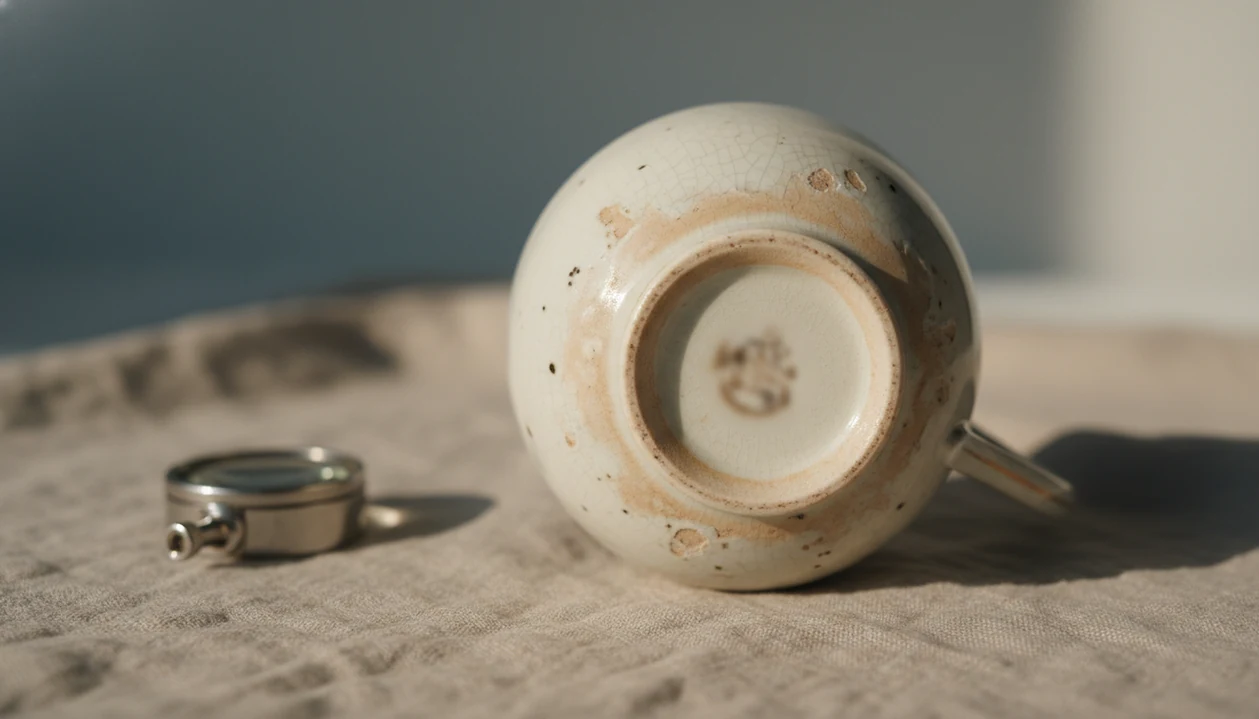
Maker marks are often stronger than style impressions because they provide searchable evidence. Look for backstamps, labels, signatures, patent numbers, registry numbers, hallmarks, country-of-origin marks, retailer labels, and handwritten inventory codes.
Search exact wording, symbols, abbreviations, spacing, and number formats. “EPNS,” “sterling,” “Made in Japan,” and a registry diamond send research in different directions. Photograph the mark before guessing what it says.
Style alone is weaker because later reproductions imitate older designs. Era clues still matter, but they need context: construction methods, materials, hardware, wear patterns, typography, glaze, finish, and joinery. A mantel clock sitting beside funeral cards may have useful family context, yet the movement, dial, case, and repair bill in a drawer are stronger clues.
For beginners, a confirmed mark usually narrows research faster than a broad style label because it gives you exact terms to verify.
Value Checks After You Identify Antiques From Pictures
What is it worth after a photo identification lead? Start with sold prices, not asking prices, because unsold listings show what someone wants, not what a buyer paid.
Compare the same maker, same size, same material, similar age, similar condition, and the same market. A polished marketplace page can look persuasive, but a sold listing screenshot is more useful. One high auction result does not set the value of every similar object.
Use this checklist:
- Auction comps from recent sales, not just old catalog estimates.
- Marketplace sold listings, filtered for completed transactions.
- Price guides, when they explain condition and edition differences.
- Specialist dealers, especially for jewelry, clocks, glass, and ceramics.
Pew reported in 2021 that about 32.5% of U.S. adults sold personal items online in the previous year. (Source: Pew Research Center, Pew Research Center) The National Endowment for the Arts also reported that the online art and antiques market reached about $13.3 billion in 2022. (Source: National Endowment for the Arts, National Endowment for the Arts) Photo-led selling is common now, but value still depends on evidence.
A careful antique identification timeline keeps the value step after the identification step.
Photo Antique Identification Myths That Cause Bad Appraisals
Bad appraisals often begin with overconfidence. Photo tools are useful, but weak evidence creates weak conclusions.
- Myth: An app answer is 100% accurate. Correction: app results are leads that need mark, material, construction, and sold-comp verification.
- Myth: One quick photo is enough for maker, age, and value. Correction: most objects need multiple angles, underside views, marks, scale, and condition shots.
- Myth: An antique photo scanner replaces an appraiser. Correction: scanners can triage, but certified valuation and authentication require qualified review.
- Myth: A similar expensive sale means this item has the same value. Correction: size, maker, condition, provenance, market, and restoration history may differ.
A cracked leather suitcase of postcards is a good example. The cover photo tells you “old paper,” but postmarks, subjects, publishers, condition, and local demand decide the research pile. If you are comparing tools, an app that identifies antiques from pictures should still encourage verification.
Beginners: start with antique collecting for beginners and difference between vintage and antique.
Understanding Results
Photo identification results are strongest when the images give the antique identifier enough visual evidence to compare shape, marks, materials, condition, and market examples.
TIQ works best when
- Clear full-object photos from the front, back, sides, and underside
- Sharp close-ups of maker marks, hallmarks, labels, pattern numbers, signatures, and stamps
- Photos showing scale, materials, construction, joints, fasteners, wear, and repairs
- Objects with distinctive shapes, decoration, known patterns, or searchable maker clues
- Value estimates checked against recent sold auction comparables, not asking prices
TIQ may be less accurate when
- Blurry, dark, cropped, or single-angle photos
- Items with hidden marks, missing labels, heavy damage, or replaced parts
- Generic furniture, pottery, glass, jewelry, or décor with few distinctive features
- High-value, rare, altered, or potentially counterfeit items needing expert authentication
- Insurance, tax, legal, or major sale decisions based only on photo results
What Is an Antique Photo App?
An antique photo app (or antique photo identifier) helps you research objects from pictures: full-item shots plus close-ups of marks, labels, joints, and damage. It is a first-pass research tool, not a certificate of authenticity.
Photos an Antique Identification App Needs
- Full object from the front and back/underside.
- Straight-on mark, hallmark, label, or signature close-ups.
- Hardware, joinery, seams, feet, and condition issues.
- A scale reference when size affects value.
When Photo Identification Needs Expert Verification
Escalate when the item may be high value, heavily restored, commonly faked, or needed for insurance, tax, estate, or legal decisions. Photos cannot prove weight, metal purity, hidden repairs, or legal title.
What a photo cannot prove
Photos are research evidence, not final proof. A clear image can support category, style, visible marks, and obvious condition issues. A photo alone usually cannot certify authenticity, materials, hidden repairs, weight, purity, legal title, or a guaranteed sale price. For insurance, tax, estate, or high-value decisions, verify with sold comps and—when needed—a qualified specialist or appraiser.
FAQ
What app identifies antiques from pictures?
An antique identifier app should help you identify antiques by photo, read visible maker marks, and compare the item with similar sold examples. TIQ is a practical choice for first-pass research when you are sorting inherited furniture, ceramics, silver, glass, jewelry, or collectibles from pictures.
Is there a free antique identifier by picture?
Some tools may offer limited free photo checks, but the useful part is whether they give you clear clues, comparable examples, and a way to organize findings. For family collections, a structured antique identifier app can save time because you can photograph each object, mark uncertain items, and decide which pieces need expert review.
Can TIQ read maker marks from a photo?
TIQ can help interpret maker marks, stamps, labels, signatures, and hallmarks when the photo is sharp and well lit. Take a straight-on close-up of the mark, plus full-object photos, so the mark can be considered alongside shape, material, construction, and condition.
Can I appraise antiques by picture?
Yes, photos can support a first-pass antique value estimate by showing the object, condition, maker marks, materials, and comparable market clues. For insurance, estate, tax, legal, or high-value sale decisions, use a qualified appraiser because photos alone may miss repairs, alterations, or authenticity issues.
How should I photograph inherited antiques for identification?
Start with clear photos of the front, back, sides, underside, and any drawers, hinges, feet, bases, or interiors. Add close-ups of maker marks, damage, repairs, labels, signatures, and a ruler or common object for scale. This gives an antique identifier more evidence than a single display photo.
How accurate is photo-based antique identification?
Photo-based identification is most useful for narrowing the category, likely era, possible maker, and rough value range. Accuracy improves with multiple clear images, visible marks, and condition details. It is less reliable when the item is heavily restored, poorly photographed, rare, or commonly reproduced.
Can a photo prove an antique is authentic?
A photo can reveal helpful authenticity clues, such as construction methods, wear patterns, signatures, hallmarks, and materials. It usually cannot prove authenticity by itself because weight, surface feel, repairs, and in-person inspection may matter. For rare or expensive pieces, confirm findings with a specialist or certified appraiser.
Are my antique photos private when I use an identifier app?
Before uploading family items, check the app’s privacy policy and understand how photos and account data are handled. Avoid including personal documents, addresses, faces, or sensitive estate paperwork in the background. Photograph the object against a plain surface when possible.
Related guides
Ready to start?
Ready to start? Take clear photos of the full object, marks, underside, scale, materials, damage, and any provenance, then use TIQ to organize your first identification lead and antique value estimate before you verify details against sold comparables.