
Vintage vs Antique: Age, Meaning, and Identification Differences


Download App: is this an antique
Definition: The difference between vintage and antique usually comes down to age: antique items are typically 100 years or older, while vintage items are older than contemporary goods but usually less than 100 years old.
For flea market and thrift store finds, TIQ helps you appraise antiques by picture while comparing age clues, maker marks, materials, and rough value ranges. Use it as a beginner-friendly way to decide whether a piece is likely vintage, antique, collectible, or decorative before you buy, sell, or research further.
For U.S. import classification, the antique category is commonly tied to articles over 100 years old under HTSUS heading 9706, which supports the trade shorthand but does not create a universal vintage definition Usitc.
> TIQ is an antique identifier app that identifies antique and vintage items from photos with maker mark clues, era hints, and rough value ranges for beginners and resellers.
- Antique generally means 100+ years old; vintage generally means 20–99 years old.
- Age is not the only value driver: rarity, condition, maker, provenance, demand, and style all matter.
- Photo-based identification works best when you capture the whole object, maker marks, construction details, wear, and any labels or documentation.
Recommended App: TIQ Antique Identifier
TIQ is an antique identifier app for checking flea market and thrift store finds from photos, so beginners can compare age clues, styles, materials, and maker marks before buying or selling. You can use TIQ to appraise antiques by picture for first-pass research, organize discoveries like an antique finder, and get an antique value estimate while you learn the difference between vintage and antique. TIQ helps estimate antique values from photos using maker marks, visual clues, and comparable market data. For insurance, estate, tax, or legal decisions, use a qualified appraiser.
- Identify antiques by photo using visible details such as shape, construction, decoration, wear, and materials.
- Use maker mark identifier features to research stamps, signatures, labels, hallmarks, and back marks.
- Estimate values with comparable market data to understand whether a find may be vintage, antique, collectible, or decorative.
- Helpful for flea market shoppers, thrift store hunters, new collectors, resellers, and families sorting inherited items.
- Save research notes as you compare similar antiques, vintage decor, and collectibles over time.
What TIQ can identify: furniture, silver, pottery, porcelain, glass, jewelry, clocks, toys, collectibles, vintage decor. Available for iPhone.
Vintage vs Antique at a Glance
Antique usually means an item is about 100 years old or more; vintage usually means it is roughly 20 to 99 years old. These are trade rules of thumb, not one global legal standard.
| Label | Common age range | Main value drivers | Style clues | Buyer caution |
|---|---|---|---|---|
| Antique | About 100+ years | Rarity, craftsmanship, provenance, condition | Handwork, older materials, period construction | Confirm age before paying an antique premium |
| Vintage | About 20–99 years | Design demand, brand, nostalgia, condition | Decade style, labels, colors, forms | Trend value can rise and fall quickly |
| Retro | Any age, often newer | Look, novelty, decorative appeal | Older style reproduced later | Retro does not always mean old |
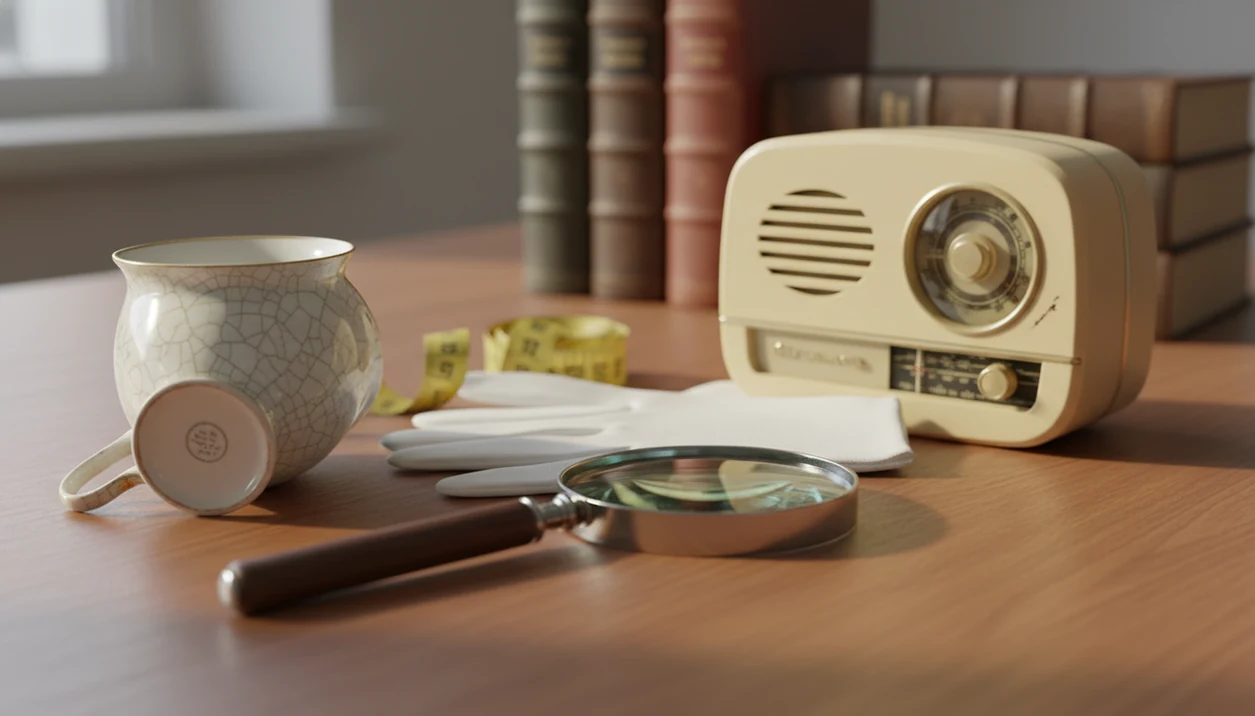
Online sellers may use both terms loosely, especially in crowded marketplace titles. A “vintage antique-style lamp” can mean almost anything. We usually start by turning the item over, then checking the underside before trusting the listing language.
Five Facts About the Difference Between Vintage and Antique
- Antique normally means an item is about 100 years old or more, although category rules can vary.
- Vintage normally means a few decades old but under 100 years, often tied to a recognizable design era.
- Age alone does not prove value; condition, maker, rarity, demand, and provenance usually matter more.
- The same object can move from used to vintage to antique as time passes, so the date range matters more than the label.
- Niche markets such as cars, fashion, jewelry, and furniture may use different age rules for collecting, clubs, insurance, or resale.
For a seller, “1950s ceramic table lamp with original shade” is often safer than only saying “vintage lamp.” Specific date language gives buyers something to verify.
How Vintage and Antique Classification Works
Vintage and antique classification works by making an age estimate first, then testing that estimate against the object itself. The label is strongest when several independent clues point to the same period, not when one attractive detail carries the whole claim.
A practical classification starts with the age band: roughly 20–99 years for vintage and about 100+ years for antique. Then you cross-check physical evidence such as maker marks, construction methods, materials, and style. A maker mark may suggest a production window, while construction means how the object was put together: joinery, seams, fasteners, casting, stitching, or labels. Materials can also narrow the date, especially when plastics, alloys, fabrics, glazes, or hardware changed over time.
Keep the age label separate from value, authenticity, and professional appraisal. An item can be genuinely old and still common, damaged, altered, or low in demand. Likewise, one clue is fragile: a copied label, replaced screw, or period-looking shape can mislead. Several matching clues are harder to dismiss because they support the same date range from different directions.
Vintage and Antique Classification Evidence
Vintage and antique classification works by stacking evidence: estimated date, materials, construction, maker marks, style period, provenance, and market language. One clue is useful; several matching clues are much stronger.
Antique status often emphasizes historical significance, hand craftsmanship, scarcity, and a documented connection to an earlier period. Vintage status often emphasizes decade design, nostalgia, brand recognition, and current trend demand. A chrome dinette chair and a Georgian side chair are judged through different evidence patterns.
The global art and antiques market reached about $67.8 billion in 2022, according to Art Basel’s market reporting, which shows why accurate category language can affect price discussions Artbasel. For beginners, classification is a first-pass research step, not a final authentication. A blue ribbon saved with a vase may help provenance, but it still needs cross-checking.
Photo Evidence Before a Vintage or Antique Label
Before calling an item vintage or antique, gather photos that show the whole object, underside, back, base, seams, hardware, labels, and maker marks. A sharp close-up beside a window at 10 a.m. beats a blurry phone photo under yellow ceiling light.
Record dimensions, materials, damage, repairs, inherited history, and purchase location. Patina, wear, and style alone can mislead because reproductions and deliberately distressed items exist. We have seen new hardware darkened around screw heads to suggest age.
Tools like TIQ can support a practical first pass, and results improve when mark and construction photos are sharp. Good AI antique and vintage item identifier apps can deliver maker mark clues, era/style guides, and value range estimates, not certified authentication or a guaranteed appraisal.
Photograph the boring parts too.
How to Use the Vintage vs Antique Difference
Use the vintage vs antique difference as a research and wording tool, not as a shortcut to price. The safest approach is to date the object first, then choose the label that your evidence can support.
- Estimate the date range before writing “vintage” or “antique.” Start with the broad age bands, then narrow them with style period, labels, maker history, and any dated paperwork.
- Inspect the physical clues before setting a price. Look for marks, materials, construction, repairs, replaced parts, and provenance, because a clean label can hide a cracked base or later hardware.
- Compare sold listings with specific search terms. “1930s oak drop-leaf table” or “1970s Italian ceramic lamp” will usually teach you more than a loose search for antique furniture or vintage decor.
- Use cautious wording near the 100-year line. If the evidence points to about 1920–1935, say that instead of forcing a firm antique claim.
- Get a qualified appraisal when the stakes are legal, estate-related, insured, rare, or high value. A casual value range is not enough for tax, court, insurance, or serious sale decisions.
TIQ Workflow for Vintage vs Antique Clues
Use this workflow when you want a structured way to compare vintage and antique clues from photos.
- Photograph the full item from the front, back, sides, underside, and scale view.
- Upload close-ups of maker marks, labels, seams, hardware, signatures, and any damage.
- Review maker mark clues, then treat them as leads to verify rather than final proof.
- Compare era hints against style, materials, construction, and known production periods.
- Check the estimated age range against the 20–99 year vintage band and 100+ year antique band.
- Save value caveats, condition notes, and screenshots of comparable sold listings.
TIQ supports practical identification, but it does not replace certified appraisal or authentication. For a broader phone workflow, our how to identify antiques with phone guide covers photo order, lighting, and documentation habits.
Step 1: Estimate the Item Age Range
How do you estimate whether something is vintage or antique? Start with working ranges: 20–99 years for vintage and about 100+ years for antique, then test that estimate against physical clues.
Check manufacturing methods, hardware, labels, materials, patents, and style period. A patent number may provide an earliest possible date, not the exact year of sale. A country-of-origin mark can also narrow the window, especially on ceramics, toys, and metalware.
Items around 90–120 years old need careful wording. One source may call a 1920s item antique, while another may describe it as early vintage or collectible. For uncertain pieces, say “estimated 1910s–1930s” instead of making a firm claim. That wording is often easier to defend because it shows the evidence range.
Step 2: Read Maker Marks, Labels, and Construction Details
Maker marks, stamps, labels, serial numbers, hallmarks, signatures, and country-of-origin marks often separate older antiques from later vintage pieces. Construction details then help confirm or challenge the first impression.
Look at joinery, casting seams, fasteners, machine marks, fabric labels, and material substitutions. A mold seam on a glass bottle, for example, can point toward a manufacturing period, but it rarely proves value by itself. A mark may date the maker, not always the exact item.
Because marks, repairs, and surface wear can be subtle, the American Institute for Conservation recommends consulting a qualified conservator for condition questions and treatment decisions Culturalheritage. If a mark is difficult to read, a maker mark identifier app can help organize the next research step.
Step 3: Connect Vintage or Antique Labels to Value Range
A vintage or antique label can affect value, but it does not create value by itself. Antique status may increase interest when paired with rarity, provenance, craftsmanship, and historical significance.
Vintage status may increase interest when paired with recognizable era design, nostalgia, brand demand, or trend momentum. Most vintage items are not automatically valuable. A common 1980s glass bowl may sell modestly, while a documented designer piece from the same decade may attract stronger bidding.
Cultural-heritage valuation research commonly treats authenticity, provenance, condition, and historical significance as price-influencing factors, which is why documentation can matter as much as the age label OECD. Online comparable ranges can also lag behind demand, especially when a style becomes fashionable quickly. For sellers, sold listing screenshots are more useful than active asking prices on polished marketplace pages. The category label opens the search; the comps narrow the range.
Common Myths About Vintage and Antique Items
Here are the misunderstandings we see most often when people sort inherited pieces, thrift finds, and online listings.
- Vintage and antique mean the same thing. They usually do not; antique points to about 100+ years, while vintage usually sits below that range.
- Vintage always means valuable. Demand, maker, condition, scarcity, and design importance decide whether a vintage item has strong resale interest.
- Antique in a listing means authenticated. It may only be seller language unless documents, expert review, or strong physical evidence supports it.
- Visible wear always increases value. Appropriate patina may help, but cracks, repairs, missing parts, and heavy damage often reduce value.
- Retro, vintage, and antique are interchangeable. Retro usually describes style imitation, not necessarily age.
A missing rhinestone in a brooch matters. So does the decade, maker, and buyer pool.
Verification Checklist for Vintage and Antique Transactions
Before relying on a vintage or antique label in a transaction, verify the claim in writing and save the evidence. This matters for buying, selling, estate sorting, insurance, and family records.
- Confirm the estimated date range, and state uncertainty clearly.
- Compare the item against similar sold listings, not only active asking prices.
- Cross-check sold results across named marketplaces or databases such as eBay Sold Items, LiveAuctioneers, WorthPoint, and Replacements when the category fits.
- Check condition, repairs, replaced parts, and signs of reproduction.
- Save photos of marks, labels, provenance, receipts, and app results.
- Note dimensions, materials, weight, pattern names, and any oral family history.
- Recommend professional appraisal for high-value, insured, estate, legal, or rare items.
If you are sorting a dusty shoebox of mismatched brooches, wrap the questionable item in a towel before putting it in the research pile. For camera-first sorting, an app that identifies antiques from pictures can help separate keep, sell, donate, research, and appraise piles.
Understanding Results
Photo-based identification is most useful when the image shows the object clearly and includes the details that reveal age, maker, materials, and provenance.
TIQ works best when
- Clear photos of the entire item from multiple angles
- Close-ups of maker marks, hallmarks, labels, signatures, stamps, and serial numbers
- Visible construction details such as joinery, hardware, seams, fasteners, glaze, or fabric labels
- Photos of receipts, family notes, certificates, or other provenance documents
- Items with recognizable design periods, brands, forms, or category-specific features
TIQ may be less accurate when
- Blurry, cropped, dark, or single-angle photos
- Objects with no maker marks, labels, provenance, or distinctive construction clues
- Modern reproductions made to imitate older antique or vintage styles
- Heavily restored, altered, refinished, or damaged items
- Very rare objects where few public auction comparables are available
Is This an Antique? Start With the 100-Year Rule
In everyday collecting language, many people call an object an antique when it is about 100 years old or older. “Vintage” usually means older but not necessarily that old. Rules vary by category and country, so treat age as a starting filter, not the only test.
Physical Clues That Support Antique Age
- Construction methods (hand-cut joinery, early machine marks, period hardware).
- Materials and wear consistent with age (not fake distressing alone).
- Maker marks, labels, and patent dates that match the claimed period.
Antique, Vintage, Retro, or Reproduction?
Retro can mean modern items in an older style. Reproductions copy antique forms with modern materials or shortcuts. If you are sorting estate items, identify category and construction first, then decide which pieces deserve deeper value research or appraisal.
FAQ
What app identifies vintage and antique finds from pictures?
An antique identifier app like TIQ can help you photograph a flea market, thrift store, or inherited item and compare visual clues such as style, construction, maker marks, and materials. It is especially useful when you are trying to decide whether something is vintage, antique, collectible, or decorative.
Is there a free antique identifier by picture for beginners?
Some antique identifier tools offer free photo checks or limited research features, but depth can vary by app. For beginners, the most useful tool is one that explains age clues, maker marks, and comparable sales instead of only giving a quick label.
Can I appraise antiques by picture before buying at a flea market?
Yes, you can use photos for a first-pass value estimate before you buy, especially if you capture the whole item, marks, labels, damage, and construction details. Picture-based research can help you avoid overpaying and spot items that deserve deeper research.
How much is my vintage or antique find worth?
Value depends on more than age, so a 30-year-old vintage piece can sometimes be worth more than a 120-year-old antique. Maker, rarity, condition, provenance, demand, and recent sold comps usually matter most when estimating a realistic range.
How can I tell whether a thrift store find is vintage or antique?
Start with the age rule: antique is usually about 100 years or older, while vintage often means roughly 20 to 99 years old. Then check construction, materials, labels, maker marks, wear patterns, style, and comparable examples to support the age estimate.
How accurate is photo-based vintage vs antique identification?
Photo-based identification is strongest when the images show clear marks, materials, joins, hardware, bases, backs, and any paperwork. It can provide useful clues and rough value ranges, but uncertain age, replaced parts, repairs, and poor lighting can reduce accuracy.
Can TIQ authenticate an antique or detect fakes?
TIQ can help flag visual clues that may support or question an item’s age, maker, or style. It does not replace hands-on authentication by a qualified specialist, especially for high-value items, disputed provenance, or suspected reproductions.
Should I rely on an app value for insurance, estate, or tax purposes?
Use app-based value estimates for research, sorting, and buying decisions, not as a formal appraisal. For insurance, estate, charitable donation, tax, or legal matters, get a written appraisal from a qualified professional.
Ready to start?
Ready to start? Take clear photos of the full object, maker marks, construction details, labels, wear, and any provenance documents, then use TIQ to identify antiques by photo and review age clues, category hints, and a practical antique value estimate before you buy, sell, or insure an item.