How an antique identifier helps new collectors decide what matters


Download App: benefits of identifying antiques
A good antique identifier helps beginners sort estate-sale finds and cleanout items with more confidence, giving you clearer clues about age, maker, materials, and potential value. With TIQ, you can appraise antiques by picture as a practical first step before deciding whether to keep, sell, donate, or research an item further.
Definition: An antique identifier is a tool or research process used to recognize an item’s age, maker, materials, style, condition, and potential market value.
- Identify before selling antiques so you can match the item to the right sales channel, not just the fastest buyer.
- Antique research benefits include safer handling, family history, better estate records, and more realistic value expectations.
- Use photo-based identification as a first-pass filter, then seek a qualified appraiser for high-value, tax, insurance, or legal decisions.
<h2 id="why-antique-identification-matters">Why Antique Identification Matters Before Selling, Donating, Or Tossing</h2>
The main risk is simple: you may give away or undersell something with real resale value. Many old-looking objects are common, but some plain-looking pieces matter because of a maker mark, scarce pattern, unusual material, or documented provenance.
At an estate table, the dusty box with masking tape marked “$3” can hold mass-market glassware, a better studio piece, or both. Identification slows the decision just enough to separate hunch from evidence. The benefits of identifying antiques include knowing whether sentimental value, active asking prices, and realistic sold-value comparisons are telling the same story.
Asking is not selling.
For owners clearing a house, first-pass research is often safer than guessing because maker, condition, and market demand can change the right next step.
<h2 id="antique-research-benefits">Five Antique Research Benefits Owners Notice First</h2>
- Smarter sorting: Identification helps divide objects into keep, sell, donate, appraise, or research-later piles. We often wrap a questionable item in a towel before moving it to the research pile, especially if the rim or handle looks stressed.
- Clearer search terms: Maker, material, era, and style clues improve searches for comps. A “silver spoon” search is weaker than “lion passant sterling fiddle pattern spoon.”
- Better sales channels: A common vase may suit a yard sale, while a named designer lamp may need a dealer, niche platform, or auction.
- Safer handling: Older painted items, toys, ceramics, metalware, electrical goods, and fragile materials may need care before use or resale.
- Stronger records: Photos, dimensions, marks, condition notes, and family stories support estate planning, insurance conversations, collection management, and efforts to document antique provenance.
<h2 id="how-antique-identification-works">How Antique Identification Works From Photos And Maker Marks</h2>
Antique identification works by comparing visible evidence, including shape, construction, decoration, material, wear, labels, hallmarks, maker marks, and style cues. Photos create the first evidence set; reference sources and comparable item data help narrow the likely category, maker, era, and value range.
AI antique identifier tools use image matching and pattern comparison, often called image embeddings, to connect visible clues with known examples. In plain terms, the tool looks for similar shapes, marks, surfaces, and cataloged outcomes. Tools like TIQ can deliver maker mark clues, era/style guides, and value range estimates, not final authentication or certified appraisal.
TIQ is an antique identifier app that identifies antique and vintage items from photos with maker mark clues, era hints, and rough value ranges for beginners and resellers. Results still depend on sharp images, visible markings, and enough reference matches. A blurry phone photo is not the same as a close-up taken beside a window at 10 a.m.
<h2 id="before-you-start-identifying-antiques">Before You Start: What To Gather Before Identifying Antiques</h2>
Before you start identifying antiques, set up a small, safe research station. A few simple tools and notes will make the photos more useful and reduce the chance of damaging evidence before you know what you have.
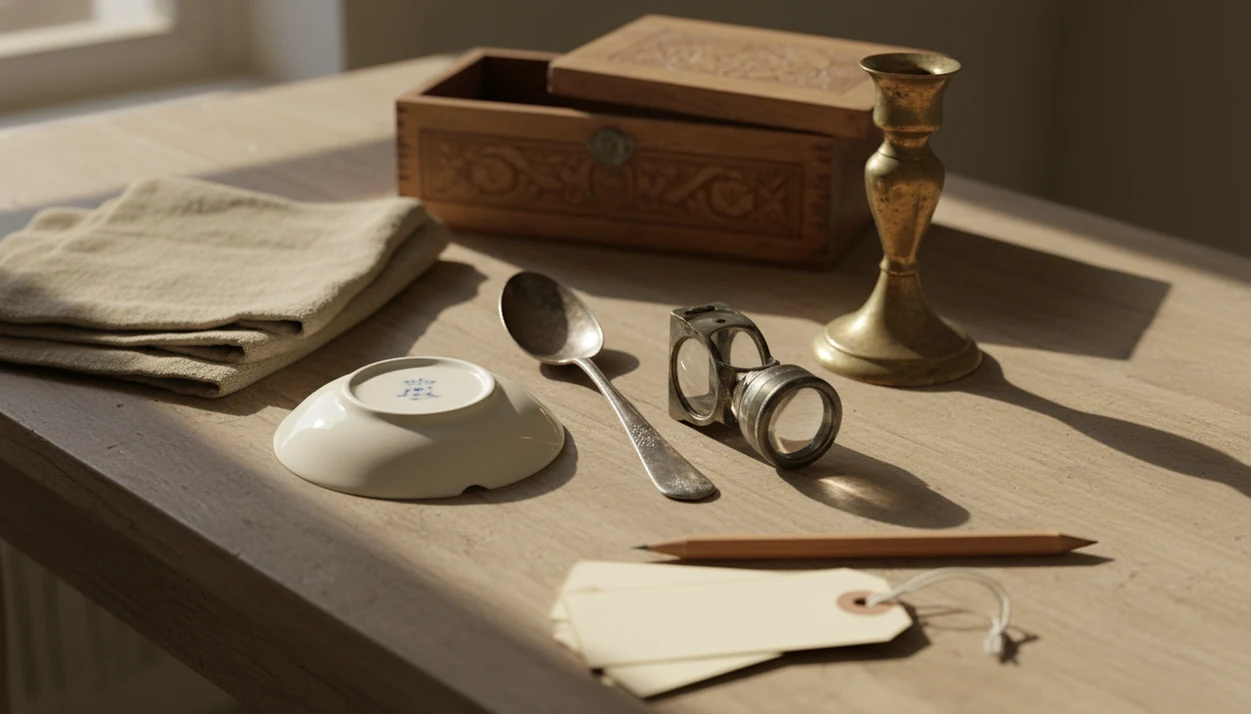
- Gather a ruler, flashlight, soft cloth, and plain photo background so scale, surface detail, and color are easier to judge.
- Leave the item as found apart from gentle dust removal; do not polish silver, strip finish, soak ceramics, tighten parts, or attempt repairs before research.
- Photograph the full object, then capture close-ups of marks, labels, signatures, seams, replaced parts, repairs, chips, cracks, stains, and other damage.
- Write down the family story, purchase location, old storage conditions, and any paperwork or boxes that came with the item.
- Separate fragile, painted, electrical, and child-use objects for slower handling, especially if the finish is flaking, wiring is old, or small parts are loose.
<h2 id="how-to-use-antique-identification">How To Use Antique Identification Before A Sale Or Donation</h2>
Use antique identification as a short workflow before you sell, donate, or discard. The goal is not to prove everything in one sitting; it is to catch items that deserve better research.
- Photograph the whole item from the front, back, side, underside, and any interior surfaces.
- Capture marks, labels, signatures, stamps, damage, repairs, and scale beside a ruler or common object.
- Note materials, weight, moving parts, odor, wiring, finish, and any family story attached to the item.
- Compare maker marks, pattern names, sold listings, and condition differences before trusting a price.
- Sort the result into keep, sell, donate, appraise, or research further.
- Escalate items with strong marks, high value ranges, legal importance, or unclear authenticity to a specialist.
To identify before selling antiques, start with evidence, then choose the venue. If the mark is the weak point, a focused guide to find antique maker can prevent a vague listing.
<h2 id="sales-channel-benefits">Sales Channel Benefits Of Identifying Antiques First</h2>
Maker, era, category, and value range often decide where an antique should be sold. A chipped everyday plate and a rare replacement-pattern plate do not belong in the same sales channel, even if they sat in the same cupboard.
The U.S. Bureau of Economic Analysis estimated that arts and cultural production contributed about 4.3% of U.S. GDP, or $1.02 trillion, in 2021 (Bea). That scale helps explain why specialized antiques, collectibles, and design markets exist. Still, asking prices are not sold prices, so check completed sale records before setting expectations.
| Item situation | Likely channel | Why identification helps |
|---|---|---|
| Common household vintage | Garage sale or local marketplace | Prevents overpricing and speeds sorting |
| Named maker, modest value | Online marketplace or niche platform | Better keywords reach better buyers |
| Specialist category | Dealer or consignment | Expertise may improve placement |
| Strong provenance or high range | Auction | Competitive bidders may matter |
| Damaged but desirable | Dealer or parts market | Condition can be disclosed clearly |
For many sellers, a sold listing screenshot is more useful than a polished marketplace asking price because it shows what a buyer actually paid.
<h2 id="safety-handling-benefits">Safety And Handling Benefits Of Identifying Older Items</h2>
Identification also screens for safety issues before an item is used, repaired, donated, or sold. Lead paint, older toys, fragile glass, old wiring, unstable finishes, sharp metal, and unknown materials deserve a slower look.
The U.S. Consumer Product Safety Commission warns that some older consumer products, including pre-1978 painted items and certain vintage toys, may contain lead or other hazardous materials. That does not mean every old object is dangerous. It means the category, date, finish, and intended use matter.
A close-up of a chipped rim can change the decision from “use this pitcher” to “display only.” Old electrical goods may need rewiring before sale. Toys with uncertain paint may be kept away from children or sold only with clear disclosure. Risk screening is not alarmism; it is basic care.
<h2 id="records-insurance-estate-donation-benefits">Records, Insurance, Estate, And Donation Benefits Of Antique Research</h2>
A simple item record can prevent confusion later. Include photos, dimensions, marks, condition notes, family story, likely maker, era, and a rough value range. The old repair bill in a drawer may matter as much as the object itself.
The IRS says non-cash charitable contributions may require Form 8283, and donated property valued over $5,000 generally needs a qualified appraisal (IRS guidance; IRS guidance). The IRS also notes that estate and gift tax returns for art and similar property over $50,000 need complete appraisal support. App-based research can organize evidence, but it is not a substitute for a formal written appraisal when rules require one.
Family history is part of the record too. A mantel clock beside funeral cards may not sell for much, yet it can anchor a useful provenance note. If you need a first value check, use research to see antique value range, then escalate when the stakes are formal.
<h2 id="common-antique-identification-mistakes">Common Antique Identification Mistakes Sellers Make</h2>
The most common mistake is assuming old, ornate, or heavy automatically means valuable. Some ornate pieces were mass-produced, while some restrained items carry stronger maker, material, or provenance clues.
Sellers also rely on active asking prices instead of completed sale comparisons. That can lead to inflated expectations. Condition matters too: restoration, missing parts, replaced hardware, hairline cracks, and weak provenance can change value sharply. A fingertip tracing raised backstamp letters may reveal a useful clue, but one similar-looking online item is not enough to confirm maker, age, or value.
The Federal Trade Commission warns that art and collectibles can be misrepresented and advises buyers to verify authenticity and get written documentation for higher-value purchases. The same caution helps sellers. AI identification should be treated as research support, not certified appraisal or authentication. For a deeper triage question, start with how to check if antique is valuable.
Recommended App: TIQ Antique Identifier
TIQ is an antique identifier app for estate-sale shoppers, estate cleanouts, and new collectors who need a fast first pass on unfamiliar objects. It works as an antique finder, maker mark identifier, and antique value estimate tool so you can identify antiques by photo, appraise antiques by picture for first-pass research, and organize what deserves closer review. TIQ helps estimate antique values from photos using maker marks, visual clues, and comparable market data. For insurance, estate, tax, or legal decisions, use a qualified appraiser.
- Identify antiques by photo when you find furniture, pottery, silver, glass, decor, or collectibles during an estate sale or cleanout.
- Use maker marks, signatures, labels, stamps, and visual clues to narrow down origin, period, and likely category.
- Estimate values with comparable market data so you can decide what to research, keep, sell, or donate.
- Helpful for beginners, collectors, resellers, estate-sale shoppers, and families sorting inherited items.
- Save item notes and photo-based findings to keep provenance, condition, and value clues organized.
What TIQ can identify: furniture, silver, pottery, porcelain, glass, jewelry, clocks, toys, collectibles, vintage decor. Available for iPhone.
New collectors should read antique collecting for beginners and difference between vintage and antique.
Understanding Results
Photo-based identification works best when the item is shown clearly and the result is treated as evidence for better research decisions, not a final verdict.
TIQ works best when
- Clear photos of the full item from multiple angles
- Close-ups of maker marks, labels, signatures, hallmarks, or pattern numbers
- Visible condition details such as chips, repairs, wear, patina, or missing parts
- Known provenance notes, including where the item came from and how long the family has owned it
- Common collecting categories such as glassware, ceramics, silver, jewelry, furniture, tools, toys, books, and decorative objects
TIQ may be less accurate when
- Blurry, dark, cropped, or heavily filtered photos
- Items with no marks, no scale reference, or only one angle shown
- Reproductions, altered pieces, marriages, and items with replaced parts
- Objects where value depends on hands-on testing, authentication, precious metal content, or legal documentation
- High-value, tax, insurance, estate, or legal decisions that require a qualified appraiser
What a photo cannot prove
Photos are research evidence, not final proof. A clear image can support category, style, visible marks, and obvious condition issues. A photo alone usually cannot certify authenticity, materials, hidden repairs, weight, purity, legal title, or a guaranteed sale price. For insurance, tax, estate, or high-value decisions, verify with sold comps and—when needed—a qualified specialist or appraiser.
FAQ
What is the best antique identifier app for beginners clearing an estate?
The best antique identifier app for beginners is one that helps you turn photos into useful research clues, such as likely age, category, materials, maker marks, and comparable items. TIQ is a practical choice when you need a fast first pass before sorting items into keep, sell, donate, or research-later piles. For high-value, tax, insurance, or legal decisions, use app results as a starting point and follow up with a qualified appraiser.
Can a photo help me estimate an antique before selling inherited items?
Yes, clear photos can help you identify the object type, style, marks, condition issues, and possible comparable sales. That gives you a more informed starting range before choosing a yard sale, dealer, auction, or specialist marketplace. The estimate is strongest when you include measurements, close-ups of marks, and photos of wear or damage.
Is there a free antique identifier by picture for estate-sale finds?
Some tools and marketplaces offer free or limited photo-based research, but the usefulness depends on image quality, item category, and available comparable data. A free first pass can help you decide which items deserve more research instead of treating every old object the same. For valuable or unusual pieces, compare multiple sources and consider expert review.
How much is my antique worth after I identify it?
Identification helps narrow value by connecting the item to maker, age, material, condition, rarity, and recent sold comparisons. The most useful number is usually a realistic range, not the highest asking price you can find online. Value can also change depending on where you sell, how quickly you need to sell, and whether provenance is documented.
What app identifies antiques from pictures during an estate cleanout?
An antique identifier app can review photos and help you recognize broad categories like ceramics, furniture, silver, glass, art, toys, books, and decorative objects. During a cleanout, that saves time by flagging items that may need careful handling, better photos, or specialist attention. TIQ can be used for this kind of first-pass sorting before you make final sale or donation decisions.
How accurate is photo-based antique identification?
Photo-based identification is most accurate when the item has clear visual clues such as marks, construction details, patterns, labels, or distinctive materials. It is less reliable when photos are blurry, the object is heavily restored, or many similar reproductions exist. Treat the result as informed research, then verify important items with comps, reference sources, or a specialist.
Can an antique identifier tell if an item is fake?
An antique identifier can point out warning signs such as inconsistent marks, modern construction, artificial wear, or mismatched style details. It cannot always prove authenticity from photos alone, especially for high-value categories with strong reproduction markets. If authenticity affects price, insurance, or legal ownership, get an in-person review from a qualified expert.
Are my estate cleanout photos private when I use an antique identifier app?
Privacy matters because estate cleanouts often include family objects, addresses, documents, and personal surroundings. Before uploading photos, crop out identifying details when possible and review the app’s privacy policy so you know how images are stored or used. For sensitive items, photograph only the object, marks, measurements, and condition details needed for identification.
Ready to start?
Ready to start identifying your own finds? Use TIQ as a first-pass antique identifier to organize photos, notes, maker marks, provenance clues, and value research before you decide whether to keep, sell, donate, insure, or ask an appraiser.