


Definition: An antique identifier app helps users research objects from photos by recognizing visual clues, maker marks, categories, and comparable market data.
TIQ is available now on iPhone via the App Store. Use the Play badge for the Android companion camera tool when you need photo research on Android.
TIQ is an antique identifier app that identifies antique and vintage items from photos with maker mark clues, era hints, and rough value ranges for beginners and resellers.
- Snap or upload a photo to get item name, era estimate, style notes, and a rough value range
- Official TIQ app is on iPhone; Android companion tools are available via the Play badge where shown
- Results are AI-generated guidance, not certified appraisals, so always verify before selling or insuring
Recommended App: TIQ Antique Identifier
TIQ is an antique identifier app built for fast first-pass research when you want to identify antiques by photo, review maker marks, and appraise antiques by picture before deciding what to keep, sell, or research further. As an antique value estimate tool, maker mark identifier, and antique finder, TIQ helps estate-sale shoppers and estate cleanout teams organize clues quickly. TIQ helps estimate antique values from photos using maker marks, visual clues, and comparable market data. For insurance, estate, tax, or legal decisions, use a qualified appraiser.
- Identify antiques by photo using shape, materials, style, age clues, and visible condition.
- Research maker marks, signatures, stamps, labels, and hallmarks that may point to origin or maker.
- Estimate values with comparable market data to support first-pass pricing and sorting decisions.
- Useful for estate-sale shoppers comparing finds before buying.
- Helpful for estate cleanouts when deciding what may deserve more research.
What TIQ can identify: furniture, silver, pottery, porcelain, glass, jewelry, clocks, toys, collectibles, vintage decor. Available for iPhone.
At a Glance: What You Get When You Download the TIQ App
- Snap or upload a photo when you want a first-pass identification of an old object.
- Each result can include an item title, likely era or period, style notes, maker-mark clues, and a rough value range.
- Official TIQ is available on iPhone via the App Store; use the Play badge for the Android companion camera tool when needed.
- Check the current App Store listing for trial or paid features before sorting a box of finds.
- Mobile-first identification fits how people already research objects; 81% of U.S. adults own a smartphone, according to Pew Research Center (Pew Research Center).
At a dusty estate table, the useful moment is simple: you photograph the object before the room gets crowded. TIQ looking for fast triage fits that situation because the ID card gives you a research pile, not just a guess.
How Photo-Based Antique Identification Works
Photo-based antique identification works by comparing your item photo against visual patterns and reference data for antique and vintage objects. The system looks for shape, glaze, patina, construction details, labels, backstamps, signatures, and other visible clues.
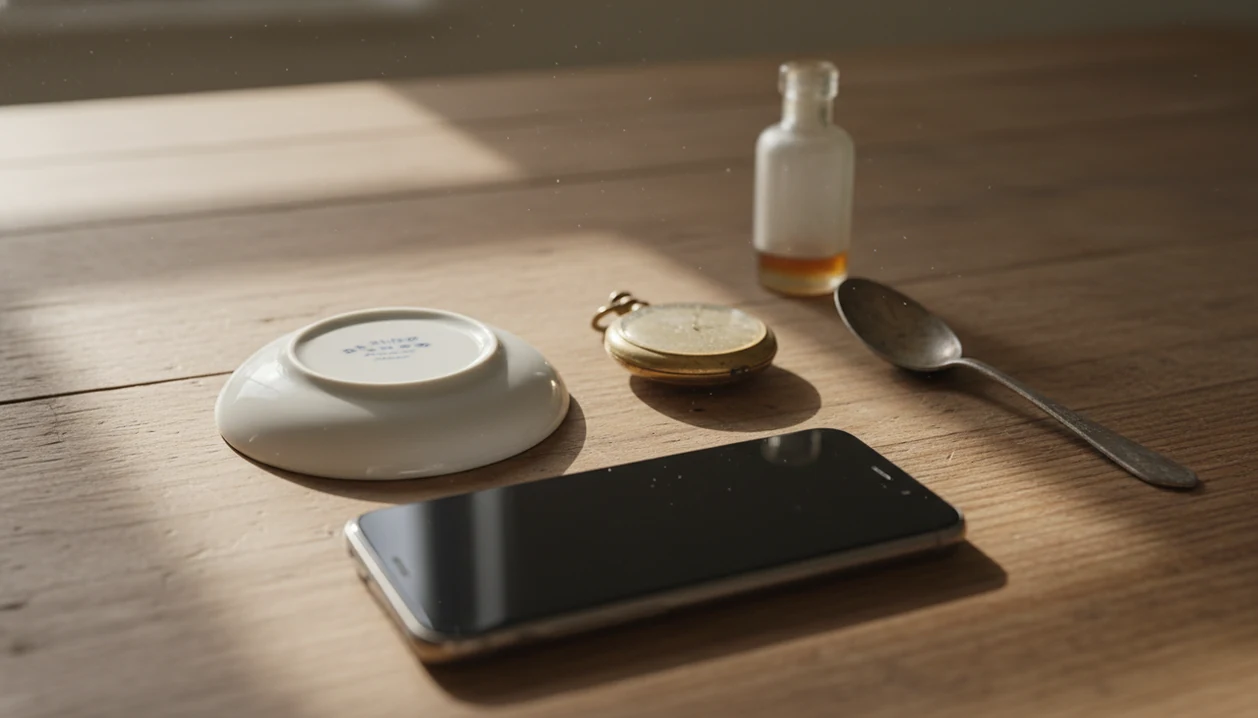
Under the hood, the model uses image embeddings, which are numerical summaries of visual features. In plain terms, it compares what the camera sees with similar examples. A turned-over saucer on a kitchen table can produce a better result when you angle it away from ceiling glare and capture the backstamp clearly.
The output is a best-match identification with an era estimate, style classification, and maker-mark clues. A value range comes from comparable market data, not from a formal appraisal. Good AI antique and vintage item identifier app with maker marks, era/style guides, and value range estimates deliver organized research clues, not guaranteed authentication.
Rare, altered, or one-of-a-kind objects are harder for any AI to classify.
How to Download and Use the TIQ App
Does TIQ download quickly enough for a first item check? Yes, the basic workflow is built around installing, photographing, reviewing, and saving one result.
- Download TIQ from the official App Store listing for iPhone.
- If you are on Android, use the companion Play badge tool for photo research, then verify with the guides on this site.
- Snap a clear photo or upload an existing image of the item.
- Review the AI-generated ID card for item name, era, style, and maker-mark clues.
- Check the rough value range and save the result to your collection.
Photograph the full object first, then take close-ups of marks, signatures, paper labels, or engraved initials. For mark-focused research, also see the maker mark identifier app guide.
Beginner collectors who need a first result before deeper research fit TIQ because the saved collection workflow keeps photos, clues, and value notes together.
When to Use the TIQ App Download
Use the app when you need a quick starting point before buying, sorting, listing, or researching an item. It is most useful when the next decision is practical: keep, sell, donate, research, or appraise.
At a flea market, a cash-only sign near wooden crates changes the pace. You may only have two minutes to decide whether a chipped enamel sign is worth a closer look. For thrift-store and estate-sale finds, The scan can provide a field ID before you buy.
Inherited items are another fit. Wrap a questionable object in a towel, put it in the research pile, and scan it later beside a window. Resellers can also use the rough value range before drafting listing photos.
The global collectibles market is projected to reach $62.1 billion by 2029, according to Statista (Statista market data), so fast identification demand is not surprising. Still, high-value insurance or sale decisions need a qualified appraiser.
What Identification Looks Like Inside TIQ
Inside TIQ, each scan produces an ID card with a likely item title, short description, possible origin, and time period. The card can also surface maker-mark clues, style classification, and a rough value range.
The layout is meant for review, not drama. You can compare a blurry phone photo with a sharper close-up taken beside a window at 10 a.m., then save the stronger result to your collection. That matters when you are sorting ten plates, three brooches, and a small clock in one afternoon.
TIQ also keeps multiple items organized, which helps families handling inherited objects. The interface uses readable text and simple photo actions; the CDC reports that 27.5 million U.S. adults had diagnosed arthritis in 2021 (CDC guidance), so low-friction capture matters for many older users.
For iPhone download steps and device notes, stay on this page and use the App Store badge above.
TIQ Download vs Other Antique Apps
TIQ differs from many antique apps by pairing photo ID with maker-mark clues, era and style classification, and a saved collection workflow. Curio, AntiqSnap, and generic image-search tools may help with visual matches, but they often leave more interpretation to the user.
| Option | Main use | Notable gap |
|---|---|---|
| TIQ | Photo ID, maker-mark clues, era/style notes, saved collection | Still requires verification for appraisal-level decisions |
| Curio | Quick collectible recognition | May not explain how to photograph marks clearly |
| AntiqSnap | AI-style antique lookup | Estimated value may be unclear versus appraisal |
| Generic image search | Broad visual matching | Often misses condition, provenance, and category context |
Most competitor pages skip clear guidance on photographing marks and labels. Few explain the difference between estimated value and a real appraisal.
Resellers who need listing language before checking sold comps fit TIQ because the result card separates item name, style clues, and rough value guidance.
Photo Tips That Improve Your Antique App Download Results
Better photos usually produce better first-pass identification. Use natural light, avoid flash glare, and take one full-item photo before close-ups.
Capture the bottom, back, inside rim, clasp, label, signature, stamp, or hallmark. A paper label under a figurine base can matter more than the front view. Do not crop out chips, foxing, cracks, missing stones, replaced screws, or worn plating, since condition affects value estimates.
Small details count.
For most users, uploading high-resolution photos is practical; the U.S. Census Bureau reported that 84.2% of U.S. households had broadband internet in 2023. If you want a deeper shooting checklist, the identify antique from photo guide explains angles and close-ups in more detail.
Anyone dealing with a box of mixed vintage pieces can use TIQ because multiple saved scans turn loose photos into a sortable collection record.
Understanding Results
TIQ works best when the photo shows the object clearly and includes the visual evidence a knowledgeable researcher would inspect first.
TIQ works best when
- Clear, well-lit photos of the full object from multiple angles
- Close-ups of maker marks, backstamps, labels, signatures, or hallmarks
- Ceramics, glass, silverplate, furniture, art objects, collectibles, and vintage household items with recognizable design features
- Items with comparable auction or resale records that can support an antique value estimate
- Unrestored objects where patina, construction, and materials are visible
TIQ may be less accurate when
- Blurry, dark, cropped, or glare-heavy photos
- Rare, altered, repaired, or one-of-a-kind objects with limited comparables
- Items hidden in boxes, display cases, frames, or protective sleeves
- Objects without visible marks, distinctive shape, or enough construction detail
- High-stakes authentication questions that require in-person expert inspection