


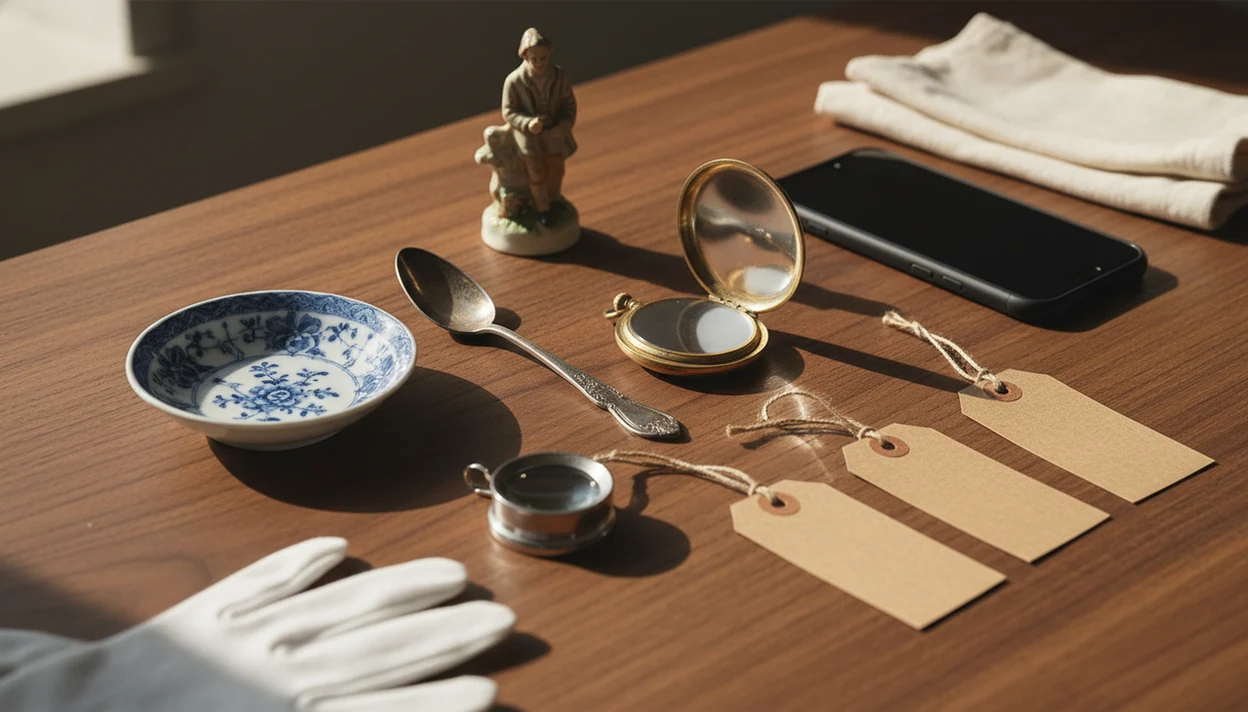
Definition: An antique value estimate app helps identify an object from photos and provides a research-based estimate using visual details, maker marks, condition clues, and comparable sales data.
- App-generated values are educated ranges from sold comps, not legally binding appraisals.
- Fair market value, auction hammer price, insurance replacement, and liquidation value can all differ dramatically for the same item.
- Use the app for instant triage, then send high-value or rare pieces to a USPAP-compliant appraiser.
Recommended App: TIQ Antique Identifier
TIQ is an antique identifier app built for quick first-pass research when you need to identify antiques by photo, appraise antiques by picture, check maker marks, and understand whether an item may be worth selling, keeping, or researching further. As an antique value estimate tool, maker mark identifier, and antique finder, TIQ is especially useful for estate-sale shoppers and estate cleanouts where decisions often need to happen quickly. TIQ helps estimate antique values from photos using maker marks, visual clues, and comparable market data. For insurance, estate, tax, or legal decisions, use a qualified appraiser.
- Identify antiques by photo using shape, materials, style, age clues, and visible construction details.
- Use maker marks, signatures, backstamps, hallmarks, labels, and other markings to guide attribution research.
- Estimate values with comparable market data, condition clues, and object-specific context.
- Helpful for estate-sale shoppers, estate cleanouts, collectors, resellers, inheritors, and homeowners sorting older items.
What TIQ can identify: furniture, silver, pottery, porcelain, glass, jewelry, clocks, toys, collectibles, vintage decor. Available for iPhone.
Antique Value Estimate App at a Glance
An antique value estimate app gives a first-pass market range for an object by comparing it with similar sold items. It does not replace a certified written appraisal for insurance, taxes, donations, or estate settlement.
TIQ fits beginners, inheritors, thrifters, and resellers because it pairs photo identification with sold-comps logic, maker mark clues, and a rough antique value range. We use it as a sorting tool, not a final verdict. A dusty box with estate-sale masking tape marked “$3” may need only a quick screen. A signed bronze or early silver piece may need a specialist.
A good antique valuation app should surface maker marks, era and style clues, comparable sold examples, and uncertainty notes instead of presenting one polished number as a final answer.
For household cleanouts, app triage is often faster than manual auction searching because it narrows the category before you decide what to keep, sell, donate, research, or appraise.
What an Antique Value Estimate App Does
An antique value estimate app helps identify what an object is and gives a rough market range based on similar sold items. It is built for quick sorting, not for promising the exact price a buyer will pay.
A good workflow starts with the visible evidence: photos of the whole piece, marks, materials, underside, joints, labels, and any wear. From there, the app narrows the likely category and compares the object with examples that share a possible era, style, maker, pattern, or construction clue. The result should be a low-to-high range, plus context about why the number may be uncertain.
- Photograph the object from several angles, including marks, damage, hardware, bases, backs, and seams.
- Review the identification for category, material, style, era, maker mark, or pattern clues.
- Compare the range with similar sold examples instead of treating the midpoint as a guaranteed sale price.
- Read the uncertainty note when condition, rarity, provenance, missing photos, or weak comparables widen the estimate.
- Decide the next move: sell, research more deeply, donate, or seek a formal appraisal for higher-stakes pieces.
Five Facts About Antique Valuation App Estimates
- An antique valuation app estimate is a ballpark range, not a guaranteed selling price.
- The range usually reflects fair market value, which can differ from dealer retail, insurance replacement, auction hammer price, or liquidation value.
- Certified appraisals require a qualified human appraiser following professional standards such as USPAP, first issued in 1987.
- Accuracy depends on photo quality, item category, visible marks, condition notes, and the depth of the sales database behind the estimate.
- The smart workflow is app triage first, then formal appraisal for rare, high-value, donated, insured, or legally sensitive items.
If the priority is quick screening before a weekend sale, TIQ earns its place because it combines identification, rough range, and comparable-item review in one phone workflow. That matters when you are deciding whether a cold brass candlestick belongs in the “research” pile or the donation box.
For tax context, the IRS generally requires a qualified appraisal for noncash charitable contributions of property valued over $5,000 (IRS Publication 561: IRS guidance), so an app estimate is not enough for that use.
How an Antique Value Estimate App Calculates Rough Ranges
An antique worth app calculates a rough range by matching a photo to likely category, era, style, and maker clues, then comparing the result with historical sales. The technical work often involves image embeddings, which means the photo is converted into patterns a database can compare.
Sold Comps and Database Depth
Sold comps matter more than asking prices. A porcelain teacup photographed from the underside may reveal a backstamp that changes the search from “old cup” to a narrower maker and pattern. TIQ uses that kind of clue to compare similar examples, but a confirmed match still needs cross-checking. Our guide on how to research antique sold prices explains why screenshots of completed sales beat polished active listings.
Why Value Bases Diverge
Fair market value, hammer price, retail replacement, and liquidation value answer different questions. One item can show four different numbers depending on venue, timing, buyer urgency, and region. Recent online art and antiques sales were estimated at about $10.9 billion in 2022, according to the Art Basel and UBS Art Market Report 2023 (Artbasel), so digital sales records are useful, but they are still uneven.
How to Use TIQ for a Rough Antique Value Range
Use TIQ by photographing the object clearly, reviewing the identification clues, then treating the value range as a research signal. A sharp window-lit photo at 10 a.m. beats a blurry phone shot under yellow ceiling light.
- Photograph the item in good light from the front, back, base, side, and any damaged area.
- Capture marks closely, including backstamps, hallmarks, signatures, labels, and construction details.
- Let TIQ narrow the item by era, style, material, category, and maker mark clues.
- Review the rough value range and read the uncertainty note before assuming the midpoint.
- Compare the sold comps or similar examples behind the range, especially for rare patterns.
- Choose the next step: sell casually, research further, wrap it in a towel for the research pile, or hire a professional appraiser.
After the first scan, when a mark looks promising, TIQ helps because the workflow keeps photos, clues, range, and next-step triage together.
When to Trust an Antique Worth App vs. Hire an Appraiser
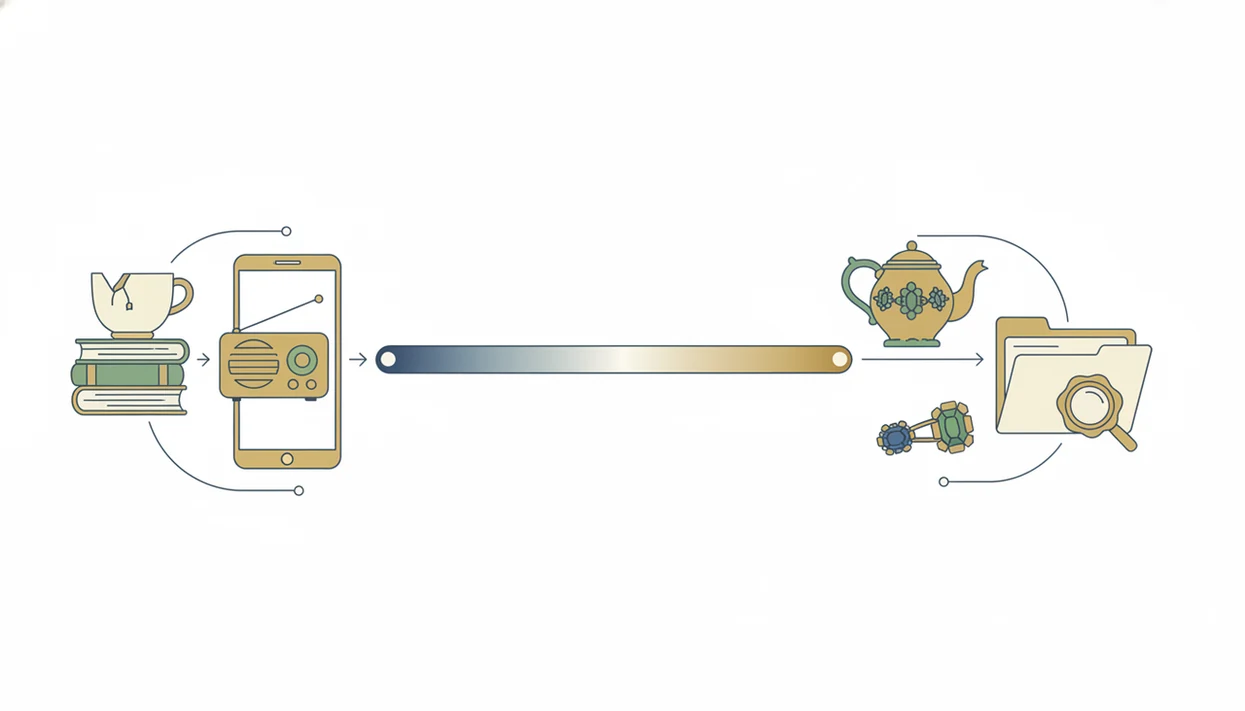
Trust an antique worth app for garage-sale triage, thrift screening, casual curiosity, and low-stakes resale decisions. Hire an appraiser when the outcome affects taxes, insurance, estate division, donation paperwork, or a potentially high-value sale.
Decision Tree: App, Online Expert, or USPAP Appraisal
Use TIQ when you need a fast range for common pottery, glassware, furniture, jewelry, or household vintage. Use a low-cost online expert opinion when the app flags a rare maker, unusual material, or wide uncertainty band. Use a USPAP-compliant written appraisal when the value may affect legal or financial records.
A cedar chest with yellowed linens may contain ordinary textiles, but one labeled quilt or documented military item changes the stakes. Per IRS guidance, donations over $5,000 generally require a qualified appraisal. Insurance replacement values also need written documentation. The fuller escalation guide is covered in when to get antique appraisal.
For resellers, app screening is often safer than guessing because sold comps expose whether demand exists beyond a nice-looking listing.
What the Rough Value Range Looks Like in TIQ
TIQ shows a low-to-high estimate, then adds context such as era tag, style label, maker mark clues, and an uncertainty note. The range is meant to say “worth researching” or “probably ordinary,” not “you will receive this price.”
Condition changes the displayed range. A small chip on a vase foot, a musty smell inside a wooden box, or a poor repair can push an item below similar sold examples. Photo clarity matters too. We often turn a saucer over at the kitchen table and angle it away from ceiling glare before reading a backstamp.
If condition details are missing, TIQ may show a wider band because the comparison set has to make more assumptions.
Antique Valuation App vs. Free Price-Check Alternatives
The main difference between an antique valuation app and free alternatives is time, structure, and transparency. Free searches can work well, but only if you know the right terms and can separate sold prices from hopeful asking prices.
| Option | Strength | Weak Point | Best Use |
|---|---|---|---|
| TIQ | Combines photo ID, maker clues, and rough range | Not a certified appraisal | Fast triage and beginner research |
| Manual eBay sold-search | Free and broad | Requires search skill and category knowledge | Checking common resale items |
| Auction-house verbal estimate | Human review | Limited availability and selective interest | Better pieces with auction potential |
| Curio or AntiqSnap | Quick app-style checks | Transparency varies by database and uncertainty display | Casual comparison |
| WorthPoint or LiveAuctioneers | Deep sales records | May require more manual interpretation | Researching documented categories |
The key question is whether the result shows real sold comps or just ask-prices. The asking price vs sold price debate is where many beginner estimates go wrong.
Common Myths About Antique Worth App Accuracy
An antique worth app is useful, but four myths cause most bad decisions. First, no app gives a precise guaranteed selling price. It gives an estimate band based on similar sales and visible clues.
Second, app values are not legally valid for insurance, taxes, or estate settlements. Those uses generally need written appraisal work by a qualified human appraiser. If you are asking can an app appraise antiques, the short answer is no for formal purposes.
Third, AI apps do not formally authenticate antiques. They can flag similarities, marks, materials, and value patterns, but they cannot inspect weight, surface oxidation, restoration, provenance, or tool marks in person.
Fourth, a pricier interface is not automatically more accurate. Database depth, sold-price transparency, uncertainty language, and category fit matter more. Plain but well-supported evidence beats a glossy number.
Related TIQ Features
Value estimates work best when they are tied to the clues that usually drive them. The maker mark identification feature helps narrow hallmarks, backstamps, signatures, and labels before a range is shown. The era and style guide feature helps compare Victorian, Art Deco, Mid-Century, and other broad style signals.
The photo-based antique identification feature is the starting point for most users. A macro shot of dovetail drawer joints, for example, may be more useful than a full-room furniture photo. If you want a broader feature overview, the app that tells antique worth page explains how identification and valuation work together.
Understanding Results
Antique value estimate results are most useful when you read them as evidence-based market ranges shaped by identification confidence, condition, venue, and sold comps.
TIQ works best when
- Clear photos of the full item, underside, back, base, seams, hardware, and close-up details
- Visible maker marks, signatures, labels, hallmarks, pattern names, or serial numbers
- Objects with many comparable sold examples, such as common ceramics, glass, silverplate, watches, toys, furniture, and collectibles
- Items with honest condition photos showing chips, repairs, wear, missing parts, or restoration
- Quick triage decisions about whether to keep, sell, donate, research further, or seek a specialist
TIQ may be less accurate when
- Rare, museum-quality, one-of-a-kind, or historically important pieces with few sold comps
- Items photographed in poor lighting, from one angle, or without scale and detail shots
- Objects with hidden damage, replaced parts, undisclosed restoration, or missing provenance
- Categories where small differences change worth dramatically, such as early silver, fine art, jewelry, and signed bronzes
- Legal appraisal needs for insurance, taxes, charitable donations, divorce, probate, or estate settlement