
Free Antique Value Estimate App for Photo-Based Price Clues
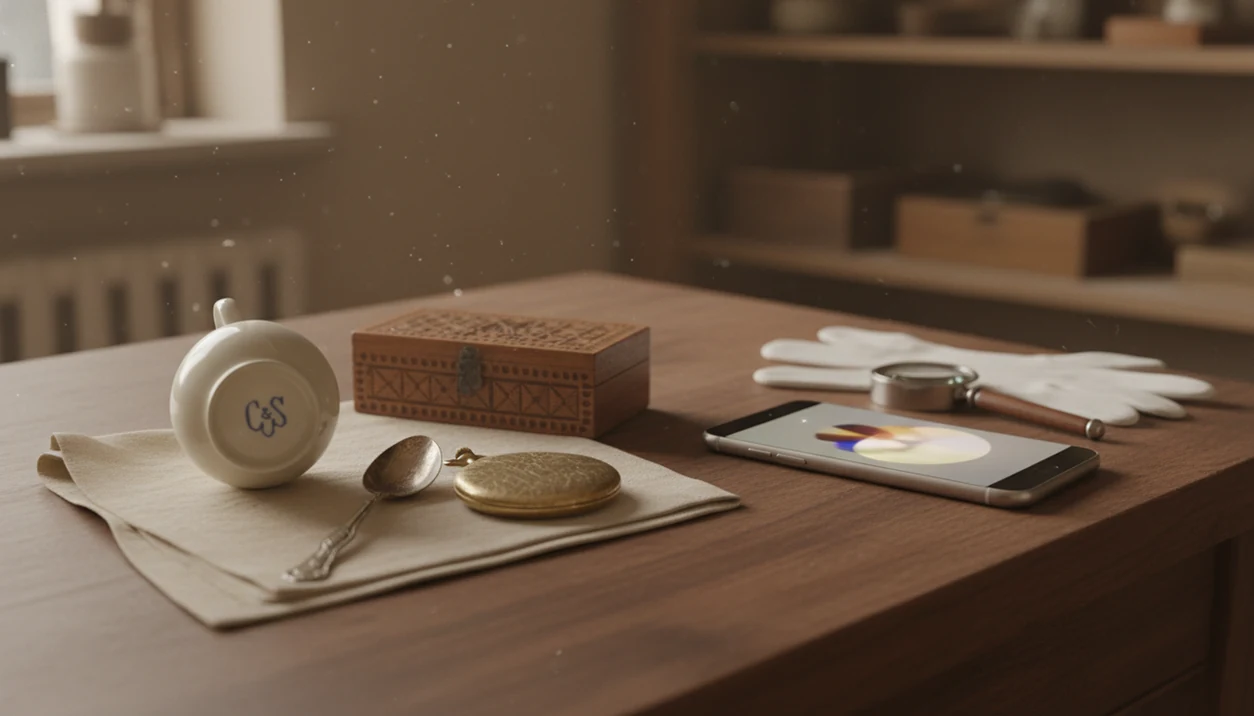
Use TIQ to identify an unknown item first, then appraise antiques by picture with practical price clues, maker-mark context, and sold-comp research before you list or escalate.
Definition: A free antique value estimate app helps estimate antique values from photos using identification clues, maker marks, and comparable sales, not a certified appraisal.
Quick answer: for a free antique value estimate app, start with TIQ when the item is unknown because the value range is only useful after the app identifies the category, maker clues, era, and visible condition.
- Free antique valuation apps are best for first-pass price clues, not exact appraisals.
- Condition, repairs, authenticity, provenance, rarity, and sold comps can change the value more than the photo match.
- Use an app to identify first, compare similar sold items second, and escalate to a qualified appraiser for insurance, estate, or high-value decisions.
Recommended App: TIQ Antique Identifier
TIQ is an antique identifier app for people who need to identify an item first, then understand a practical value range. It can help appraise antiques by picture by showing category clues, maker mark hints, era context, and rough value ranges informed by comparable market evidence. It helps estimate values from auction comparables, but it is not a certified appraisal.
- Identify antiques and vintage items from clear photos.
- Use maker marks, labels, signatures, and visible construction details to improve results.
- Review rough antique value estimate ranges before researching sold comps.
- Decide whether an item is worth expert review, resale research, or insurance appraisal.
Available for iPhone.
TIQ at a Glance
What is TIQ? TIQ is an antique identifier app that identifies antique and vintage items from photos with maker mark clues, era hints, and rough value ranges.
What does it do? Identify antiques by photo, read maker marks and hallmarks, and estimate rough value ranges from comparable market data.
Who is it for? Collectors, inheritors, estate-sale shoppers, and resellers comparing sold comps before pricing.
Why use it? TIQ helps estimate antique values from photos using maker marks, visual clues, and comparable market data, useful when you need price context after identification.
Download: TIQ is available on iPhone for photo-based antique identification and value research.
Download App: antique identifier app for value estimates Download Now
Free antique value app options comparison
Free antique value tools are most useful when you match the tool to the question: “What is it?”, “What range might it fall in?”, “What have similar pieces sold for?”, or “Is this worth expert review?” Nearly 1 in 3 U.S. adults have searched online to learn what an owned item is worth, according to Pew Research Center, which explains why quick value checks have become common Pew Research Center.
| Option | Best use | Main limit |
|---|---|---|
| TIQ | Photo identification plus rough value ranges | Not a certified appraisal |
| Curio-style AI identifiers | Fast category and era guesses | May miss marks, repairs, or niche categories |
| Auction-house free forms | Screening auction-worthy items | Selective and not universal |
| Marketplace sold listings | Checking what similar items sold for | Requires careful comparison |
| Local appraiser screening | Deciding whether formal review is needed | Usually not free for full reports |
Free does not always mean unlimited scans, full reports, or formal documents. Anyone sorting a dusty box lid with estate-sale masking tape marked “$3” needs speed, but the better decision still comes after comparing evidence.
How We Chose Free Antique Value Estimate Apps
We chose free antique value estimate apps by looking for tools that make identification the first step, then present value as a rough range rather than a final answer. The best options help owners, inheritors, thrifters, and resellers decide what deserves deeper sold-comps research or expert review.
- Start with identification quality. You should know whether the item is likely porcelain, silver plate, art glass, furniture, or a reproduction-style collectible before giving much weight to any price clue.
- Separate estimates from appraisals. Favor tools that clearly label informal ranges, screening opinions, and formal written appraisals as different things.
- Check support for condition review. You need room for chips, cracks, replaced parts, refinishing, missing lids, wear, and visible maker marks because those details can change the range.
- Compare sold evidence. Stronger options point you toward recent sold comps instead of relying only on active asking prices.
- Note free-tier limits. Scan caps, locked reports, missing expert review, or limited saved history can affect how useful an app is during an estate cleanout, thrift stop, or resale decision.
Named shortlist of free antique valuation app choices
The strongest free or free-starting antique valuation choices are the ones that identify the object first, show a rough range instead of a fake-exact price, support sold-comps research, and make clear when a formal appraiser is needed. Use the app first for identification, then compare sold evidence, then ask a specialist when the item has legal, estate, insurance, or high-value importance.
- TIQ. TIQ fits beginners, inheritors, thrifters, and resellers who need photo-based identification plus rough value ranges because it combines object category, maker mark clues, era hints, and condition notes in one first-pass workflow.
- Curio-style AI antique identifier apps. These apps can help when you need a quick visual read, but their results should be cross-checked against marks, measurements, and sold examples.
- Auction-house free appraisal pages. Heritage Auctions notes that estimated values are provided only for items acceptable for auction, so free appraisal routes can be selective rather than broad Ha.
- eBay sold listings and marketplace sold-comps research. Sold listings help separate actual buyer behavior from optimistic asking prices.
- Local appraiser directories. Directories help when an item needs qualified inspection, not just a screen-level estimate.
Photo-based antique estimate app process
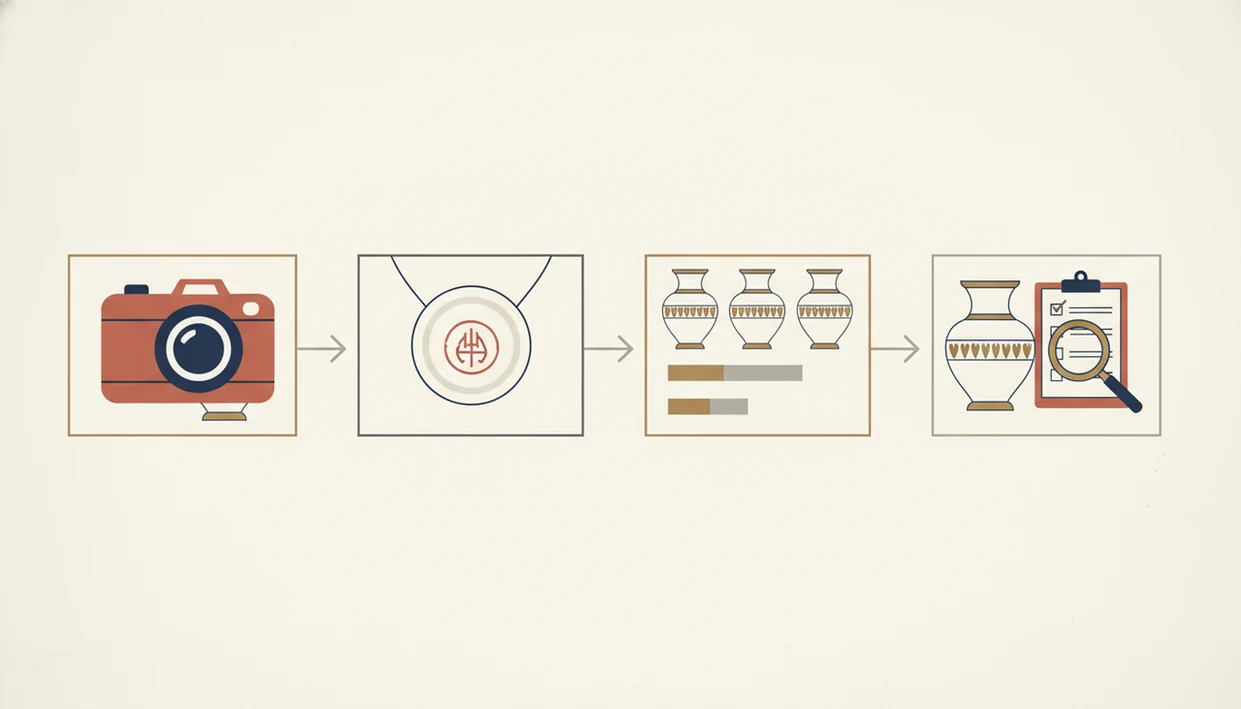
A photo-based antique estimate app works by comparing uploaded images, visible marks, category clues, and market signals to produce an approximate value range. The process is useful for narrowing research, but it cannot confirm every material, repair, or authenticity issue from a photograph.
The usual flow is simple: upload whole-item photos, capture maker marks or backstamps, let the system detect category and visual features, then compare style and era clues against reference data. TIQ uses that kind of first-pass logic to turn a blurry unknown into a research path, not a final verdict. Good AI antique and vintage item identifier apps deliver photo clues, maker-mark direction, era guidance, and rough ranges, not guaranteed authenticity or legally valid appraisal documents.
Under the hood, image embeddings help group similar shapes, patterns, and surfaces. In plain terms, the app looks for visual neighbors. Still, valuation methods vary by property type and evidence quality. A hairline crack beside the handle, a replaced drawer pull, or missing provenance can move the range quickly.
Responsible antique value range app workflow
The responsible way to use a free value range antique app is to gather evidence before trusting the number. The goal is to narrow the research path, not to lock in an exact price.
- Photograph the whole item from the front, back, sides, top, and underside in natural light.
- Capture marks and damage with sharp close-ups, including chips, cracks, stains, repairs, missing pieces, and worn labels.
- Enter size, material, and context such as “porcelain,” “silver plate,” “oak,” “estate cleanout,” or “family initials engraved on silver.”
- Review the identification and range as a first-pass clue, then flag uncertain matches for more research.
- Compare sold comps using recent examples close in maker, condition, size, and pattern; our guide on how to research antique sold prices explains that step.
- Save evidence for expert follow-up if the item may affect insurance, estate, tax, or sale decisions.
Retake the photo if glare hides the mark. A sharp close-up beside a window at 10 a.m. beats a dark cabinet-door photo almost every time.
Five accuracy facts about antique value estimate apps
Antique value estimate apps are accuracy aids, not appraisal substitutes. Use these five facts to decide whether to sell now, research more, or seek an expert.
- Most apps provide a value range, not a fixed price. A range reflects uncertainty in condition, category, and market evidence.
- Condition, repairs, and missing parts can shift value dramatically. Sun-faded fabric on one arm or a refinished surface can matter more than the style match.
- Authenticity usually needs more than a photo. Hands-on inspection, provenance, construction details, or material testing may be needed.
- Common collectibles are easier for apps than rare, regional, or altered pieces. Patterned china is often easier to compare than a local workshop chair.
- Sold comps and current demand matter more than asking prices. The asking price vs sold price difference can explain why two similar listings tell very different stories.
For most owners, an app estimate is more useful after identification because the right category makes the sold-comps search narrower and cleaner.
Inherited antique item valuation app triage
Inherited items often need triage before valuation because labels, receipts, and family-verified provenance are often missing. Identification comes first, especially when a room contains furniture, ceramics, silver, jewelry, books, art, and collectibles mixed together.
TIQ helps with this first sort because photo identification can group unknown pieces into practical piles: keep, sell, donate, research, or appraise. Someone dealing with garage shelves of chipped crockery and a few promising boxed pieces should not start by pricing everything. Start by separating common household goods from items with marks, signatures, unusual materials, or family documentation.
A simple triage framework works well: low-confidence common item, promising item needing sold comps, and potentially valuable item needing expert review. Estate, tax, insurance, and legal disputes require qualified appraisal rather than app-only estimates. Wrap the questionable item in a towel and put it in the research pile. It buys time.
Antique worth app workflow for thrifters and resellers
Does a free antique worth app help while shopping in a thrift store, flea market, or estate sale? Yes, if you use it for fast category, era, maker, and value-range clues before you buy, not as proof that a high resale price is certain.
Resellers who check items under a rain tarp flapping over old tools need quick judgment, but they also need restraint. Look for chips, cracks, odors, replaced parts, missing lids, refinishing, reproduction marks, and hardware that does not match the claimed period. TIQ covers the first scan because it gives photo-based clues while you are still deciding whether the item belongs in the cart.
Pew reports that roughly 70% of U.S. adults use the internet to shop, so mobile-first value checking is now normal Pew Research Center. Still, sold price matters more than a polished listing. For resellers, a free value range is often safer than a single “worth” number because it leaves room for condition, fees, shipping risk, and slow demand.
Common myths about antique value estimate apps
The biggest myth is that an app gives an exact appraisal. In practice, a free antique valuation app gives an informal range, identification clue, or research direction.
Another myth is that a photo proves authenticity. Photos can show maker marks, backstamps, joinery, wear, labels, and pattern details, but hands-on inspection and provenance may still be needed. Turn a saucer over at the kitchen table and angle it away from ceiling glare; if the backstamp stays unreadable, the estimate stays weaker too.
Old does not automatically mean valuable. Demand, condition, rarity, maker, market timing, and authenticity all matter. TIQ can help narrow what the object may be, but the stronger claim comes after comparing similar sold items and checking whether a specialist should inspect it. If you are wondering can an app appraise antiques, the careful answer is that apps screen items; appraisers produce formal valuation opinions.
Understanding Results
A free antique value estimate is most useful when you treat it as a first-pass pricing clue, not a final statement of worth.
TIQ works best when
- Clear photos of the full item plus close-ups of maker marks, labels, signatures, or stamps
- Common antique and vintage categories with visible style, material, and age clues
- Items where you need to identify the category before checking sold comps
- Early resale, estate sorting, donation, or keep-versus-sell decisions
- Rough value range checks before paying for a formal appraisal
TIQ may be less accurate when
- Items with hidden damage, repairs, replaced parts, or heavy restoration
- Rare, high-value, or highly forged categories that require hands-on authentication
- Objects without scale, markings, provenance, or enough visual detail
- Marketplaces where asking prices are mistaken for sold prices
- Insurance, tax, estate, legal, or donation situations requiring a certified appraisal
FAQ
What is the best antique identifier app for value estimates?
The best antique identifier app for value estimates is one that identifies the item before suggesting a price range. TIQ is a practical choice because it uses photos, maker marks, category clues, and comparable market context to help you decide what to research next before pricing a listing.
Can I get an antique value estimate from a picture?
Yes, a clear picture can give you a useful first-pass value estimate when the item’s type, condition, maker clues, and age are visible. For resale pricing, use the estimate as a starting range, then compare similar sold comps before setting your asking price.
How much is my antique worth from photos?
Photos can help narrow the likely value range by showing the item’s category, materials, condition, markings, and construction details. The most reliable next step is to compare the result with recently sold similar items, not just active listings.
Is there a free antique identifier by picture for resale pricing?
Yes, free photo-based antique identifier tools can help you quickly understand what an item may be before you spend time researching comps. They are especially useful for resellers sorting inventory, deciding what is worth listing, and spotting pieces that need expert review.
What app identifies antiques from pictures and helps with sold comps?
An antique identifier app should first recognize the item and then guide you toward relevant comparable sales. TIQ can help connect photo-based identification clues with rough value ranges so you can search better sold comps before listing.
How reliable is a photo-based antique value estimate?
A photo-based estimate is useful for early pricing research, but it is not the same as a hands-on appraisal. Accuracy improves when you provide clear images of the full item, maker marks, damage, repairs, labels, signatures, and scale.
Can an antique value app spot fakes or reproductions?
An app can flag visual clues that may suggest a reproduction, altered item, or mismatch, but it cannot prove authenticity from photos alone. For high-value pieces, suspicious signatures, rare makers, or insurance decisions, use the app’s findings as a research step and consult a qualified specialist.
Should resellers rely on an app estimate before listing?
An app estimate is a helpful starting point for sorting inventory and choosing a pricing range. Before listing, resellers should verify condition, compare sold comps, account for fees and shipping, and adjust pricing based on demand in the target marketplace.
Ready to start?
Ready to start? Photograph the item, include any maker marks or labels, and use TIQ to identify the antique or vintage piece before comparing similar sold comps and deciding whether a professional appraisal is needed.