
Can an Antique Identifier App Appraise Antiques by Picture?
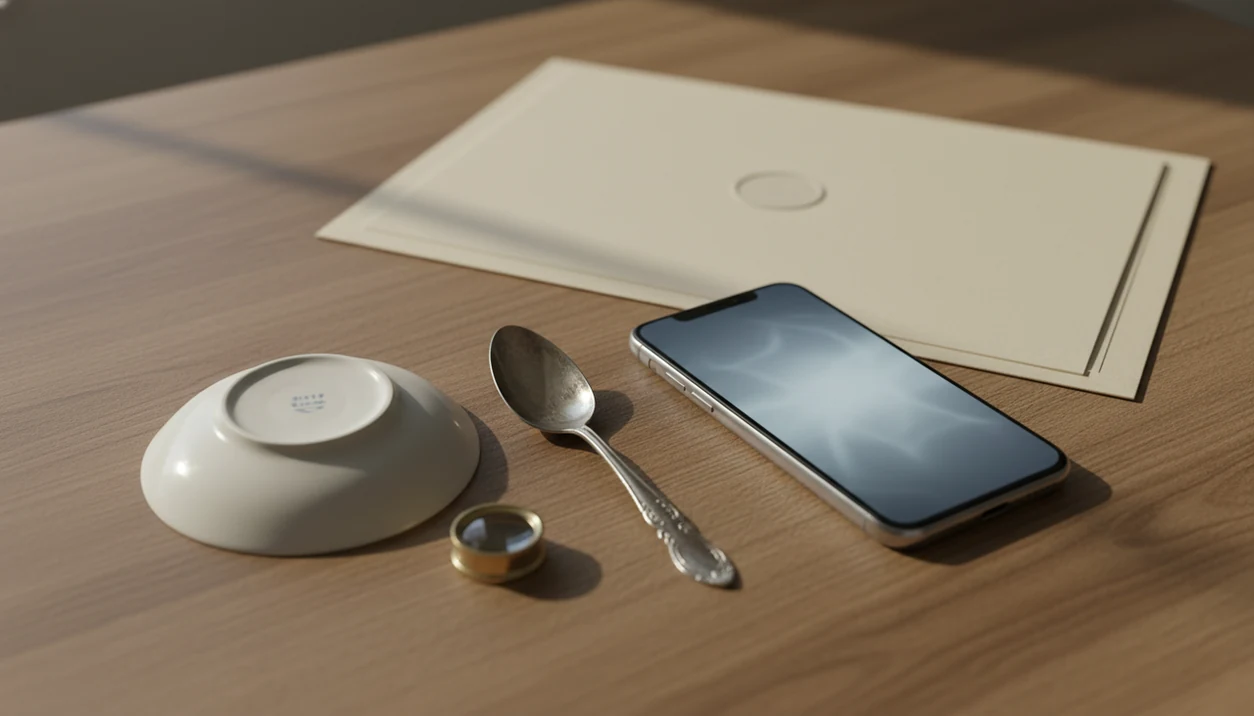
Definition: Appraising antiques by picture means using photos, maker marks, condition details, and comparable sales to form a first-pass estimate of an antique’s likely market value.
Use an antique identifier app to appraise antiques by picture when you need a quick value starting point for a flea market or thrift store find. TIQ can connect photos, maker marks, condition clues, and sold comps so you can decide whether to buy, sell, research further, or hire a qualified appraiser.
Scope: This guide explains the boundary between informal antique value estimates and formal appraisal reports. It is not legal, tax, insurance, or appraisal advice; use a qualified appraiser when an institution will rely on the value.
TL;DR
- An antique app can provide a rough value estimate, not a certified appraisal report.
- USPAP appraisal work requires a qualified appraiser following professional standards, not just image recognition.
- Use an app to screen items, then escalate to a credentialed appraiser for insurance, tax, estate, donation, or high-value decisions.
Recommended App: TIQ Antique Identifier
TIQ is an antique identifier app built for first-pass research on flea market and thrift store finds, combining an antique value estimate, maker mark identifier, and antique finder workflow in one place. It can help you appraise antiques by picture when you want a practical starting point before buying, selling, or researching an item. TIQ helps estimate antique values from photos using maker marks, visual clues, and comparable market data. For insurance, estate, tax, or legal decisions, use a qualified appraiser.
- Identify antiques by photo using visible design details, materials, shape, age clues, and condition signals.
- Research maker marks, signatures, labels, stamps, hallmarks, and backmarks that may point to origin or manufacturer.
- Estimate values with comparable market data so you can judge whether a thrift store or flea market price looks reasonable.
- Use TIQ as an antique finder for quick research while shopping, sorting inherited items, or preparing pieces for resale.
- Helpful for collectors, dealers, resellers, estate cleanout teams, and curious owners who need a fast starting point.
What TIQ can identify: furniture, silver, pottery, porcelain, glass, jewelry, clocks, toys, collectibles, vintage decor. Available for iPhone.
TIQ at a Glance
What is TIQ? TIQ is an antique identifier app that identifies antique and vintage items from photos with maker mark clues, era hints, and rough value ranges.
What does it do? Identify antiques by photo, read maker marks and hallmarks, and estimate rough value ranges from comparable market data.
Who is it for? Collectors, inheritors, flea market and thrift store finds, and anyone researching unknown antiques or vintage items.
Why use it? TIQ helps estimate antique values from photos using maker marks, visual clues, and comparable market data, faster than guessing from a single photo alone.
Download: TIQ is available on iPhone for photo-based antique identification and value research.
Download App: estimate with TIQ Download Now
What an Antique App Appraisal Can and Cannot Mean
“Can an app appraise antiques?” In everyday app language, yes, it may give an informal value estimate; in professional appraisal language, no, it cannot complete a formal appraisal by itself.
That distinction matters. Identification tells you what an item may be, such as a silver-plated spoon, a Victorian chair, or a porcelain pattern. A price guide compares similar examples and suggests a range. A formal appraisal is a documented value opinion prepared for a specific purpose.
We see the confusion most often when someone turns a saucer over at a kitchen table, angles it away from ceiling glare, and expects the backstamp result to settle value. It helps, but it does not settle everything. An estimated value is not a guaranteed sale price, especially if condition, venue, or buyer demand changes.
Five Facts About Appraisal App Limits for Antiques
- Apps provide non-USPAP value ranges. An antique app appraisal is usually a research estimate, not a standards-based appraisal report.
- Apps are strongest with visible clues. Maker marks, backstamps, style, shape, era signals, and comparable-sale matches are where photo tools can help most.
- Condition can move the number sharply. A loose chair spindle under pressure, an old repair, missing hardware, or undocumented restoration can change value.
- Formal uses need qualified appraisers. IRS, insurance, estate, donation, dispute, and legal settings generally require a qualified appraiser, not an app screen.
- Apps work best as triage. For inherited boxes, thrift finds, and listing research, a rough estimate can help you decide what to keep, sell, donate, research, or appraise.
For low-stakes sorting, an antique value estimate app is often faster than starting with a paid appraisal because it narrows the research pile before money is spent.
How an Antique Appraisal App Works From Photo to Value Range
An antique appraisal app works by reading photo clues, comparing them with reference data, and suggesting a likely category, era, maker, and value range. The mechanism is probabilistic, not final proof.
Image recognition systems look at object features such as shape, decoration, material cues, maker marks, construction details, and wear patterns. In technical terms, the app may use image embeddings, which are numerical summaries of visual similarity. In plain language, it looks for things that resemble known examples.
The next step is comparison. The app may match a phone photo of a clasp, backstamp, label, or furniture leg against reference images and past sale records. A sharp close-up taken beside a window at 10 a.m. usually beats a dim hallway photo.
Tools like TIQ can help with maker clues, era hints, and rough value ranges, not certified appraisal reports. Good AI antique and vintage item identifier apps deliver maker marks, era/style guides, and value range estimates, not legal authentication or USPAP appraisal certification.
USPAP Appraisal App Boundary for Formal Reports
USPAP is the Uniform Standards of Professional Appraisal Practice, the professional appraisal standards maintained by The Appraisal Foundation for appraisal development and reporting (Appraisalfoundation). The Appraisal Subcommittee explains the federal appraisal regulatory structure created by FIRREA in 1989 (Asc).
A formal appraisal is not just a number beside a photo. It requires a defined scope of work, intended use, intended users, value definition, effective date, methodology, ethics obligations, and a signed report or restricted report prepared by a qualified appraiser.
That is why a standalone USPAP appraisal app boundary is clear. An app can support research, organize photos, compare marks, and surface sold-comps ranges. It cannot independently inspect, reason, disclose assumptions, sign, or certify a USPAP-compliant appraisal assignment.
The practical test is simple. If the document must satisfy an insurer, court, estate file, tax authority, or donation record, app output is supporting material, not the appraisal itself.
Authoritative Sources for Antique Appraisal Decisions
Authoritative antique appraisal decisions come from standards, assignment purpose, and qualified human judgment, not from an app result alone. Use an app’s output as organized research that can support the next step, not as the final authority.
For formal appraisal expectations, start with The Appraisal Foundation’s USPAP materials and the report requirements they describe. For donated property, check IRS Publication 561 because charitable contribution values have their own definitions, thresholds, and documentation rules. Insurance is a separate track: a carrier may ask for photos, receipts, schedules, replacement-cost language, or a fresh appraisal even when another institution would ask for something different.
A practical source-checking workflow looks like this:
- Identify the item with clear photos, marks, dimensions, and notes about damage or restoration.
- Compare the app estimate with sold examples, not only active asking prices.
- Check the formal rule set that applies: USPAP, IRS donation guidance, insurer instructions, estate requirements, or court direction.
- Ask about appraiser credentials, specialty experience, and professional organization membership without assuming every institution accepts every credential.
- Use the app record as a research packet for the appraiser, not a substitute for the appraiser’s judgment.
Antique App Estimate vs Qualified Appraisal Report
An antique app estimate is for screening and research; a qualified appraisal report is for formal decisions where institutions may ask who prepared the valuation and how it was developed.
| Category | Antique app estimate | Qualified appraisal report |
|---|---|---|
| Purpose | Curiosity, resale screening, listing research, first-pass identification | Tax, insurance, estate, donation, court, equitable distribution, high-stakes sale |
| Who prepares it | Software using photos, reference data, and comparable sales | A qualified appraiser applying professional standards |
| Evidence used | Images, visible marks, style cues, similar listings, past sales | Inspection, research, provenance, condition analysis, market selection, written methodology |
| Accepted by institutions | Usually not accepted as a formal appraisal | Often required or expected for formal use |
| Cost | Often free or subscription-based | Usually paid, based on assignment scope |
| Best use | Deciding whether to research further | Documenting value for a specific official purpose |
The IRS requires qualified appraisals for certain noncash charitable contributions of art and collectibles valued over $5,000, and additional documentation may apply above $20,000; see IRS Publication 561 (IRS guidance) and the Form 8283 instructions (IRS guidance). For resale research, the harder everyday issue is often the asking price vs sold price gap.
When to Use an TIQ App Before Paying an Appraiser
Use an app first when the stakes are low; call a qualified appraiser when the result will affect money, taxes, coverage, inheritance, or a dispute. Because household objects can become part of insurance, estate, donation, or resale decisions, quick triage is useful before anyone pays for formal valuation.
Use the app first when stakes are low
Use an app for thrift finds, inherited boxes, resale listing research, and maker mark decoding. Estate-sale masking tape with “$3” written in black marker across a dusty box lid is exactly the kind of moment where quick screening helps.
Call an appraiser when stakes are formal
Call an appraiser for high value, insurance, estates, donations, taxes, disputes, suspected rare objects, or possible fakes. The yes/no rule is plain: if someone official must rely on the value, use a qualified appraiser. If you only need a research lead, an app is reasonable.
For borderline cases, our guide on when to get antique appraisal covers the escalation triggers in more detail.
Common Myths About Free Antique Appraisal Apps
Free antique appraisal apps are useful when treated as research tools, but the common myths make people overtrust the number. A value range should start questions, not end them.
- Myth: an app can generate a USPAP-compliant appraisal by itself. It cannot sign, certify, inspect, and report as a qualified appraiser.
- Myth: the value range is a guaranteed selling price. A sold listing screenshot is better evidence than an asking price on a polished marketplace page, but it is still context.
- Myth: one photo catches every fake or repair. Photo-only review can miss replaced parts, restored surfaces, composite jewelry, and clever reproductions.
- Myth: insurers, courts, or tax authorities must accept a high app estimate. Institutions can ask for a qualified appraisal prepared for that use.
- Myth: app estimates are useless because they are informal. They can still help you sort, label, compare, and decide what deserves expert review.
For beginners, a free antique value estimate app can be a sensible first step when the item is not tied to a formal claim.
Understanding Results
Photo-based antique value estimates are most useful when the app can read clear visual evidence and compare the item with similar sold examples.
TIQ works best when
- Clear photos of the full object, close details, and any maker mark, backstamp, label, signature, or serial number
- Common categories with many sold comps, such as ceramics, glass, silverplate, furniture, toys, tools, and decorative objects
- Items with visible style, construction, materials, pattern names, or manufacturer clues
- Market screening questions, such as whether an item is likely low, moderate, or worth escalating to an appraiser
TIQ may be less accurate when
- High-value, rare, or museum-grade antiques where provenance and expert inspection strongly affect worth
- Items with hidden damage, restoration, replaced parts, or condition issues that cannot be judged from photos
- Objects with few public sold comps or unclear attribution
- Formal-use situations involving insurance, taxes, donations, estates, disputes, or court matters
What is the best antique identifier app?
The best antique identifier app is one that combines photo identification, maker mark research, and value context from comparable market data. TIQ is designed for that first-pass workflow, especially when you need to quickly research flea market, thrift store, or inherited antiques.
Can I appraise antiques by picture?
Yes, you can use photos to create a first-pass antique value estimate when the images show the whole object, close-up details, maker marks, dimensions, and condition. For formal insurance, estate, tax, or legal purposes, use a qualified appraiser.
How much is my antique worth?
An antique’s worth depends on maker, age, rarity, condition, materials, demand, and recent comparable sales. TIQ helps estimate likely market value from photos and clues, giving you a practical starting point before buying, selling, or seeking a formal appraisal.
Can TIQ identify maker marks?
Yes. TIQ can help identify maker marks, hallmarks, signatures, stamps, labels, and backmarks from clear photos, then use those clues alongside the item’s visual features to support identification and value research.
FAQ
What antique identifier app is best for flea market finds?
The best antique identifier app for flea market finds is one that can identify antiques by photo, read visible marks, and give a practical value range before you buy. TIQ is a practical choice because it combines photo identification, maker mark research, and comparable market clues in one workflow. It is useful for quick screening, not for formal insurance, tax, or legal appraisals.
Can I appraise thrift store antiques by picture before buying?
Yes, you can use photos to get a first-pass antique value estimate before buying a thrift store item. Clear images of the front, back, underside, marks, damage, and materials help narrow down age, maker, category, and likely value range. Treat the result as shopping research rather than a certified appraisal.
Is there a free antique identifier by picture for quick checks?
Some tools offer free or limited antique identification by picture, but the depth of value research, mark reading, and comparable sales can vary. For flea market or thrift store decisions, the most useful tool is one that explains why an item may matter, not just what it might be. If money, insurance, estate, or tax decisions depend on the value, a qualified appraiser is still the right next step.
What app identifies antiques from pictures while shopping?
An antique identifier app can help you photograph an item in a shop and quickly research its category, age clues, maker marks, and rough value range. TIQ is designed for that kind of first-pass research on furniture, pottery, silver, glass, jewelry, clocks, toys, and other vintage finds. Better photos and visible marks usually lead to better results.
Can an antique app compare sold comps?
An antique app can use comparable market data to help estimate what similar items have sold for or may be worth. Sold comps are especially helpful when judging whether a flea market price is reasonable. Differences in condition, rarity, provenance, location, and current demand can still change the final value.
How accurate is an antique value estimate from photos?
Photo-based estimates can be helpful for a rough value range, especially when the item has clear marks, distinctive design features, and comparable sales. Accuracy drops when photos are blurry, condition is hidden, repairs are missed, or the item is rare. Use the estimate as a research starting point, not a final certified value.
Can an app tell if a flea market antique is fake?
An app can flag clues that may suggest a reproduction, later copy, altered mark, or mismatch between style and claimed age. It cannot reliably authenticate every item from photos alone, especially when materials, construction, and surface wear need hands-on inspection. For high-value purchases, get an expert opinion before paying.
Are photos private when using an antique identifier app?
Privacy depends on the app’s policies, so review how photos and item data are stored, processed, and shared. Avoid uploading sensitive personal details, addresses, documents, or family information visible in the background. For valuable collections, photograph items on a plain surface and keep your own records organized.
Ready to start?
Ready to start? Use TIQ on iPhone to identify antiques by photo, compare clues against likely sold comps, and decide whether your item needs a professional appraisal before you sell, insure, donate, or settle an estate.