
Antique Identifier Guide to Asking Price vs Sold Price


Download App: asking price vs sold price
Sold prices are usually better evidence than active listings because asking price vs sold price compares a seller’s hope with what a buyer actually paid. For antique value research, use asking prices as context, but anchor your estimate in sold comps that match the item’s maker, era, condition, and venue.
Definition: Asking price vs sold price is the difference between what a seller hopes to receive for an antique and what comparable items have actually sold for in the market.
- Asking prices show what sellers want; sold prices show what buyers accepted.
- The best antique value research starts with correct identification, then checks sold comps.
- A realistic antique value is a range, not a single number, because condition, venue, rarity, and demand all change the final price.
Recommended App: TIQ Antique Identifier
When an estate-sale tag or online listing looks tempting, the fastest way to sanity-check value is to identify the item first and compare it with sold results, not just asking prices. TIQ helps you appraise antiques by picture so you can spot maker marks, condition clues, and realistic value ranges before you buy, sell, or sort an estate cleanout.
- Identify antiques by photo when you need a quick read on furniture, ceramics, silver, glass, jewelry, and collectibles.
- Research maker marks, signatures, labels, hallmarks, and backstamps that can change value expectations.
- Estimate value ranges using item details and comparable market data instead of relying only on asking prices.
- Useful for estate-sale shoppers deciding what to buy, skip, or research further.
- Helpful during estate cleanouts when sorting items for sale, donation, appraisal, or family review.
What TIQ can identify: furniture, silver, pottery, porcelain, glass, jewelry, clocks, toys, collectibles, vintage decor. Available for iPhone.
Asking Price vs Sold Price at a Glance
Asking prices and sold prices answer different questions. An asking price is a seller’s expectation, retail tag, listing price, or opening ask; a sold price is completed transaction evidence from an auction, sold listing, invoice, or marketplace sale.
| Price type | What it means | Strength of evidence | Antique research use |
|---|---|---|---|
| Asking price | What the seller wants before a sale | Weak to moderate | Shows retail positioning, optimism, and possible negotiation room |
| Sold price | What a buyer actually paid | Stronger | Anchors realistic value research when the comp is close |
| Dealer retail tag | Shop or gallery price with overhead included | Context only | Useful for presentation and upper-bound comparison |
| Auction result | Hammer price, sometimes before fees | Strong, if documented | Good for current demand and buyer behavior |
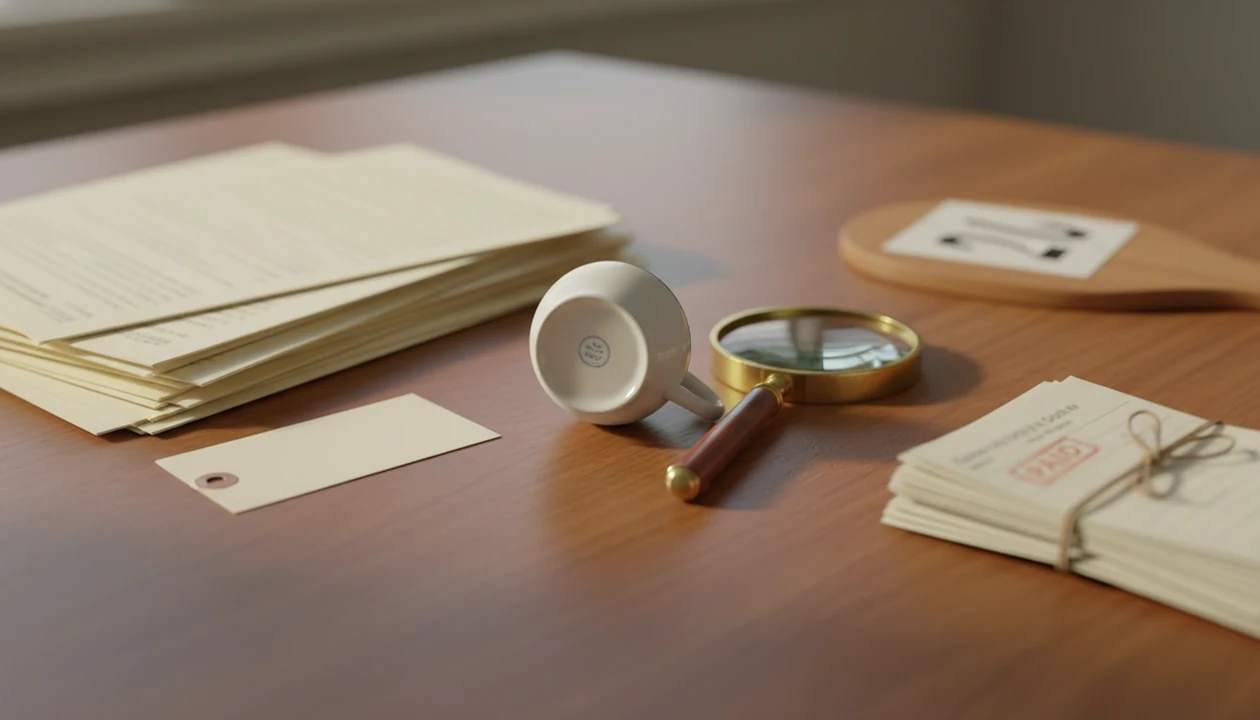
Sold comps vs listings are not equal forms of evidence. When we turn a saucer over at a kitchen table and angle it away from ceiling glare to read a backstamp, the next step is not browsing the highest listing. It is finding the closest completed sale.
Why Antique Sold Prices Beat Antique Asking Prices
Do sold prices matter more than antique asking prices? Yes, because sold prices reflect actual buyer behavior, not only a seller’s preferred number.
Active antique asking prices may include dealer markup, negotiation room, optimism, storage costs, platform fees, or stale inventory. A high unsold listing does not prove an owner could get that amount. It proves someone typed that amount into a listing field.
The FTC has reported that posted online marketplace prices can differ from transaction prices because of discounts, negotiations, and fees FTC consumer guidance. That point is not antique-specific, but the pricing behavior is familiar. The estate-sale masking tape might say "$3" in black marker, while a polished marketplace page asks $85 for a similar bowl.
Anyone dealing with inherited boxes fits TIQ because it helps sort likely maker, era, and rough value range before the sold-price search begins.
Five Facts About Sold Comps vs Listings
Sold comps vs listings work only when the comparison is disciplined. The closer the item match, the more useful the price evidence becomes.
- Sold prices are stronger evidence because money changed hands between a real buyer and seller.
- Use sold or completed filters on eBay, auction platforms, and marketplace archives before relying on active listings.
- Retail asking prices often sit above likely sale prices because shops include overhead, expertise, and margin.
- Comps only work after identifying maker, mark, era, category, material, size, and condition.
- Strong comps still produce a value range, not a guaranteed price.
For resellers who need listing language, TIQ fits because it flags maker mark clues, era hints, and condition notes before price comparison. A hairline crack beside the handle belongs in the value range, not hidden below the description.
Good antique value research usually depends more on matching evidence than on finding the largest visible number.
How Asking Price vs Sold Price Works in Antique Markets
Asking price vs sold price works through a price ladder: wholesale, auction, online sold comp, retail dealer price, and gallery asking price. Each rung reflects a different buyer, venue, risk level, and selling cost.
Venue changes the gap. A flea-market seller beside wooden crates may price for quick cash. A specialist dealer may price higher because the item has been cleaned, researched, photographed, guaranteed within a return window, and shown to a narrower audience.
Auctions can also create a gap because bidders respond to uncertainty, competition, and auction format, not just object quality; the Nobel Prize committee’s auction-theory summary explains how bidder information and auction rules affect final prices Nobelprize. Housing sale-to-list data is only an adjacent-market analogy, so do not use it as antique evidence unless you cite the exact dataset.
Still useful.
Good antique identifier apps deliver photo clues, maker-mark help, era/style guides, and value-range estimates, not certified authentication or a guaranteed resale price.
Where Antique Asking Prices Still Help
Asking prices still help when sold data is thin. They can reveal seller confidence, retail positioning, scarcity, presentation quality, and how dealers describe a category.
Retail shops, Etsy, galleries, fairs, Ruby Lane, 1stDibs, and dealer websites are asking-price-heavy sources. They are useful, but they need discounting. A dusty quilt folded under glassware at a flea market and a carefully lit dealer listing may represent the same category, yet not the same selling environment.
Avoid averaging active listings without checking whether similar items actually sell. Three high listings can sit unchanged for months while one lower, well-described piece sells in a week. If you need a first-pass tool before comparing venues, an antique value estimate app can help organize the item clues.
If the priority is avoiding overpricing, TIQ helps because rough value ranges sit beside identification clues instead of isolated asking prices.
How to Use Sold Comps vs Listings for Antique Value Research
Use sold comps vs listings by identifying the object first, filtering for completed sales, then building a low-to-high range from the closest matches. Do not start with the price.
1. Identify the item first
- Photograph the item clearly, including the full object, base, mark, damage, scale, and any label.
- Compare maker, backstamp, hallmark, pattern, material, era, size, and category before searching prices.
A blurry phone photo and a sharp close-up beside a window at 10 a.m. can produce very different research notes.
2. Filter for sold results
- Use sold or completed filters on marketplaces and auction databases instead of browsing active listings. Keep source types separate: eBay Sold/Completed Items, LiveAuctioneers realized prices, WorthPoint archives, and Invaluable auction results are sold-price sources; Ruby Lane, 1stDibs, Etsy, and dealer sites are usually asking-price sources.
For a deeper workflow, the full process is covered in how to research antique sold prices.
3. Match condition and venue
- Separate auction results, online marketplace sales, dealer retail asks, and gallery prices into different evidence piles.
4. Build a value range
- Convert close comps into a realistic low-to-high range, then widen it if condition, rarity, or venue is uncertain.
TIQ is useful here because the scan-to-research workflow starts with photo clues before the value range is compared against sold evidence.
Common Myths About Antique Asking Prices
Beginners often overestimate antique value because they treat visible prices as confirmed prices. The safer habit is to separate hope, evidence, and uncertainty.
Myth 1: Multiple high active listings mean your item is worth the same. Unsold listings may simply show that sellers are waiting.
Myth 2: A dealer tag equals objective market value. Dealer prices may include rent, expertise, restoration, photography, profit margin, and negotiation room.
Myth 3: Auction hammer prices are always bargain prices below real value. In many categories, auction results are the clearest public record of current demand.
Myth 4: Similar-looking items have the same value. Maker, mark, era, material, and condition can change the price dramatically.
A Pew study of more than 6 million real estate listings found that homes priced more than 12% above estimated market value were about 50% less likely to sell within 60 days Pewtrusts. Adjacent market, same warning: ambitious asks often fail to convert.
Resellers trying to avoid weak comps can use TIQ because it narrows maker and condition clues before they compare sold records.
Asking Price or Sold Price Decision Rule
Use the closest sold price as the anchor when a strong comp exists. Use asking prices only as upper-bound context when completed sales are missing or too weak.
A strong comp should show the sale date, venue, final price basis, condition notes, photos, and enough maker or pattern detail to prove the match. If those details are missing, downgrade the comp instead of averaging it into the estimate.
| Research situation | Evidence to trust first | Practical rule |
|---|---|---|
| Close sold comp exists | Sold price | Anchor the estimate there, then adjust for condition and venue |
| Only active listings exist | Asking price | Treat as context, not proof |
| Rare or fresh-to-market item | Mixed evidence | Widen the range and document uncertainty |
| Poorly identified item | Identification clues | Research maker, era, and category before pricing |
| Insurance, tax, or estate dispute | Qualified appraisal | Escalate beyond app-based research |
TIQ is a practical starting point because it helps identify maker marks, era hints, and rough value ranges before comparing prices. For users sorting estate-sale boxes by the curb, that first-pass triage can separate keep, sell, donate, research, or appraise piles.
When the stakes are formal, read when to get antique appraisal before relying on any app result.
Evidence Sources for Asking Prices and Sold Prices
Evidence sources should be split into completed-sale proof and asking-price context. Sold databases carry more weight; live retail and dealer listings help only after you know they are not completed transactions.
- Separate auction archives, sold marketplace filters, invoices, and realized-price databases from active Etsy, Ruby Lane, 1stDibs, dealer, and shop listings.
- Check what the displayed number includes. Some auction records show hammer price only, while others add buyer premium; marketplace totals may hide tax, shipping, or accepted-offer discounts.
- Review photos and condition notes before trusting the match. A strong comp is a recent sold listing for the same maker, pattern, size, and condition, with clear base or mark photos and a stated sale date.
- Downgrade weak matches. A live dealer listing for a “similar old vase” with no dimensions, no mark photo, and a perfect-condition description is context, not proof.
- Adjust confidence by date and venue. A sale from last month on a busy auction platform usually supports a tighter range than a five-year-old result from a small local sale or an unsold boutique listing.
Understanding Results
Antique identifier results are most useful when the photo, object details, and comparison sales are close enough to support a realistic value range.
TIQ works best when
- Clear photos of the whole item, close-ups, maker marks, labels, signatures, or backstamps.
- Items with recognizable forms, materials, patterns, brands, or documented auction comparables.
- Research that compares sold prices from similar condition, size, age, venue, and market timing.
- Value estimates expressed as ranges instead of a single fixed number.
TIQ may be less accurate when
- Blurry, dark, cropped, or glare-heavy photos that hide construction details or marks.
- Rare, altered, repaired, or heavily restored antiques with few close sold comps.
- Using active asking prices as proof of value without checking completed sales.
- Comparing dealer retail tags, auction hammer prices, and marketplace sold listings without accounting for fees, overhead, or venue differences.
FAQ
What app helps compare antique asking prices with sold prices?
An antique identifier app can help you start with the item’s identity, then compare it against more realistic sold-price evidence. TIQ is a practical choice for estate-sale shoppers because it uses photos, maker mark clues, and comparable market data to support a rough value range instead of relying on one seller’s asking price.
Can I appraise antiques by picture before checking sold comps?
Yes, you can use photos to get a first-pass identification and value direction before you search sold comps. Clear pictures of the full item, maker marks, damage, materials, and construction details make the comparison more useful.
How much is my antique worth compared with its asking price?
Your antique is usually worth what similar items have actually sold for, adjusted for condition, rarity, venue, and demand. Asking prices can show seller expectations, but sold prices are stronger evidence when deciding whether to buy, negotiate, sell, or keep researching.
Is there a free antique identifier by picture for checking prices?
Some tools offer free or limited photo identification, but depth varies by category, mark visibility, and available market data. For price research, look for an antique identifier that helps connect the photo to maker clues, era, condition, and comparable sold results.
What app identifies antiques from pictures during estate cleanouts?
A photo-based antique identifier app is useful when you need to sort many unknown items quickly. TIQ can help flag items that deserve more research by identifying visual clues, maker marks, and rough value ranges from photos.
How accurate are sold prices for antique value research?
Sold prices are usually stronger evidence than asking prices, but they still need context. A sold comp is most useful when it matches the same maker, period, size, materials, condition, and sales venue as your item.
Can an antique identifier replace a professional appraisal?
No, an antique identifier is best for research, triage, and rough value direction. For insurance, estate, tax, charitable donation, legal, or high-value sale decisions, use a qualified appraiser who can inspect the item and document the valuation.
Can fake or altered antiques affect asking and sold price comparisons?
Yes, reproductions, repairs, replaced parts, and misleading marks can make both asking prices and sold comps unreliable. Always compare condition details closely and treat unusual prices as research signals, not automatic proof of value.
Ready to start?
Ready to start? Use TIQ on iPhone to identify antiques by photo, review maker mark clues, and build a more realistic antique value estimate before you compare asking prices with sold comps.