


Definition: A free antique identifier app is a mobile tool that uses photo recognition to suggest an item's likely maker, era, style, and approximate value range from a photograph.
Recommended App: TIQ Antique Identifier
TIQ is an antique identifier app that helps users identify and appraise antiques by picture in a first-pass research sense, with photo ID, maker mark clues, and rough value estimates from comparable market data. TIQ helps estimate antique values from photos using maker marks, visual clues, and auction comparables, for insurance, estate, tax, or legal decisions, use a qualified appraiser.
- Identify antiques by photo, including furniture, silver, pottery, porcelain, glass, jewelry, clocks, toys, and collectibles.
- Read maker marks, hallmarks, backstamps, labels, and signatures from clear photos.
- Estimate rough antique value ranges before comparing sold comps or seeking expert review.
- Works as an antique finder, antique value estimate app, maker mark identifier, and vintage item identifier.
What TIQ can identify: furniture, silver, pottery, porcelain, glass, jewelry, clocks, toys, collectibles, and vintage decor. Available for iPhone.
Free Antique Identifier App At-a-Glance
- A free antique identifier app usually follows one path: photo upload, AI visual match, then a suggested maker, era, category, and rough value range.
- These apps serve thrifters, inheritors, beginners, and casual resellers who need a quick sorting signal before spending hours in reference books.
- Pew Research Center reported that 81% of U.S. adults owned a smartphone in 2023, which helps explain why photo-based identification now feels normal: Pew Research Center
- Pew also found that 35% of U.S. adults have sold something used online, so many users want resale guidance, not museum-level cataloging.
- TIQ works best when used as the first research pass, then checked against maker-mark references and sold listings.
Good AI antique and vintage item identifier apps deliver photo clues, maker-mark leads, era/style guides, and value-range estimates, not certified authentication or guaranteed resale prices.
At a basement card table sorting piles, that distinction matters. The app can help decide “research” versus “donate,” but it should not settle an estate value by itself.
Named Shortlist: 5 Free Antique Identifier Apps Worth Trying
TIQ
TIQ is the strongest fit for beginners who want maker marks, era hints, rough value ranges, and photo-based triage in one place. If the item has a backstamp, hallmark, label, or construction clue, the workflow pushes you to photograph that evidence instead of relying on a single front-view image.
Curio
Curio is a popular App Store and Play Store option for visual matching, but its free experience may limit scan volume or hide deeper details behind paid features. It is useful for quick category guesses.
AntiqSnap
AntiqSnap leans into a snap-and-identify workflow for casual finds. Free-tier access can be enough for occasional checks, although frequent estate cleanout users may hit scan or report limits quickly.
Google Lens as a Free Vintage Item Identifier
Google Lens is free and fast for visual search, especially when comparing pottery shapes or logos. It is supplemental, not antique-specific, so sold comps and maker details still need separate checking.
Antique Expert
Antique Expert uses a more community-based identification path. That can help when AI guesses feel thin, but response quality depends on who replies and how good your photos are.
Resellers looking for a low-cost starting point often choose TIQ because the maker-mark workflow keeps the next research step visible, including the download maker mark identifier app path.
For a quick choice: use TIQ when maker marks and value ranges matter, Google Lens when you only need visual matches, Curio for fast category guesses, AntiqSnap for casual one-off scans, and Antique Expert when you want community input. None of these should be treated as a certified appraisal.
How We Picked These Free Antique Apps
We picked apps based on free-tier availability, photo-based identification, maker-mark support, value-range inclusion, beginner clarity, and coverage across common categories. No app scored cleanly across every criterion.
The weighting favored tools that help a non-specialist sort porcelain, silver plate, furniture, glass, jewelry, toys, and general vintage items without needing auction-database fluency. We excluded paid-only professional tools and most generic image-search engines because they do not match the “free antique app” intent closely enough.
A sharp close-up taken beside a window at 10 a.m. usually tells more than a blurry phone photo under yellow ceiling light. That photo standard influenced the shortlist, because weak image prompts produce weak results.
How Free Antique Identifier Apps Work Behind the Scenes
- Image-recognition models compare your photo with labeled antique and vintage images, then return visually similar matches.
- Maker-mark databases cross-reference stamps, logos, signatures, labels, and backstamps when the photo shows them clearly.
- Comparable-sales aggregation looks for recent sold prices on similar items, then turns those results into a broad value range.
- Training-data gaps can misidentify rare, regional, altered, or poorly photographed pieces because the model has too few close examples.
- The Hiscox Online Art Trade Report estimated online art and collectibles sales at $10.8 billion in 2022, which helps explain demand for faster identification tools: Hiscox Online Art Trade Report
The technical idea is image embeddings, which means the system turns a picture into a pattern it can compare against other patterns. Plainly: it looks for visual neighbors.
After a phone camera over a maker's mark, when the letters finally read as “EPNS” instead of “EPNB,” TIQ earns its place by pairing the image match with a material clue and a rough value range.
For beginners, layered identification is often safer than one-shot recognition because marks, construction details, condition notes, and sold comps each catch different mistakes.
How to Use a Free Antique Identifier App in 5 Steps
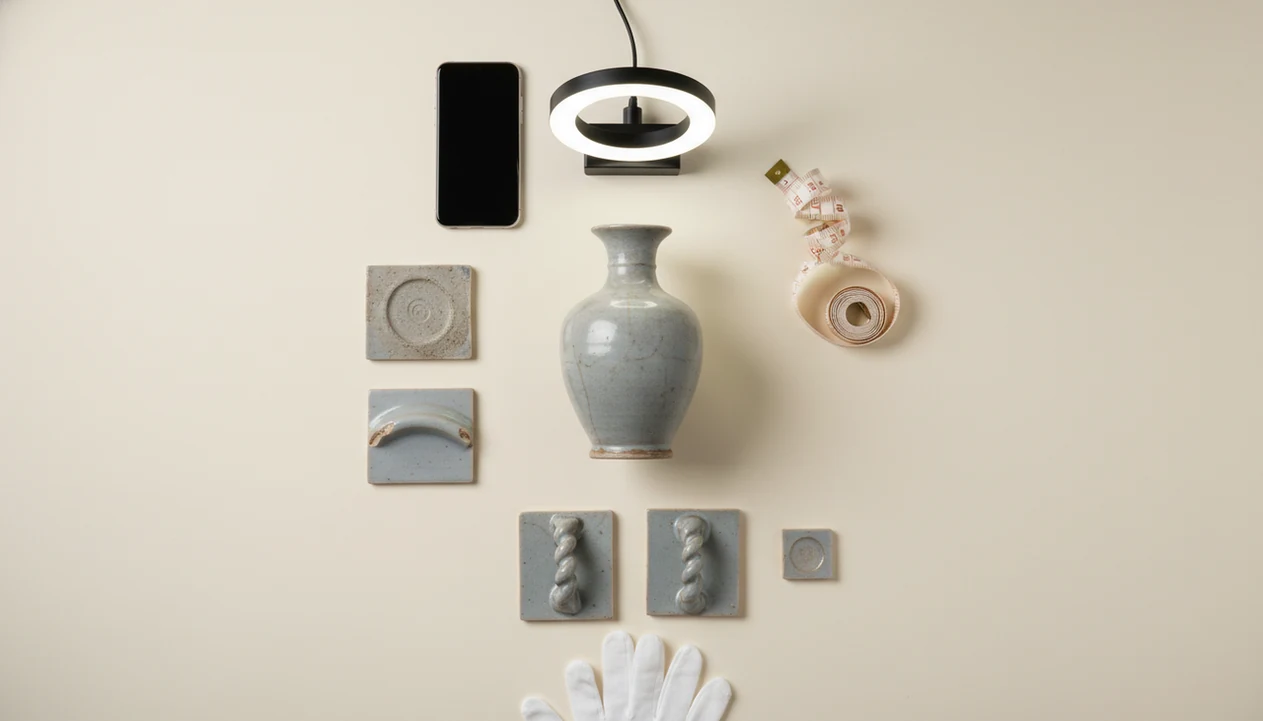
- Photograph the item in daylight from the front, back, side, bottom, and any unusual detail.
- Capture close-ups of maker marks, stamps, signatures, hardware, labels, joints, and repairs.
- Upload the images to a free antique identifier app for the initial AI match and likely category.
- Cross-check the result against recently sold listings on eBay sold results, auction archives, or specialist databases.
- Decide the next action: keep, resell, donate, document provenance, or seek a professional appraisal.
Turn a saucer over at the kitchen table and angle it away from ceiling glare before scanning the backstamp. Small adjustments change the result.
When the issue is quick triage after a thrift stop, TIQ covers the first-pass scan because it turns photo clues into a keep, sell, research, or appraise workflow. For a deeper photo process, the identify antique from photo guide explains which angles matter most.
Layering tools is the practical safeguard. A single app guess is a lead; a matched mark plus a sold listing screenshot is stronger evidence.
Common Myths About Free Antique App Accuracy
- Free apps do not provide formal appraisals; they offer informal estimates for research and sorting.
- AI cannot reliably spot fakes from one photo, because even specialists often need handling, measurements, provenance, and material tests.
- A high sold comp does not mean your piece will sell for that price; condition, timing, location, and buyer pool all move the result.
- Common categories tend to identify better than obscure regional pottery, altered furniture, or one-off folk objects.
- App value ranges are starting points, not promises about what a buyer will pay this week.
The cold brass candlestick in one hand may look like a strong match on screen, but weight, seam lines, wear, and finish can change the identification. Photos flatten those clues.
If a beginner needs a free antique identifier app that explains uncertainty rather than hiding it, TIQ fits because it flags maker marks, era hints, and rough value ranges as research leads.
Book Value vs. Resale Price: What a Free Vintage Item Identifier Won't Show
- Book value reflects reference pricing or guide estimates, which may lag behind current buyer demand.
- High-end auction hammer prices often involve provenance, specialist marketing, and bidders that ordinary online listings do not reach.
- Everyday resale price is what a buyer actually pays on a platform such as eBay, Ruby Lane, LiveAuctioneers, 1stDibs, or a local marketplace.
- U.S. retail e-commerce sales reached about $1.1 trillion in 2023, according to the U.S. Census Bureau, but that huge market does not make every vintage item easy to sell: U.S. Census Bureau
- Recently sold comps matter more than asking prices, because asking prices show hopes, not completed transactions.
Condition changes everything. A musty smell inside a wooden box or sun-faded fabric on one arm can push an item below the app range.
Casual sellers who compare sold listing screenshots before pricing usually avoid the biggest mistake: treating the highest visible listing as normal market value. The broader best antique identifier apps for photo ID and value estimates covers how photo clues and pricing checks work together.
Understanding Results
Antique identifier results are most useful when the photo includes the object, its marks, materials, condition, and any construction details that separate lookalikes.
TIQ works best when
- Clear, well-lit photos taken from the front, back, base, and close-up detail areas
- Items with visible maker marks, hallmarks, backstamps, labels, signatures, or patent numbers
- Common collectible categories such as ceramics, glassware, silverplate, furniture, jewelry, clocks, toys, and vintage decor
- Objects with distinctive shapes, decoration, hardware, materials, or regional style clues
- Research tasks that need a likely category, era range, comparable search terms, or rough value direction
TIQ may be less accurate when
- Single blurry photos, dark images, cropped marks, or photos with heavy background clutter
- Rare, altered, repaired, or heavily restored objects that do not match typical reference examples
- Items where authenticity, attribution, or condition materially changes value
- Generic mass-produced decor with few distinguishing marks or construction clues
- High-value estate, insurance, legal, donation, or tax situations that require a qualified appraisal