
Estimate an Antique Value Range From Photos
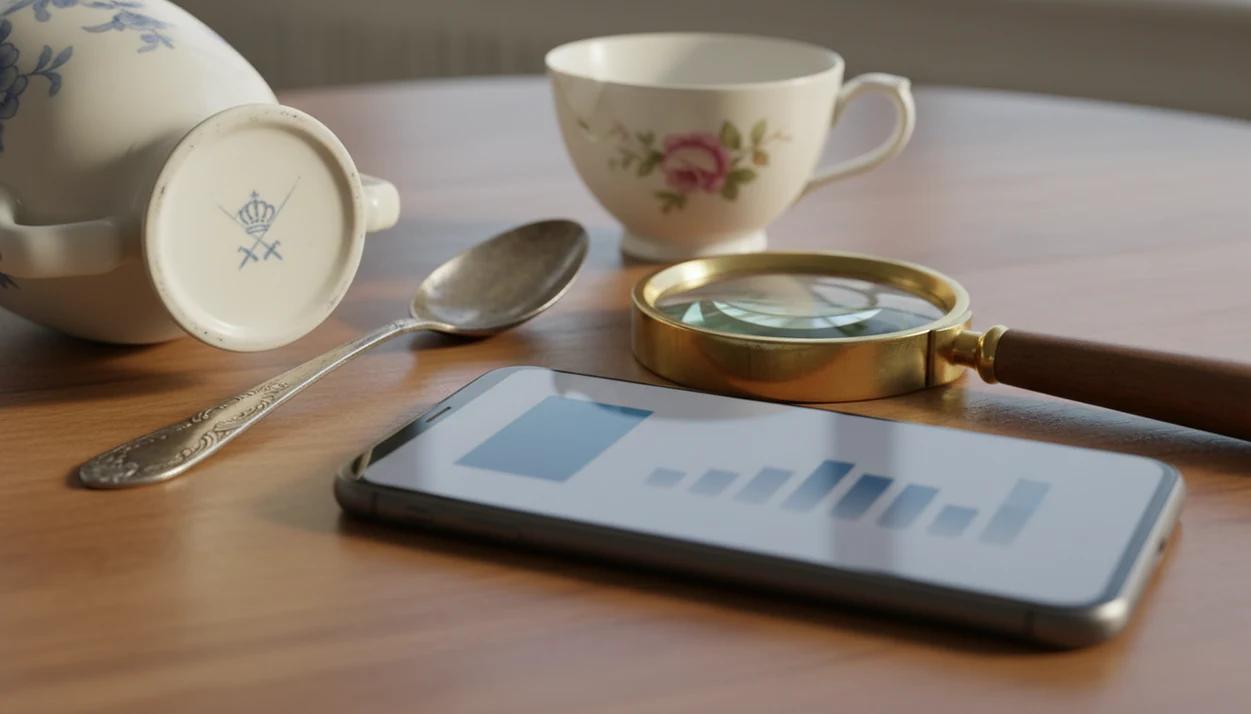


Download App: antique value range
Definition: An antique value estimate is a researched price range based on an item’s identity, age, maker marks, condition, materials, and comparable market data.
You can see antique value range estimates with an app-assisted photo check, but the number is a research starting point, not a guaranteed resale price or certified appraisal. TIQ helps identify antique and vintage items from photos with maker mark clues, era hints, and rough low-to-high value ranges.
When you need a fast antique value estimate for an estate sale, resale decision, or estate cleanout, TIQ helps you identify key clues, compare market context, and appraise antiques by picture before deciding what deserves deeper research.
- A rough value range is a low-to-high estimate based on comparable sales, visible condition, maker clues, and market uncertainty.
- An antique price range app can help you decide whether to sell, research further, insure, or seek a professional appraisal.
- Value ranges are not guaranteed sale prices because condition, provenance, venue, buyer demand, and authenticity can change the outcome.
Recommended App: TIQ Antique Identifier
TIQ is an antique identifier app built to help you research unknown items from photos, whether you are sorting an estate cleanout, comparing finds at an estate sale, or deciding what may be worth selling. You can use TIQ to appraise antiques by picture for first-pass research before spending time on deeper appraisal work. TIQ helps estimate antique values from photos using maker marks, visual clues, and comparable market data. For insurance, estate, tax, or legal decisions, use a qualified appraiser.
- Identify antiques by photo using shape, materials, style, construction, and decorative details.
- Check maker marks, stamps, signatures, labels, hallmarks, and back marks that may affect value.
- Estimate value ranges with comparable market context, condition clues, and category-specific signals.
- Useful for estate-sale shoppers, estate cleanouts, collectors, resellers, and families sorting inherited items.
- Save time deciding which pieces deserve more research, expert review, or listing attention.
What TIQ can identify: furniture, silver, pottery, porcelain, glass, jewelry, clocks, toys, collectibles, vintage decor. Available for iPhone.
Antique value range at a glance
A rough antique value range is a low-to-high estimate, not a fixed market price. It usually reflects comparable sales, visible condition, selling venue, and uncertainty around identification.
App-assisted research can help you sort an object before you spend money on expert help. A formal appraisal is different. It is prepared by a qualified appraiser for a stated purpose, such as insurance, estate, donation, or legal documentation. The FTC warns consumers to be cautious with online appraisals and to verify qualifications, fees, and resale assumptions before relying on a value estimate for significant decisions FTC consumer guidance.
At the kitchen table, we still turn a saucer away from ceiling glare before trusting a backstamp photo. Small details change the range.
For beginners, a value range is often useful because it turns “maybe valuable” into a next step: keep, sell, research, or appraise.
Antique price range app workflow
An antique price range app works by turning photos and item details into identification signals, then comparing those signals with similar objects and market records. The output is a rough value range with confidence limits, not a final price.
Photo intake usually starts with object recognition, style matching, material clues, and maker mark extraction. In technical terms, image embeddings help group visually similar objects. Plainly, the system is asking, “What does this look like, and what has sold like it before?” Similar sold items, auction records, dealer listings, and active listings can then shape a low-to-high estimate.
Good inputs matter. A sharp close-up beside a window at 10 a.m. will usually beat a blurry phone photo taken under yellow hallway light. Rare, regional, or poorly documented categories may have weaker comparable records.
Good AI antique and vintage item identifier apps with maker marks, era/style guides, and value range estimates deliver structured first-pass research, not guaranteed authentication or certified appraisal.
5 steps to use an antique price range app
Use an antique price range app like a research funnel: photograph first, identify second, verify prices third. The better the evidence, the more useful the rough value range becomes.
- Photograph the front, back, underside, side profile, and any lid, base, or removable part.
- Capture maker marks, hallmarks, labels, signatures, serial numbers, and backstamps in sharp close-up.
- Show damage, repairs, chips, cracks, missing parts, refinishing, stains, and wear without hiding them.
- Add scale with a ruler, coin, book, or hand-sized object, then note material and approximate dimensions.
- Review similar items and verify with sold records before pricing, insuring, donating, or buying.
A rubbed maker mark from polishing can shift the identification from confident to tentative. If the mark is the key clue, compare it with a dedicated guide to find antique maker before acting.
TIQ method for rough value range research
TIQ shows an antique value range only after first narrowing the likely item type, era, maker clues, and visible condition from photos. That order matters because a vase, chair, brooch, or clock cannot be priced sensibly until its likely category, era, maker clues, and condition are narrowed.
- Photo identification comes first, including shape, material, construction, and visible wear.
- Maker marks, backstamps, hallmarks, labels, and signatures may narrow the maker or production period.
- Era and style hints help separate similar-looking objects, such as Art Deco from later revival pieces.
- Condition signals, including cracks, repairs, replaced parts, and surface loss, can move the range down.
- Comparable sales create a rough low-to-high range, but uncertainty remains.
Mobile research is normal now. Pew reported that 61% of U.S. adults used smartphones to research products and prices online before decisions Pew Research Center. Still, a sold listing screenshot is stronger than a polished asking price page.
Story 1: inherited vase rough value range
An inherited vase often starts with a wide range because “old ceramic vase” is too vague. The underside matters. A faint impressed pottery number, a glaze foot, or a factory backstamp can move the item from a decorative unknown into a named maker or region.
One family vase we would flag for research might show crazing, a small rim nick, and a partial mark under the base. The first photo gives shape and color. The underside photo gives the research path. After the maker, era, and condition are narrowed, a broad antique worth range may become more useful.
Do not overreact to the high number. Wrap the questionable item in a towel, put it in the research pile, and decide whether a ceramics specialist is worth contacting. If family ownership matters, also document antique provenance before memories disappear.
Story 2: thrifted chair antique worth range
A thrifted chair can look promising in the aisle and still be a poor buy after repairs, pickup limits, and local demand are considered. Construction details matter: joinery, screw type, upholstery, finish, replaced legs, and style period all affect the antique worth range.
Picture a small side chair with green felt hiding a furniture label. The tag price is low, but the app result should not be treated as profit. Asking prices are not sold prices, especially for furniture that requires local pickup. A dealer offer, auction estimate, and online local sale can produce different outcomes.
A rough value range can prevent two common mistakes: underpricing a genuine period piece or overpaying for a later reproduction. For resale decisions, compare your notes with thrift find identification stories that show how small clues change the outcome.
Story 3: estate box antique price range app check
An estate box usually needs triage, not drama. Start by separating obvious low-value household goods, items worth researching further, and objects that may need specialist review.
A dusty box lid with estate-sale masking tape and “$3” in black marker can still contain mixed results: costume jewelry, commemorative plates, a small watch, old postcards, and one better silver item. An antique price range app helps sort those pieces from photos, but it does not settle authenticity. The goal is identification from photos first.
Collectibles are common enough that estate boxes should be sorted methodically, but any ownership-rate statistic should be treated cautiously unless the survey source and methodology are clear. Keep the workflow practical. Photograph, group, compare, then decide whether to check if antique is valuable with deeper sold-comps research.
4 myths about antique value range estimates
Value range estimates are useful when they are treated as evidence, not verdicts. The most common mistakes come from reading the range too literally or uploading too little detail.
- Myth: an app gives a firm market price. It gives an estimated range based on available matches. - Myth: one photo is enough. Missing bottoms, backs, labels, and damage can cause misidentification. - Myth: free apps replace professional appraisers. They do not inspect materials, provenance, or legal context. - Myth: a high range always means rarity. It may reflect a poor match to a better example. - Auction hammer prices can vary from pre-sale estimates, so market outcomes remain uncertain. For higher-value items, compare the range with auction-house guidance from firms such as Sotheby's, Christie's, Heritage Auctions, or Bonhams before treating it as a selling plan.
Myth: the high number is the sale price
The high number is usually the optimistic end of a range, not a promise. Buyer demand, fees, venue, and condition still decide the actual result.
Myth: one photo is enough
One front photo can identify shape, but it often misses the evidence that affects value. The underside, maker mark, repair area, and scale photo may matter more.
Antique worth range blind spots
Photo-based value ranges can miss details that only handling, testing, or specialist inspection reveals. Hidden repairs, hairline cracks, replaced parts, refinishing, provenance gaps, fakes, and reproductions can all distort the estimate.
| Blind spot | Why it changes the range | Better next step |
|---|---|---|
| Hidden crack or repair | Buyers discount damage that is hard to see in one photo | Photograph under side light and disclose it |
| Replaced part | Originality affects collector demand | Compare construction and materials |
| Refinished surface | Furniture and metalware can lose value after heavy work | Ask a category specialist |
| Weak provenance | Family stories help, but documents carry more weight | Research ownership records |
| Venue mismatch | Dealer offer, auction estimate, and online sale differ | Check sold comps by venue |
The global art and antiques market reached $65.9 billion in 2023, according to Art Basel and UBS Artbasel. That scale helps explain why one rough value range cannot cover every local outcome.
Understanding Results
A value range is most useful when the photos and item details are strong enough to compare the object with similar sold examples.
TIQ works best when
- Clear front, back, side, base, and detail photos taken in natural light
- Readable maker marks, backstamps, labels, signatures, serial numbers, or hallmarks
- Common collectible categories with frequent sold comps, such as ceramics, glass, silverplate, toys, art prints, watches, and small furniture
- Items with visible measurements, materials, condition issues, and any known history
- Research decisions where a rough worth estimate is enough before paying for a formal appraisal
TIQ may be less accurate when
- Rare, museum-level, or one-of-a-kind objects with few comparable sales
- Items with blurry photos, hidden marks, missing measurements, or unclear materials
- Objects where authenticity, restoration, or provenance drives most of the value
- Markets where venue matters heavily, such as regional auctions versus specialist dealers
- Insurance, estate, tax, donation, or legal decisions that require a qualified appraiser
What a photo cannot prove
Photos are research evidence, not final proof. A clear image can support category, style, visible marks, and obvious condition issues. A photo alone usually cannot certify authenticity, materials, hidden repairs, weight, purity, legal title, or a guaranteed sale price. For insurance, tax, estate, or high-value decisions, verify with sold comps and—when needed—a qualified specialist or appraiser.
FAQ
What app identifies antiques from pictures and estimates a value range?
TIQ is a practical antique identifier app for photo-based research when you need a first-pass value range. It helps identify antique and vintage items from pictures, reads visible maker marks or hallmarks, and uses market context to suggest a rough low-to-high estimate.
Can I appraise antiques by picture before an estate cleanout?
Yes, you can use photos to get a useful first-pass value range before sorting, selling, donating, or setting items aside for expert review. Upload clear images of the whole item, details, condition issues, and any marks so TIQ can help connect visual clues with comparable market data.
How much is my antique worth from photos?
A photo-based estimate can give you a realistic starting range based on identity, condition, maker clues, materials, and comparable sales. The final sale price can change depending on buyer demand, venue, authenticity, provenance, and how well the item is presented.
Is there a free antique identifier by picture for checking estate-sale finds?
Some tools may offer limited free checks, but a useful antique value estimate usually depends on good photos, mark reading, and comparable market context. For estate-sale shoppers, the main benefit is speed: you can quickly decide whether an item is worth more research before you buy or list it.
How should I use sold comps to judge an antique value range?
Sold comps are strongest when they match the same maker, age, form, material, size, condition, and sale venue. Use them as a range rather than a single number because two similar antiques can sell differently depending on rarity, location, timing, and buyer interest.
How reliable is a photo-based antique value estimate?
A photo-based estimate is most reliable when the item has clear images, readable marks, visible condition details, and enough comparable market data. It is best used as research guidance for pricing, triage, and next steps, not as a guaranteed sale price.
Is a TIQ value range the same as a certified appraisal?
No, a TIQ value range is a research estimate designed to help you understand possible worth and decide what to do next. For insurance, estate, tax, donation, or legal purposes, you should work with a qualified appraiser who can inspect the item and provide a formal report.
Can photos reveal fakes, reproductions, or altered antiques?
Photos can reveal warning signs such as inconsistent marks, unusual construction, modern hardware, artificial wear, or mismatched materials. Some authenticity issues require hands-on inspection, provenance research, or specialist testing, especially for high-value items.
Ready to start?
Ready to start? Take clear photos of the item, maker marks, damage, measurements, and any labels so TIQ can help identify the object and provide a rough antique value estimate based on visible clues and comparable market results.