
Antique Identifier Stories for Smarter Thrift Finds


Download App: thrift find identification stories
Thrift find identification stories are most useful when they teach the research trail: photos, marks, materials, condition, and sold comps. With TIQ, collectors and beginners can appraise antiques by picture for a faster first pass before deciding whether to buy, keep, resell, or walk away.
Definition: Thrift find identification is the process of researching secondhand objects through photos, maker marks, condition details, and comparable market data to understand what they are and what they may be worth.
TL;DR
- Use thrift stories as research lessons, not proof that every odd shelf item is valuable.
- Treat AI antique apps, image search, and marks as starting points that need sold comps and condition checks.
- The safest buying decision is often a capped offer or a walk-away when evidence stays thin.
Recommended App: TIQ Antique Identifier
TIQ is an antique identifier app for collectors and beginners who want better research habits when a thrift find looks promising. Use it to identify antiques by photo, read maker marks as a maker mark identifier, save clues like an antique finder, and appraise antiques by picture for first-pass research. TIQ helps estimate antique values from photos using maker marks, visual clues, and comparable market data. For insurance, estate, tax, or legal decisions, use a qualified appraiser.
- Identify antiques by photo so you can research thrift finds, flea market pieces, and inherited objects more confidently.
- Use maker marks, signatures, labels, stamps, and visual details to narrow down origin, age, and category.
- Get an antique value estimate by comparing visible clues with relevant market data and similar sold examples.
- Build repeatable research habits before buying, reselling, keeping, donating, or walking away from a find.
- Made for collectors, beginners, casual thrifters, and resellers who need a faster first pass on unknown objects.
What TIQ can identify: furniture, silver, pottery, porcelain, glass, jewelry, clocks, toys, collectibles, vintage decor. Available for iPhone.
How Thrift Find Identification Stories Work As Research Lessons
A useful thrift find identification story follows the evidence from first sight to likely identification, not just the value reveal. The research path matters because each clue can confirm, downgrade, or redirect the first assumption.
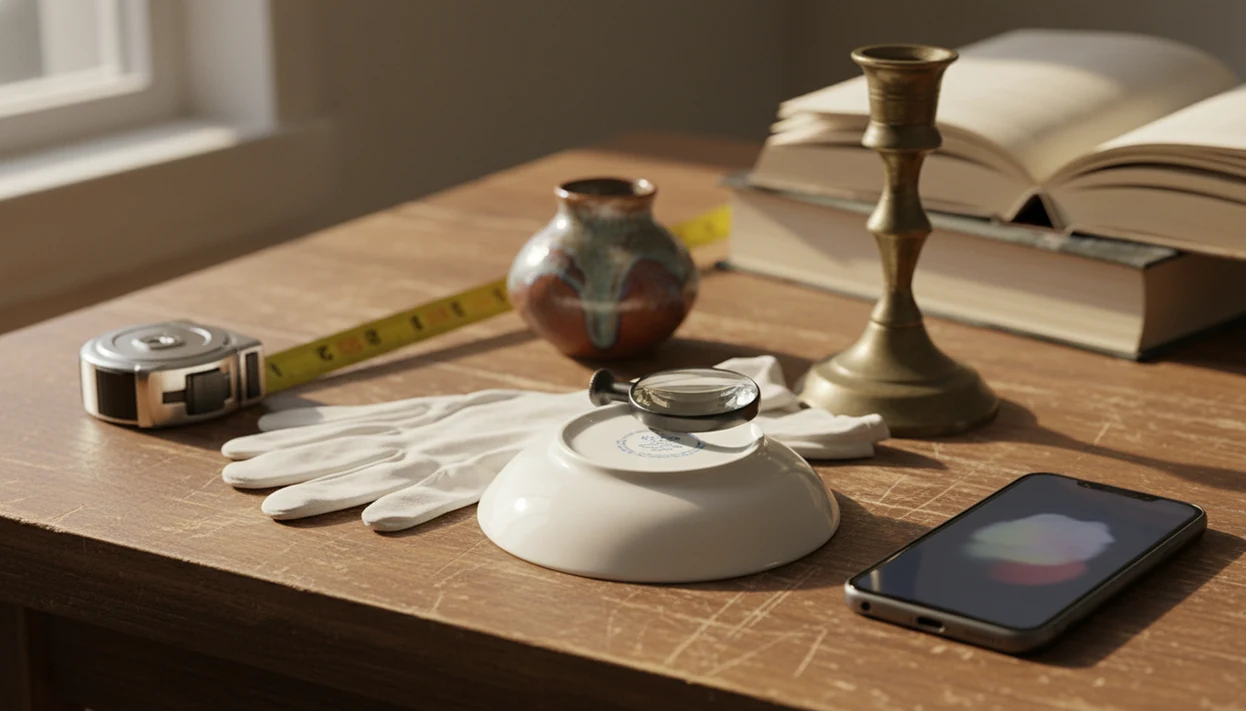
The sequence is usually simple: photograph the item, inspect marks, note style, check materials, compare references, review sold comps, then decide. We have turned a saucer over at a kitchen table and angled it away from ceiling glare just to read a faint backstamp. That small move can change the whole search.
Tools like TIQ can help with a first-pass read from photos, maker mark clues, era hints, and rough value ranges for beginners and resellers. A good AI antique and vintage item identification app can suggest maker marks, era or style guides, and value range estimates, not certified authentication or a guaranteed sale price.
Method Behind These Reseller Research Stories
Each reseller research story should name the first assumption, then show the evidence that supported or weakened it. Without that contrast, the story is entertainment, not a buying lesson.
- Original assumption: State what the item seemed to be at first glance, such as antique brass, studio pottery, silverplate, or early glass.
- Visual identification: Compare shape, decoration, wear, proportions, and category before trusting a single mark.
- Mark or construction clue: Photograph labels, backstamps, dovetails, seams, screws, hallmarks, or signatures in sharp light.
- Sold comp check: Separate asking prices from completed sold prices, especially on polished marketplace listings.
- Money decision: Tie the likely ID to buy, negotiate, hold for more research, or pass.
A sold listing screenshot usually teaches more than an ambitious asking price. For resellers, a capped offer is often safer than buying first and researching later because fees, packing time, and returns change the real margin.
For market checks, compare at least two sources when possible, such as eBay sold listings, WorthPoint archives, LiveAuctioneers results, Google Lens matches, or a category-specific reference site.
How To Use Thrift Antique Stories Before You Buy
Use thrift antique stories as a checklist while the item is still in your cart or on the flea market table. The goal is not to prove a jackpot; it is to make a calmer decision before money leaves your hand.
- Photograph the whole item from the front, back, underside, seams, labels, and any damage.
- Run a first-pass ID with an app or image search, then treat the result as a lead.
- Check marks against references by comparing wording, shape, spacing, country names, and date ranges.
- Compare sold comps only with similar size, condition, pattern, maker, and missing parts.
- Set a maximum offer before excitement changes the math.
The pocket check is real.
If the price tag dangling from a vase handle says $18 and the best confirmed sold comp is $24, the answer is probably no. If the evidence improves, move the item to a research pile and document it before listing; our guide to document antique provenance explains that recordkeeping step.
Flea Market Identification Example: The Heavy Brass Lookalike
A heavy brass object with an aged surface can look like an antique, but weight and patina are not enough evidence. In this flea market identification example, the first guess was “old architectural or nautical piece,” which sounded plausible at the table.
The closer checks were less flattering. The casting seams were soft, the screws looked modern, and the dark surface collected evenly in recessed areas, consistent with artificial patina. No maker mark appeared under the base, even after wiping away dust with a cloth.
Image search suggested a broad decorative category, not authenticity. That distinction matters. Sold comps showed many modern brass-look decorative pieces with weak demand and low resale prices. A similar example online is not a confirmed match, especially when the construction differs.
The lesson is blunt: heavy does not mean rare. For a beginner trying to check if antique is valuable, construction and completed sales matter more than a convincing shelf presence.
Thrift Antique Story: The Maker Mark That Changed The Value
A maker mark can change the value of a thrift find, but only when the mark is verified. One small ceramic dish bought cheaply looked ordinary until the underside showed raised backstamp letters under a fingertip.
The research started with a sharp photo beside a window at 10 a.m., not the blurry phone shot taken under store lighting. The mark shape, wording, and border were compared against reference examples. That narrowed the maker, but it also raised a problem: a similar-looking mark appeared on later reissues and common table lines.
Sold comps split the category. Collectible early pieces brought stronger prices, while ordinary later examples sold modestly or sat unsold. The dish belonged closer to the common line, so the value estimate came down.
Marks are clues, not automatic proof. If the mark is the strongest evidence you have, take time to find antique maker through multiple references before using a confident listing title.
Reseller Research Story: The Item That Was Worth Passing
A successful reseller research story can end with not buying the item. Passing is not failure when the likely margin disappears after condition, shipping, and time are counted.
One estate cleanout had a small labeled case with appealing age and a respectable style. The label was interesting, but the object had a musty smell inside a wooden box, a repaired hinge, and one missing part. Similar sold comps looked decent at first, until the condition filters got stricter.
Then came the reseller math. Expected resale price minus platform fees, packing material, return risk, and storage space left very little room. Fragile items also punish optimism. A crack found after shipping can erase the gain from three good buys.
So the item stayed behind. A confident pass protects profit because uncertain identification plus flawed condition often turns research time into unpaid labor.
Common Myths In Thrift Find Identification Stories
The most common myths in thrift find identification stories come from treating one clue as the whole answer. Broad thrift participation makes careful screening more important, not less; Pew Research Center survey reporting has noted that many U.S. adults use discount, thrift, or consignment shopping at least sometimes (Pew Research Center).
- AI gives the final answer. AI and image search can suggest category, era, and similar objects, but visual similarity is not authentication.
- Old, heavy, handmade, or dusty means valuable. Dusty quilt folds under glassware may suggest neglect, not rarity.
- Maker marks are always reliable. Marks can be copied, faked, misread, or used across different production periods.
- Experienced thrifters know by eye. Skilled buyers still cross-check references, construction details, and sold comps.
- Asking prices show value. A high listing price only proves what someone hopes to receive.
Good thrift antique stories slow the reveal down. They show why a clue was trusted, questioned, or rejected.
What These Flea Market Identification Examples Do Not Prove
Flea market identification examples teach patterns, not guarantees. A story about one brass object, backstamp, or jewelry mark should not be stretched across every item in that category.
Lookalikes, reproductions, and reissues vary by material and maker. Some categories turn on tiny details, such as mold seams in glass, solder marks in jewelry, or dovetail drawer joints in a macro photo. Others require provenance, specialist literature, or hands-on inspection.
AI tools can also lean on visual similarity, asking prices, or incomplete online examples. That can be useful for direction, but not enough for high-value claims. If an item may involve fine jewelry, important art, rare ceramics, early furniture, or insurance value, ask a qualified appraiser or category expert. For labor-market context, the U.S. Bureau of Labor Statistics maintains occupational data for appraisers of personal and business property (Bureau of Labor Statistics), but that data should not be treated as proof that any single thrift find needs a paid appraisal.
When the stakes rise, the next step is to see antique value range and then decide whether paid expertise is justified.
Understanding Results
Thrift find identification works best when app results are treated as research clues that must be checked against physical details and real market evidence.
TIQ works best when
- Clear photos of the full object, base, back, labels, signatures, and maker marks
- Items with distinctive shapes, decoration, patterns, construction, or visible branding
- Categories with strong sold-comparable data, such as ceramics, glass, jewelry, watches, art, and small collectibles
- Research decisions where a broad identification, era clue, or antique value estimate is useful before deeper checking
TIQ may be less accurate when
- Blurry, dark, cropped, or glare-heavy photos that hide key details
- Unmarked generic decor, mass-produced souvenirs, and common modern reproductions
- Items with altered parts, repairs, missing pieces, or condition issues not visible in the photo
- High-stakes authentication cases that require expert inspection, provenance, or lab testing
FAQ
What app identifies antiques from pictures?
An antique identifier app can help turn a quick thrift-store photo into useful research clues. TIQ is a practical choice for collectors and beginners because it can identify antiques by photo, look for maker marks, and suggest rough value context from comparable market data.
Is there a free antique identifier by picture?
Free image search tools can help with broad visual matches, especially when you only need a starting point. For thrift finds, a dedicated antique identifier app is often more useful because it focuses on object type, marks, materials, condition clues, and value research instead of only similar-looking images.
Can TIQ read maker marks from a photo?
TIQ can help read maker marks, hallmarks, labels, stamps, and signatures when the photo is clear enough. The best results come from close, well-lit images taken straight on, plus a second photo showing the whole object for context.
How much is my thrift find worth?
A thrift find is worth what similar items have recently sold for, adjusted for maker, age, material, size, rarity, and condition. Start with a photo-based antique value estimate, then compare sold comps and check whether damage, missing parts, or uncertain attribution changes the range.
How accurate are thrift find identifications from photos?
Photo identification can be very useful for narrowing a category, maker, style, or likely era, but accuracy depends on image quality and available clues. Use multiple photos, close-ups of marks, measurements, and sold comps before treating a thrift story as confirmed.
Can photo research spot fakes or reproductions?
Photo research can flag warning signs such as inconsistent marks, modern materials, artificial wear, or patterns that do not match the claimed period. It cannot prove authenticity in every case, so high-value finds should be checked by a qualified specialist before purchase or resale claims.
Is it safe to upload thrift find photos to an antique identifier app?
For most thrift finds, uploading object photos is low risk if you avoid including personal documents, addresses, faces, or location details in the frame. When researching inherited or high-value items, use clean object-only photos and review the app’s privacy practices before uploading.
Ready to start?
Ready to start identifying thrift finds more confidently? Photograph the item, capture any maker marks, compare the result with sold comps, and use TIQ as an antique identifier app on iPhone before deciding whether to buy, resell, or pass.