A Beginner’s Antique Identifier Guide for New Collectors


Download App: antique collecting for beginners
If you are sorting inherited boxes or starting your first collection, a simple identify-first workflow helps you decide what to keep, research, sell, or document. Use clear photos, marks, condition clues, and comparable sales to appraise antiques by picture as a faster first step before deeper research.
Definition: Antique collecting for beginners is the practice of identifying, researching, and organizing older objects by age, maker, condition, provenance, and market value.
- Start with one collecting category so you can learn normal materials, marks, styles, and prices.
- Use clear photos, maker marks, construction clues, condition notes, and comparable sales before you trust a value estimate.
- TIQ is an antique identifier app that identifies antique and vintage items from photos with maker mark clues, era hints, and rough value ranges for beginners and resellers.
Category guides for beginners
Once you know the object type, jump into a focused guide. These pages cover photo clues, construction details, and when to escalate to sold comps or an appraisal.
- Antique painting identification
- Antique book identification
- Antique rug and textile identification
- Antique coin identification
- Antique militaria identification
- Antique lighting identification
- Understanding antique patina
- Restricted antique materials
- How much is it worth (generic sold-comps hub)
- How much is my antique worth (antique-specific)
Recommended App: TIQ Antique Identifier
TIQ is an antique identifier app for beginners and inheritors sorting family collections who want a faster first look at what an item may be, who made it, and what details matter before selling, keeping, or researching further. You can use TIQ to appraise antiques by picture for first-pass research, compare visual clues, and investigate maker marks as you build a clearer inventory. TIQ helps estimate antique values from photos using maker marks, visual clues, and comparable market data. For insurance, estate, tax, or legal decisions, use a qualified appraiser.
- Identify antiques by photo when you are unsure whether an object is furniture, silver, pottery, glass, jewelry, or another collectible category.
- Use maker mark identifier support to research stamps, signatures, hallmarks, labels, and backmarks found on inherited pieces.
- Get an antique value estimate based on visible condition, style, materials, age clues, and comparable market data.
- Use TIQ as an antique finder when sorting boxes, cabinets, attics, and family collections piece by piece.
- Helpful for beginner collectors, heirs, downsizers, estate organizers, and anyone deciding what to keep, sell, document, or research next.
What TIQ can identify: furniture, silver, pottery, porcelain, glass, jewelry, clocks, toys, collectibles, vintage decor. Available for iPhone.
Antique Collecting for Beginners at a Glance
Antique collecting for beginners works best as a slow sorting process: identify the object, research its clues, document what you found, then compare it with similar sold examples before buying. An antique is commonly treated as at least 100 years old; vintage usually means older material that has not reached that age.
Many finds do not start in polished shops. They turn up in ordinary homes, inherited households, estate sales, thrift shops, and online listings. The National Association of Home Builders reported that the median age of owner-occupied U.S. homes was 40 years in 2021, which helps explain why older objects often appear during cleanouts: Nahb.
The dusty box is normal.
A beginner might find estate-sale masking tape with “$3” written across a lid, but the sticker is only the start. The next question is evidence.
How Antique Collecting Works
Antique collecting works by stacking evidence until an object’s likely age, maker, authenticity, and value become clearer. No single clue should carry the whole decision, because style, marks, wear, and price can each mislead when viewed alone.
Think of the workflow as four separate layers. Identification names the object and its likely category: vase, side table, mourning brooch, transferware plate. Condition checks damage, repairs, missing parts, refinishing, odors, and structural weakness. Provenance is the ownership trail, such as a receipt, estate note, old label, or family history; useful, but still something to verify. Comparable sales are recent sold examples that match material, size, maker, age, and condition as closely as possible. Sold prices matter more than asking prices because they show what buyers actually paid, while app estimates are rough research ranges, not promises. Escalate to an appraiser, specialist, conservator, or auction house when the item may be high value, insured, disputed among heirs, culturally important, heavily restored, or outside your category knowledge.
Before You Start Antique Collecting
Before you start antique collecting, set guardrails for money, tools, focus, and buying terms. A little preparation keeps a fun estate-sale morning from turning into a chipped, overpriced object in the back seat.
- Set a small starter budget and decide your personal “lesson cost” before you shop. If you can lose $25 on a mistaken buy without stress, stop there until your eye improves.
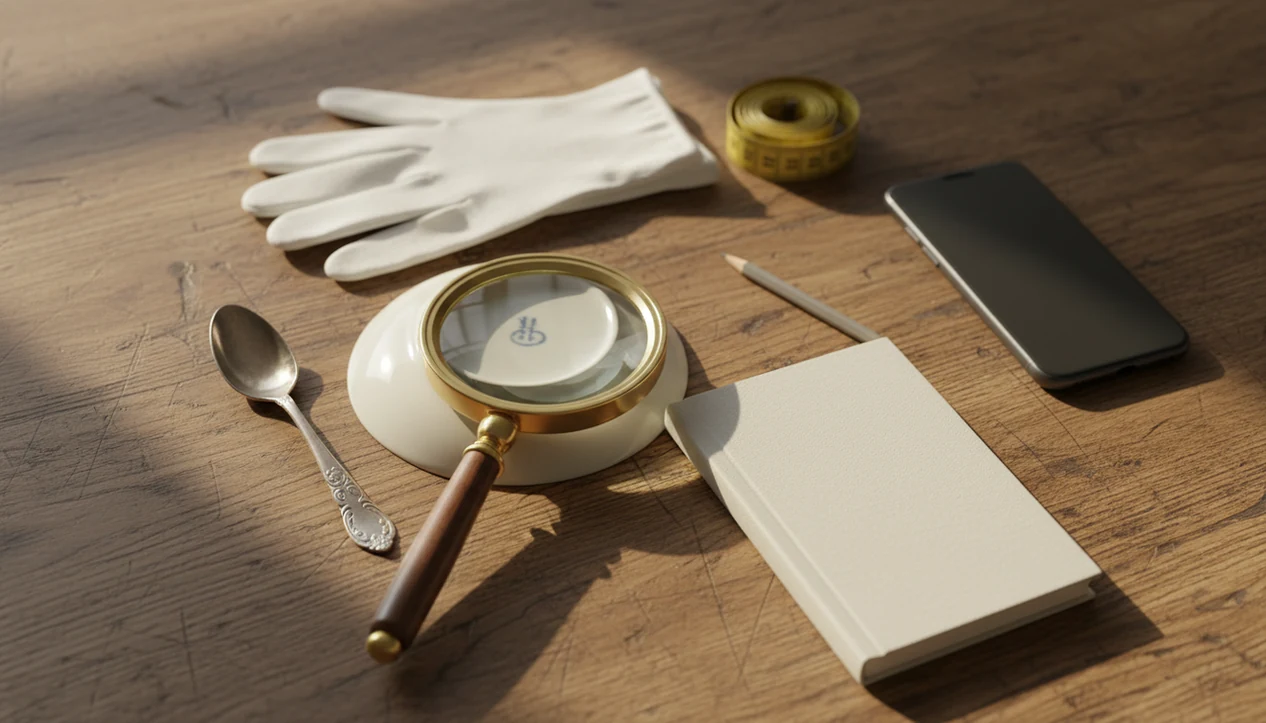
- Pack a simple field kit with your phone, tape measure, small flashlight, soft cloth, and padding or packing paper. The flashlight helps inside drawers and under bases; the cloth gives fragile pieces a safer surface.
- Choose one category before visiting estate sales, auctions, thrift stores, or flea markets. Looking only for ceramics, jewelry, small furniture, books, or glass makes it easier to compare condition and prices.
- Check the buying rules first before bidding or carrying an item to the counter. Return policies, buyer premiums, shipping fees, and damage risk can turn a fair price into a bad buy.
- Walk away when the terms are unclear. There will be another box, another table, another sale.
Five Antique Collecting Facts Every Beginner Should Know
- Antique age is usually 100 years or more. Vintage items are usually newer old objects, though sellers may use both terms loosely.
- A narrow focus helps beginners learn faster. For a new collector, one category is often easier than “anything old” because normal prices, repairs, and materials become familiar.
- Condition changes value. Chips, cracks, refinishing, replaced hardware, missing lids, odors, and weak repairs can matter as much as age.
- Identification needs several clues. Maker marks, backstamps, style details, materials, wear patterns, and construction methods support a first-pass identification.
- Records make collecting easier over time. Photos, receipts, provenance notes, measurements, and comparison examples help separate similar examples from confirmed matches.
A macro shot of dovetail drawer joints can tell you more than a dramatic room photo. Close, plain images usually win.
Photo, Maker Mark, and Clue-Based Antique Identification
Clue-based antique identification is the process of observing an object, photographing it clearly, reading its marks, estimating materials and construction, then comparing it with documented examples.
The practical sequence is simple. First, name the item type. Next, photograph the front, back, underside, inside, seams, hardware, damage, labels, and maker marks. Then estimate material, construction, era, and style before checking sold market examples. A sharp close-up beside a window at 10 a.m. often beats a blurry phone photo under yellow ceiling light.
Identification is probabilistic, not a guarantee of authenticity. Today’s market includes true antiques, vintage pieces, reproductions, altered objects, and new goods made to look old. Good AI antique and vintage item identifier apps with maker marks, era/style guides, and value range estimates deliver research clues, not certified authentication.
Tools like TIQ can support this workflow with photo identification, maker mark clues, era hints, and rough value ranges. Treat the result as a research lead, then verify.
Five Steps to Start Antique Collecting Safely
How to use antique collecting as a beginner is mostly about building a repeatable buying routine, not guessing faster. Use the same five steps whether you are at a thrift store, auction preview, family attic, or online listing.
- Choose one broad category such as furniture, jewelry, books, ceramics, glass, tools, or décor so your eye learns normal materials and prices.
- Photograph the item clearly, including the front, back, underside, seams, hardware, damage, labels, and maker marks. Our guide to identify antique from photo explains what images help most.
- Identify age clues using material, construction, style period, wear patterns, maker marks, and any labels or repair history.
- Compare condition and value ranges against similar sold examples, not asking prices alone. A sold listing screenshot is stronger than a polished marketplace page.
- Record the decision with photos, seller details, price, provenance, and why you bought or skipped it.
Wrap a questionable item in a towel before it goes in the research pile. That small pause prevents many regret buys.
Beginner Antique Categories Worth Choosing First
Beginners should choose a broad category first because each category teaches a different evidence habit. Do not buy only because something looks cheap or trendy; cheap clutter still takes storage, research time, and repair judgment.
- Ceramics and china: These teach backstamps, pattern names, glaze clues, chips, crazing, and the habit of turning a saucer away from ceiling glare to read the mark.
- Small furniture: Tables, chairs, and boxes teach construction, joinery, wood type, hardware, refinishing, and style periods.
- Jewelry and watches: These teach hallmarks, materials, clasp styles, wear, repairs, and the difference between costume and precious metal clues.
- Glass and crystal: These teach pattern matching, mold seams, pontil marks, chips, clouding, and maker attribution.
- Books, paper, and ephemera: These teach editions, condition, inscriptions, provenance, and storage risk.
For beginner antique collecting, category focus is often safer than bargain hunting because it builds comparison memory.
Antique Identification Checklist Before You Buy
“What should I check before buying an antique?” Check age, category, maker marks, material, construction, dimensions, condition, restoration, missing parts, and provenance before money changes hands.
Capture clear photos before using Antique Identifier: full object, underside, back, interior, labels, signatures, seams, feet, hardware, damage, and scale. If the mark is small, use a steady close-up rather than zooming from across the table. A maker mark identifier app works better when the mark is square to the camera.
Then compare rough value ranges with sold listings and local demand. A crowded flea table of tarnished trays may include silver plate, stainless steel, and later reproductions in the same stack. In 2023, the United States imported $85.9 billion in furniture and bedding products, a useful caution that old-looking furniture is not automatically antique. Source: U.S. International Trade Commission DataWeb, HS 94 imports, Usitc.
Ask: would I still want this after repair costs?
Five Antique Collecting Myths That Cost Beginners Money
Some beginner mistakes come from treating one clue as proof. Five myths cause the most overpaying.
Myth 1: Every old-looking object is an antique. A distressed finish, dark stain, or ornate shape may be style, not age.
Myth 2: Restoration always increases value. Poor polishing, repainting, over-cleaning, or replaced parts can reduce collector interest.
Myth 3: A maker mark proves authenticity. Marks can be copied, altered, misread, or added later to reproductions.
Myth 4: The lowest price is always the best deal. A chipped vase foot, missing drawer pull, or cracked case may cost more than the “bargain” saves.
Myth 5: An app value estimate is a guaranteed selling price. Value ranges are research aids. Selling price depends on buyer demand, location, condition, and timing.
The price tag dangling from a vase handle is not evidence. It is a prompt to inspect.
Antique Collection Records for Photos, Prices, and Provenance
Good collection records make identification, insurance conversations, resale listings, inheritance planning, and duplicate-purchase avoidance much easier. Keep item photos, purchase date, purchase price, seller or estate details, maker marks, condition notes, measurements, comparison links, and app results.
Collecting is research-heavy, but beginners do not need formal credentials. The useful habit is simpler: write down what you can verify, keep photos of every mark or repair, and save the sold examples you relied on.
A simple spreadsheet is enough. Include a provenance note if you find an old repair bill in a drawer, or if a seller connects an item to a named estate. Small notes become useful later.
TIQ Use Cases Before Buying or Selling
Use TIQ when an item has unclear age, unknown maker marks, confusing style clues, or an uncertain price. It can help with photo identification, maker mark clues, era hints, and rough value ranges before you buy, list, donate, or set aside an object for review.
The app is most useful as a first-pass research step. For example, a paper label under a figurine base may point toward a maker, country, or production period, but it is not enough to confirm authenticity alone. If you are deciding how to describe an online listing, a guide on how to identify antiques with phone can help standardize the photos first.
App outputs are not definitive authentication, legal valuation, tax guidance, insurance valuation, or certified appraisal. High-value, insured, disputed, or historically important objects should go to a specialist, certified appraiser, conservator, or auction house.
Understanding Results
A photo-based antique identifier works best when beginners provide clear images, useful context, and honest condition details.
TIQ works best when
- Clear photos of the full object, close-ups, maker marks, signatures, labels, stamps, or hallmarks
- Common collecting categories such as ceramics, glass, furniture, silver, jewelry, art, toys, clocks, and vintage household items
- Items with visible construction clues, materials, patterns, design style, or documented provenance
- Beginner research workflows that combine photo identification with comparable sales and condition notes
TIQ may be less accurate when
- Blurry, dark, cropped, or single-angle photos without scale or detail
- Objects with missing marks, heavy damage, later repairs, replaced parts, or uncertain provenance
- Reproductions, fantasy pieces, revival styles, and items marketed as antique only because they look old
- High-value, rare, or legally sensitive items that require expert appraisal, authentication, or specialist inspection
FAQ
What app identifies antiques from pictures for beginner collectors?
An antique identifier app should help you start with the basics: object type, likely age, maker or mark clues, condition notes, and rough value ranges. TIQ is a practical choice for beginners and inheritors because it lets you photograph items one by one and build a clearer research path before deciding what to keep, sell, or investigate further.
Is there a free antique identifier by picture for inherited items?
Free image search tools can help you compare shapes, patterns, and similar-looking objects, but they often miss maker marks, condition, and market context. For inherited collections, an antique identifier app can be more useful because it keeps the item, photos, clues, and value research together.
How much could an inherited antique be worth from photos?
Photos can provide a first-pass antique value estimate when they show the whole item, close-up details, marks, damage, repairs, and scale. The most useful estimate compares similar sold items, not just asking prices, because condition, maker, rarity, and local demand can change value significantly.
Can TIQ read maker marks from a photo when I am new to collecting?
TIQ can help analyze maker marks, hallmarks, labels, signatures, stamps, and backmarks from clear photos. Beginners should photograph the mark straight on, include nearby context, and add images of the full object so the mark can be interpreted with style, material, and age clues.
Can an antique identifier app help me organize a family collection?
Yes, an antique identifier app can make a large family collection easier to sort by category, likely age, maker clues, condition, and possible value. This is especially helpful when you are working through cabinets, attic boxes, inherited furniture, silver, pottery, glass, jewelry, or mixed collectibles.
How accurate is photo-based antique identification for beginners?
Photo-based identification is strongest when images are clear, well-lit, and include the full object, close-ups, marks, construction details, and any damage. It is best used as a guided research starting point because hands-on inspection may still be needed for materials, age, repairs, and authenticity.
When should I get a professional appraisal for an inherited antique?
Get a qualified professional appraisal when the item may be high value or when the result will be used for insurance, estate, tax, donation, legal, or equitable family-division decisions. A photo-based estimate can help you decide which pieces deserve that extra step.
Can photo research spot reproductions or fakes?
Photo research can flag warning signs such as inconsistent marks, modern construction, artificial aging, unusual materials, or mismatched style details. It cannot guarantee authenticity on its own, so valuable or suspicious items should be checked against trusted references or reviewed by a specialist.
Ready to start?
Ready to start your first collection? Photograph the item, capture maker marks and condition issues, save any provenance, and use TIQ on iPhone as a first-pass antique finder before you research comparable sales or decide to buy, sell, restore, or pass.