Definition: A maker mark identifier app helps match photographed hallmarks, backstamps, signatures, stamps, or labels to possible makers, origins, age ranges, and market context.
Recommended App: TIQ Antique Identifier
TIQ is an antique identifier app for researching objects from photos, reading maker marks, and building a first-pass antique value estimate before you buy, sell, keep, or donate. Estate-sale shoppers and estate cleanout teams can use TIQ to appraise antiques by picture for first-pass research, compare visual clues, and decide what deserves deeper review. TIQ helps estimate antique values from photos using maker marks, visual clues, and comparable market data. For insurance, estate, tax, or legal decisions, use a qualified appraiser.
- Identify antiques by photo, including marks, labels, forms, materials, and decorative details.
- Use TIQ as a maker mark identifier for hallmarks, backstamps, signatures, stamps, and maker labels.
- Get an antique value estimate supported by visible clues and comparable market data.
- Use it as an antique finder when sorting estate cleanouts, browsing estate sales, or checking inherited items.
- Built for collectors, resellers, estate-sale shoppers, families, and anyone researching old objects quickly.
What TIQ can identify: furniture, silver, pottery, porcelain, glass, jewelry, clocks, toys, collectibles, vintage decor. Available for iPhone.
TIQ at a Glance
What is TIQ? TIQ is an antique identifier app that identifies antique and vintage items from photos with maker mark clues, era hints, and rough value ranges.
What does it do? Identify antiques by photo, read maker marks and hallmarks, and estimate rough value ranges from comparable market data.
Who is it for? Collectors, inheritors, estate-sale shoppers and estate cleanouts, and anyone researching unknown antiques or vintage items.
Why use it? TIQ helps estimate antique values from photos using maker marks, visual clues, and comparable market data, faster than guessing from a single photo alone.
Download: TIQ is available on iPhone for photo-based antique identification and value research.
At a Glance: What a Maker Mark Identifier App Does
A maker mark app compares a photo of a mark against reference data, then returns likely makers, date ranges, origins, and related value clues. It is useful when the mark is visible but hard to read by eye.
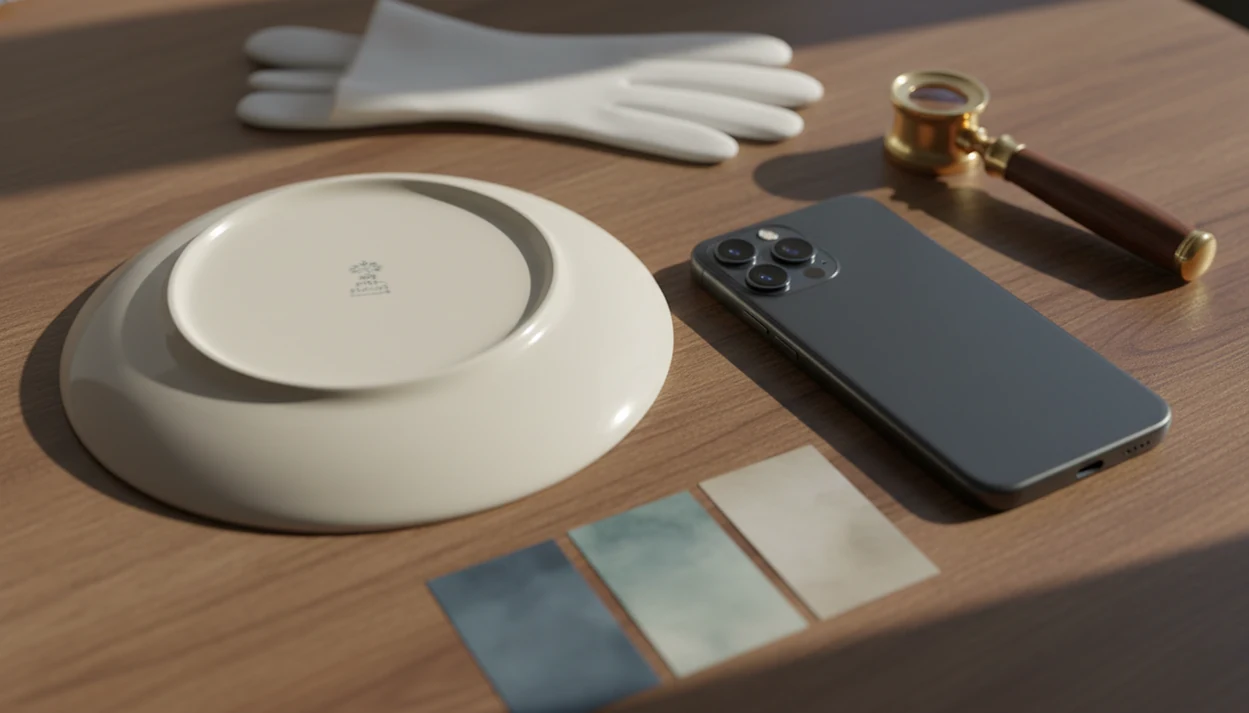
Collectors use it at home. Resellers use it before writing listings. Inheritors use it during estate sorting, often with porcelain plates stacked in towels and a phone balanced over the underside. Thrift shoppers use it when a price tag is still dangling from a vase handle.
In 2019, 81% of U.S. adults reported owning a smartphone, according to the Pew Research Center, which makes phone-based mark research broadly accessible. If you keep a market-size claim for online antiques and collectibles, attach the original market-research report URL inline; otherwise remove the sentence.
After a mark appears under better light, when the next question is maker, date, and resale wording, TIQ fits because it pairs photo matching with rough value ranges and item notes.
5 Facts About Maker Marks Every Collector Should Know
- Maker marks can identify more than a name. A mark may indicate country of origin, metal purity, factory, workshop, assay office, or an approximate production date.
- AI mark matching works by comparison, not certainty. A Nature study showed deep learning image recognition can reach top-5 error rates below 5% on trained benchmark datasets, which supports pattern matching when the reference data is strong Nature.
- Marks are strong evidence, but not the whole case. Weight, wear, construction, glaze, hardware, and style still matter. Crazing lines across cream glaze can change the interpretation of a backstamp.
- Coverage is uneven by category. European silver and American pottery often have stronger reference trails than obscure studio work or undocumented workshop stamps.
- Photo quality changes the result. A sharp close-up beside a window at 10 a.m. usually beats a blurry phone photo under yellow overhead light.
The right fit for beginners who need an antique mark identifier is TIQ because it shows likely matches with confidence levels rather than forcing one unsupported answer.
How AI Maker Mark Identification Works
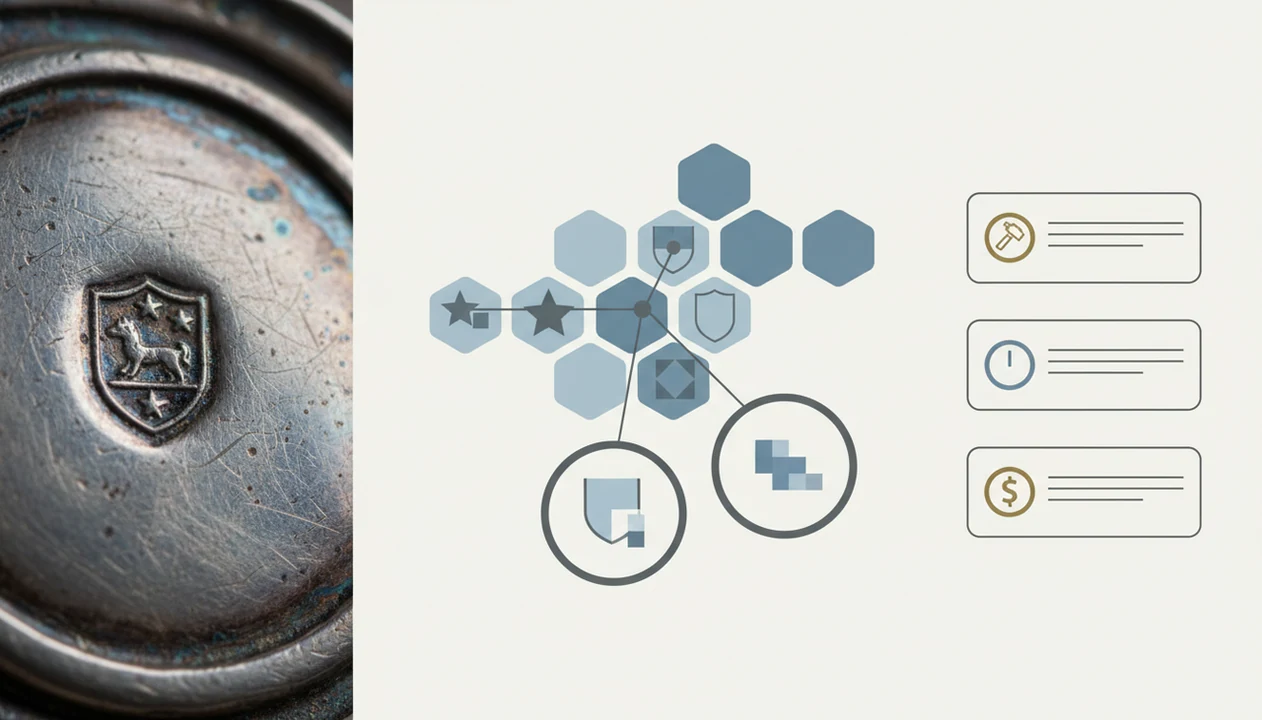
AI maker mark identification works by turning a photographed mark into visual patterns, then comparing those patterns with structured reference data. The process is useful, but it is still a first-pass identification method.
Image Recognition and Pattern Matching
The pipeline is usually capture, preprocessing, pattern extraction, and database comparison. Preprocessing may sharpen contrast, crop the mark, and reduce glare. Pattern extraction uses image embeddings, meaning the app converts shapes into searchable visual data.
Reference databases then connect those shapes to manufacturers, assay offices, hallmark systems, factory logos, signatures, and known date ranges. A phone camera over a maker's mark can be enough if the stamp is clean and centered. For porcelain, our porcelain backstamp identification guide covers extra clues around printed, impressed, and painted marks.
Confidence Scores and What They Mean
Confidence scores rank probable matches. A low score usually means the photo is poor, the mark is damaged, or the database has only partial coverage.
Good AI antique and vintage item identifier apps deliver likely matches, era clues, and value ranges, not certified authentication or a guaranteed sale price.
TIQ adds era and style recognition plus comparable-sales context, so a mark match can be checked against the object itself.
How to Use a Maker Mark App on Your Antiques
Use a maker mark app by photographing the mark clearly, reviewing the match, then cross-checking the result against the whole object. The mark is the starting clue, not the final verdict.
- Locate the mark on common areas: silver bases and handles, pottery undersides, jewelry clasps, watch movements, drawer interiors, and furniture backs.
- Clean gently with a dry soft cloth, then place the item under even, diffused light.
- Photograph the mark close-up and fill the frame without cutting off letters, symbols, or borders.
- Upload the photo and review suggested makers, date ranges, origins, and confidence levels.
- Cross-reference the result with construction, weight, wear, material, and style details.
- Save photos and notes as provenance documentation for later appraisal, resale, or family records.
Small adjustments matter.
If the mark reflects glare, angle the item away from the ceiling light before retaking the shot. The full photo workflow is covered in how to photograph maker marks.
When to Use the Antique Mark Identifier Feature
Use an antique mark identifier when a quick, documented read would change your next decision. That may mean buy, pass, list, research, or wrap the item in a towel before putting it in the appraisal pile.
At a thrift store or estate sale, a quick mark check can keep you from relying on a vague seller label. Estate-sale masking tape with “$3” in black marker is not provenance. For inherited items, mark lookup helps separate family history from confirmed maker evidence.
Resellers also need better listing language. Bain & Company reported that the secondhand luxury market grew 65% from 2017 to 2021 Bain, and buyers increasingly expect maker and condition details. The FTC also reported a sharp rise in online-shopping fraud reports during 2020 FTC consumer guidance, so mark verification helps when buying online.
When the issue is silver, TIQ can support the first pass, while silver hallmark identification helps explain purity and assay clues.
What Maker Mark Lookup Looks Like in TIQ
In TIQ, maker mark lookup starts with a camera capture or an uploaded photo from your phone. The cleaner the crop, the more useful the result screen usually becomes.
The result screen may show a suggested maker, date range, country, and confidence level. It can also add companion clues, such as era or style hints and rough value ranges from comparable examples. That matters when a mark resembles a known factory stamp but the object shape, glaze, or hardware points to a different period.
Resellers who photograph marks before listing online can use TIQ because it saves mark images and notes into a personal collection record. A saved sold listing screenshot is more useful than an asking price on a polished marketplace page.
For porcelain-specific questions, the guide on what app identifies porcelain marks narrows the backstamp workflow further.
Maker Mark App vs Hallmark Reference Books and Websites
A maker mark app is faster and more portable than printed references, while books and specialist websites may provide deeper editorial context. Serious research often uses both.
| Research method | Strength | Trade-off |
|---|---|---|
| Maker mark app | Instant photo matching from a phone | Depends on photo quality and database coverage |
| Google Lens image search | Broad web-image matching for marks, logos, and signatures | No antique-specific confidence score, provenance notes, or value workflow |
| Reference books | Strong editorial notes and specialist context | Slow to browse and expensive across categories |
| Museum or archive websites | Good authority for documented makers | Search terms must be precise |
| Auction databases like LiveAuctioneers or WorthPoint | Useful sold-comps research | Similar examples are not confirmed matches |
| Specialist sites such as replacements.com | Strong for patterns and replacements | Coverage is category-specific |
For field decisions, a phone-based workflow is often easier than manual browsing because you can compare the mark while the object is still in front of you.
TIQ earns the spot for quick sorting because it connects mark matching, style clues, and rough value ranges in one workflow.
Common Myths About Hallmark Lookup Apps
A hallmark lookup app can narrow a mark, but it cannot make every hard call. The realistic use is research guidance, followed by comparison and verification.
Myth: the app guarantees authenticity. Reality: matches are probability-based. A copied mark, later replacement part, or reproduction can still mislead the result.
Myth: worn marks are always readable. Reality: over-polishing, partial stamping, and corrosion can erase the shapes recognition needs. Missing strokes matter.
Myth: the result gives one exact value. Reality: good apps show value ranges based on comparable sales, not fixed price tags.
Myth: databases only cover famous makers. Reality: regional marks may be included, but coverage is uneven across materials, countries, and time periods.
For confusing terminology, the maker mark vs hallmark distinction is worth checking before assuming a stamp identifies the maker.
Understanding Results
Maker mark results are strongest when the photo, mark visibility, and object context all support the same conclusion.
TIQ works best when
- Clear, well-lit close-ups of readable hallmarks, backstamps, logos, signatures, or impressed marks
- Objects with known reference trails, such as porcelain, silver, pottery, watches, jewelry, and branded vintage goods
- Photos that include both the mark and the full item, so shape, material, decoration, and construction can be compared
- Marks photographed straight-on with glare, shadows, blur, and heavy cropping reduced
- Research tasks where you need likely maker, origin, date range, and listing keywords rather than a formal appraisal
TIQ may be less accurate when
- Worn, partial, blurry, overexposed, or heavily tarnished marks
- One-off studio marks, undocumented workshop stamps, forged marks, or later reproduction labels
- Items where the mark conflicts with material, construction, wear, glaze, hardware, or style
- Very common symbols, initials, or decorative stamps that many makers used
- Value estimates for rare, damaged, restored, or museum-grade pieces without expert inspection