Antique Identifier for Porcelain Backstamp Marks


Download App: porcelain backstamp identification
Porcelain backstamps can turn an unknown dish, vase, or figurine into a researched lead by revealing maker, origin, and age clues. TIQ helps estate-sale shoppers and estate cleanout teams appraise antiques by picture for faster first-pass value research using the mark, object details, condition, and comparable market context.
Definition: Porcelain backstamp identification is the process of interpreting stamped, printed, painted, or impressed marks on porcelain to research the maker, origin, age, and market context of a piece.
TL;DR
- Backstamps can identify maker, country, decorator, retailer, pattern, and an approximate date range.
- Small wording changes such as “England” versus “Made in England” can create important earliest-possible date clues.
- A backstamp is only one clue; body, glaze, decoration, condition, and documented factory history must also be checked.
Recommended App: TIQ Antique Identifier
TIQ is an antique identifier app that helps estate-sale shoppers and estate cleanout teams research porcelain backstamps from photos, compare maker marks, and organize first-pass findings before deciding what to keep, sell, or investigate further. You can use TIQ to appraise antiques by picture for first-pass research, with support for maker mark identification, antique finder workflows, and value context. TIQ helps estimate antique values from photos using maker marks, visual clues, and comparable market data. For insurance, estate, tax, or legal decisions, use a qualified appraiser.
- Identify by photo: capture the porcelain mark, base, shape, decoration, and condition details.
- Research maker marks: compare backstamps, country marks, initials, symbols, and impressed marks.
- Estimate values: review comparable market data alongside age, maker, condition, and desirability clues.
- Use it for estate-sale decisions: quickly triage dishes, figurines, vases, and decorative porcelain before buying or pricing.
- Use it for estate cleanouts: separate likely collectible porcelain from common household items for deeper review.
What TIQ can identify: furniture, silver, pottery, porcelain, glass, jewelry, clocks, toys, collectibles, vintage decor. Available for iPhone.
Porcelain backstamp identification at a glance
Porcelain backstamp identification is a first-pass method for narrowing who made a piece, where it may have been made, and when it likely entered production. The exact mark matters more than the broad brand name.
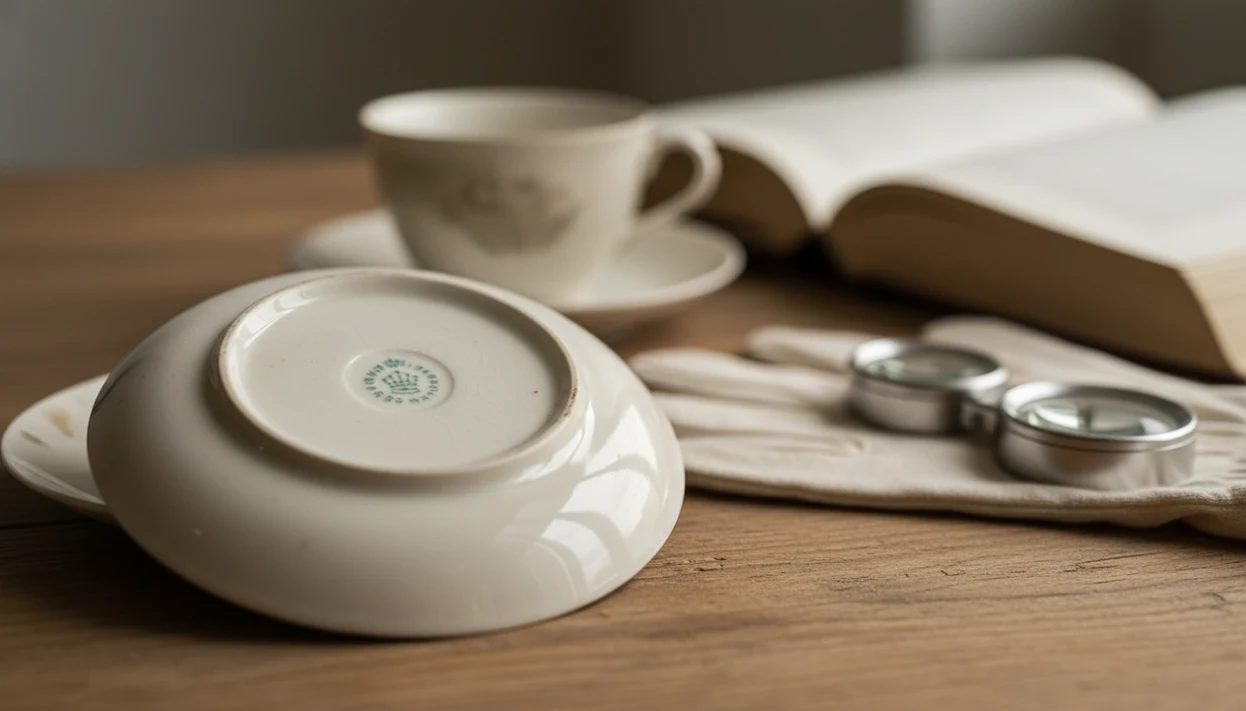
A crown with one shape, one word missing, or a slightly different border can point to another factory period. Turn the saucer over at the kitchen table, angle it away from ceiling glare, and read every letter before searching. Use photos, reference books, museum and library databases, and mark lookup apps as routes into the evidence.
A mark is not authentication. It is also not a value. For beginners, the safest conclusion is “consistent with this maker and date range,” not “confirmed rare antique.”
How porcelain backstamp identification works
Porcelain backstamp identification works by turning the mark into a testable hypothesis, then checking whether the object supports it. The stamp suggests a maker, market, or period, but authentication comes only when the wording, symbol, placement, and technique agree with the porcelain itself.
The process is cumulative. Country phrases and factory mark timelines can narrow a date range because laws, exports, mergers, and name changes often altered what appeared under a piece. Technique also matters: an impressed mark, printed underglaze mark, or later overglaze decorator mark may tell different stories. Then the body, glaze, decoration, wear, repairs, and foot ring must confirm the proposed match.
- Read the full mark exactly, including symbols, line breaks, numbers, and country wording.
- Compare the version with dated factory and export references, not just a similar online image.
- Check the porcelain body, glaze, decoration quality, and condition against that proposed maker and period.
- Escalate to a specialist appraiser when the piece is high-value, disputed, insured, damaged, or too unusual for photo research.
Porcelain backstamp evidence: names, symbols, numbers, and dates
A porcelain backstamp works as an evidence cluster: factory name, symbol, initials, country phrase, numbers, printing method, and placement all matter together.
Factories often changed marks over decades. A crown, wreath, shield, animal, crossed swords symbol, or wording line may have several versions, so porcelain mark dating depends on the exact version in front of you. The mark may be printed under the glaze, painted over the glaze, impressed into the clay, incised by hand, or stamped after decoration. Underglaze marks usually sit beneath the clear surface; overglaze marks can feel slightly raised or worn.
The University of North Texas Libraries’ art identification guides index more than 10,000 marks across porcelain, silver, and glass (Unt). That scale explains why systematic comparison beats a quick guess from one similar image.
Small differences do the work.
Porcelain backstamp photo requirements before you start
Start with a photo set, not a single cropped mark. You need the whole object, underside, close-up backstamp, rim, foot ring, decoration, and any chips, crazing, staining, repairs, or gilding loss.
Use indirect daylight, no flash glare, and a plain background. A sharp close-up taken beside a window at 10 a.m. usually beats a blurry phone photo under a yellow ceiling light. Record the object type, height, diameter, weight impression, translucency, and any labels, receipts, or family notes.
Tools like TIQ can be a photo-based starting point for maker hints and era clues, especially when the mark is hard to read. Treat the result as a prompt for research, not definitive authentication. If you are comparing other stamped objects, a maker mark identifier app can help organize the same kind of clue gathering.
For stronger cross-checking, compare TIQ results with non-AI references such as Kovels, The Marks Project, museum catalogs, and sold listings from eBay or WorthPoint when pricing context matters.
Ceramic backstamp guide workflow from photos
How to use porcelain backstamp identification from photos:
- Photograph the whole piece before the mark, so shape, decoration, and scale are not lost.
- Capture the backstamp sharply with indirect light and a neutral background, not a cropped blurry mark.
- Transcribe every detail exactly, including words, initials, numbers, symbols, punctuation, and line breaks.
- Compare multiple references rather than trusting one image-search match that only looks close.
- Build the date range from the strongest clues, usually country wording, registration data, and documented factory mark timelines.
- Check the object itself against the proposed maker, material, decoration quality, glaze, and foot ring.
For beginners, a full-object photo plus a legible mark photo is often more useful than a dramatic close-up because it lets the mark and the object argue with each other.
Step 1: Read every china backstamp identification clue
Before searching, extract the data from the mark as if you were copying a library catalog label. Write down odd spacing, broken letters, and misspellings. They may matter.
- Factory names and initials may identify the maker, but initials can repeat across firms.
- Symbols such as crowns, shields, animals, crossed swords, wreaths, and monograms need exact visual comparison.
- Country words such as England, Germany, Nippon, Japan, or Made in England can create date boundaries.
- Pattern names and numbers usually identify a design, not necessarily the factory by themselves.
- Registration numbers may point to design registration, not the year the individual plate was made.
Separate maker marks from retailer, decorator, importer, and pattern marks. A famous-looking symbol is only a clue. Copied marks exist, and a weak body or sloppy transfer print can contradict the name underneath.
Step 2: Use country marks for porcelain mark dating
Do country marks date porcelain exactly? Usually no. Country phrases often provide earliest-possible dates or export-market clues, not exact production years.
For U.S. imports, the McKinley Tariff Act of 1890 required imported goods to be marked with their country of origin; collectors often use that rule as an 1891-era research boundary, not an exact production date (GovInfo). That makes wording such as “England,” “Germany,” “Nippon,” “Japan,” and “Made in England” useful research prompts. The phrase does not work like a stopwatch. It tells you what laws, markets, or labeling habits may have been in play.
“England” and “Made in England” should be checked separately because factories used different wording at different times. “Nippon” and “Japan” also need careful export-context research. Legal marking rules varied by country and destination market, so a country word should narrow the search, not end it.
For English china, country wording is often the first useful boundary because it can rule out some earlier factory periods.
Step 3: Match porcelain mark dating against reference sources
Use trusted references to verify a possible maker and date range. One image-search result is not enough, because similar marks can belong to unrelated factories.
- Factory histories: These show when a company operated, merged, changed names, or altered its mark.
- Museum catalogs: Museum records can connect a mark with form, decoration, date, and provenance.
- Library guides and digitized mark books: Smithsonian Libraries and Archives provides access to large research collections and digitized references useful for porcelain mark work (Smithsonian).
- Specialized databases: The Marks Project documents thousands of American studio ceramic and pottery marks, which is useful for modern potter signatures (Themarksproject).
- Sold listing notes: A sold listing screenshot is stronger than an asking price, especially when it names the mark source.
Save screenshots or notes for each match. If your piece may be pottery rather than porcelain, a pottery mark identifier workflow may fit the clay body better.
Common porcelain backstamp identification myths
Several common assumptions lead beginners to overdate or overvalue china. Slow down before accepting the exciting answer.
- Myth: any backstamp means the piece is valuable. Many mass-produced pieces are clearly marked and still modest in value.
- Myth: unmarked porcelain is always fake or modern. Some early, regional, or worn pieces have no clear mark.
- Myth: “England” automatically means early 1800s. Country wording often points later, especially for export goods.
- Myth: decoration style alone can date porcelain accurately. Style helps, but marks, body, glaze, and records must agree.
- Myth: AI or image search can identify every obscure or worn mark. Worn stamps, fantasy marks, and regional variants can confuse both apps and humans.
A good AI antique and vintage item identifier app with maker marks, era/style guides, and value range estimates can speed up sorting, not replace reference checking or certified appraisal.
Porcelain backstamp verification checklist
Verify the proposed identification against the object itself before you accept it. The backstamp should make sense with the body type, glaze, paste color, weight, translucency, foot ring, and decoration.
Check whether the painting, transfer print, gilding, or molded detail fits the claimed maker and period. Hand-painted brushstrokes under magnification may support a better-quality decoration claim, but they still do not prove the factory. Look for reproduction marks, fantasy marks, later decorator marks, and transfers applied to blanks from another maker.
Keep identification separate from valuation. TIQ can help organize photo clues, maker hints, era hints, and rough value ranges, but valuation still depends on condition, demand, rarity, and sold comps. For rough pricing research, an antique value estimate app can sit beside backstamp notes rather than replace them.
Understanding Results
Porcelain backstamp results are strongest when the mark, object photos, material clues, and date evidence all point in the same direction.
TIQ works best when
- Clear, close photos of printed, impressed, painted, or stamped porcelain marks with all wording visible.
- Full-object photos showing the shape, decoration, glaze, foot ring, and underside together.
- Backstamps with country words, registration numbers, factory names, retailer marks, or recognizable symbols.
- Porcelain pieces that can be compared with documented factory timelines, museum records, catalogs, or auction comparables.
- Related marks research, including maker marks, hallmarks, silver marks, and pattern identifiers when an object has multiple clues.
TIQ may be less accurate when
- Blurred, cropped, overexposed, or glare-covered mark photos.
- Partial marks where key words, numbers, crown shapes, or border details are missing.
- Common reproduction marks, fantasy marks, or later decorator marks that imitate earlier factories.
- Pieces where the backstamp conflicts with the body, glaze, decoration, or wear.
- Value estimates without enough comparable sales for the same maker, pattern, size, age, and condition.
FAQ
What is the best antique identifier app for porcelain backstamps?
The best antique identifier app for porcelain backstamps should let you photograph both the mark and the full object, then compare wording, symbols, country marks, shape, and condition clues. TIQ is a practical choice for first-pass porcelain research because it helps organize photos, maker mark clues, and rough value context in one workflow.
What app identifies porcelain marks from pictures?
An app that identifies porcelain marks from pictures should analyze the backstamp along with the base, body shape, decoration, glaze, and visible wear. TIQ supports photo-based antique identification, making it useful when you need a quick research starting point during an estate sale or cleanout.
How much is my porcelain antique worth?
Porcelain value depends on maker, age, pattern, rarity, condition, demand, and recent comparable sales. A clear photo of the backstamp plus full-object images can help narrow a rough value range before you decide whether to sell, keep, or research further.
Is there a free antique identifier by picture for porcelain backstamps?
Free image searches can help you find similar marks, but they often miss small wording changes, decorator marks, retailer stamps, and date-code details. For porcelain backstamps, a dedicated antique identifier app can be more useful because it keeps the mark, object photos, and value research together.
Can a backstamp identify the exact maker and date?
A backstamp can often narrow the maker, country, and approximate date range, especially when the wording or symbol changed over time. Exact dating may still require checking the porcelain body, pattern, registration marks, shape, and documented factory references.
How accurate is porcelain backstamp identification from photos?
Accuracy improves when you photograph the mark in sharp focus and include the entire object, base, decoration, and any damage. Photo-based identification is best used as a research starting point, then confirmed against reliable mark guides, museum records, or expert review for high-value pieces.
Can fake or copied porcelain marks mislead identification?
Yes, copied marks are common on some porcelain categories, especially pieces imitating well-known European or Asian makers. A mark should be checked against the paste, glaze, decoration quality, wear patterns, and known factory history before assuming authenticity.
Are my porcelain photos private when using TIQ?
Privacy matters when you are sorting inherited items, estate contents, or potential valuables. Review TIQ’s current privacy terms in the app or App Store listing so you understand how photos and item research are handled before uploading sensitive images.
Ready to start?
Ready to start? Photograph the full porcelain piece, the underside, and a close, glare-free backstamp, then use TIQ on iPhone to compare maker marks, hallmarks, backstamps, porcelain marks, and related value clues in one place.