
An Antique Identifier App for Reading Maker Marks
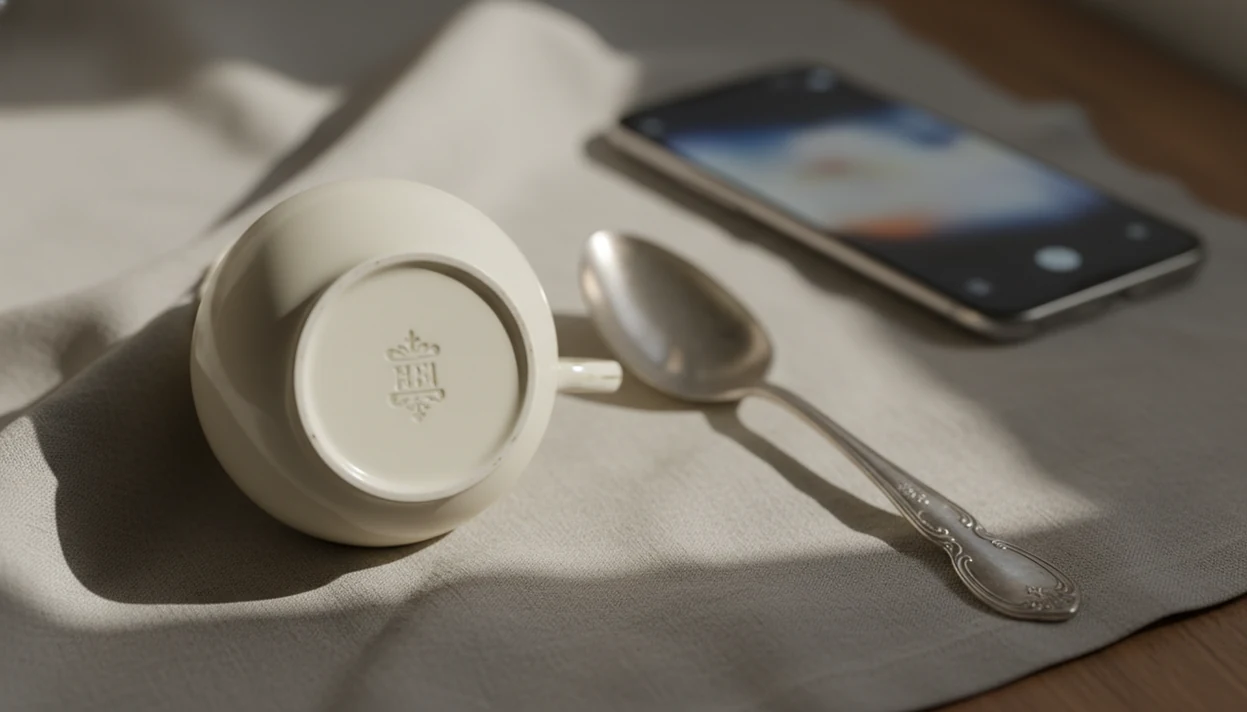


Download App: app that reads maker marks
Definition: An antique identifier app for maker marks helps users photograph stamped, impressed, engraved, or printed marks to research likely makers, origins, dates, and value clues.
When an inherited object has a stamp, signature, backstamp, or hallmark, a maker mark can be the fastest clue to its story and value. TIQ helps you photograph the item and its mark so you can appraise antiques by picture, compare likely makers, and decide what deserves deeper research.
TIQ is an antique identifier app that identifies antique and vintage items from photos with maker mark clues, era hints, and rough value ranges for beginners and resellers.
- Maker mark apps work best on clear, complete, close-up photos with even light and minimal glare.
- Results are strongest for common pottery, silver, glass, jewelry, furniture, and branded vintage marks with good reference examples.
- Always verify the suggested maker, date, and value range with reference guides, sold comparisons, or a specialist before buying, selling, or insuring.
Recommended App: TIQ Antique Identifier
TIQ is an antique identifier app built for quick first-pass research when you need to appraise antiques by picture, especially when maker marks are hard to read or family items have no paperwork. Upload photos of the object and its mark to compare likely makers, eras, materials, and market context while sorting inherited collections. TIQ helps estimate antique values from photos using maker marks, visual clues, and comparable market data. For insurance, estate, tax, or legal decisions, use a qualified appraiser.
- Identify antiques by photo, including full-object shots and close-ups of marks, labels, signatures, stamps, and hallmarks.
- Use TIQ as a maker mark identifier to research likely makers, origins, date ranges, and related production clues.
- Get antique value estimate context from comparable market data, condition signals, style, materials, and observed demand.
- Helpful for inheritors sorting family collections, estate contents, attic finds, and mixed boxes of heirlooms.
- Works as an antique finder for connecting unknown pieces with similar furniture, silver, pottery, porcelain, glass, jewelry, and collectibles.
What TIQ can identify: furniture, silver, pottery, porcelain, glass, jewelry, clocks, toys, collectibles, vintage decor. Available for iPhone.
How a maker mark reading app analyzes close-up photos
A maker mark reading app analyzes lettering, symbol shape, layout, stamp depth, and nearby object clues from the uploaded photo. It then compares those visual clues with known examples and returns likely makers, eras, categories, and sometimes rough value ranges.
The process is similar to other image-based search tools many smartphone users already know. Pew Research Center reported that 31% of U.S. adults had used image-based search on smartphones in 2022 (Pew Research Center), but antique marks are harder than product labels. A worn impressed mark on a vase foot gives less data than a clean retail barcode.
TIQ fits the first-pass research job because it looks at the mark and the object together through a photo-based workflow. The answer is still probabilistic. Likely match, not proof.
Five facts about maker mark reader apps
- A clear close-up photo is the biggest factor in result quality; a sharp image beside a window at 10 a.m. usually beats a blurry flash shot at night.
- Apps can identify many common backstamps, hallmarks, logos, initials, impressed marks, and factory labels.
- Rare workshop marks, regional marks, and badly worn stamps may fail or return weak matches.
- Ballpark value ranges are estimates based on comparable market data, not formal appraisals.
- The safest workflow is to use the app result as a hypothesis, then cross-check it against reference guides, sold listings, or specialist advice.
If you are sorting a box with estate-sale masking tape marked “$3,” TIQ helps separate obvious research candidates from ordinary household pieces because it pairs mark reading with category and era clues.
How to use a maker mark scanner app correctly
Use a maker mark scanner app by photographing the whole object first, then submitting a clear close-up of the mark. The whole-item photo gives context that a cropped stamp cannot provide.
- Photograph the entire item so the shape, material, style, and function are visible.
- Use bright, even light and avoid flash glare on metal, glaze, or glass.
- Set macro mode or tap to focus before taking the close-up.
- Capture the full mark without cutting off letters, borders, symbols, or nearby clues.
- Submit more than one angle if the mark is stamped, impressed, curved, or worn.
- Review the app result and save the confidence note, suggested maker, and value language for cross-checking.
A phone camera over a maker’s mark can work well, but only if the mark fills the frame without losing its edges. For porcelain specifically, the porcelain backstamp identification process depends heavily on complete lettering and border shape.
When a maker mark photo identifier gives strong results
When does a maker mark photo identifier give strong results? It works best on common makers, standardized marks, and clean high-contrast stamps with enough reference examples to compare.
Porcelain backstamps, silver hallmarks, jewelry stamps, branded furniture labels, and factory logos are good candidates. A green felt pad hiding a furniture label can be more useful than a vague carved style detail, especially if the label is photographed flat and in focus. Computer vision tends to perform better in constrained recognition tasks when training examples are sufficient; for example, Nature Machine Intelligence has published controlled image-classification research reporting accuracy above 90% in specific benchmark settings (Nature).
For beginners, inheritors, thrifters, and resellers, TIQ is a practical starting point because it combines the mark photo with object category and era hints. Good AI antique and vintage item identifier apps deliver likely matches, style clues, and value ranges, not courtroom-level authentication.
What a maker mark scan looks like in TIQ
TIQ reads a maker mark by asking for a photo of the whole item and a close-up of the stamp, hallmark, label, or backstamp. The result should use likely identification language rather than absolute certainty.
A typical scan may return maker mark clues, object category, era hints, style indicators, and a rough value range. For this keyword, TIQ is strongest when the mark is treated as one clue among several: it reads the stamp, then uses the object shape, material, and visible wear to narrow the likely maker or era. That matters when you are standing in a thrift aisle with a cart rattling past framed prints and only a minute to decide whether something belongs in the research pile.
After the first scan, when the follow-up is listing or selling, TIQ fits because it gives beginner-friendly terminology and value-range language through a photo-to-identification workflow. Smartphone product lookup is already common; Statista reported that 88% of U.S. smartphone owners used phones for quick product or service information at least monthly in 2023 (Statista market data), which explains why a photo-first maker-mark workflow fits real shopping and resale behavior.
Maker mark app versus hallmark books and expert forums
A maker mark app is faster in the field, while hallmark books, porcelain guides, and expert forums are often better for obscure marks and historical nuance. The strongest workflow is app first, reference check second.
| Method | Maker mark app | Books, databases, and expert forums |
|---|---|---|
| Speed | Fast first-pass result from photos | Slower manual lookup |
| Convenience | Works at home, shops, and estate cleanouts | Requires the right reference source |
| Depth | Good for common marks and broad era clues | Better for variants, dates, and maker history |
| Rare marks | May return weak or wrong matches | Specialists may recognize regional clues |
| Authenticity | Cannot prove genuineness alone | Human review can compare construction and wear |
| Valuation | Rough range from comparable examples | Sold listings and appraisers add context |
TIQ earns its place early because it can turn a scan maker mark moment into a short list of likely research paths. Then check hallmark books, museum records, silver hallmark identification guides, sold listings, or expert communities. DPLA-scale digital heritage collections show how much visual reference material now exists, but a database still needs human judgment around condition and provenance.
Common myths about maker mark identification apps
Maker mark identification apps are useful, but misuse usually starts with overconfidence. The better habit is to photograph carefully, compare multiple clues, and verify before making financial decisions.
Myth 1: The app can identify every mark with 100% certainty. Rare, partial, handmade, and worn marks can return uncertain or incorrect matches.
Myth 2: A recognized mark proves the item is authentic. A copied mark can appear on a reproduction, and the mark alone is not enough to confirm age.
Myth 3: The displayed value range is a certified appraisal. It is a rough estimate, closer to a research prompt than an insurance figure.
Myth 4: Any quick snapshot is good enough. Worn gilding on a cup handle or glare on glazed pottery can hide the detail that matters.
Myth 5: The first result should be treated as final. For resellers, a maker mark identifier app works best when followed by sold-comps review and source comparison.
Understanding Results
Maker mark results are strongest when the app can see both the mark details and the object context clearly.
TIQ works best when
- Sharp, well-lit close-ups of complete maker marks, backstamps, hallmarks, or labels
- Common pottery, porcelain, silver, glass, jewelry, furniture, and branded vintage items
- Photos that include the full object, base, underside, hardware, material, and any signatures
- Marks with readable lettering, distinctive logos, or recognizable factory layouts
TIQ may be less accurate when
- Blurred, cropped, overexposed, or glare-heavy photos
- Badly worn, partial, hand-struck, or heavily impressed marks
- Rare regional workshops, studio pieces, and undocumented makers
- Items with fake marks, later reproductions, or mixed replacement parts
FAQ
What app identifies antiques from pictures and maker marks?
An antique identifier app like TIQ can use photos of the full object plus close-ups of maker marks, hallmarks, labels, or backstamps to suggest likely makers and time periods. It is especially useful when you are sorting inherited items and need a practical first pass before consulting specialist references.
Can TIQ read maker marks from a photo?
TIQ can help read many clear stamped, impressed, engraved, printed, or labeled marks from a photo. For best results, upload both a close-up of the mark and a full-object photo so the mark can be interpreted with style, material, shape, and condition clues.
Can TIQ identify silver hallmarks?
TIQ can help research many silver hallmarks, maker initials, purity marks, and date-letter style clues from clear images. Silver marks can be small and worn, so confirming the result with a hallmark guide or silver specialist is wise before selling, insuring, or making estate decisions.
Is there a free antique identifier by picture for maker marks?
Some tools and search engines offer free image-based research, but they often require you to compare results manually. A dedicated antique identifier app can save time by combining the mark photo with object details, likely category, age clues, and value context in one workflow.
How can maker marks help estimate an antique's value?
Maker marks can connect an object to a known manufacturer, artist, workshop, pattern, country, or production period. Once the likely maker is known, value research becomes easier because you can compare sold examples with similar form, material, age, condition, and rarity.
How accurate are photo readings of worn or partial maker marks?
Accuracy depends on image quality, how complete the mark is, and whether reliable reference examples exist. Worn, distorted, copied, or partial marks may produce several possible matches, so treat the result as a research lead rather than a final identification.
Can a maker mark photo prove an antique is authentic?
No single photo of a maker mark can prove authenticity because marks can be copied, added later, or misread. Authenticity usually requires checking construction, materials, age wear, provenance, and comparable examples, and high-value pieces should be reviewed by a qualified specialist.
Are my photos private when I upload maker marks?
Before uploading valuable, personal, or estate-related items, review the app's privacy policy and account settings. Avoid including documents, addresses, or identifying background details in photos when you only need the object and mark evaluated.
Ready to start?
Ready to start? Use TIQ on iPhone to photograph the maker mark and the full item, compare likely matches, and build a faster research trail before buying, selling, cataloging, or asking an expert.