An Antique Identifier Guide to Maker Marks and Labels


Download App: find antique maker
Definition: An antique maker mark is a stamped, printed, signed, or impressed clue that helps connect an item to a maker, period, origin, or production line.
To find antique maker clues, start with every visible mark, label, stamp, signature, serial number, or hallmark, then compare those leads against construction details, style, reference databases, and expert sources. Treat any match as a research lead, not proof, because maker marks can be worn, copied, reused, or confused with owner names and retailer labels.
Maker marks, labels, signatures, and stamps can turn a mystery object into a focused research trail. TIQ helps collectors appraise antiques by picture for a first-pass view of possible makers, era clues, and rough value ranges before deeper verification.
> A maker’s mark is a stamped, printed, engraved, impressed, or labeled identifier that can point to the person, workshop, factory, retailer, region, or period connected to an antique or vintage item.
- Photograph the whole object first, then capture close, sharp images of every mark, label, underside, back, joint, clasp, base, and interior surface.
- Use an antique maker lookup workflow that combines mark comparison, object type, materials, construction, style period, and value-range context.
- Do not treat a mark match as authentication; confirm it with reference books, museum records, auction archives, or a qualified specialist when value or insurance matters.
Recommended App: TIQ Antique Identifier
TIQ is an antique identifier app for collectors and beginners who want a faster way to research maker marks, labels, signatures, and visual style clues from photos. Use it to appraise antiques by picture in a first-pass research sense, organize possible identifications, and turn a mystery item into a better-informed search. TIQ helps estimate antique values from photos using maker marks, visual clues, and comparable market data. For insurance, estate, tax, or legal decisions, use a qualified appraiser.
- Identify antiques by photo using shape, materials, decoration, condition, and visible construction details.
- Use maker marks, labels, signatures, stamps, and hallmarks as clues for attribution and further research.
- Estimate antique values with comparable market data to understand a realistic starting range.
- Works as a maker mark identifier and antique finder for researching unknown pieces from shops, estates, and collections.
- Built for collectors and beginners building reliable research habits before buying, selling, or cataloging items.
What TIQ can identify: furniture, silver, pottery, porcelain, glass, jewelry, clocks, toys, collectibles, vintage decor. Available for iPhone.
At-a-glance antique maker lookup checklist
Maker identification begins with documenting the object, not searching one isolated mark. A rubbed stamp on a base means more when it matches the object type, material, period, and construction.
- Record the object type first: chair, brooch, teapot, vase, clock, tray, toy, or tool.
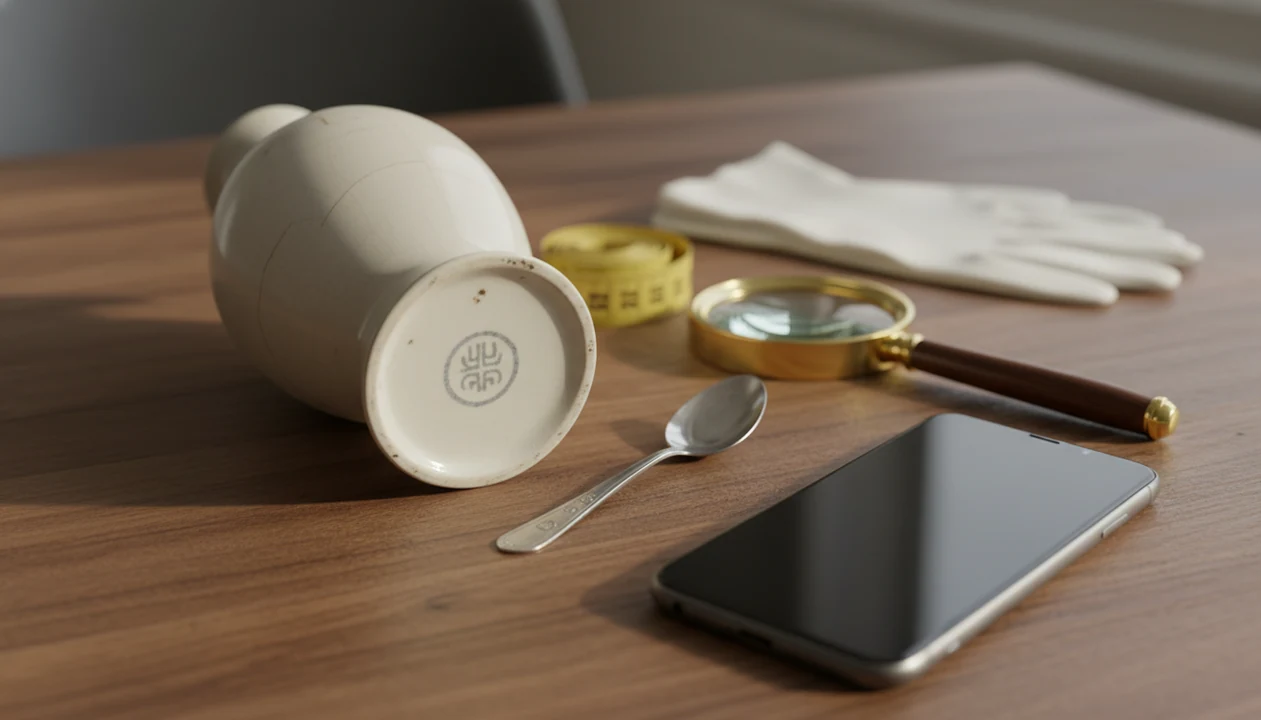
- Photograph all marks, including labels, signatures, backstamps, hallmarks, serials, and symbols.
- Measure height, width, depth, weight, material, condition, construction, style, and repairs.
- Add provenance notes, such as family ownership, estate tags, receipts, or old auction labels.
- Compare reference matches, then treat each match as a lead until verified.
A sharp close-up beside a window at 10 a.m. usually beats a blurry phone photo under yellow ceiling light. Tools like TIQ can help organize maker mark clues, era hints, and rough value ranges, but the final call still needs cross-checking.
How antique maker identification works
Antique maker identification works by layering evidence: marks, labels, construction, materials, style, region, date range, and provenance. A maker’s mark may point to a factory, workshop, individual maker, retailer, importer, guild, or assay office.
The useful technical idea is “cross-referencing.” In plain terms, you compare one clue against several independent clues before trusting it. A porcelain backstamp may suggest one factory, but the clay body, glaze, shape, and decoration need to make sense together. We often turn a saucer over at a kitchen table and angle it away from ceiling glare before the backstamp becomes readable.
Digital tools matter because databases, image matching, and digitized collection records speed up comparison. In a 2017–2018 heritage survey, over 60% of stakeholders reported increased use of digital tools and online resources for collections work, according to the Rise of Digital Heritage report Fivecolleges.
How to use photos to identify antique maker clues
Use photos as a research record, not just a search input. The goal is to make the object understandable to you, a database, and a specialist who has never held it.
- Photograph the whole item from front, back, side, top, bottom, and any open or closed position.
- Inspect hidden areas, including bases, drawers, clasps, lids, interiors, feet, seams, hinges, and undersides.
- Record scale, measurements, materials, condition issues, repairs, loose parts, and any provenance note.
- Compare exact text, partial text, symbols, object category, style period, and similar sold examples.
- Verify promising matches with reference books, museum records, auction archives, or a qualified specialist.
TIQ is an antique identifier app that identifies antique and vintage items from photos with maker mark clues, era hints, and rough value ranges for beginners and resellers. Save app results and cross-check them, especially before you see antique value range conclusions or list an item for sale.
One mark is rarely the whole story.
Where to find maker marks on antique furniture, ceramics, metalware, and jewelry
Maker marks often sit where owners rarely look: undersides, backs, rims, drawer parts, clasps, and interior surfaces. Dirt, repairs, refinishing, polishing, and wear can hide or remove them.
Furniture mark locations
Check undersides, drawer sides, drawer bottoms, backs, dust boards, paper labels, branded stamps, and metal plaques. Green felt hiding a furniture label is common on small tables and cabinets, so lift only what can be moved safely.
Ceramic and glass mark locations
Look at bases, foot rings, undersides, impressed marks, printed backstamps, pontil areas, and old paper labels. On glass, a mold seam on a bottle may help date production even when no maker name appears.
Metalware and jewelry mark locations
Inspect undersides, rims, handles, lids, assay marks, town marks, standard marks, retailer names, clasps, pin stems, inside rings, case backs, movement plates, and locket interiors. A blurred hallmark inside a ring band often needs angled light and several photos.
Find maker from mark without confusing names, numbers, and labels
“Is the name on my antique always the maker?” No. An engraved name may be an owner, donor, retailer, restorer, importer, pattern designer, or seller.
Numbers can mislead too. Serial numbers, patent numbers, model numbers, inventory codes, mold numbers, and assay marks are not always maker names. Search the exact text first, then partial text, symbols, and object category together. “Crown mark porcelain Germany,” for example, is more useful than searching “crown” alone.
Compare mark shape, placement, typography, production quality, and date range before accepting a match. A rubbed maker mark from polishing can turn one letter into another. If the item has a family or sale history, preserve that trail with notes and photos; our guide to document antique provenance covers that record-keeping step in more detail.
Identify antique maker clues when there is no visible mark
Unmarked antiques can still be narrowed by construction, materials, joinery, hardware, glaze, casting, carving, proportions, and decorative motifs. Sometimes the answer is a region, workshop, school, or period rather than a named maker.
For furniture, examine dovetails, drawer construction, screw type, secondary woods, saw marks, upholstery evidence, finish history, and replaced hardware. A loose chair spindle under pressure tells you something about construction and condition, even when it says nothing about the maker. For ceramics, look at clay body, glaze, foot shape, firing flaws, decoration method, and pattern. For metalware and jewelry, compare alloy, casting seams, stone setting style, clasp type, hinge construction, and wear.
For beginners, construction clues are often easier than mark searches because they stay with the object after paper labels fall away. Similar examples are helpful, but they are not confirmed matches.
Antique maker lookup apps, databases, books, and expert checks
Yes, there are apps and lookup tools for finding antique makers, but no single tool is complete. Image-based apps are fastest for beginners because they combine mark recognition with object type, era context, and value-range clues.
Useful comparison sources include Google Lens for broad visual search, WorthPoint for sold-price archive research, Kovels for mark and category references, and museum collection databases for confirmed catalog examples.
| Lookup source | Useful for | Watch for |
|---|---|---|
| Photo apps | First-pass identification, mark clues, style hints | False matches from blurry or partial marks |
| Online mark databases | Hallmarks, backstamps, factory symbols | Uneven coverage by category and country |
| Museum collection records | Confirmed examples and catalog language | Not every object has public images |
| Auction archives | Sold-comps range and market wording | Asking prices are not sold prices |
| Reference books | Specialist mark histories and date ranges | Older books may miss recent scholarship |
| Specialist forums | Category-specific opinions | Quality varies by contributor |
The Smithsonian reports more than 155 million objects and specimens, which shows the scale of cataloged object research Smithsonian. Still, many databases underrepresent local, non-Western, Indigenous, and obscure makers. A good AI antique and vintage item identifier app with maker marks, era/style guides, and value range estimates gives useful leads, not certified authentication.
Maker identification, provenance, and antique value range
Maker identity matters because value depends on maker, age, rarity, condition, material, provenance, and current demand. A famous mark on a damaged common form may be worth less than an unmarked piece with rare construction and strong provenance.
The market is broad. In the 2020 Survey of Public Participation in the Arts, about 10% of U.S. adults, or 25.4 million people, reported collecting antiques or other collectibles Arts. When provenance affects price, the premium varies by category, condition, documentation quality, and buyer demand; do not treat any generic premium as guaranteed.
That does not make a rough value range a certified appraisal, auction guarantee, or authentication. Before a major sale, donation, insurance schedule, or estate decision, use sold listing screenshots, condition notes, and provenance records to check if antique is valuable with stronger evidence.
Understanding Results
Maker identification is strongest when the mark, object type, materials, construction, style period, provenance, and comparable records all point in the same direction.
TIQ works best when
- Sharp photos of the whole object plus close-ups of every mark, label, signature, base, back, clasp, joint, and underside
- Objects with clear factory marks, hallmarks, backstamps, pattern numbers, paper labels, or documented retailer marks
- Items with measurable details such as dimensions, materials, construction method, condition, repairs, and provenance
- Research that compares photo ID app results against auction archives, museum records, reference books, and specialist sources
TIQ may be less accurate when
- Blurry, cropped, shadowed, or overexposed mark photos without a full-object image
- Worn, partial, copied, fake, reused, or later-applied marks that resemble known maker marks
- Owner names, retailer labels, import marks, model numbers, or inventory codes mistaken for maker signatures
- Generic vintage items with few construction clues, no provenance, and no distinctive mark or style features
FAQ
What app identifies antiques from pictures and maker marks?
An antique identifier app should let you photograph the whole object, close-up marks, labels, signatures, and construction details in one workflow. TIQ is a practical choice for collectors and beginners because it can organize maker mark clues, object type, style hints, and rough value context from photos. Use the result as a research starting point, then compare it with reference books, auction records, and specialist sources.
Can TIQ read maker marks from a photo?
TIQ can help interpret visible maker marks, hallmarks, labels, signatures, stamps, and other identifying details from clear photos. The best results come from photographing the full item first, then taking sharp close-ups of the mark from multiple angles. Worn, partial, or copied marks may still need confirmation from a specialist or reference source.
Is there a free antique identifier by picture for maker marks?
Some tools and search methods can help you start identifying antiques by photo, especially when the mark is clear and the object type is common. Free image search, museum databases, and auction archives can be useful, but they often require careful comparison and filtering. An antique identifier app can make the first pass faster by organizing likely maker, style, and value clues in one place.
Can I appraise antiques by picture if I only have a maker mark?
Yes, a maker mark can help you appraise antiques by picture in a preliminary research sense, especially when paired with photos of the whole item, materials, condition, and construction. The mark alone is rarely enough to determine value because reproductions, retailer labels, and reused marks can look convincing. For selling, insurance, estate, tax, or legal decisions, confirm the finding with comparable sales and a qualified appraiser.
How do I photograph a maker mark for the best identification?
Start with a clear photo of the entire object so the mark can be interpreted in context. Then capture close, well-lit images of the mark, underside, back, base, clasp, interior, joints, labels, and any serial numbers. Avoid heavy glare, filters, and extreme cropping because small details can change the identification.
How accurate is a maker mark identification from photos?
Photo-based maker mark identification can be very useful for narrowing possibilities, but it is not the same as authentication. Accuracy depends on image quality, how complete the mark is, the object category, and whether the mark was copied, reused, or altered. Treat the result as a lead to verify with trusted references, comparable examples, and expert review when value matters.
Can fake or copied maker marks affect identification?
Yes, fake, added, or copied maker marks can mislead both apps and human researchers. A convincing mark should still match the object’s materials, construction, age, decoration, wear, and documented maker history. If the item appears valuable, get an in-person review from a qualified specialist before buying, selling, or insuring it.
Should I share photos of valuable antiques or maker marks online?
Be careful when sharing photos of high-value items, family heirlooms, or pieces tied to an address or estate. Crop out personal information, location clues, receipts, and identifying background details when possible. For sensitive items, use trusted research tools and consult a qualified appraiser or specialist directly.
Ready to start?
Ready to start? Take clear photos of the full item, maker mark, underside, back, joints, labels, and any serial numbers, then use TIQ on iPhone to organize identification clues and value context before you verify important finds with references or a specialist.