Antique Identifier Guide to Sterling Silver vs Silver Plate


Download App: sterling silver vs silver plate
If you inherited flatware, trays, tea sets, or jewelry, a photo-first workflow can help you spot marks, wear, and value clues before deciding what needs expert testing. TIQ helps you appraise antiques by picture so you can separate likely sterling silver from silver plate and prioritize the pieces worth closer research.
Definition: Sterling silver vs silver plate is the process of distinguishing solid sterling silver from base metal coated with silver by checking marks, wear patterns, construction, and value clues.
- Look first for marks such as “925,” “sterling,” “EP,” “EPNS,” or “silver plate.”
- Inspect high-wear areas like rims, handles, feet, engraved monograms, and raised decoration for coppery or yellow base metal.
- Avoid destructive home testing on antiques unless the item has low value or an expert recommends it.
Recommended App: TIQ Antique Identifier
TIQ is an antique identifier app for turning photos of inherited silver, tableware, and family collection finds into clearer first-pass research. Use it to appraise antiques by picture in a research sense, compare visible marks and design clues, and organize what may be sterling silver, silver plate, or another collectible category. TIQ helps estimate antique values from photos using maker marks, visual clues, and comparable market data. For insurance, estate, tax, or legal decisions, use a qualified appraiser.
- Identify by photo: upload silverware, trays, tea sets, candlesticks, jewelry, and mixed household antiques for fast visual guidance.
- Maker marks: use TIQ as a maker mark identifier to research hallmarks, stamped names, symbols, and pattern clues.
- Estimate values: get an antique value estimate based on condition, comparable market data, age clues, and likely category.
- Who it is for: inheritors sorting family collections, collectors, resellers, and anyone deciding what to keep, sell, test, or research further.
- Antique finder workflow: save promising pieces, compare similar objects, and separate everyday silver plate from items worth closer review.
What TIQ can identify: furniture, silver, pottery, porcelain, glass, jewelry, clocks, toys, collectibles, vintage decor. Available for iPhone.
Sterling Silver Vs Silver Plate At A Glance
Sterling silver is silver alloy throughout the object, while silver plate is a silver surface over another metal. The quickest comparison is marks plus wear, not shine alone.
| Clue | Sterling silver | Silver plate |
|---|---|---|
| Metal structure | 92.5% silver alloy throughout | Thin silver layer over base metal |
| Common marks | 925, sterling, sterling silver, assay symbols | EP, EPNS, A1, silver plate, quadruple plate |
| Wear behavior | Scratches still show silver-colored metal | Edges may reveal copper, brass, gray, or yellow metal |
| Value basis | Usually has higher intrinsic value from real silver content | Usually valued for maker, design, pattern, or history |
| Cleaning risk | Can tolerate careful polishing, though detail can soften | Over-polishing can remove the silver layer |
| Testing confidence | Marks and expert tests can support identification | Thick plate can imitate sterling closely |
A heavy plated hotel creamer can feel convincing in the hand. Still, sterling usually carries stronger metal value, while thick antique plate can remain collectible.
Five Sterling Silver Vs Silver Plate Facts Beginners Need
These five facts prevent most beginner mistakes when comparing silver plate vs sterling. We use the same checklist when a blurry hallmark photo arrives from a drawer cleanout.
- Sterling silver is 92.5% pure silver by weight under the U.S. sterling standard, with the remaining 7.5% usually other metals for strength (FTC jewelry guidance: eCFR (FTC jewelry guides)).
- Silver plate is usually copper, brass, nickel, or another base metal covered with a silver coating.
- “925,” “sterling,” and “sterling silver” generally point to sterling, while “EP,” “EPNS,” and “silver plate” point to plated wares.
- Sterling can usually be polished repeatedly, while silver plate can wear through at edges, feet, handles, and raised decoration.
- Maker marks, country assay marks, pattern names, and era rules matter as much as the 925 vs silver plate distinction.
If your priority is sorting a mixed estate box quickly, TIQ fits because it lets you photograph marks, compare likely maker clues, and keep uncertain pieces in a research pile.
How Sterling Silver And Silver Plate Construction Works
Sterling silver is an alloy, meaning silver is mixed with a smaller amount of strengthening metal, commonly copper. Silver plate is different: a thin silver layer is bonded to a cheaper core, often through electroplating.
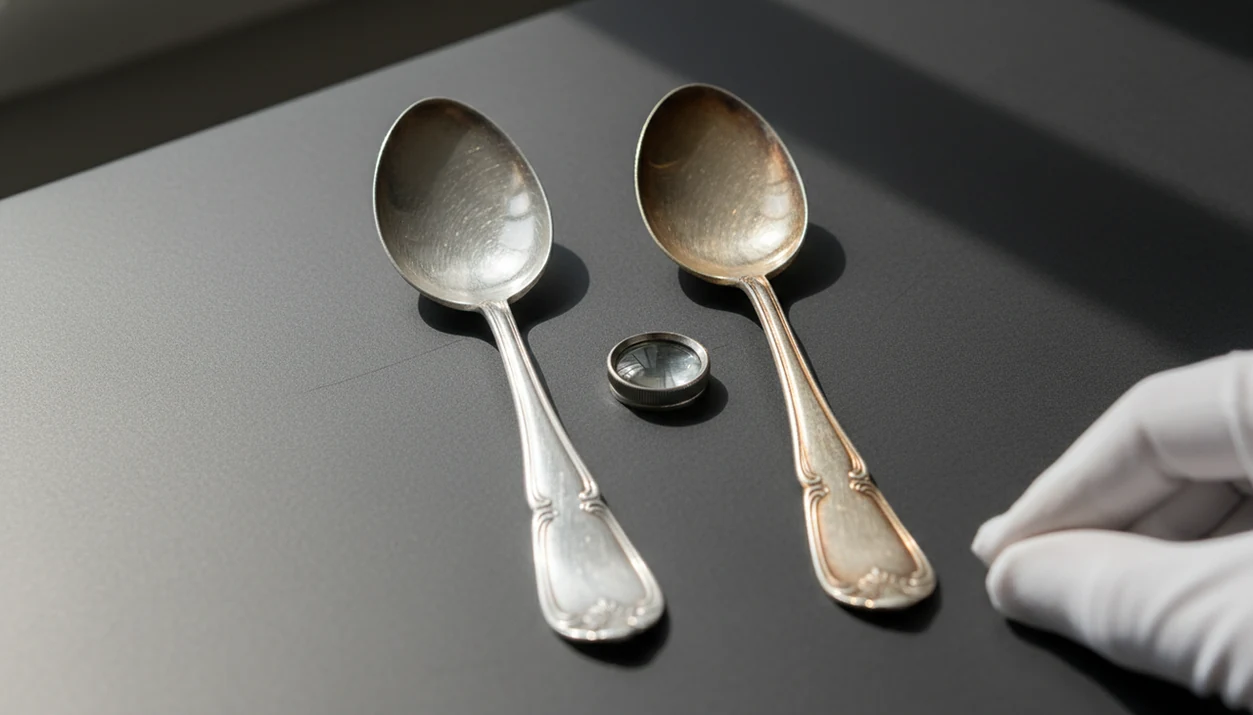
That construction explains the visible clues. Sterling stays silver-colored below normal scratches, dents, and engraving. Plate may expose a coppery, brassy, gray, or yellow core where the surface has been rubbed away. A hairline scratch across a tray rim is often more useful than the tray’s overall brightness.
Silver also has high thermal conductivity, so ice tests can look dramatic on real silver. However, temperature feel is only a supporting clue. TIQ treats ice, weight, and tarnish as prompts for further checking, not proof, because photo clues and marks carry more identification value.
How To Identify Sterling Silver From Photos And Marks
To identify sterling silver safely, start with clear photos, read every mark, inspect wear points, and escalate valuable pieces before using destructive tests. A sharp close-up beside a window at 10 a.m. beats a dark photo inside a cabinet door.
- Photograph the whole item from the front, back, underside, handles, rims, feet, and any hinged or engraved areas.
- Read the marks first and note “925,” “sterling,” “coin,” “EP,” “EPNS,” “A1,” country symbols, and maker initials.
- Inspect high-wear points for coppery, brassy, gray, or yellow base metal showing through.
- Compare maker marks and patterns in reference sources or with TIQ when a stamp is partial or unfamiliar.
- Escalate uncertain pieces to a jeweler, silver dealer, appraiser, or XRF tester if value, inheritance, or insurance may matter.
Estate-sale buyers who need a fast first pass can use antique identifier for estate sales workflows to separate keep, sell, donate, research, and appraise piles.
Where Sterling Silver Wins For Antique Value
Sterling silver usually wins on value because the silver is present throughout the object, not only on the surface. In 2023, the annual average silver price was about $23.35 per troy ounce, which gives sterling a metal-value floor that plate usually lacks (U.S. Geological Survey silver statistics: USGS).
That number is context, not a guaranteed item value. Weight, condition, maker, age, pattern, rarity, and buyer demand all change the result. A dented spoon by an ordinary maker may be closer to metal value, while a scarce pattern by a desirable maker can sell above weight.
For inherited flatware owners, sterling is often easier to value than silver plate because melt weight, maker, and sold-comps range can be cross-checked. TIQ supports that research because it captures marks, condition notes, and value-range prompts in one first-pass workflow.
Monograms, solder repairs, missing knife blades, over-polishing, and altered forms can reduce collectible value. Always check sold listing screenshots, not just polished asking prices.
Where Silver Plate Wins For Antique Collectors
Silver plate wins when a collector wants decorative, usable, or historically interesting tableware without sterling prices. It can be affordable and handsome, especially in complete patterns or strong presentation pieces.
In a real dining room, that can mean using the plated tea set on a sideboard without worrying that every new scratch is eating into a high melt-value object.
Collectible plate includes high-quality Sheffield plate, hotel silver, named makers, military or club presentation pieces, and complete services with serving pieces intact. A silver-plated coffee pot with a hotel crest may have more story than a plain damaged sterling spoon.
The value usually comes from design, maker, condition, rarity, or provenance rather than melt value. A handwritten note tucked in a teapot can matter if it connects the piece to a family, hotel, ship, or local institution.
After a thrift-store find, when the mark is readable but the metal is uncertain, TIQ helps because it compares maker-mark language and flags plated terms before you overstate a listing.
Damaged or heavily worn plate is often difficult to restore economically. Replating can cost more than resale value.
Who Should Choose Sterling Silver Or Silver Plate?
Choose sterling silver when long-term metal value, formal appraisal, insurance, or heirloom preservation matters most. Choose silver plate when you want attractive pieces for display, entertaining, pattern collecting, or a lower purchase price.
The right choice depends less on shine and more on what you expect the object to do in your home, estate plan, or resale pile.
- Choose sterling if the piece may need an appraisal, scheduled insurance coverage, estate division, or careful preservation for the next generation.
- Choose silver plate if you want a tea service, tray, or flatware pattern you can actually use at dinner without tying up sterling-level money.
- Check the purpose before buying: a cabinet display piece can tolerate different wear than a fork set used every holiday.
- Ask an expert for testing when sale value, inheritance, authenticity, or a family dispute depends on the answer.
- Avoid buying from photos alone when the listing hides marks, rims, feet, handles, worn decoration, or the underside, because those are often the clues that separate sterling from plate.
For mixed family silver, sort first, then decide what deserves professional review.
925 Vs Silver Plate Marks On Antique Silver
Does “925” mean sterling and “EPNS” mean silver plate? Usually, yes, but silver marks must be read in full because country, period, maker, and alteration history can change the conclusion.
For British pieces, the Assay Office and hallmark sequence can matter more than a single stamped word; the London Assay Office overview is a useful starting point for understanding official marks: London Assay Office. For American pieces, maker databases and sold-comps should be treated as supporting evidence, not proof of metal content.
Sterling and solid silver marks
“925,” “sterling,” and “sterling silver” generally indicate sterling-grade silver. “Coin” often refers to American coin silver, commonly older than standardized sterling marking. British lion passant marks, French Minerva heads, and continental 800 or 835 marks point to country-specific silver systems, not always U.S. sterling.
Silver plate and electroplate marks
“EP,” “EPNS,” “EPC,” “A1,” “quadruple plate,” and “silver soldered” usually indicate plated or related wares. Marks can be worn, fake, incomplete, misread, or added to altered items.
A good ai antique and vintage item identification app with maker marks, era/style guides, and value range estimates should narrow the next research step, not declare guaranteed authenticity. TIQ follows that middle ground through photo clues, mark comparison, and cautious wording.
Common Sterling Silver Vs Silver Plate Myths
Beginner silver myths usually come from relying on one clue too heavily. Use marks, wear, maker context, and condition together.
- Heavy means sterling. Many base metals are heavy, and hotel silver can feel substantial even when plated.
- Non-magnetic means sterling. Copper and brass are also non-magnetic, so a magnet test cannot prove sterling.
- Black tarnish means silver plate. Sterling can develop deep black tarnish and patina, especially after long storage.
- “Silver,” “Sheffield,” “Germany,” or a crest means sterling. These words need hallmark context because many plated wares use regional, decorative, or trade language.
- Acid, filing, or hard polishing is the best first test. These can damage an antique before you know whether it is worth preserving.
Resellers who photograph mixed items for online listings can pair TIQ with a vintage item identifier app workflow because material clues, maker names, and condition notes all affect accurate descriptions.
Evidence And Sources For Sterling Silver Vs Silver Plate
Good evidence for sterling silver vs silver plate combines legal metal standards, market-price context, hallmark authority, and cautious sales comparisons. No single auction listing or shiny photograph should be treated as authentication proof.
Use sources in layers rather than as shortcuts:
- Start with metal-description rules such as FTC jewelry guidance, which explains why “sterling” in the U.S. is tied to 925 fineness and why sellers should avoid loose silver language.
- Check silver-price context from public market references such as USGS statistics or LBMA price data, because sterling value can move with silver volatility while plate usually does not have the same metal floor.
- Read hallmark guidance from an assay-office source when marks are British, continental, or country-specific; date letters, assay towns, maker punches, and fineness symbols can differ by jurisdiction.
- Compare auction records carefully as market examples only. Sold listings can show what buyers paid for similar form, maker, condition, or pattern, but they do not prove that your piece is genuine sterling.
- Confirm high-stakes pieces with a qualified silver dealer, appraiser, or non-destructive test when insurance, inheritance, or resale claims depend on the answer.
Understanding Results
An antique identifier is most useful when the app can compare clear photos of marks, construction, wear, and object type against known silver reference patterns.
TIQ works best when
- Sharp close-ups of hallmarks, maker marks, pattern numbers, and words such as sterling, 925, EP, EPNS, or silver plate
- Multiple photos showing the full object, underside, handles, rims, feet, hinges, and engraved areas
- Objects with recognizable forms such as flatware, trays, tea services, bowls, candlesticks, napkin rings, and vanity items
- Items with visible high-wear points where base metal may show through plating
- Research questions that need a likely identification, mark explanation, or antique value estimate before expert testing
TIQ may be less accurate when
- Blurry, dark, cropped, or reflective photos where marks cannot be read
- Heavily polished, replated, repaired, or altered pieces with misleading surface clues
- Unmarked silver-colored objects that require metal testing to separate sterling, coin silver, plate, or nickel silver
- Very rare regional marks, pseudo-hallmarks, or imported pieces with incomplete provenance
- Situations requiring a legal appraisal, insurance value, melt value, or confirmed precious-metal content
FAQ
What app identifies antique silver from pictures?
TIQ is a practical choice for identifying antique silver from pictures because it can review visible marks, shapes, wear points, and design clues in one workflow. It is especially useful for inherited flatware, trays, tea sets, candlesticks, and mixed family collections where you need a first-pass sort before expert testing.
Is there a free antique identifier by picture for silver?
Free image searches and hallmark databases can help with obvious marks, but they often miss context such as plating terms, wear patterns, and comparable sold examples. For better results, use a photo-based antique identifier app alongside close-up photos of marks, rims, handles, feet, and worn areas.
Can TIQ identify silver hallmarks?
TIQ can help read and research visible silver hallmarks, stamped words, maker names, symbols, and pattern clues from clear photos. It works best when you upload both the full object and sharp close-ups of the marks under good lighting.
Can TIQ read maker marks from a photo?
Yes, TIQ can help interpret maker marks from photos when the stamp is clear enough to see. For silver items, include close-ups of any 925, sterling, EP, EPNS, patent, country, retailer, or maker stamps so the app has more clues to compare.
What photo clues help separate sterling silver from silver plate?
Start with marks, then look at high-wear areas where silver plate often reveals yellow, coppery, or gray base metal underneath. Sterling silver is more likely to show consistent silver color through wear, though heavy polishing, repairs, and mixed materials can make identification harder.
How accurate is photo identification for sterling silver vs silver plate?
Photo identification can be very useful for sorting likely sterling, likely silver plate, and uncertain items, especially when marks and wear are visible. It cannot guarantee metal content in every case because some marks are misleading, worn, altered, or used differently across countries and eras.
Can a photo prove my silver is real or fake?
A photo can reveal warning signs such as inconsistent marks, suspicious wear, modern casting, or plating loss, but it cannot prove authenticity by itself. For high-value silver, estate decisions, insurance, or resale claims, confirm findings with a qualified appraiser, jeweler, or metal testing professional.
Should I clean or test inherited silver before identifying it?
Avoid harsh polishing, acid testing, or abrasive cleaning until you know what the item may be. Gentle dusting and clear photos are safer first steps because aggressive cleaning can reduce value, damage plating, or remove surface clues that help with identification.
Ready to start?
Ready to start? Take clear photos of the full object, underside, hallmarks, rims, handles, feet, and worn high points, then use TIQ to organize the clues before you clean, test, sell, or insure the piece.