


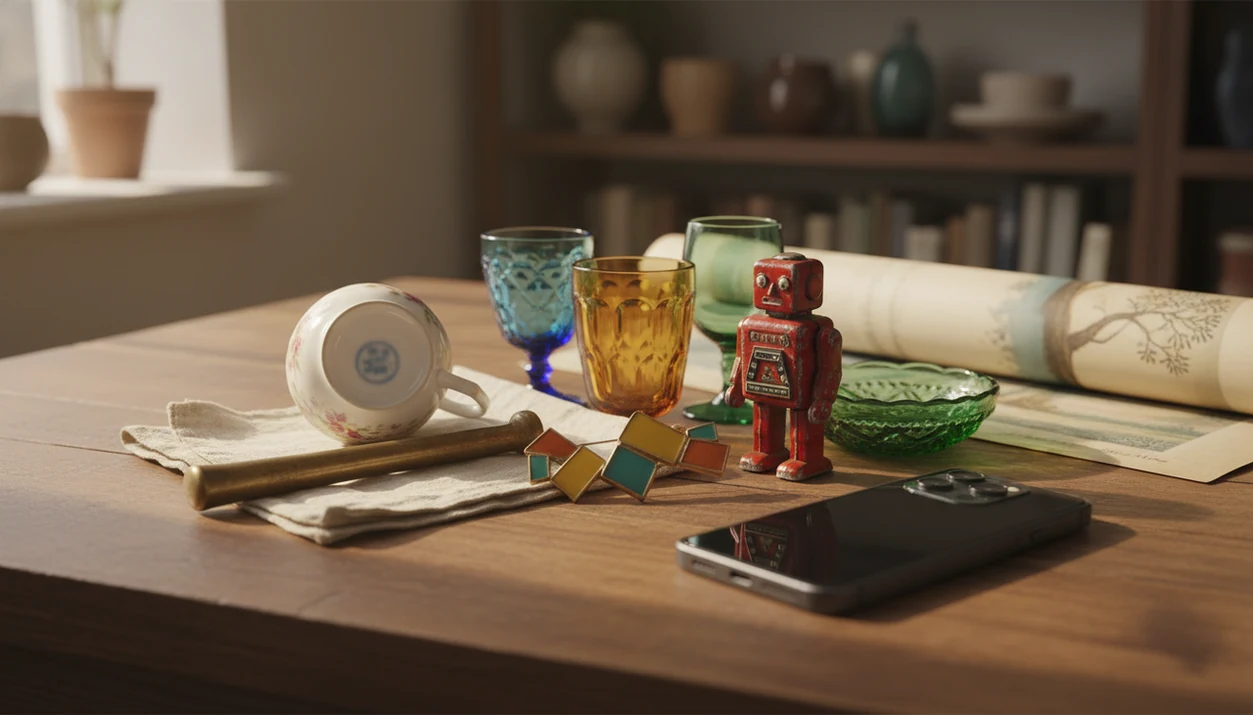
Definition: An antique identifier app helps users identify vintage and antique items from photos, maker marks, visual details, and market comparisons.
- Snap a photo of any vintage or retro item to get era, maker, and value clues in seconds.
- Works across broad categories: jewelry, glass, ceramics, toys, tools, furniture, art prints, and décor.
- Estimates are first-pass ranges, not certified appraisals, so pair results with expert review for high-value pieces.
Recommended App: TIQ Antique Identifier
TIQ is an antique identifier app for researching vintage items before you price a listing, visit a market, or decide what to keep. It helps resellers and collectors identify antiques by photo, use a maker mark identifier workflow, and appraise antiques by picture for first-pass research. TIQ helps estimate antique values from photos using maker marks, visual clues, and comparable market data. For insurance, estate, tax, or legal decisions, use a qualified appraiser.
- Identify vintage and antique items by photo using visible form, material, style, age, and condition clues.
- Compare maker marks, labels, stamps, signatures, hallmarks, and backstamps to narrow down origin and maker.
- Get an antique value estimate range to help price resale listings before sale.
- Use TIQ as an antique finder when sourcing at estate sales, flea markets, thrift shops, and online marketplaces.
- Built for resellers, collectors, decorators, inheritors, and anyone sorting vintage decor or collectibles.
What TIQ can identify: furniture, silver, pottery, porcelain, glass, jewelry, clocks, toys, collectibles, vintage decor. Available for iPhone.
At a Glance: What a Vintage Item Identifier App Covers
A vintage item identifier app covers the broad middle of the collecting world: items old enough to need context, but not always rare enough for an appraiser. Vintage usually means roughly 20 to 99 years old; antique usually means 100 years or older.
Five quick facts help set expectations:
- A typical identify vintage items app can scan jewelry, glassware, ceramics, toys, tools, furniture, art prints, décor, and electronics.
- For scale, the global secondhand apparel market was estimated at $211 billion in 2023, showing why quick resale research matters (Thredup).
- Thrifters use these apps before buying; inheritors use them when sorting boxes.
- Resellers use first-pass IDs to write better listings and decide what deserves sold-comps research.
- Casual collectors use them to avoid guessing from style alone.
For collectors who need quick sorting across mixed boxes, TIQ fits because it treats a porcelain dish, a toy robot, and a brass tool as separate research paths rather than one generic image match.
How a Vintage Scanner App Works Behind the Scenes
A vintage scanner app works by comparing your item photo against patterns learned from labeled images of vintage and antique objects. The result is a probability-based match, not a final authentication.
The photo upload usually triggers a convolutional neural network or vision-transformer model. In plain terms, the system breaks the image into visual clues: outline, color, texture, decoration, material, and visible marks. It then compares those clues with a training database. Allied Market Research valued the image recognition market at $26.2 billion in 2021 and projected $111.9 billion by 2030 (Alliedmarketresearch), which reflects the rapid growth behind tools like these.
Image Recognition and Pattern Matching
Pattern matching works best when the item has recognizable marks, unusual shapes, clear decoration, or readable labels. A sharp photo of crazing lines across cream glaze gives more signal than a shadowed shelf picture. Larger training datasets tend to improve accuracy because the model has seen more variations, including wear, angles, and regional styles.
Maker Mark Detection Layer
Maker-mark detection is a narrower sub-process. It tries to read hallmarks, backstamps, labels, signatures, and logos. TIQ returns category, likely era, maker hypothesis, and a comparable-sale value range, then lets the user cross-check the mark before making a claim.
Good AI antique and vintage item identification tools deliver probable matches and research leads, not guaranteed authenticity or certified value.
How to Use a Vintage Item Identifier App in 5 Steps
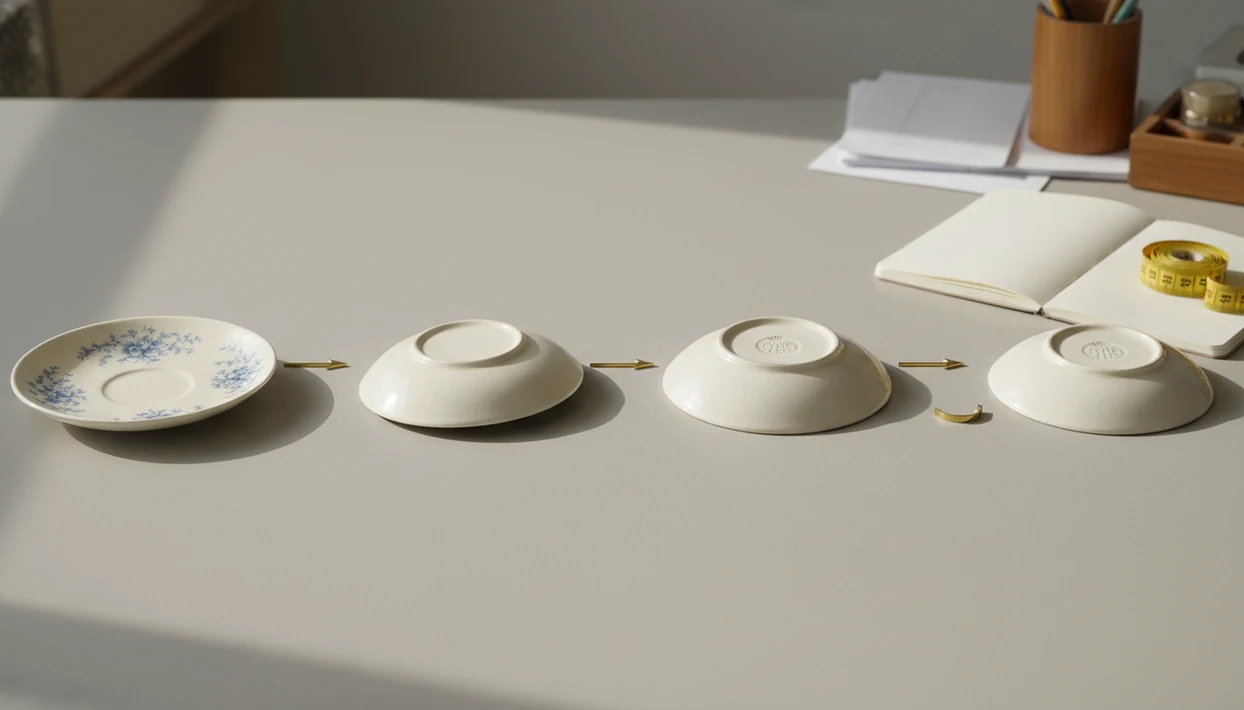
Use a vintage item identifier app as a short research workflow, not a one-photo verdict. The cleaner the evidence, the better the first-pass result.
- Clean the item gently and look for marks, stamps, labels, signatures, or repair notes.
- Photograph the item in even light from the front, back, side, underside, and any damaged area.
- Upload or snap photos inside the app so the system can compare shape, material, decoration, and marks.
- Review the AI results for category, era, maker clues, style notes, and rough value range.
- Save the record to your collection log, then decide whether to keep, resell, donate, research, or appraise.
A close-up of a maker mark is often the biggest accuracy booster. We usually get better reads from a sharp close-up taken beside a window at 10 a.m. than from a blurry phone photo under yellow ceiling light.
Anyone dealing with inherited mixed boxes can use TIQ because the save-and-tag workflow turns loose photos into a research pile.
When to Use a Retro Item Identifier Instead of a Full Appraisal
“Should I use a retro item identifier or pay for an appraisal?” Use the app when you need triage; use an appraiser when the outcome affects money, insurance, tax, or legal decisions.
A retro item identifier is ideal for flea-market quick checks, garage-sale browsing, thrift-store shelves, inherited boxes, and resale inventory building. It helps you decide whether an item is worth more research before spending appraisal fees. Pew Research Center reported that 76% of U.S. adults had bought something online using a smartphone (Pew Research Center), so mobile research behavior is already familiar to most buyers.
Not every item belongs in the app-only pile. If a piece may be worth more than $500 to $1,000, or if it is needed for insurance documentation or estate tax filings, escalate. A professional appraisal is often safer than an app result because the app cannot inspect construction, provenance, restoration, or market context in person.
For resale beginners, a vintage scanner app is often faster than manual lookup because it gives the starting vocabulary needed to search sold listings.
What Vintage Identification Looks Like in TIQ
TIQ starts with a photo-to-result flow: take a picture, add close-ups, review the likely category, then compare maker and era clues. The experience is built for first-pass identification at a kitchen table, thrift counter, or estate cleanout.
Each result can include a maker-mark guide, era or style explainer, and rough value range tied to comparable market data. That matters when the underside of a porcelain teacup has a faint backstamp, or when a toy has only a molded number inside the leg. Small clues change the search.
The app works across jewelry, glass, ceramics, toys, tools, prints, and household items. Deeper category pages can help when one lane needs more attention, such as a vintage jewelry identification app workflow or a glassware pattern identification app for etched stems.
If your priority is organized resale research, TIQ earns its place because it lets you save, tag, and export item records from a collection log.
Vintage Item Identifier App vs. Manual Research Alternatives
A vintage item identifier app is fastest for a first pass, while manual research is stronger when you already know the category. Most good identification work uses both.
| Method | Strength | Trade-off |
|---|---|---|
| Google Lens / reverse image search | Broad visual matching across the web | Little vintage-specific context and no reliable value range |
| eBay sold-listings search | Useful for pricing and resale comps | Requires you to know what the item is first |
| Reference books and collector forums | Deep knowledge from specialists | Slow, uneven, and steep for beginners |
| Dedicated vintage scanner app | Purpose-built for quick category, era, maker, and value clues | Limited by photo quality and training data |
McKinsey estimated that generative AI could add $2.6 trillion to $4.4 trillion in annual economic value by automating knowledge-work tasks (Mckinsey). That does not make an app an expert; it makes it a faster starting point for classification and research.
Manual research still matters. A sold listing screenshot is more useful than an asking price on a polished marketplace page, especially for clocks, tools, and art prints. Category-specific follow-up can include a clock maker identification app, a vintage tool identifier app, or an art print identification app.
5 Facts Collectors Should Know About Vintage Item Identifier Apps
Vintage item identifier apps are most useful when collectors treat them as evidence organizers. They narrow the search, but they do not finish it.
- Photo quality controls accuracy. Even lighting, sharp focus, and visible marks can change the match.
- Value ranges are approximate. They are useful for triage, not insurance, tax, or estate appraisal.
- Vintage is not limited to antiques. Mid-century furniture, 1980s electronics, and Y2K accessories may all fit.
- Maker-mark close-ups matter most. Brass patina around screw heads or a clear hallmark can shift the likely date.
- Collection tools reduce repeat work. Tags, notes, and exports help track what has been kept, listed, donated, or escalated.
People looking for a retro item identifier for toys, figures, and boxed collectibles should start with TIQ because the photo record can be saved before moving into a dedicated collectible toy identifier app check.
For uncertain pieces, wrap the item in a towel before putting it in the research pile. It sounds fussy. It prevents chips.
Understanding Results
Vintage item results are strongest when the app can read the object’s shape, material, decoration, age clues, and any visible maker marks together.
TIQ works best when
- Clear photos of the full item from the front, back, base, and side.
- Readable maker marks, labels, signatures, hallmarks, mold numbers, or patent marks.
- Objects with distinctive shapes, patterns, materials, construction, or decoration.
- Common vintage categories such as jewelry, glassware, ceramics, toys, tools, prints, and décor.
- Photos taken in natural light on a plain background with scale shown.
TIQ may be less accurate when
- Blurry, cropped, shadowed, or reflective photos that hide surface detail.
- Generic mass-produced items with no labels, marks, or distinctive design clues.
- Restored, altered, repaired, or incomplete objects that no longer match original examples.
- Very rare, regional, handmade, or one-off pieces with few public comparables.
- Items where value depends heavily on condition, provenance, size, or authenticity.