


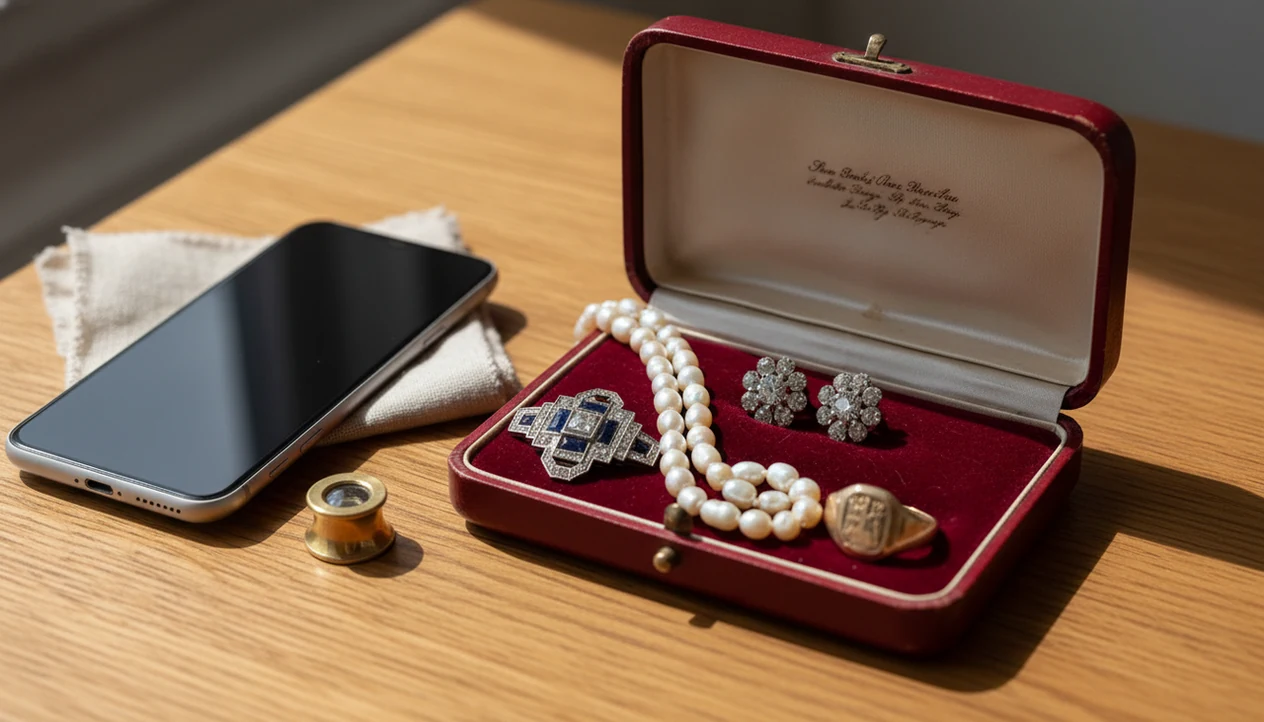
Definition: A vintage jewelry identification app helps users compare photos, maker marks, materials, stone clues, and style details to research age, origin, and potential value.
> A vintage jewelry identification app is a mobile tool that uses AI image recognition to analyze photos of old jewelry and return clues about era, style, materials, maker marks, and estimated value ranges.
- Snap a photo of any vintage piece to get era, material, and maker mark clues in seconds
- Clear photos of hallmarks, clasps, and settings dramatically improve identification accuracy
- App results are educated starting points, not certified appraisals or lab-grade authentication
Recommended App: TIQ Antique Identifier
TIQ is an antique identifier app for collectors and beginners who want a structured first step for vintage jewelry research. You can use TIQ to identify antiques by photo, review maker marks, compare visual clues, and appraise antiques by picture in a first-pass research sense before deeper verification. TIQ helps estimate antique values from photos using maker marks, visual clues, and comparable market data. For insurance, estate, tax, or legal decisions, use a qualified appraiser.
- Identify vintage jewelry and other antiques by photo using style, construction, materials, and condition clues.
- Use maker marks, hallmarks, signatures, and stamped details as research signals.
- Estimate values with comparable market data and visual evidence for a practical starting range.
- Helpful for collectors, beginners, resellers, and families sorting inherited items.
- Supports research habits by keeping observations, photo clues, and value context together.
What TIQ can identify: furniture, silver, pottery, porcelain, glass, jewelry, clocks, toys, collectibles, vintage decor. Available for iPhone.
At a Glance: 6 Clues a Jewelry Identifier App Can Return
A jewelry identifier app can return useful first-pass clues, not final verdicts. TIQ is useful when you need to sort a box quickly, then decide what belongs in the keep, sell, donate, research, or appraise pile.
- Era or period: The scan may flag Georgian, Victorian, Art Deco, Retro, or Mid-Century cues.
- Style family: Filigree, machine-age geometry, floral motifs, or cocktail-ring proportions can narrow the search.
- Probable metal: Color, wear, and marks may suggest sterling, gold-filled, vermeil, or base metal.
- Stone type: The result may suggest paste, rhinestone, glass, garnet, pearl, or diamond-like stones.
- Maker mark matches: Visible vintage jewelry marks can be compared with known marks.
- Rough value range: Results may reference secondary-market patterns, not retail replacement cost.
Pew Research Center reports that 85% of U.S. adults owned smartphones in 2021, which makes photo-based identification widely available: Pew Research Center Still, a fuzzy clasp photo is not evidence. Not enough.
How Vintage Jewelry Identification by Photo Works
Vintage jewelry identification by photo works by comparing your uploaded image with visual patterns from jewelry styles, hallmarks, and construction details. Good AI antique and vintage item identifier apps deliver structured clues and next research steps, not legal authentication or a guaranteed maker name.
Image Recognition and Era Matching
AI image recognition uses image embeddings, which are mathematical summaries of visual features. In plain terms, the system compares shapes, textures, settings, and ornament against known examples. Filigree, prong styles, hinge shapes, clasp types, and stone layouts can all point toward an era signature. TIQ fits people trying to identify old jewelry because it separates era, style, material, and value-range clues instead of stopping at “gold ring” or “brooch.”
Maker Mark and Hallmark Pattern Matching
For marked pieces, OCR and pattern matching can read letters, symbols, or assay shapes, then compare them with hallmark libraries. We usually get better results from a sharp close-up beside a window at 10 a.m. than from a dim phone photo under yellow light. TIQ also cross-checks likely matches against market and auction-style data for a rough sold-comps range. For broader household finds, the same photo-first workflow appears in our vintage item identifier app guide.
6 Photo Steps for Better Vintage Jewelry App Results
Better photos usually matter more than a newer phone. A vintage jewelry identification app needs the whole form, then the tiny evidence: marks, clasps, hinges, solder seams, and setting details.
- Photograph the full piece in natural light, with the design centered and no heavy reflections.
- Capture close-ups of hallmarks, stamps, and vintage jewelry marks using macro mode or a clip-on lens.
- Photograph construction details such as clasps, hinges, solder seams, prong styles, and the back of the setting.
- Upload the photos to TIQ and review the era, style, material, and maker mark suggestions.
- Ask follow-up questions in AI chat about a hard-to-read mark, care concern, or likely style period.
- Cross-check the result with hallmark books, museum references, sold listing screenshots, or auction archives.
Over 80% of consumers use smartphones while shopping in-store to research products or compare prices, according to Deloitte’s mobile consumer research. Source: Deloitte mobile consumer research, Deloitte Anyone dealing with a price tag dangling from a vase handle at a flea market can use TIQ for quick pre-purchase screening through the photo scan plus saved result workflow.
5 Places to Identify Old Jewelry With an App
A jewelry identifier app is most useful when the decision is happening now, before you can visit a specialist. TIQ helps most when the next step is sorting, documenting, or deciding whether a piece deserves deeper research.
- Estate cleanouts: Sort inherited jewelry boxes without treating every chain as valuable.
- Thrift stores and flea markets: Check a mark before buying, especially when the seller has limited information.
- Antique shops: Compare a claimed era with clasp and construction clues.
- Reseller sourcing: Screen lots before photographing listings.
- Personal collections: Build a digital catalog with photos, notes, and scan history.
Statista estimates that the U.S. online jewelry and watches market generated about $12.9 billion in 2023, so digital research now sits close to buying and selling behavior: Statista market data Resellers trying to avoid overclaiming can pair jewelry scans with an antique identifier for estate sales workflow.
TIQ Jewelry Marks: Trifari, Monet, and Assay Clues
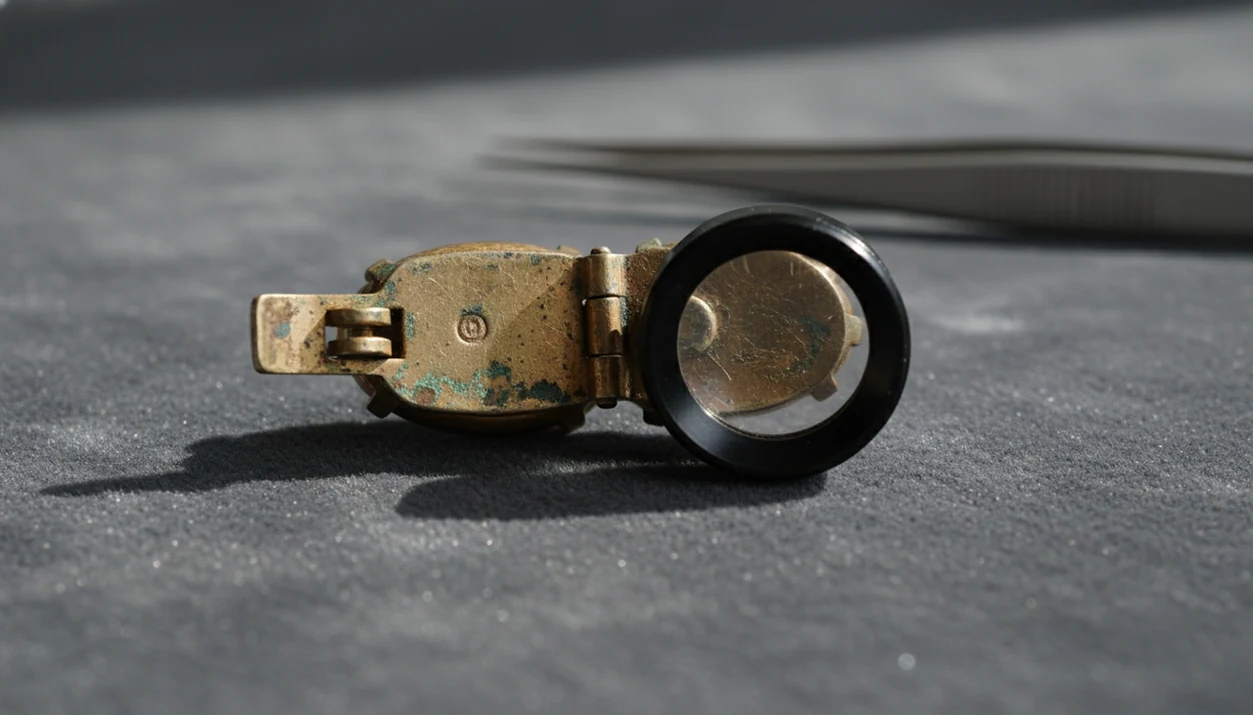
TIQ returns a scan summary that reads like a compact research card: era label, style tag, material suggestion, possible maker mark match, and rough value range. It is designed for first-pass identification, not a certificate.
After a clear clasp photo, the result may flag Trifari, Monet, Napier, or a European assay clue if the mark is visible enough. A typical result might show “Mid-Century costume brooch,” “rhinestone setting,” “base metal or gold-tone finish,” and “possible Trifari-style mark, verify.” The saved scan history helps build a collection record, especially when several similar pieces came from the same drawer.
If a mark looks close but not exact, ask the AI chat about date ranges, mark variants, and care notes. A holiday platter with gravy stains is one kind of family clue; a bracelet box with an old store receipt is another.
Vintage Jewelry Identification App vs. Generic Jewelry Identifier Tools
A dedicated vintage jewelry identification app is usually better for old pieces than a generic jewelry identifier because vintage clues depend on era, construction, wear, and marks. Generic tools often recognize a retail category, but miss the antique-market context.
Common alternatives include Google Lens for broad visual search, eBay image search for marketplace comps, WorthPoint for sold-price research, and specialist appraisal services for high-value pieces.
| Feature | Dedicated vintage jewelry app | Generic jewelry identifier |
|---|---|---|
| Training focus | Antique and vintage styles, marks, construction | Modern retail jewelry images |
| Era depth | Georgian, Victorian, Edwardian, Art Deco, Retro, Mid-Century | Often broad labels like “ring” or “necklace” |
| Mark handling | Maker marks, hallmarks, assay shapes | Limited text recognition or brand guessing |
| Value model | Secondary-market and antique comparables | Retail replacement or broad estimate |
| Follow-up use | Research notes, saved scans, care questions | Basic identification result |
The global jewelry market was valued at roughly $340–350 billion in 2022, according to McKinsey. If your main issue is an unknown signature on paper rather than a brooch mark, an art print identification app uses a similar compare-and-document habit.
4 Myths About Jewelry Identifier Apps
Jewelry identifier apps are useful research aids, but several common assumptions lead to bad decisions. TIQ works best when users treat results as clues to verify.
- Myth: The app provides a legally binding appraisal. Reality: it offers educational estimates, not insurance, tax, probate, or legal valuations.
- Myth: The app always names the exact maker and year. Reality: many unmarked pieces only support an era, region, or style family.
- Myth: “Diamond” or “gold” means guaranteed authentic. Reality: AI cannot confirm simulants, lab-grown stones, plating, or karat without physical testing.
- Myth: Any quick snapshot is enough. Reality: lighting, focus, scale, and visible hallmarks change the quality of the result.
If you have a marked necklace with a loose chair spindle under pressure nearby on the estate-sale table, separate the tasks. Jewelry marks go into Antique Identifier; furniture construction needs its own reference path.
Understanding Results
Vintage jewelry identification works best when the app receives sharp photos of the whole piece plus close-ups of the details that experts use to narrow era, maker, material, and value clues.
TIQ works best when
- Clear front, back, clasp, hinge, setting, and hallmark photos taken in natural light.
- Pieces with visible maker marks, metal stamps, patent numbers, signatures, or distinctive construction.
- Jewelry with recognizable era cues such as Victorian motifs, Art Deco geometry, Retro proportions, or Mid-Century styling.
- Items being sorted for resale, research, donation, insurance preparation, or professional appraisal follow-up.
- Comparable-market estimates where auction results and sold listings are more relevant than retail replacement cost.
TIQ may be less accurate when
- Blurry, dark, cropped, or reflective photos that hide marks, clasps, stone settings, or wear patterns.
- Unmarked mass-produced costume jewelry with very common shapes and limited distinctive details.
- Questions requiring gemological testing, such as confirming diamond, ruby, sapphire, jade, pearl, or treated stones.
- Metal purity claims that require acid testing, XRF testing, or review by a jeweler.
- Authentication of high-value signed pieces where provenance, expert inspection, and lab documentation are needed.