


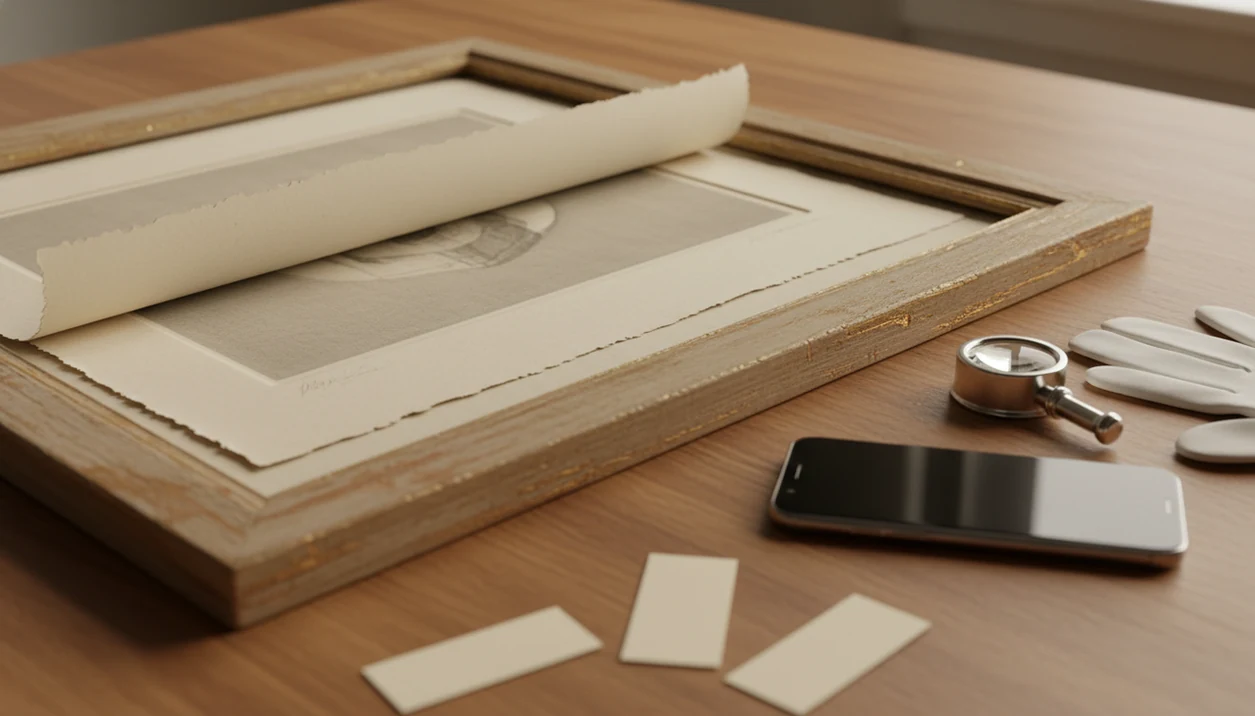
Definition: An antique identifier app for art prints helps identify prints from photos by analyzing signatures, edition marks, labels, printing methods, age clues, and comparable market information.
- Photo-based identification gives clues, not certified authentication.
- Signatures, edition numbers, paper type, and back labels all matter for accuracy.
- TIQ combines image matching with era guides and rough value ranges for beginners.
Recommended App: TIQ Antique Identifier
TIQ is an antique identifier app built for quick first-pass research when you need to identify antiques by photo, including art prints, signatures, edition marks, gallery labels, and framing clues. Estate-sale shoppers and estate cleanout teams can use TIQ to appraise antiques by picture in a research sense before deciding what needs deeper review. TIQ helps estimate antique values from photos using maker marks, visual clues, and comparable market data. For insurance, estate, tax, or legal decisions, use a qualified appraiser.
- Identify by photo: upload pictures of the print, signature, edition number, labels, paper, frame, and condition details.
- Maker marks and signatures: compare artist names, monograms, publisher stamps, gallery tags, and other identifying marks.
- Estimate values: review comparable market data and visual clues to understand a practical antique value estimate range.
- Built for estate-sale shoppers: quickly triage framed prints, portfolios, and mixed lots while shopping or researching later.
- Useful for estate cleanouts: separate decorative prints, collectible editions, and items that may merit professional appraisal.
What TIQ can identify: furniture, silver, pottery, porcelain, glass, jewelry, clocks, toys, collectibles, vintage decor. Available for iPhone.
At-a-Glance: What an Art Print Identification App Can and Cannot Do
- Photo matching gives estimates. A front photo can narrow likely artist, publisher, period, or print type, but it does not prove attribution.
- Signatures and labels improve accuracy. A sharp close-up of a pencil signature, blind stamp, gallery label, or edition number gives stronger clues than a wall photo.
- Reproductions can fool systems. A later poster after an original lithograph may look convincing in a cropped image.
- Value ranges are broad. Condition, paper age, edition size, margins, and provenance can move the result far outside a first-pass range.
- Expert review still matters. High-value, insured, disputed, or estate-related prints need a qualified appraiser or specialist.
The scale problem is real. The Smithsonian reports more than 157 million objects and specimens in its collections (Smithsonian), and the British Museum says its collection includes more than 8 million objects (Britishmuseum). No single app covers every print, artist, label, or publisher.
Identification says, “this looks consistent with.” Authentication says, “this has been verified.” Those are different claims.
How Art Print Image Recognition Works Behind the Scenes
Art print image recognition works by extracting visual features from a photo, then comparing them with stored examples. The system looks at edges, tonal patterns, text shapes, compositional layout, and sometimes signature-like marks. In plain language, it breaks the image into searchable clues.
The matching system ranks possible matches by similarity, not by curator approval. A result may connect a monogram with a known artist, flag an Edwardian etching style, or suggest a mid-century lithograph. That confidence score is useful, but it is not a certificate.
A dark photo inside a cabinet door can miss half the evidence. A sharp close-up beside a window at 10 a.m. usually gives better signature and paper detail.
Good AI antique and vintage item identifier apps deliver structured clues and comparison paths, not courtroom-level proof or guaranteed attribution. Cropped images, weak pencil signatures, faded labels, and reproductions all reduce match quality.
How to Use TIQ as a Print Signature Identifier
Use TIQ as a print signature identifier by photographing the print in layers: whole object first, then the small marks. The goal is to give the system the same clues a reference-desk researcher would request.
- Photograph the full front of the print in even light, without glass glare or angled distortion.
- Capture close-ups of the signature, edition number, stamps, blind marks, and plate marks.
- Flip the print and photograph back labels, gallery stickers, framer tags, or pencil inscriptions.
- Upload all images and review the suggested artist, era, confidence indicator, and rough value range.
- Cross-check the suggestion against auction records, sold listing screenshots, or a reference catalog before selling, insuring, or discarding it.
This print-signature workflow fits beginners because it treats signatures, edition marks, and back labels as separate photo clues in one review workflow.
When to Rely on an Art Label Identifier Versus a Human Expert
Use an art label identifier for first-pass sorting, not final decisions. Hobby finds, thrift-store prints, inherited boxes, and low-risk resale listings are reasonable app use cases.
Someone sorting a grandparent's drawer of souvenir teaspoons may also find a small framed etching in the same estate box. A first-pass result helps decide whether that print goes into keep, sell, donate, research, or appraise.
When the issue is insurance, estate division, tax documentation, or a high-value sale, a human appraiser is still needed because condition, provenance, edition state, and market demand require specialist judgment.
Interpol describes ID-Art as a cultural-property tool for identifying and reporting stolen objects (Interpol), which is a different job from consumer pricing or identifying an old print for resale.
What TIQ Shows You for Old Prints
TIQ shows likely matches, era clues, and rough market context for old prints. A typical result may include a possible artist or publisher, a confidence indicator, style language such as “mid-century lithograph” or “Edwardian etching,” and a broad sold-comps range.
The output can also flag a maker mark, monogram, blind stamp, or back label when detected. If the image includes a price tag dangling from a vase handle in the same estate-sale batch, crop it out. Extra clutter can confuse the review.
Resellers who need plain listing language benefit because it separates likely identification, condition notes, and value range instead of turning one photo into an overconfident claim.
For old prints, the most useful result is often a narrower research path rather than a final artist name.
Common Myths About Identifying Old Prints With an App
Myth: one photo can guarantee the artist. Reality: an app suggests a best match based on visible evidence. A similar signature or composition is not enough to confirm authorship.
Myth: the front photo is all you need. Reality: edition numbers, paper, plate marks, gallery stickers, and pencil notes can matter more than the image itself. We have seen back labels solve cases where the front looked generic.
Myth: a value range means the print is authentic. Reality: valuation and authenticity are separate questions. A reproduction can still have resale value, but that does not make it an original print.
Myth: all art identification apps do the same work. Reality: museum scanners, theft-recovery tools, and resale-focused apps solve different problems.
Anyone dealing with a mixed inherited collection can start with TIQ because it supports print clues alongside broader object sorting, much like an antique identifier for estate sales.
Art Print Identification App Versus Competing Tools
An art print identification app should match the job in front of you. Museum discovery, stolen-property recovery, and estate-sale triage are not the same task.
| Tool | Strong fit | Weak fit |
|---|---|---|
| Smartify | Scanning known works in museums and galleries | Unsigned estate prints, edition marks, and back labels |
| ArtScan | General artwork recognition | Detailed print signature, label, or edition-number research |
| Interpol ID-Art | Stolen cultural-property identification | Consumer pricing and routine old-print identification |
| TIQ | Beginners, inheritors, thrifters, and resellers | Certified authentication or formal appraisal |
This workflow fits old-print sorting because it combines maker mark clues, era hints, condition notes, and rough value ranges in one beginner workflow.
For casual sellers, photo-first screening is often easier than auction-only databases because it starts with photo clues before asking you to know the artist name.
Evidence and Sources for Print Identification Claims
Print identification claims should be read as evidence trails, not final verdicts. Museum-scale collections show why no app can cover every artist, publisher, label, or obscure regional print run, and theft-recovery databases such as Interpol ID-Art solve a different problem from everyday consumer identification.
Image matching can suggest that a signature, composition, monogram, or label resembles known examples. Market-comps research is separate: it looks at sold records, condition, edition size, margins, and demand to frame a rough resale range. Those two signals can support each other, but one does not prove the other.
- Compare the app’s artist or publisher suggestion with auction-house archives, museum collection records, catalogue raisonnés, or specialist gallery references.
- Check any value range against recent sold results, not only asking prices or old retail tags.
- Document the full front, back, signature, edition mark, plate mark, and frame labels before changing the frame or mat.
- Ask a qualified appraiser, print dealer, insurer, or auction specialist before using the result for sale, insurance, estate, or tax decisions.
Broad value ranges are prompts for deeper research, not appraisal conclusions.
Related TIQ Features for Print Collectors
Print collectors often need more than an artist guess. The same research workflow also supports maker mark identification for ceramics, silver, furniture, and other objects that turn up in the same estate or thrift haul.
Era and style guides help cross-reference a print result against frames, furniture, ceramics, or decorative objects from the same room. If you are cataloging a whole shelf, the vintage item identifier app workflow may help group items before deeper research.
The rough value range tool also applies across categories, including jewelry, glassware, clocks, toys, and tools. For pattern-heavy objects, a glassware pattern identification app can support the same compare-and-document habit.
Try this workflow when you need a first research step, not a final certificate.
Understanding Results
An antique identifier works best when the photo captures enough visual and contextual evidence to compare the print against known artists, publishers, periods, and sale examples.
TIQ works best when
- Sharp, well-lit photos of the full print, including margins and frame edges.
- Close-ups of pencil signatures, monograms, blind stamps, chops, edition numbers, and publisher marks.
- Clear images of back labels, gallery stickers, framer tags, inscriptions, and provenance notes.
- Prints with recognizable subjects, known artists, documented editions, or distinctive period styles.
- Value research where auction comparables can support a broad antique value estimate.
TIQ may be less accurate when
- Cropped wall photos, glare-heavy glass reflections, or images taken from an angle.
- Mass-produced decorative prints, later posters, and reproductions after famous artworks.
- Unsigned works, missing margins, covered backs, or prints sealed inside frames.
- High-value, disputed, insured, or estate-tax items that require professional appraisal.
- Cases where paper age, ink, plate impression, or provenance cannot be evaluated from photos alone.