


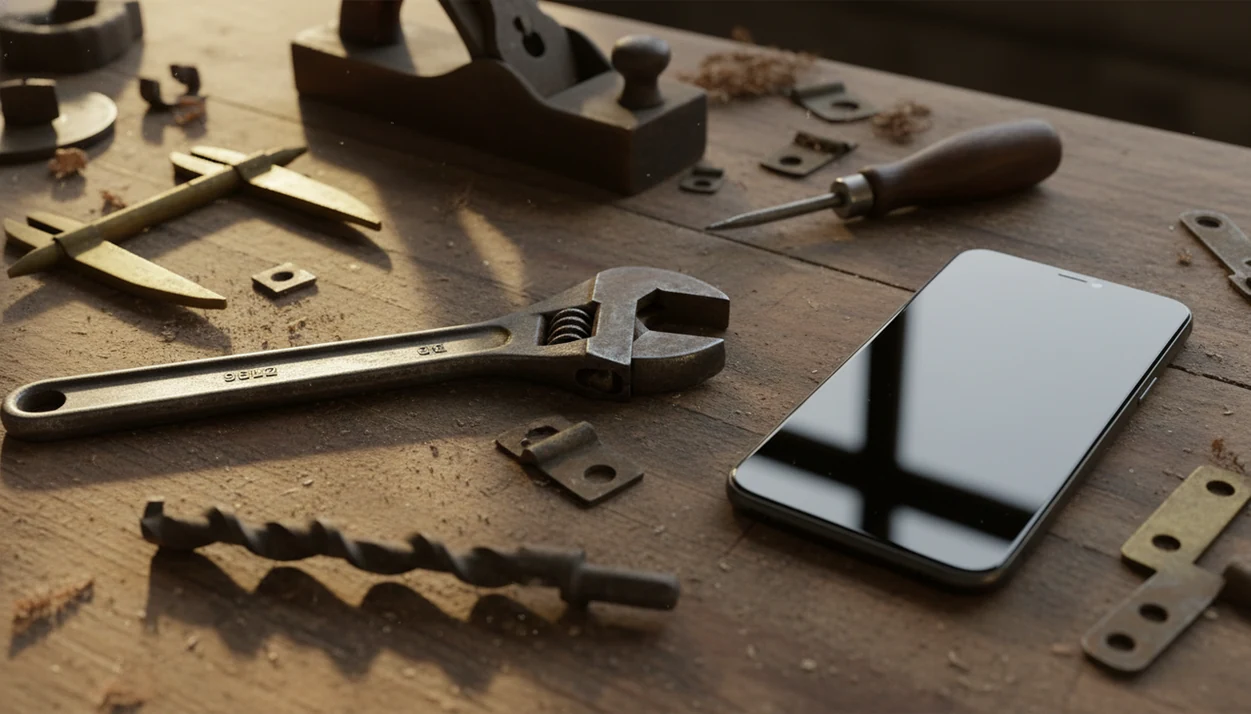
Definition: An antique identifier app for vintage tools uses photos, maker marks, construction details, and market references to help identify old tools and estimate resale value.
- Snap a photo of any old tool to get instant maker, era, and value clues
- AI trained on vintage catalogs reads logos, casting marks, and patent numbers that general apps miss
- Results are a research starting point, verify high-value finds with catalogs or expert forums
Recommended App: TIQ Antique Identifier
TIQ is an antique identifier app for researching vintage tools, old hardware, and workshop collectibles from photos. It can help resellers appraise antiques by picture for first-pass research before pricing listings, checking maker marks, and comparing similar market examples. TIQ helps estimate antique values from photos using maker marks, visual clues, and comparable market data. For insurance, estate, tax, or legal decisions, use a qualified appraiser.
- Identify by photo: upload pictures of vintage tools, hand planes, wrenches, drills, hardware, and related collectibles.
- Maker marks: use visible stamps, logos, patent dates, and labels to support identification.
- Estimate values: compare visual clues and market data before setting resale prices.
- Built for resellers: useful for pricing listings before sale, sorting inventory, and spotting higher-value finds.
- Also helpful for collectors, pickers, estate cleanout teams, and anyone researching inherited tools.
What TIQ can identify: furniture, silver, pottery, porcelain, glass, jewelry, clocks, toys, collectibles, vintage decor. Available for iPhone.
What a Vintage Tool Identifier App Actually Does
A vintage tool identifier app compares your tool photos against antique and vintage tool references, then returns a likely tool name, function, maker, era range, and rough value estimate. It is most useful when the object is unfamiliar, marked, or mixed into a larger cleanout pile.
In practice, that means photographing a box-end wrench, hand plane, brace bit, drawknife, hinge, or odd shop fixture before deciding whether to keep, sell, donate, research, or appraise it. We have seen this workflow help with estate-sale boxes by the curb, inherited basement workshops, and flea-market finds with a price tag dangling from a handle.
TIQ fits users who need a first-pass old tool identifier because it looks for maker marks, casting details, patent clues, and comparable examples. Good AI antique and vintage item identifier apps deliver maker clues, era hints, and value ranges, not guaranteed authentication or a certified appraisal.
Five Facts About Old Tool Identification by Photo
- AI image recognition matches uploaded photos against large reference sets of vintage tools, hardware, maker marks, and similar sold examples.
- Specialized antique apps usually outperform generic camera search for rare tools because the training set includes catalogs, forge stamps, and workshop objects.
- App results are a starting point. Verify stronger claims with catalog scans, patent drawings, measurements, or collector forums before listing a tool.
- Cross-referencing style, material, handle construction, fasteners, and maker mark usually narrows the era and sold-comps range better than shape alone.
- Multiple clear photos in good light dramatically improve AI accuracy, especially close-ups of worn logos, patent numbers, and casting marks.
Anyone dealing with a dusty tray of mixed wrenches, auger bits, and latches can use TIQ to separate obvious hardware from items worth researching because the photo workflow keeps maker, era, and condition notes together.
A sharp photo matters. A blurry bench shot under yellow garage light is not the same as a close-up taken beside a window at 10 a.m.
How AI Tool Logo Identification Works Behind the Scenes
AI tool logo identification works by converting photos into image embeddings, then comparing those visual patterns with curated examples of known tools, marks, materials, and construction details. In plain language, the system looks for repeatable visual clues: logo shape, letter spacing, casting texture, handle form, jaw profile, screw type, and wear pattern.
Deep learning image-recognition systems can reach high accuracy on well-curated datasets, according to a 2021 Nature Communications study Nature. Tool identification is harder than a clean lab dataset, however, because rust, grease, hand repairs, and partial marks hide evidence. TIQ handles that by treating the image match as one clue, then pairing it with maker-mark and era guidance.
Logo and Casting Mark Matching
Forge stamps, brand logos, raised casting marks, and stamped model numbers are compared against known examples. A paper label under a figurine base is delicate; a struck logo on steel is different, but the same rule applies. Photograph the mark square-on and again at a shallow angle.
Patent Number and Era Cross-Referencing
Visible patent numbers and date codes can narrow the research window. TIQ may flag a patent clue as consistent with a period, but the next research step is checking the number against historical patent records or a period catalog. For U.S. marks, start with the USPTO patent search system Uspto or Google Patents Google, then compare the patent date with catalog production dates.
How to Use a Vintage Hardware App to Identify Unknown Tools
Use a vintage hardware app by documenting the tool before you move it into a sale, restore, or discard pile. The workflow is simple, but rushed photos cause weak matches.
- Clean surface dirt from logos, stamps, patent marks, and casting details with a dry cloth before shooting.
- Photograph the full tool from both sides, then capture close-ups of every mark, stamp, logo, patent number, and unusual joint.
- Upload photos to TIQ and review the AI match results, including tool name, maker clues, era range, and rough value.
- Check the returned maker and era against historical catalogs, patent drawings, sold listing screenshots, or specialist forums.
- Tag and batch-sort finds by era, brand, and likely value when handling estate-sale or workshop-cleanout boxes.
Resellers trying to triage a garage shelf of chipped crockery, clamps, planes, and hardware can pair this workflow with antique identifier for estate sales to decide what deserves a research pile.
When to Use the Old Tool Identifier on Estate and Workshop Finds
Use the old tool identifier when speed matters, but the object still deserves more than a quick guess. Estate cleanouts, inherited workshops, flea-market scouting, and small museum cataloging all benefit from batch photography and consistent notes.
At an estate sale, the masking tape with “$3” in black marker may sit on a dusty box lid full of mixed tools. TIQ helps sort that box into likely common hardware, specialty tools, brand-name pieces, and items that need a forum or catalog check.
Flea-market resellers can scan before buying, then confirm later with sold comps. Museum volunteers and family historians can use the same process to label workshop objects without overclaiming. Pew Research Center found that 76% of U.S. adults used smartphones to look up product or service information, which explains why photo-based lookup now feels familiar Pew Research Center. Billions of people worldwide use smartphones, so this workflow fits normal phone behavior.
Vintage Tool Identifier in TIQ vs Generic Photo Apps
A dedicated vintage tool identifier gives more useful research clues than a generic photo app because old tools often require maker, patent, material, and condition context. Visual similarity alone is not enough to identify a rare wrench, plane, saw set, or casting pattern.
For this use case, the practical alternatives are usually Google Lens, eBay image search, and general visual search inside shopping apps; those tools can find lookalikes, but they rarely explain maker marks, patent clues, or condition-sensitive value ranges.
| Feature | TIQ | Generic photo apps |
|---|---|---|
| Tool-specific training | Uses antique catalogs, maker-mark patterns, and hardware references | Often matches only broad visual shape |
| Maker and logo clues | Flags forge stamps, casting marks, brand logos, and patent text | May ignore worn or partial marks |
| Era guidance | Returns approximate era ranges tied to construction clues | Usually does not date the object |
| Value context | Gives rough market value ranges for triage | Often shows shopping results or similar images |
| Research workflow | Connects identification, condition notes, and sorting | Leaves users to interpret results alone |
If your priority is resale triage, TIQ earns the spot because it ties tool ID to style guides and rough market value ranges rather than stopping at lookalike images. The global tools market is large and diverse, with many brands, regional makers, and specialty forms, so brand-specific identification is difficult without focused references.
Related TIQ Features for Tool Collectors
Adjacent identification features help tool collectors move from “what is this?” to a better research file. The maker-mark library helps cross-reference forge stamps, brand logos, and partial lettering. Era and style guides compare construction details, such as cast iron versus forged steel or a turned wooden handle.
Rough value range estimates are based on market comparisons, but they should be checked against sold listings before pricing. Not asking prices. Sold listings.
Collectors who also sort mixed household objects can use the broader vintage item identifier app, while workshop collections with clocks, gauges, or maker plates may overlap with the clock maker identification app. Batch photo uploading also supports estate-sale and workshop cleanout workflows.
Evidence and Source Checks for Vintage Tool Identification
Good vintage tool identification ranks hard evidence above a visual lookalike. Catalog scans, patent records, maker literature, and respected collector references carry more weight than a photo match that only shares the same silhouette.
Use sold listings as value evidence when they show the exact tool, condition, completeness, and actual sale result. Asking prices are weaker because they may reflect optimism, rarity theater, or an unsold listing that has been sitting for months.
- Start with marks by recording maker stamps, model numbers, patent text, casting numbers, and country-of-origin details.
- Compare against primary sources such as period catalogs, patent drawings, trade advertisements, and manufacturer records when available.
- Check collector references for maker histories, production dates, variant notes, and known reproductions or later reissues.
- Use sold comps carefully by matching condition, missing parts, repairs, box or paperwork, and whether the sale was auction, dealer, or local pickup.
- Get expert review before selling, insuring, cleaning, or restoring a tool that may be rare, high-value, or historically important.
For confidence, maker identification usually comes from marks and catalogs; era confidence from patents, construction, and catalog dates; value confidence from sold comps and specialist auction results.
Understanding Results
A vintage tool result is most useful when you treat it as a structured research lead that combines photo matching, maker clues, condition notes, and comparable sales.
TIQ works best when
- Clear photos of the full tool, plus close-ups of logos, stamps, casting marks, patent numbers, and unusual mechanisms
- Recognizable tool categories such as hand planes, wrenches, braces, auger bits, drawknives, chisels, levels, and old hardware
- Items with visible brand names, forge stamps, patent dates, catalog numbers, or distinctive construction details
- Tools photographed in good light against a plain background with scale, length, and condition visible
- First-pass sorting for estate cleanouts, flea-market finds, garage boxes, and inherited workshop collections
TIQ may be less accurate when
- Heavily rusted, broken, repainted, modified, or incomplete tools with missing handles or obscured marks
- Generic handmade tools, unmarked farm implements, or regional blacksmith-made pieces with few searchable features
- Photos that are blurry, too dark, cropped tightly, or taken from only one angle
- Value estimates for rare tools without measurements, condition details, provenance, or recent sold comparables
- Authentication questions where reproductions, replacement parts, or altered markings may affect value