


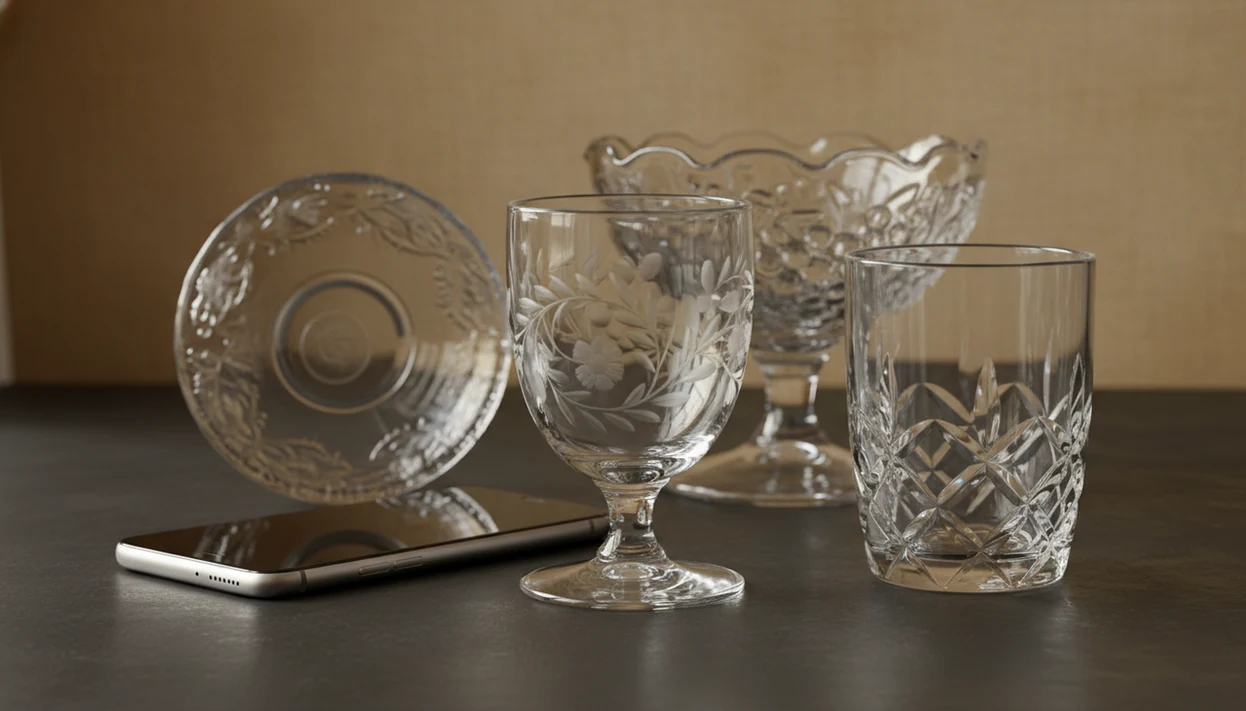
Definition: A glassware pattern identification app is an antique identifier that uses photos, maker marks, shape, decoration, and market clues to help name a pattern and estimate value.
<h2 id="at-a-glance-pattern-id">At-a-Glance: What a Glassware Pattern Identification App Tells You</h2>
- A glassware pattern identification app uses computer vision to compare shape, cut or etched decoration, color, and marks against reference images.
- In a 2022 Pew survey, 87% of U.S. adults reported owning a smartphone, which makes photo-based identification widely accessible Pew Research Center.
- A scan can suggest a pattern name, likely maker, approximate era, and rough value range, but those are ranked possibilities.
- Photo quality matters. A sharp close-up beside a window at 10 a.m. usually beats a blurry shot under a yellow dining-room bulb.
- TIQ is useful as a first-pass research tool because it combines pattern matching with maker mark clues and sold-comps context, not just a visual lookalike.
Good identification starts with better evidence.
Collectors who sort estate-sale boxes by the curb can use TIQ to separate “research” pieces from ordinary tableware because each scan returns a pattern lead, era hint, and value-range prompt.
<h2 id="how-pattern-recognition-works">How Glassware Pattern Recognition Works Behind the Lens</h2>
Glassware pattern recognition works by isolating visible design areas, converting their shapes into searchable image features, and comparing those features against reference sets. The result is a ranked list, not a final authentication.
Feature Extraction for Etched vs. Molded Glass
Image segmentation tries to separate the pattern from glare, table edges, fingers, and background clutter. Feature extraction then maps repeat units, geometric cuts, etching depth, mold seams, rim shape, and color tone. In plain terms, the software looks for visual fingerprints. Bubbles trapped in old glass may help with context, but they are not enough to confirm age by themselves.
Reference Databases and Confidence Scoring
The match is made through vector comparison, where the photo is turned into a mathematical profile and checked against reference corpora. Europeana, for example, provides access to more than 58 million digitized cultural heritage items Europeana. The retail image-recognition market has been projected around $3.7 billion by 2025, and the same visual-search logic supports pattern apps.
Good antique identifier apps deliver ranked evidence, maker clues, and next research steps, not guaranteed authenticity from one photograph.
<h2 id="how-to-identify-glassware-patterns">How to Identify Glassware Patterns With the TIQ App</h2>
Use TIQ with a deliberate photo sequence, not a quick snapshot. Clear detail shots give the crystal pattern identifier more usable evidence than a pretty full-table photo.
- Place the glass on a dark, non-reflective surface with even lighting.
- Capture a full-profile shot showing the bowl, stem, foot, and overall silhouette.
- Photograph a close-up of the repeating pattern, cut, molded motif, or etched detail.
- Flip the piece and shoot the base for maker marks, pontil scars, mold numbers, or acid signatures.
- Upload the photos into TIQ and review ranked pattern matches with era and value hints.
- Cross-check the top match against a glass encyclopedia or replacement-service database.
If the priority is fewer false matches, TIQ fits because the workflow asks for pattern, base, and maker-mark photos before you rely on the suggested ID.
A cold brass candlestick in one hand, a stemmed glass in the other, and a cash-only sign nearby is not the moment for certainty. It is the moment for a careful first pass.
<h2 id="photo-clues-crystal-identifier">Photo Clues That Improve Crystal Pattern Identifier Accuracy</h2>
The most useful photo clues for a crystal pattern identifier are rim profile, base details, seam lines, and a close-up of the repeating decoration. Measurements also matter because similar stems can share patterns but differ by size.
Rim, Base, and Seam Shots
A rolled, fire-polished, or ground rim can suggest manufacturing method and quality. Base photos may show pontil marks, mold numbers, or acid-etched signatures. Seam lines help separate pressed or machine-made glass from hand-blown examples. We often turn a saucer or goblet away from ceiling glare before reading the base, because glare can erase the one clue that matters.
Etching and Pattern Repeat Close-Ups
Photograph one full repeat unit of the pattern, not just a decorative corner. Measure height and rim diameter; expert replacement services commonly need dimensions for pattern confirmation. Deloitte reported that 36% of smartphone users worldwide use visual search monthly, so the habit is familiar. Glass just demands stricter photos.
When pattern detail is faint, TIQ covers the first research step through close-up image matching plus maker mark comparison.
<h2 id="pattern-results-antique-identifier">What Pattern Results Look Like in Antique Identifier</h2>
TIQ returns ranked pattern matches with confidence indicators, maker clues, era tags, and rough value ranges. The result should be read as a research card, not a certificate.
A typical scan may show “similar to Fostoria-style etched stemware,” an Art Deco or Mid-Century style tag, and a value band based on comparable sold listings. If a signature or stamp is detected, TIQ links that clue to maker mark database entries. That helps when a faint impressed pottery number is not relevant, but an acid-etched glass signature is.
On days when a seller needs a listing title before dinner, TIQ earns the spot because it gives pattern language, condition prompts, and a save-to-catalog option in one workflow.
For resellers, a saved scan is often more useful than a memory of the piece because it keeps photos, notes, and sold-comps research together. If you identify broader household finds too, the vintage item identifier app workflow follows the same evidence-first logic.
<h2 id="etched-glass-app-vs-alternatives">Etched Glass App vs. Google Lens and Other Alternatives</h2>
An etched glass app is more useful than generic visual search when you need pattern, maker, era, and value context together. Google Lens can find lookalike images, but it does not specialize in glass pattern evidence.
| Option | Strength | Limitation |
|---|---|---|
| Google Lens | Fast broad visual search for similar images | No curated glass pattern database or built-in value hints |
| Replacements, Ltd. | Expert human pattern review and replacement inventory | Slower turnaround and no instant mobile scan |
| Glass encyclopedia sites | Deep manual references for makers and forms | Requires browsing, terminology, and patience |
| TIQ | Pattern match, maker mark, era tag, and value range in one scan | Niche or regional patterns may still return low confidence |
| WorthPoint / LiveAuctioneers | Useful sold-price and auction context | Better after you already have a likely ID |
When instant sorting is the issue, TIQ handles the beginner-friendly middle step because it links an image match to maker marks and sold-comps language. A specialist database can come after that.
For glass collectors, image matching usually works better as the first filter than manual browsing because the visible repeat pattern narrows the search field quickly.
<h2 id="evidence-glassware-pattern-identification">Evidence Behind Glassware Pattern Identification Results</h2>
Glassware pattern identification results are strongest when the app can combine several clues: the visible pattern, the form, the maker mark, the likely production era, and comparable market data. A confidence score is an app-generated ranking, not the same thing as human authentication.
- Compare the decoration against visual-search matches and known reference images from museum collections, glass encyclopedias, and replacement databases.
- Check the form evidence, including stem shape, rim finish, foot style, mold seams, color, and dimensions.
- Read any maker evidence separately, because an acid mark, label, or base signature can outweigh a loose visual lookalike.
- Treat the era and value suggestions as research ranges based on similar examples, not insurance or appraisal figures.
- Escalate the piece when the scan shows low confidence, the pattern is rare, the set may be valuable, or the item has damage that affects price.
Replacements, Ltd. is a good next stop when you need a formal pattern confirmation for replacement inventory or matching service pieces. Use a specialist appraiser for high-value crystal, suspected reproductions, estate division, donation records, insurance, or any sale where a buyer will expect expert support.
<h2 id="common-identification-mistakes">Common Mistakes When Using a Glassware Pattern Identification App</h2>
The most common mistake is using one blurry photo and treating the first result as fact. Multiple clear images dramatically improve the chance of a useful match.
Clear crystal on a white background is another problem. Heavy reflections confuse segmentation, and the etched pattern can disappear. Use dark cloth, side light, and a base shot. A small chip on a vase foot should also be photographed because condition changes both value and listing language.
Do not assume “vintage-looking” means valuable. Maker, rarity, condition, and demand matter more than an ornate pattern. AI can flag a possible reproduction, but human verification is still needed for wear, color tone, mold fatigue, UV response, and weight.
If condition is uncertain, then TIQ works best as a documentation tool because the scan keeps pattern leads beside photos of chips, seams, and base marks.
<h2 id="related-features-glass-collectors">Related TIQ Features for Glass Collectors</h2>
Glass collectors often need more than a pattern name: maker-mark scanning for acid signatures, stamps, and labels; era and style guidance for pressed, cut, and blown glass; and value-range estimates tied to comparable-sale context.
A collection catalog lets you save each scan with photos and notes. That is useful when wedding china wrapped in napkins sits beside crystal stems, odd serving pieces, and one mystery decanter. For estate sorting, the antique identifier for estate sales process helps divide items into keep, sell, donate, research, or appraise piles.
The same documentation habit applies outside glass. A vintage jewelry identification app depends on hallmarks, clasp photos, stones, and era clues rather than a single attractive image.
Recommended App: TIQ Antique Identifier
TIQ is an antique identifier app for photographing glassware patterns, reading visual clues, and organizing first-pass research when you want to appraise antiques by picture. As a maker mark identifier and antique finder, it can help estate-sale shoppers and estate cleanout teams compare patterns, makers, age clues, and resale signals quickly. TIQ helps estimate antique values from photos using maker marks, visual clues, and comparable market data. For insurance, estate, tax, or legal decisions, use a qualified appraiser.
- Identify by photo: upload glassware images to narrow down pattern, form, color, and likely era.
- Maker marks: check etched, stamped, or molded marks on stems, bases, bowls, and serving pieces.
- Estimate values: review comparable market data for a practical antique value estimate before buying or listing.
- Who it is for: estate-sale shoppers, estate cleanouts, collectors, resellers, and families sorting inherited glassware.
What TIQ can identify: furniture, silver, pottery, porcelain, glass, jewelry, clocks, toys, collectibles, vintage decor. Available for iPhone.
Understanding Results
Glassware identification results are most useful when the app can see both the overall form and the small pattern clues that separate similar makers.
TIQ works best when
- Sharp photos of the full piece against a plain background
- Close-ups of etched, cut, pressed, or molded pattern repeats
- Clear images of the rim, stem, foot, pontil area, and base
- Visible maker marks, acid stamps, labels, signatures, or pattern numbers
- Multiple angles that show color, translucency, seams, and wear
TIQ may be less accurate when
- Blurry photos taken under yellow indoor light or heavy glare
- Single images that hide the base, rim, or pattern repeat
- Very common shapes with no visible mark or distinctive decoration
- Damaged, altered, or heavily worn pieces with missing design details
- Modern reproductions that closely copy older pressed or cut-glass patterns