
How to Use an Antique Identifier for Uranium Glass


Download App: uranium glass identification
Use TIQ to research uranium glass faster from flea market, thrift store, or inherited finds: upload photos, compare maker clues, and appraise antiques by picture for a practical first-pass value range. For best results, pair photo research with a dark-room UV flashlight test and close-up images of the base, rim, color, form, labels, and marks.
Definition: Uranium glass identification is the process of confirming glass that contains uranium compounds by combining UV glow testing with visual clues, maker marks, age indicators, and comparable examples.
TL;DR
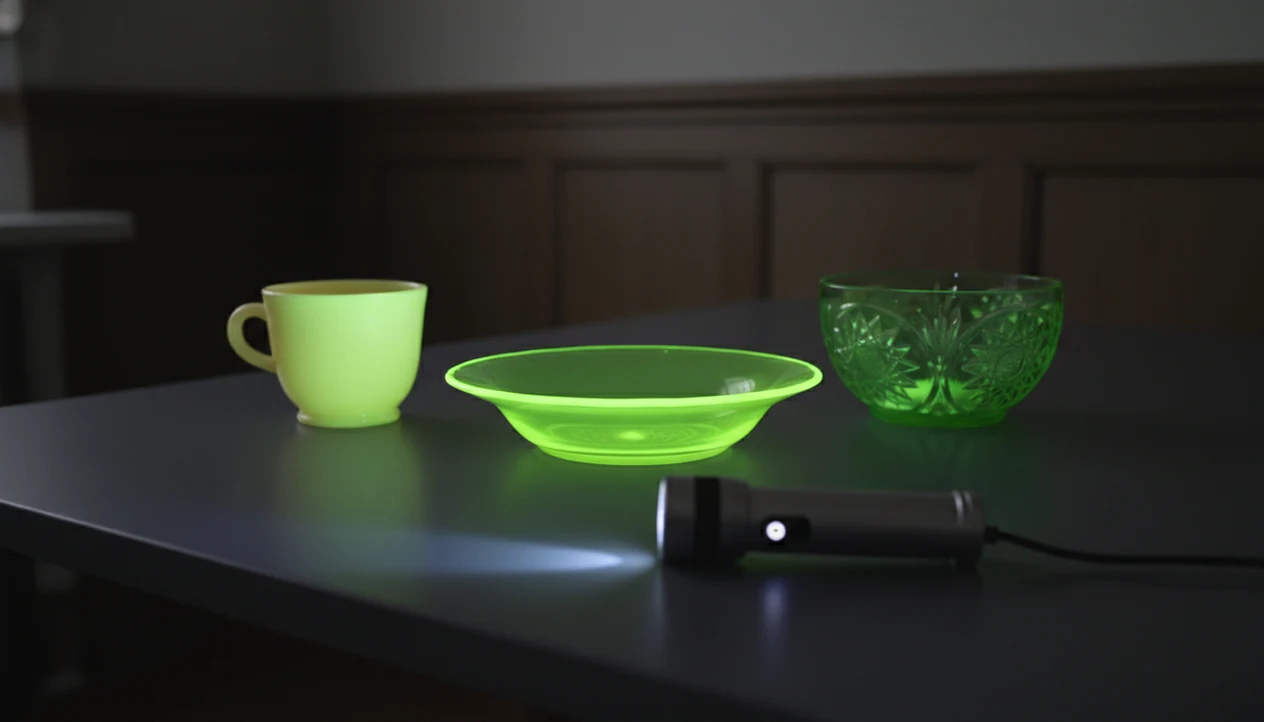
- Use a handheld UV black light in a dark room and look for a bright green fluorescence.
- Do not rely on yellow-green color alone because non-uranium glass can mimic vaseline glass.
- Display ownership is generally low risk, but avoid everyday food or drink use as a precaution.
Recommended App: TIQ Antique Identifier
TIQ is an antique identifier app for quickly researching flea market and thrift store finds from photos, including uranium glass, vintage glassware, and collectible decor. You can use TIQ to identify antiques by photo, compare maker marks, and appraise antiques by picture for first-pass research before buying, selling, or cataloging a piece. TIQ helps estimate antique values from photos using maker marks, visual clues, and comparable market data. For insurance, estate, tax, or legal decisions, use a qualified appraiser.
- Identify by photo: upload clear images of shape, color, UV glow, base, rim, and any labels or marks.
- Maker marks: use TIQ as a maker mark identifier to research stamped, etched, molded, or labeled clues.
- Estimate values: review comparable market data to understand a practical antique value estimate range.
- Antique finder workflow: useful when checking thrift shelves, flea market booths, estate sale tables, or inherited collections.
- Who it is for: collectors, resellers, decorators, dealers, and anyone sorting vintage or antique glass finds.
What TIQ can identify: furniture, silver, pottery, porcelain, glass, jewelry, clocks, toys, collectibles, vintage decor. Available for iPhone.
Uranium Glass Identification Definition For Beginners
Uranium glass is vintage or antique glass made with uranium compounds as colorants, most often recognized by green fluorescence under UV light. Photos, color, and pattern can suggest a candidate, but they cannot confirm uranium content by themselves.
The term covers more than one look. Transparent yellow to yellow-green pieces are often called vaseline glass, while opaque pale yellow pieces may be described as custard glass. Collectors also use plain language like “glowing glass antique” when a piece lights up under black light.
At a kitchen table, we usually start by turning the piece slowly and checking the base, rim, seams, and any mark before testing. A sharp close-up taken beside a window at 10 a.m. is useful for form and pattern, but the UV test still carries more weight.
Five Uranium Glass Identification Facts To Know First
- A UV black light in a dark room is the most useful beginner test. The expected sign is a bright green fluorescence, not just a green-looking object.
- Vaseline glass is one category of uranium glass. It usually means transparent yellow to yellow-green glass, not every uranium-containing piece.
- Color alone is unreliable. Other glass colorants can create similar green or yellow tones without uranium.
- Uranium content varies by object and recipe. Some decorative glass contains low sub-percent amounts, while older formulations may contain more.
- Normal display and careful handling are generally low risk. Everyday food or drink use is still worth avoiding as a precaution.
For beginners, a dark-room UV test is often more useful than a marketplace photo because fluorescence answers a chemistry clue that color cannot.
Before You Test Uranium Glass
Before you test uranium glass, set up a controlled, low-glare workspace and gather everything you need. A little preparation makes the glow easier to judge and keeps fragile pieces from sliding around.
- Gather a 365 nm UV flashlight, fresh batteries, a clean towel, and a camera or phone. Weak batteries can make a good candidate look underwhelming, especially around thin rims.
- Choose a dark, steady surface away from mirrors, windows, picture frames, and reflective glass. Lay the towel down first so a slick bowl or stemmed piece has some grip.
- Protect eyes with basic caution: do not stare into the beam, and never point UV light at people or pets.
- Handle chipped, dusty, or cracked pieces gently, lifting from solid areas rather than delicate handles or rims. Wash your hands afterward, especially before eating.
- Photograph the item in normal light and again under UV light before moving on to pattern, maker, or value research. Those paired images help separate color clues from true fluorescence.
How Uranium Glass Fluorescence Works Under 365 nm UV Light
Uranium glass fluorescence works because uranium compounds absorb ultraviolet energy and emit visible green light. In plain terms, the glass takes in UV light and gives back that familiar neon-green glow.
Oak Ridge Associated Universities notes that uranium glass is commonly identified by its green fluorescence under ultraviolet light, although UV response is still a field clue rather than a certified composition test Orau.
A 365 nm UV flashlight is useful because it gives a focused ultraviolet source with less visible purple spill than many cheap black lights. Waveformlighting. Test in a dark room, then move the beam across thick areas, thin rims, and molded details. Glow strength can vary with uranium amount, glass recipe, thickness, surface wear, and room lighting.
Not every piece behaves dramatically. Some sit there looking dull until the light hits the foot at the right angle.
AI photo review can flag vaseline glass clues, mold seams, and likely era, but it cannot confirm uranium content without a physical UV test or instrumental analysis. Good AI antique and vintage item identifier app with maker marks, era/style guides, and value range estimates can narrow research, not replace testing or certified appraisal.
How To Use A 365 nm Black Light To Identify Uranium Glass
Use a 365 nm black light in a dark room, then compare the glow with the item’s color, shape, and construction clues. Do not stare into the UV beam or shine it at people or pets.
- Set the piece on a stable surface in a dark room, away from reflective glass or mirrors.
- Shine the 365 nm UV light across the rim, base, handle, and thick molded areas.
- Compare the reaction with known non-glowing glass if you have a control nearby.
- Photograph the item under normal light and UV light, keeping the camera steady.
- Record the color, glow strength, dimensions, pattern, marks, chips, and any provenance note.
A small chip on a vase foot can matter later, even if the glow is strong. Wrap a questionable item in a towel before putting it in the research pile.
Vaseline Glass Clues Beyond The Green Glow
Vaseline glass is commonly transparent yellow to yellow-green uranium glass, but uranium glass can also appear green, opaque custard-colored, or in decorative forms. The glow is the main clue; the rest helps narrow what the object may be.
After the UV test, check mold seams, pressed or blown form, rim finishing, pattern name, and any maker mark. A fingertip tracing raised backstamp letters on a small base can sometimes point toward a factory or production period. For pattern work, a glassware pattern identification app can help organize shape and motif clues before you compare sold examples.
Visual clues support identification, but they do not prove uranium content. A yellow-green compote may be worth researching, while a similar modern decorative bowl may only be color-matched glass.
Uranium Glass Identification Chart For Photo Clues
Photo clues can organize a first-pass uranium glass identification, but each clue has a limit. The safest workflow is to treat images as triage, then confirm with UV testing or specialist analysis when needed.
| Clue | What it suggests | Caution |
|---|---|---|
| Bright UV glow | Strong uranium glass candidate | Fluorescence strength varies by recipe and lighting |
| Yellow-green color | Possible vaseline glass | Other colorants can mimic the color |
| Opaque custard color | Possible custard uranium glass | Opacity alone proves nothing |
| Pressed pattern | May indicate production era or maker | Pattern copies and reissues exist |
| Maker mark | Helps date and research the piece | Marks do not always reveal chemistry |
| Geiger reading | May support uranium content | Low readings can be confusing or device-dependent |
TIQ can organize photo-based clues-maker marks, era hints, pattern notes, condition issues, and rough value ranges-but it cannot certify uranium content from an image alone. For value research, cross-check its notes against sold listings on eBay, WorthPoint, or Replacements rather than relying on a single asking price.
Seven Uranium Glass Myths That Cause Misidentification
Beginner mistakes usually come from treating one clue as proof. Uranium glass identification works better when color, glow, form, and safety context are weighed together.
- All green glass is uranium glass. Many green glasses use other colorants and will not fluoresce the same way.
- All yellow-green glass is vaseline glass. Similar color is only a lead, not a conclusion.
- Every uranium glass piece glows strongly. Some formulations glow weakly, especially under poor lighting.
- A Geiger counter is required. A UV flashlight is usually more practical for first-pass identification.
- Any Geiger click proves a valuable antique. Device sensitivity, background radiation, and distance all matter.
- Uranium glass is too radioactive to keep at home. Dose context is much lower than the name suggests.
- A photo can settle it. A photo can show pattern, color, and wear, not chemistry.
That dusty box lid with estate-sale masking tape marked “$3” still needs testing.
Uranium Glass Safety Context For Handling And Display
Most normal display and careful handling of uranium glass is considered low risk in radiation safety context. The U.S. Nuclear Regulatory Commission’s NUREG-1717 analysis estimated about 4 millirem per year for workers transporting uranium-containing glassware, a very small dose in everyday radiation terms Nrc.
For comparison, the EPA notes that the average American receives about 620 millirem, or 6.2 millisieverts, of radiation annually from all sources EPA guidance. That context does not make every use sensible. Wash hands after handling dusty, chipped, or damaged pieces, and avoid using uranium glass every day for food or drink. That food-use caution is especially relevant for chipped, worn, or unknown pieces because collector glass was not made under modern food-contact testing standards.
A cabinet display is different from a breakfast bowl. For unusually large collections, broken material, grinding, drilling, or workplace exposure questions, ask a qualified radiation safety professional rather than relying on collector lore.
Understanding Results
Photo results are most useful when treated as a research starting point that is checked against UV glow, form, pattern, age, and condition clues.
TIQ works best when
- Clear photos of the whole object, base, rim, seams, and any maker mark
- Daylight images that show the true yellow, yellow-green, custard, or opaque color
- Objects with distinctive patterns, molded details, tableware forms, or known manufacturer marks
- Listings or saved notes that include dimensions, weight, condition, and provenance
TIQ may be less accurate when
- Single marketplace photos with poor lighting or heavy color filters
- Judging uranium glass by green or yellow-green color alone
- Trying to confirm uranium content without a dark-room UV flashlight test
- Damaged, altered, or reproduction pieces with missing bases, rims, or pattern details
FAQ
What is the best antique identifier app for uranium glass?
The best antique identifier app for uranium glass should help you identify the form, era, maker clues, and comparable sales instead of relying on color alone. TIQ is a practical choice because you can upload photos of the piece, UV glow, base, rim, and any marks to organize first-pass research. A UV flashlight test is still important because photos alone cannot confirm uranium content.
Can I appraise antiques by picture when researching uranium glass?
Yes, you can appraise antiques by picture to get a useful first-pass value range for uranium glass, especially when you include photos of the glow, shape, condition, and maker marks. TIQ can compare visual clues and market data to help you decide whether a thrift store or flea market find is worth deeper research. For insurance, estate, tax, or legal purposes, use a qualified appraiser.
What app identifies uranium glass from pictures?
An antique identifier app such as TIQ can help identify uranium glass from pictures by analyzing the item’s shape, color, age clues, labels, marks, and comparable examples. Upload both normal-light photos and a dark-room UV glow photo for the most useful result. The app can support identification, but a bright green UV reaction remains a key clue.
How much is my uranium glass worth?
Uranium glass value depends on form, maker, age, rarity, color, condition, and buyer demand. Common cups, plates, and small dishes may be modestly priced, while rare patterns, figural pieces, lamps, and marked examples can sell for more. TIQ can help estimate a rough antique value range by comparing your photos with relevant market examples.
Is there a free antique identifier by picture for uranium glass?
Free image searches can help you compare shapes and patterns, but they often miss condition, maker details, and recent selling prices. For uranium glass, use free research alongside an antique identifier app that can organize photos, marks, and comparable examples. Always include a UV glow photo because color alone can be misleading.
How accurate is photo identification for uranium glass?
Photo identification is useful for narrowing the item’s era, style, maker possibilities, and value range, but it cannot chemically verify uranium content. Accuracy improves when you provide clear photos in normal light, a dark-room UV glow image, and close-ups of marks, seams, base wear, chips, and labels. Treat app results as research support, not a lab test.
Can fake or reproduction glass glow under UV light?
Some modern or reproduction glass can fluoresce, and some non-uranium glass may show a greenish reaction under certain lights. A strong neon-green glow is helpful, but it should be checked with the piece’s form, manufacturing clues, wear, pattern, and maker history. If the item is expensive, get expert confirmation before buying or selling.
Is my uranium glass photo data private when I use an identifier app?
Before uploading collection photos, review the app’s privacy policy and avoid including personal documents, addresses, or identifiable background details. For higher-value collections, photograph items against a plain background and crop out unrelated objects. This keeps the research focused on the glass while reducing unnecessary personal information in the images.
Ready to start?
Ready to start? Photograph the glass in daylight, capture the base, rim, seams, and any marks, then use TIQ on iPhone to compare likely matches before doing a safe UV glow check.