Antique Identifier App for Documenting Provenance
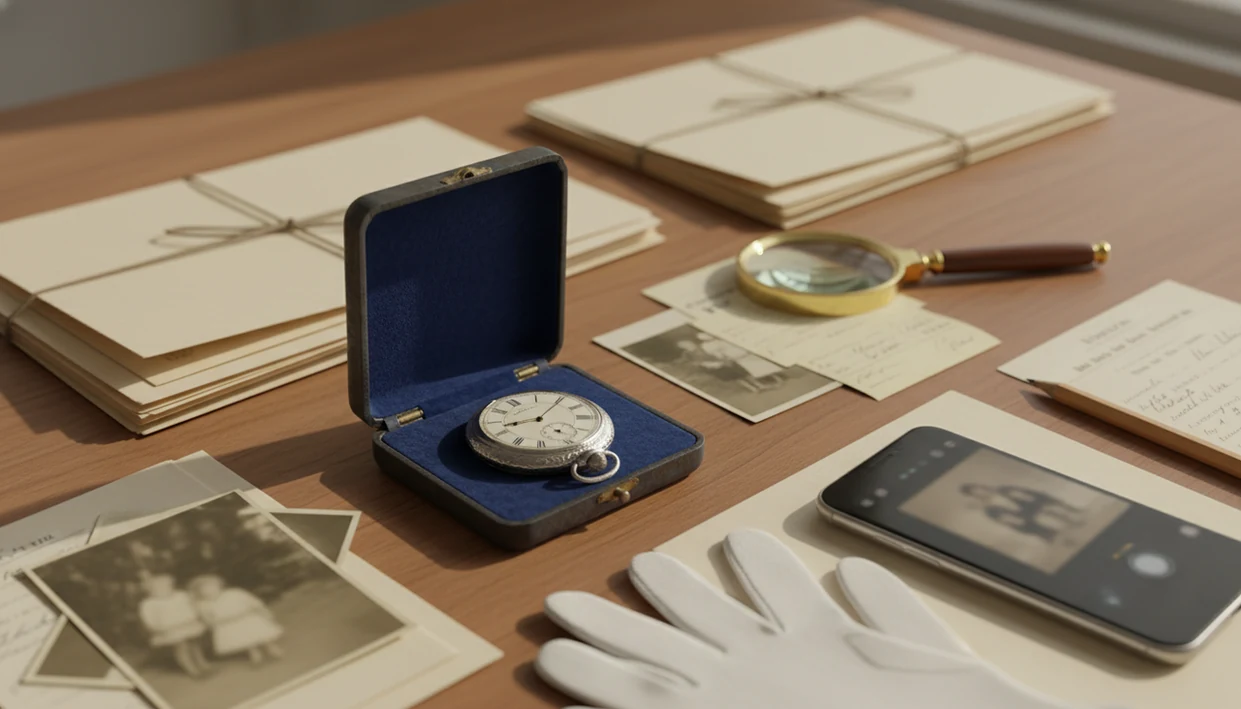


Download App: document antique provenance
Good provenance turns scattered photos, receipts, labels, and family notes into a clearer item history that collectors, heirs, and buyers can understand. With TIQ, you can appraise antiques by picture for first-pass research while saving identification clues and value notes alongside your records.
Definition: Antique provenance documentation is the process of recording an object’s ownership history, identifying details, supporting photos, receipts, marks, and value notes.
- Start with a cover sheet, dated photos, and every receipt, label, estate note, appraisal, auction listing, or family document you can find.
- Use photo-based antique identification tools to capture maker mark clues, style hints, period estimates, and rough value ranges, but do not treat app output as proof.
- Label each claim as documented, likely, possible, or family story so future buyers, heirs, and appraisers can see what is verified.
Recommended App: TIQ Antique Identifier
TIQ is an antique identifier app for collectors and beginners who want to document objects as they learn, organize photo records, and appraise antiques by picture for first-pass research. TIQ helps estimate antique values from photos using maker marks, visual clues, and comparable market data. It also works as a maker mark identifier and antique finder when you are building provenance notes, comparing similar items, or preparing records for family, resale, or collection management. For insurance, estate, tax, or legal decisions, use a qualified appraiser.
- Identify antiques by photo and capture useful visual clues for provenance files.
- Use maker marks, signatures, labels, stamps, and construction details to support identification research.
- Estimate antique values with comparable market data and keep value notes alongside your records.
- Build better research habits by saving photos, receipts, dates, ownership notes, and condition details.
- Designed for collectors, beginners, inheritors, resellers, and families organizing antiques over time.
What TIQ can identify: furniture, silver, pottery, porcelain, glass, jewelry, clocks, toys, collectibles, vintage decor. Available for iPhone.
Antique Provenance Records: The Simple Definition
Antique provenance is the ownership, origin, and movement history of an object, supported by records that can be checked. It answers a practical question: where did this item come from, and what evidence says so?
Useful antique provenance records include receipts, auction catalog pages, dealer labels, appraisal reports, photographs, estate paperwork, letters, expert notes, and insurance schedules. A grandfather’s watch in a velvet box may start with a family memory, but the stronger record is the engraved initials, dated repair receipt, and photo showing it in the same household decades earlier.
Partial provenance still matters when it is verifiable. A file that documents the last 40 years is better than a loose story about the last 140. For inherited antiques, these records help with identification, insurance discussions, resale descriptions, and family sorting.
Five Facts About Documenting Antique Provenance
- Provenance means collecting reliable evidence of an antique’s ownership, origin, and movement over time.
- Strong records can support authenticity, legal ownership, and buyer confidence, especially for higher-value art, design, cultural property, and branded collectibles.
- Incomplete but verifiable records are better than no records because they give appraisers and heirs something concrete to cross-check.
- Red flags include unnamed experts, inconsistent dates, dramatic unsupported stories, fresh-looking documents, and value claims that do not match the object.
- AI antique identifier apps can support research by reading maker marks, styles, and eras, but they do not replace receipts, estate papers, archive checks, or professional review.
The most useful provenance file separates evidence from interpretation because later readers can verify the evidence even if they disagree with the conclusion. That distinction saves time when someone needs to discover antique history without starting over.
How Documenting Antique Provenance Works
Documenting antique provenance works by connecting the object itself to people, dates, and places through evidence that can be checked. The goal is not to make a perfect story; it is to build a chain of custody, meaning a traceable ownership path, with each link marked by its source and confidence level.
A useful file lets documents, photos, maker marks, inscriptions, app notes, and memories test each other. A dated photo may support a family story, while a backstamp or repair receipt may contradict the date someone remembered. Confidence labels such as documented, likely, possible, and family story keep warm memories from turning into unsupported sales claims. Stronger provenance comes from independent records that agree with each other, not from the same assumption repeated in five places. When the gap involves high value, disputed ownership, cultural property, export rules, or a major attribution, pause the family file and ask the right reviewer: an appraiser for value, an archive for records, a lawyer for ownership questions, or a museum specialist for sensitive or historically important objects.
Provenance Evidence Matching for Antique Marks, Dates, and Owners
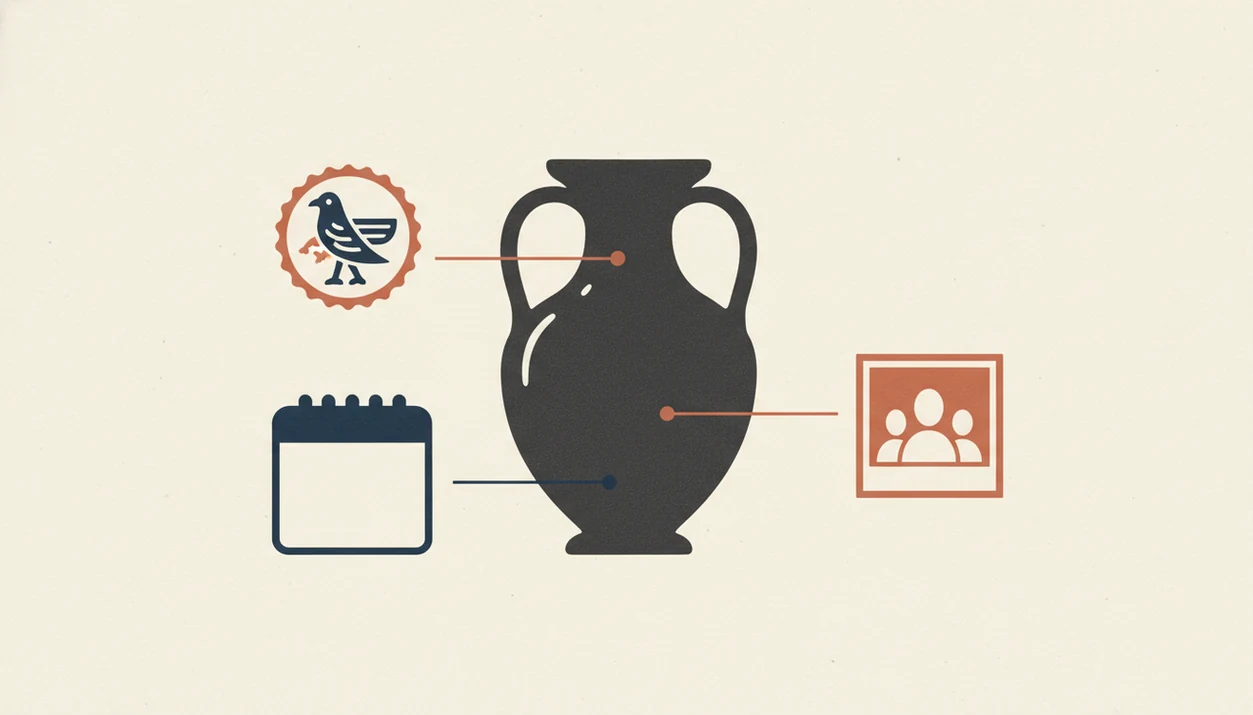
Provenance works by matching evidence: object details, dates, people, places, and documents must fit together. One strong clue is helpful; several consistent clues are better.
Start with the object itself. Cross-reference maker marks, inscriptions, labels, invoices, photographs, estate inventories, and family correspondence. A fingertip tracing raised backstamp letters on a saucer may reveal a factory clue, but the date range needs support from receipts, old photographs, or catalogue references. If the mark suggests 1930s production, a claimed 1880 purchase date needs a note, not a quiet correction.
Consistency matters across material, construction, ownership, and value claims. Museums and dealers use formal provenance research because unclear records can create authenticity and ownership risk. In surveys and market research, dealers and museums often describe provenance research as central to due diligence, especially when cultural property, high prices, or contested ownership may be involved. For formal research examples, compare object histories against resources such as the Getty Provenance Index (Getty) and museum provenance notes like The Met’s collection provenance records (The Met).
Documents and Photos to Gather Before You Start
Gather everything before judging importance. Small scraps often become useful after the maker, date, or owner is clearer.
- Current photos: Take front, back, side, underside, inside, scale, damage, repair, maker mark, and label images. A sharp close-up beside a window at 10 a.m. usually beats a blurry phone photo under ceiling glare.
- Ownership records: Save wills, estate inventories, letters, gift notes, receipts, insurance schedules, and household lists.
- Market records: Keep auction listings, dealer invoices, appraisal reports, prior sale pages, and sold listing screenshots, not just asking prices.
- Research records: Add app screenshots, museum database matches, maker mark references, and catalogue notes. For art, antiquities, or culturally sensitive objects, also record checks against ICOM Red Lists (Icom) or other relevant stolen-art and cultural-property resources.
Name files by item and date, such as `blue-willow-platter-backstamp-2026-05-26.jpg`. For marks, a separate find antique maker note can keep your research trail readable.
How to Use a Provenance File for an Inherited Antique
Use one provenance file per item, not one overflowing family folder. That keeps the story attached to the object.
- Set up a folder and cover sheet for one antique, with item name, owner, location, and date opened.
- Photograph the antique and every mark, label, inscription, repair, damage spot, and condition issue.
- Log ownership history in a dated timeline, even when the first entry is only “known in family by 1978.”
- Attach receipts, appraisals, estate records, screenshots, emails, letters, and prior sale pages.
- Label each claim as documented, likely, possible, or family story.
- Save digital backups and keep fragile originals separate in sleeves or envelopes.
Tools like TIQ can help record photo clues, maker mark leads, era hints, and rough value ranges, not certified proof or legal ownership. Wrap a questionable item in a towel before it goes into the research pile. Simple, but it prevents damage.
Antique History Notes: How to Separate Facts From Family Stories
Good antique history notes preserve memories without turning them into evidence. Do not delete family stories; label them clearly.
| Label | What it means | Example note |
|---|---|---|
| Documented fact | Supported by a record you can show | “Purchased from Miller Estate Sale, 1984 receipt attached.” |
| Likely | Fits several clues but lacks final proof | “Likely English transferware, based on backstamp and pattern match.” |
| Possible | Worth researching, but weakly supported | “Possibly brought from Ohio after 1910 family move.” |
| Family story | A memory or tradition, not verified | “Family says it belonged to great-grandmother.” |
Record who supplied each memory and when. “Told by Anne R., 14 March 2022” is more useful than “family says.” If two relatives disagree, include both versions. Contradictions are not failures; they are research leads. For inherited groups, inherited antique research stories show how often the first story changes after labels, receipts, or photos surface.
Common Provenance Mistakes With Inherited Antiques
The most common mistake is treating age as proof. Old does not automatically mean authentic, rare, or valuable.
Do not present family lore as verified provenance. “Grandmother said” belongs in the file, but it should not become “documented 19th-century ownership” without support. Also avoid relying only on AI identification, online listings, or seller claims. They can point you toward research, but they are not the whole record.
Never separate paper labels, tags, boxes, frames, or mounts from the object before photographing them. A green felt pad hiding a furniture label may hold the clue that connects a chair to a maker or retailer. If you need to update a note, add a dated correction instead of overwriting the original. And be practical: do not spend heavily on paid research for low-value mass-produced items unless the family history matters personally.
Verification Checklist for Stronger Antique Provenance Records
Does this provenance file show evidence that fits the object, or just a good story? Check the dates, materials, maker marks, ownership claims, and value claims together before sharing it.
Compare app clues with maker mark databases, museum records, auction archives, catalogue references, or specialist books. Confirm that appraisals and expert reports came from identifiable, qualified sources, not vague “antique expert” notes. Name the source in the file: database title, archive name, appraiser name, book title, auction house, or museum collection page. A note that says ‘matched on WorthPoint, LiveAuctioneers, or a museum collection record on 2026-05-26’ is easier to audit than ‘found online.’ Look for suspicious gaps, newly created documents, altered labels, and historical claims that seem too neat.
Create a one-page summary listing confirmed facts, likely points, open questions, and attached documents. If value is part of the question, record a sold-comps range and the condition issues that affect it; a guide to see antique value range can help keep asking prices separate from evidence. TIQ may support first-pass photo review, but it is not a certified authentication service.
Understanding Results
Photo-based antique identifier results are most useful when they are treated as research clues that sit beside dated evidence, not as standalone proof of provenance.
TIQ works best when
- Items with clear front, back, detail, and maker mark photos
- Objects with labels, signatures, receipts, auction listings, or appraisal documents
- Furniture, ceramics, silver, jewelry, glass, watches, art, and branded collectibles with visible construction or mark details
- Inherited items where family notes can be compared with dates, photos, addresses, or estate paperwork
- Records that separate documented facts from likely, possible, or family-story claims
TIQ may be less accurate when
- Blurry photos, cropped marks, poor lighting, or missing scale references
- Generic household items with no maker marks, labels, serial numbers, or distinctive design features
- Restored, altered, or assembled pieces where parts may come from different periods
- Family stories with no dated documents, photographs, receipts, or independent records
- High-value, legally sensitive, or culturally significant objects that require specialist review
FAQ
What is the best antique identifier app for documenting provenance?
The best antique identifier app for provenance should help you identify objects from photos, capture maker marks, and organize research notes in one place. TIQ is a practical choice for collectors and beginners because it connects photo-based identification with rough value ranges and item details you can save for future reference.
What app identifies antiques from pictures for provenance research?
An antique identifier app can identify antiques from pictures and give you clues about style, period, maker marks, materials, and comparable items. For provenance research, use those clues to build a dated record that separates documented facts from family stories or uncertain leads.
Can TIQ read maker marks from a photo for provenance files?
TIQ can help interpret visible maker marks, hallmarks, signatures, labels, and stamps from clear photos. These details can strengthen your provenance file by linking an item to a possible maker, region, period, or comparable market record.
Is there a free antique identifier by picture for provenance notes?
Some antique identifier tools offer limited free photo checks, but provenance work usually benefits from saved records, multiple photos, and organized notes. When comparing options, look for an app that supports photo identification, value research, and item-level documentation rather than a one-time guess.
What should I include in an antique provenance file?
A useful provenance file should include dated photos, ownership notes, receipts, labels, maker marks, appraisal documents, auction records, and any family history tied to the item. Add condition details and value notes over time so the record stays useful for insurance, resale, inheritance, or collection management.
Can an antique identifier app prove provenance?
An antique identifier app can support provenance research by finding visual clues, maker mark possibilities, and comparable examples. It cannot prove ownership history by itself, so keep app findings separate from verified receipts, estate papers, photographs, or signed documents.
How accurate are photo-based antique provenance notes?
Photo-based notes are most accurate when the images are clear, well lit, and include marks, construction details, condition issues, and scale. Treat app results as research leads, then verify important claims with documents, expert review, or a qualified appraiser when value, insurance, tax, or legal decisions are involved.
How should I protect private provenance documents?
Keep sensitive documents such as addresses, estate papers, insurance forms, and purchase records in a secure location and share only what a buyer, appraiser, or insurer actually needs. If you store digital copies, use strong device security and keep backups so your provenance record is not lost.
Ready to start?
Ready to start your provenance file? Use TIQ on iPhone to photograph the item, capture maker marks, compare clues, and save notes before adding receipts, appraisals, auction records, and family documents.