Antique Identifier App for Discovering Item History


Download App: discover antique history
Definition: Discovering antique history means identifying an item's maker, age, origin, style, and market context using photos, marks, construction details, and comparable records.
When a flea market or thrift store find has no label, TIQ helps you connect photos, marks, materials, and style clues into a practical research path. Use it to appraise antiques by picture for a rough value range while you investigate maker, age, origin, and provenance.
> For beginners trying to discover antique history, TIQ gives a fast first pass from photos: object type, maker mark clues, era hints, and rough value ranges. Use those clues as a research starting point, then verify them against provenance records, reference books, museum databases, auction archives, or a qualified appraiser.
- Start with clear photos of the whole object, close details, maker marks, damage, undersides, backs, interiors, and construction.
- Use marks, materials, style, manufacturing clues, and provenance together; no single clue proves an antique’s full history.
- Treat AI identification and online price ranges as research starting points, not certified authentication or appraisal.
Recommended App: TIQ Antique Identifier
TIQ is an antique identifier app for turning flea market and thrift store finds into practical first-pass research, helping you identify antiques by photo and appraise antiques by picture before you dig deeper. It works as an antique value estimate tool, maker mark identifier, and antique finder for comparing visual clues against market context. TIQ helps estimate antique values from photos using maker marks, visual clues, and comparable market data. For insurance, estate, tax, or legal decisions, use a qualified appraiser.
- Identify antiques by photo using shape, materials, style, construction, and decorative details.
- Read and interpret maker marks, stamps, signatures, labels, and hallmarks when they are visible.
- Estimate antique values with comparable market data to guide research and buying decisions.
- Useful for flea market shoppers, thrift store hunters, collectors, resellers, and inherited-item research.
- Helps organize next steps by suggesting likely age, category, maker context, and value range.
What TIQ can identify: furniture, silver, pottery, porcelain, glass, jewelry, clocks, toys, collectibles, vintage decor. Available for iPhone.
Five facts that help you discover antique history faster
- An antique is generally an object at least 100 years old; vintage usually means older, collectible items that are newer than that.
- Provenance is stronger than family memory alone because it creates a documented chain of ownership, place, and time.
- Maker marks, hallmarks, materials, manufacturing methods, and wear are physical evidence worth photographing before cleaning or repair.
- Tech tools and human experts work best together; software can narrow possibilities, while specialists verify difficult claims.
- Value depends on condition, rarity, demand, and documentation, not age by itself.
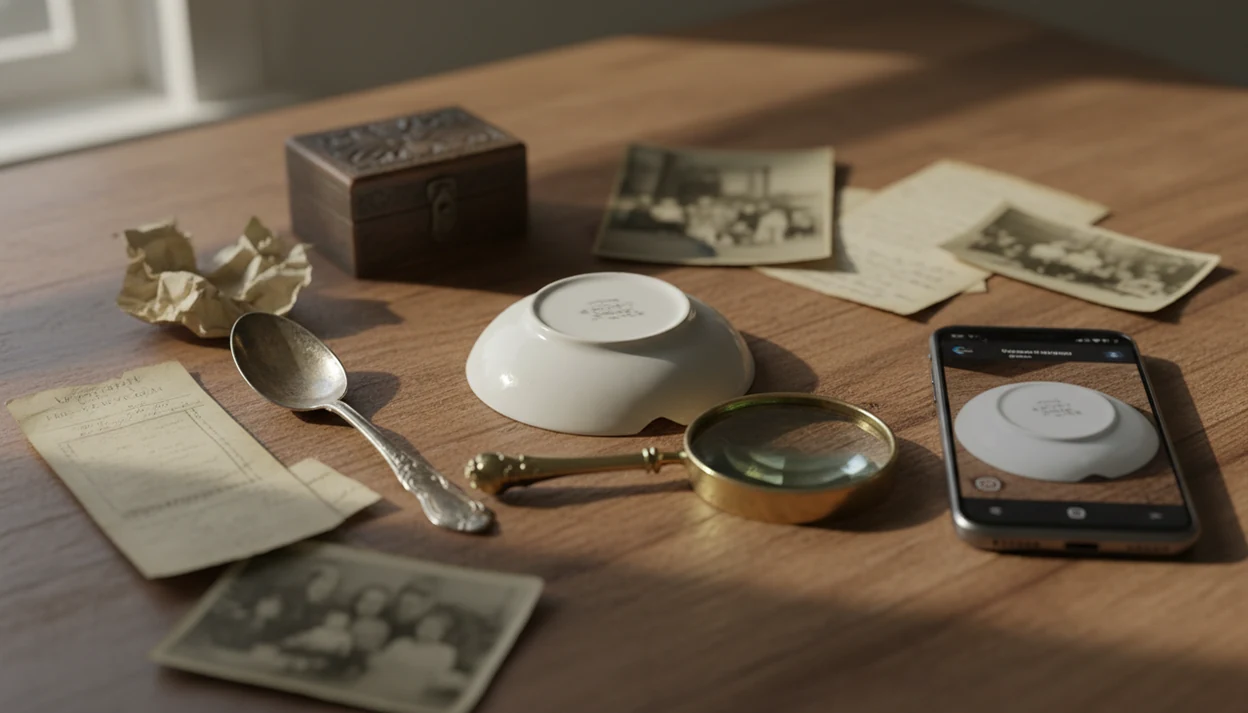
At the kitchen table, turning a saucer away from ceiling glare can reveal a backstamp that changes the whole research path. Small clue, large effect. If the mark looks promising, the next step may be to find antique maker through references, not guess from style alone.
How Discovering Antique History Works
Discovering antique history works by moving from visible evidence to tested explanation. The object supplies clues first: its form, marks, materials, construction, surface wear, repairs, and signs of use.
- Start with what can be seen and photographed before cleaning, polishing, or replacing parts.
- Turn each clue into a cautious hypothesis about maker, period, region, function, or later alteration.
- Test that hypothesis against reference books, maker catalogs, museum records, auction archives, and sold examples.
- Use provenance to confirm ownership history, dates, locations, and movement, rather than relying only on style or family memory.
- Escalate uncertain, valuable, fragile, or legally important items to a qualified appraiser or subject specialist.
This is an evidence trail, not a single yes-or-no answer. Attribution means assigning a likely maker or origin; connoisseurship means expert judgment from close comparison. Both are stronger when the story on paper matches the object in hand.
Photo-based antique origin clues in app research
Photo-based antique research works by comparing visible form, decoration, marks, materials, and construction details against known examples. AI image recognition uses image embeddings, meaning it converts visual features into comparable patterns rather than “knowing” the object’s full history.
Maker marks and construction details can narrow a possible maker, region, and date range. A dovetail pattern, molded glass seam, porcelain backstamp, or stamped metal hallmark may point toward a period, but provenance records can confirm or challenge that visual hypothesis. A receipt folded behind a painting may matter more than the frame style.
Mobile research fits how people already shop and sort objects. A Pew Research Center survey found that 51% of U.S. adults used a smartphone to look up product information while in a store. Source: Pew Research Center, Pew Research Center Good AI antique and vintage item identifier apps with maker marks, era/style guides, and value range estimates deliver first-pass clues, not certified authentication.
Five photo steps to learn antique history
Use this workflow when you want to learn antique history from an inherited item, estate box, or thrift find.
1. Photograph every surface
- Photograph the front, back, underside, inside, sides, and a scale reference, such as a ruler beside the object.
2. Capture marks and construction
- Capture maker marks, hallmarks, labels, signatures, repairs, damage, hardware, joinery, and tool traces in sharp close-up.
3. Record family ownership notes
- Record who owned it, where it was kept, and any remembered dates before those details disappear.
4. Compare app clues with references
- Run clear photos through TIQ for object type, era hints, maker mark clues, and a rough value range, then compare the result with books, museum records, auction archives, or a specialist.
5. Save the evidence trail
- Save photos, notes, URLs, screenshots, dates accessed, and source names in one folder.
A sharp close-up beside a window at 10 a.m. usually beats a blurry phone photo taken under yellow hallway light.
Photo clues that reveal the history of an inherited antique
Photo clues help turn a family object into a researchable item by showing what it is, how it was made, and how it was used. For an inherited antique, wear should fit the object’s expected age and function.
Form and proportions: Overall shape, size, and silhouette can connect a chair, clock, vase, or brooch to a known style period.
Decoration and surface: Hand-painted brushstrokes under magnification, transfer printing, carving, gilding, patina, and fading may indicate method and age.
Construction evidence: Joinery, fasteners, hardware, labels, signatures, seams, and tool marks often give better date clues than decoration alone.
Negative clues: Replaced screws, modern fabric, refinishing, fresh glue, repairs, and mismatched parts can weaken an identification.
Cleaned, restored, or altered pieces may lose both evidence and value. If a questionable item seems fragile, wrap it in a towel before placing it in the research pile.
Provenance records that turn antique origin clues into history
What records prove where an antique came from? Provenance is the documented chain of ownership, origin, and movement that connects an object to people, places, and dates.
Useful records include receipts, wills, estate inventories, letters, old photographs, insurance schedules, exhibition labels, repair invoices, auction listings, and dealer paperwork. A mantel clock beside funeral cards may support a family timeline, but the cards alone do not prove the clock’s maker or date. Family stories are useful context, not proof, unless supported by documents or physical evidence.
Strong provenance can support authenticity, historical context, and value. It also helps separate similar examples from confirmed matches. For inherited pieces, the safest habit is to document antique provenance before selling, cleaning, donating, or dividing items among relatives.
AI app research versus appraiser research for antique history
AI app research is useful for early sorting, while appraiser research is needed for formal decisions. TIQ can help with object identification, maker mark clues, era hints, and rough value ranges, but appraisers or specialists are needed for insurance, tax, sale, authentication, or high-value decisions.
| Research factor | AI app research | Appraiser or specialist research |
|---|---|---|
| Speed | Minutes from photos | Days or weeks, depending on availability |
| Cost | Usually low or subscription-based | Often paid per item, hour, or report |
| Evidence | Visual clues, marks, comparable examples | In-person inspection, market knowledge, documentation |
| Accuracy | Good for first-pass narrowing | Stronger for attribution, condition, and value |
| Best use case | Sort, research, list, or triage | Insure, sell, donate, settle, or authenticate |
| Limitations | Depends on photos and available examples | Limited access, cost, and specialist fit |
The U.S. Bureau of Labor Statistics estimated 6,200 workers in appraiser and assessor roles in 2022, including people who evaluate personal property. For occupational context, cite the BLS Occupational Outlook Handbook for appraisers and assessors: Bureau of Labor Statistics. That small field is one reason first-pass sorting matters. For uncertain value, compare your notes with see antique value range guidance before paying for a formal opinion.
Digital records that help you learn antique history
Digital records help confirm, refine, or reject an antique identification by putting photo clues into a wider evidence base. Save source names, URLs, screenshots, and access dates as you go.
Museum collection databases: Use them to compare form, materials, date ranges, and catalog language.
Maker mark references: Backstamp, hallmark, and label guides can narrow maker, region, and production period.
Patent and newspaper archives: Patents may identify mechanisms, while newspapers can show advertisements, store names, or exhibition notices.
Auction archives: Realized sale prices are stronger than asking prices because they show what buyers actually paid.
For cross-checking, compare TIQ results with Google Lens visual matches, WorthPoint sold-price archives, LiveAuctioneers records, and museum collection databases; none of these replaces a written appraisal.
Genealogy records and local historical societies: These can connect a family name, town, business, or estate to the object.
The global online art and antiques market reached an estimated $13.5 billion in 2022, so digital research now shapes both buying and selling. Still, a polished listing price is not a sold-comps range.
Understanding Results
Antique identifier results are most useful when photo evidence is clear and then checked against provenance, references, comparable sales, and expert review.
TIQ works best when
- Clear photos of the full object from multiple angles
- Readable maker marks, hallmarks, labels, signatures, or backstamps
- Visible construction details, materials, wear, repairs, and undersides
- Objects with common auction, museum, or collector reference examples
- Research questions about object type, period, style, maker leads, and value range
TIQ may be less accurate when
- Blurry, dark, cropped, or single-angle photos
- Unmarked objects with many similar regional or revival styles
- Heavily restored, altered, cleaned, or incomplete pieces
- Rare objects with limited public comparables or undocumented provenance
- Questions requiring certified authentication, legal attribution, or insurance appraisal
FAQ
What is the best antique identifier app for discovering item history?
The best antique identifier app for item history should help identify the object type, likely era, maker clues, marks, materials, and comparable market context from photos. TIQ is a practical choice for flea market and thrift store finds because it gives a fast first pass you can use before checking records, auction archives, or specialist references.
Can I appraise antiques by picture to learn an item's history?
Yes, a photo-based antique identifier can help estimate a rough value range while also pointing to the item's likely category, age, style, and maker clues. For stronger history research, photograph the whole item, marks, underside, back, damage, construction details, and any labels or paperwork.
Is there a free antique identifier by picture for researching thrift store finds?
Some tools offer free or limited photo identification, but the useful part is how well they connect images to age, maker marks, style, and comparable sales. For a thrift store find, use any first-pass result as a starting clue, then verify it with sold comps, reference sources, museum records, and provenance documents.
What app identifies antiques from pictures and maker marks?
An antique identifier app should analyze clear photos of the full object plus closeups of stamps, signatures, labels, hallmarks, and construction details. TIQ can help read visible maker mark clues and connect them with object type, era hints, and rough value context.
How do I research the history of an antique after identifying it?
Start by saving the app's likely category, age range, maker clues, materials, and value estimate. Then compare those clues with auction records, museum collections, reference books, catalogues raisonnés, local histories, family documents, and expert opinions.
How accurate is an antique identifier app for item history?
Accuracy depends on photo quality, how distinctive the object is, whether marks are visible, and whether comparable records exist. Photo identification is strongest for narrowing possibilities and weaker for proving exact maker, date, authenticity, or provenance without supporting evidence.
Can an app prove antique provenance or authenticity?
An app can suggest clues that support provenance research, such as maker marks, style, age indicators, and comparable examples. It cannot prove ownership history, authenticity, or legal title by itself; those require documents, expert review, and sometimes physical inspection.
Can photo identification spot fake antiques or reproductions?
Photo identification can flag warning signs such as inconsistent style, modern construction, suspicious marks, or unusual wear patterns. It should not be the only test for high-value items, because fakes and reproductions may require hands-on inspection, materials testing, or a qualified specialist.
Ready to start?
Ready to start discovering your antique’s history? Take clear photos of the whole object, maker marks, undersides, backs, interiors, damage, and construction details, then use TIQ to get a first identification path before checking records, references, auction comparables, and expert opinions.