How an Antique Identifier Helps Document Provenance


Download App: benefits of documenting provenance
Definition: Provenance documentation is the process of recording an antique’s ownership history, origin clues, maker marks, condition, and supporting evidence.
When you inherit a collection, good provenance notes help turn loose memories, photos, receipts, and maker marks into research you can actually use. TIQ helps you identify items and appraise antiques by picture so you can prioritize what to keep, sell, insure, donate, or review with an expert.
> Provenance is the documented ownership and context history of an antique or vintage item, including who owned it, how it changed hands, and what evidence supports that story.
- Provenance turns family stories into usable evidence by connecting an item to names, dates, places, receipts, photos, and maker-mark clues.
- Good antique documentation benefits identification, appraisal review, insurance discussions, resale confidence, estate planning, and charitable donation records.
- Start with what you have now: take clear photos, record family history, save paperwork, note condition and repairs, and keep backups in more than one place.
Recommended App: TIQ Antique Identifier
TIQ is an antique identifier app for inheritors, collectors, and sellers who want to identify antiques by photo, read maker marks, and turn loose family collection details into clearer records. It works as a maker mark identifier and antique finder, helping you appraise antiques by picture for first-pass research before deciding what needs deeper review. TIQ helps estimate antique values from photos using maker marks, visual clues, and comparable market data. For insurance, estate, tax, or legal decisions, use a qualified appraiser.
- Identify antiques by photo when sorting inherited furniture, silver, ceramics, art, decor, and collectibles.
- Capture maker marks, labels, signatures, stamps, and other provenance clues in one research workflow.
- Estimate values with comparable market data so you can prioritize what to keep, sell, insure, or appraise.
- Use TIQ as a practical antique finder for family members organizing boxes, cabinets, and estate items.
- Helpful for inheritors, downsizers, collectors, resellers, and anyone documenting family history.
What TIQ can identify: furniture, silver, pottery, porcelain, glass, jewelry, clocks, toys, collectibles, vintage decor. Available for iPhone.
Provenance Benefits For Inherited Antiques At A Glance
Provenance means ownership, context, and evidence: who had the item, where it came from, and what records support the claim. For inherited antiques, useful provenance can be partial, practical, and improved over time.
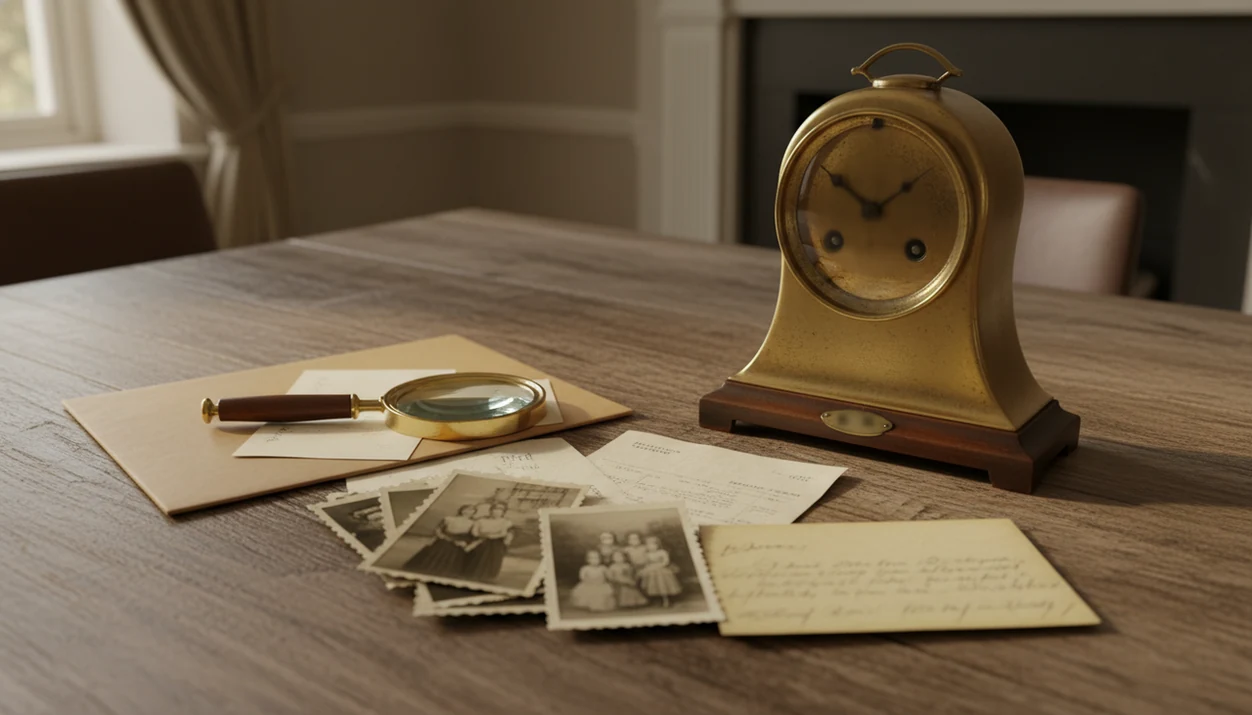
A folder with a funeral card, a receipt, and three clear photos may be more useful than a polished story with no documents. We have seen a mantel clock beside funeral cards tell a clearer ownership story than a vague “Grandma brought it from Europe” note. Small records help with identification, value context, family history records, sale confidence, insurance discussions, and donation review.
Tools like TIQ can help organize photo-based clues such as maker marks, backstamps, style signals, and rough value ranges. They do not replace expert authentication, legal review, or a certified appraisal.
A good AI antique and vintage item identification app can suggest maker marks, era clues, style guides, and value range estimates, not prove legal title or certify authenticity.
Five Provenance Benefits Every Family Should Know
The main provenance benefits are better identification, stronger review inputs, more buyer confidence, clearer family history, and calmer estate decisions. Provenance supports value, but it does not guarantee a high market price.
- Identification improves when clues connect. A maker mark, owner name, date, and location can narrow the search faster than a photo alone.
- Appraisers and AI tools get better inputs. Receipts, prior appraisals, and sharp mark photos help create more useful rough value context.
- Buyers and consignors trust records more than memories. A sold listing screenshot and original receipt can carry more weight than an asking price on a polished marketplace page.
- Heirs understand why an object mattered. Family history records keep names attached to things after the person who knew the story is gone.
- Families argue less when choices are documented. Keep, sell, insure, donate, or divide becomes easier when facts are separated from guesses.
For most families, a simple provenance file is often better than relying on oral history because it gives heirs something they can verify.
Antique Provenance Evidence Chain For Identification
How documenting provenance works: it builds a chain of linked evidence around the object, rather than relying on one certificate or family story. Each record should support the next clue, or clearly show where the chain is uncertain.
How provenance works: photos, receipts, wills, letters, auction listings, appraisals, restoration records, and maker-mark images create a cross-checkable evidence chain. Experts and tools compare those clues against known makers, catalog entries, date ranges, style features, collections, and prior sale records. In plain terms, the record helps people test whether the story fits the object.
Independent records are stronger than unsupported family stories. A receipt with a shop name, a dated photo, and a matching backstamp has more weight than “someone said it was old.” The global art and antiques market reached about $65.7 billion in 2022, and provenance and authenticity remain central to buyer confidence, according to Art Basel and UBS Artbasel.
The strongest antique identification record usually combines visual evidence, ownership notes, and external comparables because each source checks the others.
Before You Start Documenting Provenance
Before you start documenting provenance, narrow the job to one object and protect its current evidence. A careful first hour can prevent mixed-up paperwork, lost family details, or condition changes that make later research harder.
- Choose one item first. Pick the clock, ring, vase, book, or cabinet in front of you instead of opening every family box at once. Provenance gets clearer when one object has one file.
- Gather loose evidence nearby. Pull together receipts, family photos, letters, wills, repair notes, storage labels, and any envelope or drawer note that might belong with the item.
- Set up one working folder. Use a physical folder or envelope, then create a matching digital folder with a backup location outside your phone.
- Photograph before changing anything. Do not clean, repair, polish, remove labels, replace tags, or rewrite old notes before taking clear photos of the object as found.
- Sort claims by confidence. Mark what is verified by records, what is remembered by relatives, and what is still unknown. That honest separation is more useful than a perfect-sounding story.
Six Steps To Use Provenance Records For Antique Identification
How to use provenance records for antique identification: gather the paper trail, photograph the object, log the story, match clues, review uncertain points, and preserve the file. The goal is not perfection. It is a clear research packet.
- Gather receipts, letters, wills, probate notes, appraisals, emails, auction records, and family photos. Put uncertain items in the file, but label them.
- Photograph the item from all sides. Include maker marks, labels, signatures, damage, repairs, and scale beside a ruler or coin.
- Log names, dates, locations, purchase stories, inheritance path, and uncertain claims separately. Do not smooth over gaps.
- Match documents to visual clues. Compare style, materials, construction, backstamps, hallmarks, and repair details.
- Review the item with an identification app, appraiser, auction specialist, or category expert when needed. TIQ can help with first-pass photo clues, while a specialist should handle high-value or disputed claims.
- Back up the file digitally and keep a printed or exported copy with estate records. One phone is not an archive.
A sharp close-up beside a window at 10 a.m. is usually more useful than a blurry phone photo under ceiling glare.
Antique Documentation Benefits For Value, Sales, And Appraisal Review
Does provenance help when selling, donating, insuring, or appraising an antique? Yes, provenance can increase confidence when a buyer, auction house, insurer, or appraiser reviews an item, especially when the records are specific and verifiable.
Deloitte reported that 71% of dealers and 62% of auction houses said provenance and authenticity concerns significantly affect sales and prices in Deloitte's Art & Finance Report Deloitte. The IRS also requires qualified appraisals and supporting documentation, including ownership and acquisition records, for noncash charitable contributions of art and collectibles over $5,000 IRS guidance.
Rough value range estimates, market comparables, and formal certified appraisals are different things. A value range can help with triage. Sold comps show what similar examples achieved. A certified appraisal follows professional standards for insurance, tax, estate, or legal use.
Notable prior ownership, exhibition history, original receipts, and documented restoration can change value context. A replacement screw in antique hardware may not ruin a piece, but it belongs in the condition notes.
For sellers, documented provenance is often easier to defend than a dramatic listing description because buyers can inspect the evidence themselves.
Family History Records That Reduce Inheritance Disputes
Family history records help heirs understand why an inherited antique mattered, not just what it might be worth. They turn “that old cabinet” into an item tied to a person, household, place, or event.
Useful family records include:
- Wills and probate files. These can show transfer paths and estate intent.
- Old photos and household inventories. A dated room photo may connect an item to a specific home.
- Handwritten notes, letters, and gift inscriptions. These often preserve names that later heirs do not know.
- Oral histories. Record them, but separate memories from verified facts.
- Repair bills and storage labels. An old repair bill in a drawer can connect care history to the object.
Add a short heir note when possible: who owned it, why it mattered, where it came from, and what should happen to it. That note can reduce disputes over whether to keep, sell, insure, donate, or divide the item.
Quiet paper can prevent loud arguments.
Common Provenance Documentation Mistakes With Inherited Antiques
The most common provenance mistakes are treating stories as proof, saving too little, and storing records where heirs cannot access them. These weak spots can make appraisers, buyers, insurers, and relatives hesitate.
Do not assume provenance matters only for museum-quality art or very expensive antiques. Mid-range furniture, jewelry, silver, books, clocks, and ceramics can benefit from basic records. A phone camera over a maker’s mark, followed by a note about who owned the piece, is a useful start.
Avoid treating a family story as proof without documents or photos. Also avoid saving only a certificate while losing receipts, correspondence, restoration notes, and maker-mark images. If ownership history is uncertain, label it as uncertain instead of editing it into a cleaner story.
Do not store the only file in one phone, one app, or one cloud account. Export it. Print the summary. And do not confuse AI identification output with legal authentication or a certified appraisal.
Provenance Verification Checklist Before Selling Or Donating Antiques
A provenance file is ready for review when each claim is tied to the correct item and supported by attached evidence. Before selling, donating, insuring, or appraising, check the file as if a stranger had to understand it in ten minutes.
| Verification point | What to check | Why it matters |
|---|---|---|
| Item match | Confirm documents match photos, dimensions, marks, labels, or inventory numbers. | Prevents attaching the right story to the wrong object. |
| Names and dates | Verify names, dates, locations, signatures, and inheritance path where possible. | Helps reviewers test the ownership chain. |
| External sources | Compare claims against auction archives, catalogs, maker databases, exhibition records, or probate files. | Separates similar examples from confirmed matches. |
| Condition history | Keep restoration, repair, and conservation records. | Condition history affects valuation context. |
| Review summary | Create a one-page summary with evidence attached. | Reviewers should not have to decode a random folder. |
Seek expert review for high-value, culturally sensitive, disputed, or potentially looted objects. If maker marks are central to the case, a focused guide to find antique maker can help organize the next research step.
Understanding Results
Antique identifier results are most useful for provenance when the photos and notes show physical evidence that can be compared with known makers, periods, materials, and market records.
TIQ works best when
- Clear photos of the full item from multiple angles
- Close-ups of maker marks, backstamps, signatures, labels, serial numbers, or inscriptions
- Items with distinctive style, construction, materials, decoration, or regional features
- Provenance notes that include names, dates, locations, receipts, letters, or family photographs
- Common collectible categories with available auction comparables and reference examples
TIQ may be less accurate when
- Blurry, dark, cropped, or single-angle photos
- Items with no visible marks, labels, signatures, or distinctive design details
- Heavily repaired, altered, refinished, or incomplete antiques
- Family stories without supporting documents, dates, locations, or ownership evidence
- Rare, museum-level, disputed, or legally sensitive objects that need specialist authentication
FAQ About Provenance Records For Inherited Antiques
What is the best antique identifier app for inherited antiques?
The best antique identifier app for inherited antiques should help you photograph items, capture maker marks, organize clues, and estimate rough value ranges. TIQ is a practical choice because it combines photo identification, maker mark research, and value context in one workflow for family collections.
What app identifies antiques from pictures for provenance documentation?
An antique identifier app can help connect photos of an item with likely category, age, maker clues, and comparable examples. For provenance documentation, look for an app that lets you preserve visual evidence such as labels, hallmarks, signatures, receipts, and condition details.
Is there a free antique identifier by picture for family collections?
Some tools may offer limited free photo checks, but deeper identification, value context, or saved research features may require a paid option. For inherited collections, the most useful tool is one that helps you keep photos, notes, and provenance clues together instead of giving only a one-time guess.
Can TIQ read maker marks from a photo for provenance records?
TIQ can help review photos of maker marks, hallmarks, stamps, labels, signatures, and other identifying details. Clear close-up images make the results more useful, especially when you are documenting who made the item, where it may have come from, and whether it matches family records.
How do I document provenance for an inherited antique?
Start by photographing the item from multiple angles, including maker marks, damage, labels, repairs, and any paperwork. Then record family names, dates, locations, purchase stories, receipts, letters, auction records, or donation documents that connect the item to its history.
How accurate is photo-based antique identification for provenance?
Photo-based identification can be very helpful for first-pass research, especially when the images show construction details, materials, marks, and condition. Accuracy depends on photo quality, item rarity, available comparison data, and whether the provenance claim is supported by documents or only memory.
Can provenance prove an antique is genuine?
Provenance can strengthen confidence, but it does not automatically prove authenticity. Strong evidence usually combines ownership records, consistent physical details, maker marks, expert review, and market or archive comparisons.
Should I share family provenance documents in an antique identifier app?
Share only the information needed for research and avoid uploading sensitive personal details when possible. For privacy, keep separate backups of original documents and consider redacting addresses, account numbers, or living family members’ private information.
Ready to start?
Ready to start documenting provenance? Use TIQ on iPhone to photograph inherited antiques, capture maker marks and condition details, save ownership notes, and create a stronger research trail before appraisal, sale, donation, insurance review, or family distribution.