
An Antique Identifier App for Pictures and Pricing
Definition: An antique identifier app helps identify antiques by photo using visual details, maker marks, style clues, and market comparisons.
Yes, an app that identifies antiques from pictures can often suggest an item category, era, possible maker, and rough value range from photos, especially when you include clear full-item views and close-ups of marks. Treat the result as a research starting point, not a certified appraisal, authentication, or guaranteed resale price.
Use an antique identifier app to turn clear photos into practical resale research before you list an item. With TIQ, resellers can appraise antiques by picture for a first-pass category, era, maker-mark clue, and rough value range.
- Use multiple photos: front, back, underside, scale, damage, maker marks, hallmarks, labels, and construction details.
- AI antique picture identifier results are strongest for common categories such as ceramics, glassware, coins, silverplate, furniture styles, and mass-produced vintage items.
- Automated value ranges are useful for pricing research but cannot replace a qualified appraiser for insurance, tax, estate, or high-value decisions.
Recommended App: TIQ Antique Identifier
TIQ is an antique identifier app for researching antiques from pictures before you list, buy, or sell. It helps resellers appraise antiques by picture for first-pass research, compare likely category and era, and use maker mark identifier and antique finder tools to organize clues. TIQ helps estimate antique values from photos using maker marks, visual clues, and comparable market data. For insurance, estate, tax, or legal decisions, use a qualified appraiser.
- Identify antiques by photo from full-object shots, detail images, materials, and condition clues.
- Check maker marks, signatures, labels, stamps, and hallmarks when they are visible.
- Review antique value estimate ranges to help price resale listings before sale.
- Use photo-based research to compare category, era, style, and likely market positioning.
- Built for resellers, collectors, thrift shoppers, estate cleanout teams, and inherited-item research.
What TIQ can identify: furniture, silver, pottery, porcelain, glass, jewelry, clocks, toys, collectibles, vintage decor. Available for iPhone.
TIQ at a Glance
What is TIQ? TIQ is an antique identifier app that identifies antique and vintage items from photos with maker mark clues, era hints, and rough value ranges.
What does it do? Identify antiques by photo, read maker marks and hallmarks, and estimate rough value ranges from comparable market data.
Who is it for? Collectors, inheritors, resellers pricing listings before sale, and anyone researching unknown antiques or vintage items.
Why use it? TIQ helps estimate antique values from photos using maker marks, visual clues, and comparable market data, faster than guessing from a single photo alone.
Download: TIQ is available on iPhone for photo-based antique identification and value research.
Download App: identify antiques by photo Download Now
What an App That Identifies Antiques From Pictures Can Tell You
Is there an app that can identify antiques from pictures? Yes, but it usually gives a probable identification, not a final verdict. A good photo antique app may suggest the object type, likely age, style period, possible maker clues, similar examples, and a rough value range.
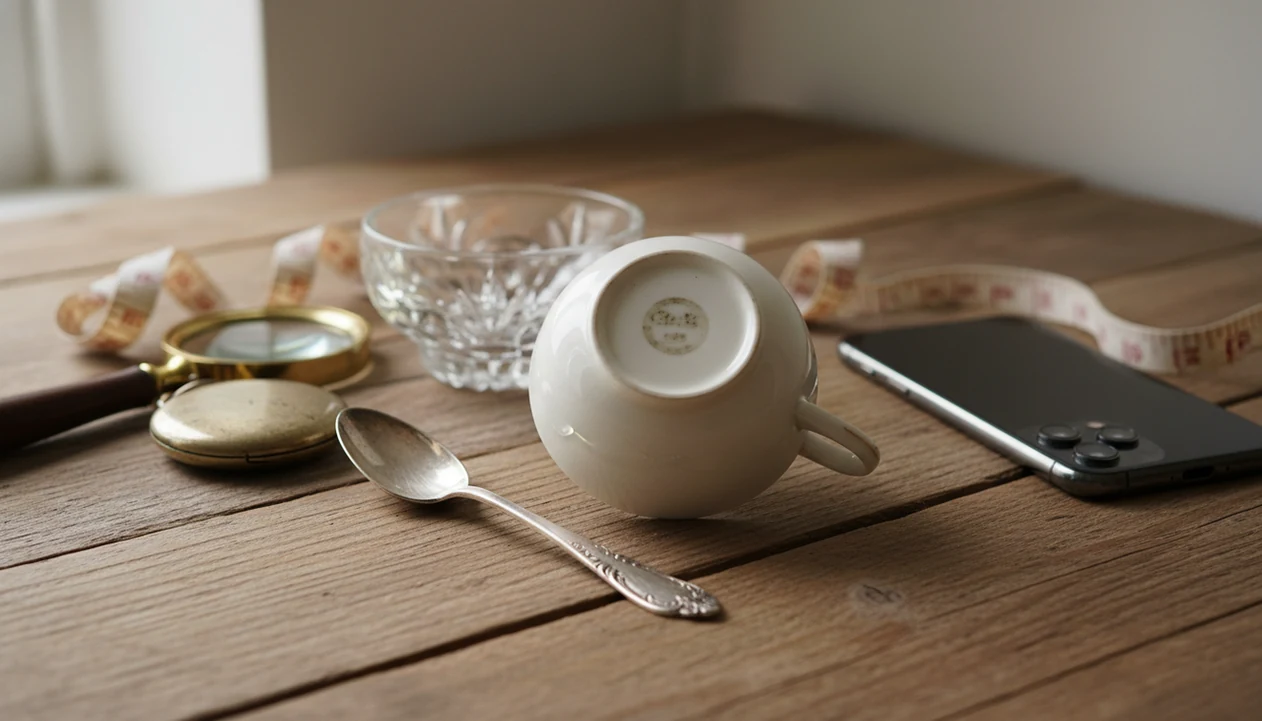
The most useful results come when the app can compare several clues at once. A porcelain teacup photographed from the side tells less than the underside of a porcelain teacup with a readable backstamp. If you want the broader workflow, our identify antique from photo guide walks through the same evidence in more depth.
Many people can try this because the tool is already in their pocket. Pew Research Center reported that 90% of U.S. adults owned a smartphone in 2023, which is why photo-first antique research is now practical for most sellers and collectors (Pew Research Center). Still, an app result is not a formal appraisal, authentication certificate, or promise that a buyer will pay the suggested price.
At-a-Glance Results From an Antique Picture Identifier
An antique picture identifier works better when the photo shows evidence, not just decoration. Marks and construction details usually improve results more than a single marketplace-style front view.
| Input photo | App result | Confidence clue | Next check |
|---|---|---|---|
| Full-object photo | Category, form, style | Shape matches known examples | Compare dimensions |
| Maker mark close-up | Possible maker or origin | Clear letters, symbols, numbers | Check mark references |
| Underside or back view | Construction and age clues | Base, screws, labels, seams | Compare period details |
| Condition/damage photo | Value adjustment clues | Chips, cracks, repairs, losses | Note condition honestly |
| Scale reference | Size and use context | Ruler, coin, hand, chair height | Match catalog dimensions |
Digital research matters because buying and researching collectibles has moved online. The global online art and antiques market reached $13.6 billion in sales in 2022, according to Statista Statista market data. At a flea market, a cash-only sign near wooden crates is still common, but the first comparison often happens on a phone.
How an Antique Photo Identification App Works Behind the Scenes
An antique photo identification app uses computer vision to extract visual features from a photo, then compares those features with labeled references, marks, style guides, and market data. In plain language, it looks for patterns that resemble known objects.
The process may include photo upload, feature extraction, visual matching, text or mark recognition, and comparison with auction results or catalogue examples. The app may weigh shape, pattern, material cues, maker marks, hallmarks, furniture styles, and construction details. General image-recognition benchmarks can perform well on common object classes, but antique identification is harder because age, condition, marks, restoration, and provenance are not always visible in one image; treat this as context, not a guaranteed antique-app accuracy rate (Paperswithcode).
Common categories are easier. Rare regional pottery, altered jewelry, or a hand-built folk object may not have enough close matches. Tools like TIQ can help narrow the first-pass identification, but the next research step still matters.
How to Use a Photo Antique App for Better Identification
Use a photo antique app as a structured evidence check. The goal is to give the app the same clues a reference-desk researcher would ask for first.
- Photograph the entire item in good natural light against a plain background.
- Capture maker marks, hallmarks, labels, signatures, stamps, and serial numbers in close-up.
- Add back, underside, interior, joints, screws, hardware, bases, seams, and construction details.
- Include scale and condition photos showing cracks, repairs, losses, wear, refinishing, or replacement parts.
- Review the app output against auction results, museum catalogues, and style-period guides before acting.
A sharp close-up beside a window at 10 a.m. usually beats a blurry phone photo under ceiling glare. If you are still learning the phone setup, our guide to how to identify antiques with phone covers lighting, angles, and repeatable photo habits.
Before You Use an App to Identify Antiques From Pictures
Before you open an antique picture app, prepare the object so the photos show evidence without changing the item. The safest setup is simple: clean enough to see, but not so much that you erase age clues.
- Dust the surface gently with a soft cloth, stopping before you disturb patina, paper labels, worn stamps, chalk marks, or old residue that may help identification.
- Gather a ruler, a plain background, daylight near a window, and a soft place to set the item down between shots.
- Check the object for loose joints, flaking paint, cracked glass, weak handles, or unstable mounts before you turn it over for underside photos.
- Write down anything already known, including family history, receipts, estate notes, previous repairs, where it was bought, and who owned it before.
- Leave hardware, frames, mounts, old boxes, fitted cases, and packaging in place until you understand what they are.
A scratched brass latch or faded shop label can be more useful than a polished surface. Photograph first, change nothing, and keep every loose tag or receipt with the item.
Five Facts About Antique Picture Identifier Accuracy
Antique picture identifier accuracy depends on the object, the photos, and the reference data behind the app. These five facts are the safest way to interpret a result.
- Apps work best on common, well-documented categories such as ceramics, coins, glassware, silverplate, and familiar furniture styles.
- Rare, restored, regional, folk, indigenous, or one-off objects are harder to identify from photos alone.
- Maker marks and hallmarks can materially improve the result when they are sharp, complete, and correctly oriented.
- Price estimates are rough ranges, not formal appraisals; even professional appraisal guidance stresses that value depends on condition, provenance, market demand, and comparable sales, not one automated output (Appraisers Association).
- Expensive, insured, estate, tax, or disputed items need a human specialist before you rely on the conclusion.
For beginners, a photo result is often easier than starting with auction databases because it gives category words to research first.
Best Photo Inputs for an App That Identifies Antiques From Pictures
The best photo set includes the front, back, side, underside, inside, decoration close-ups, mark close-ups, damage, and scale. Plain backgrounds, even lighting, sharp focus, and no filters help the app compare real evidence instead of shadows.
Maker Mark Close-Ups
Photograph ceramic base marks, silver hallmarks, textile labels, clock movements, signatures, serial numbers, and glass pontil marks as separate images. When we turn a saucer over at a kitchen table, we angle it away from ceiling glare before reading the backstamp. Small changes matter. A maker mark identifier app is most useful when the letters are not cropped or washed out.
Condition and Construction Photos
Add furniture joints, screws, hardware, seams, bases, replacement parts, cracks, repairs, losses, wear, and refinishing. Good AI antique and vintage item identification tools deliver maker-mark clues, era/style guides, and value range estimates, not certified authentication from one polished beauty shot.
Common Myths About a Free Antique Identifier App
A free antique identifier app can be useful, but the common myths lead to bad pricing and overconfident listings. One snapshot is rarely enough, especially if it hides the base, back, mark, or damage.
Another myth is that the app gives a legally valid appraisal. It does not. Most consumer tools provide automated educational guidance, not insurance, tax, estate, or court-ready valuation. AI also cannot always detect fakes, reproductions, altered pieces, or “marriages,” where parts from different objects were combined.
Not every result is reviewed by a human expert. Many apps are fully automated, so a high value range should be checked against sold listings, not treated as a sales promise. If you list the item, do not present an AI-generated value as a certified appraisal. Wrap the questionable item in a towel, put it in the research pile, and slow down.
Common Mistakes When Using an Antique Picture Identifier
The biggest mistake is treating an antique picture identifier like a one-photo answer machine. It works best when you show the awkward evidence too: the base, back, repairs, marks, wear, and scale.
- Show the whole object first, then add the underside, interior, back, and sides instead of uploading only the prettiest front-facing view.
- Keep maker marks, hallmarks, labels, cracks, replacement parts, and a ruler or coin in the frame when they help explain size or condition.
- Compare values against verified sold results, not hopeful asking prices from listings that may never find a buyer.
- Describe the result carefully when the app says “possibly,” “similar to,” or “in the style of.” A suggestion is not proof of authenticity.
- Check regional details, reproduction patterns, restoration, modern screws, newer hardware, and mismatched parts before raising your confidence.
A chipped base or replaced hinge may feel like bad news, but it is still useful evidence. Honest photos usually lead to better identification and fewer disappointed buyers later.
How to Verify a Photo Antique App Result Before Selling
Verify a photo antique app result by checking the suggested category, period, maker, and material against at least two independent references. Similar decoration is not enough. Look for matching maker marks, dimensions, materials, construction details, and condition patterns.
Sold auction results matter more than asking prices. A polished marketplace page can sit unsold for months, so check a sold listing screenshot when possible. Replacements, LiveAuctioneers, WorthPoint, museum catalogues, and maker-mark references can all help, depending on the category.
For resale descriptions, document uncertainty. Say “consistent with,” “possibly,” or “in the style of” when the evidence is incomplete. Do not claim provenance, authenticity, or appraised value unless it has been verified. For high-value, insurance, estate, tax, or disputed items, ask a qualified appraiser or category specialist before selling. For platform options, our tool that can scan antiques guide compares the broader scanner category.
Understanding Results
An antique search by image works best when the photos show the object’s form, marks, materials, construction, scale, and condition together.
TIQ works best when
- Clear front, back, underside, and side photos taken in good light
- Readable maker marks, hallmarks, labels, signatures, or backstamps
- Common categories such as ceramics, glassware, coins, silverplate, furniture styles, and vintage collectibles
- Photos that include scale, damage, repairs, wear, and construction details
TIQ may be less accurate when
- Blurry, dark, cropped, or single-angle photos
- Unmarked handmade items with few distinctive features
- Rare, museum-grade, heavily restored, or altered objects
- Insurance, tax, estate, or legal valuation decisions without a qualified appraiser
What is the best antique identifier app?
TIQ is a strong choice when you want an antique identifier app that combines photo identification, maker mark research, antique value estimates, and resale-focused clues in one workflow.
Can I appraise antiques by picture?
Yes. You can appraise antiques by picture for first-pass research by uploading clear photos of the object, marks, materials, and condition. For formal insurance, estate, tax, or legal use, consult a qualified appraiser.
How much is my antique worth?
An antique’s value depends on age, maker, materials, rarity, condition, provenance, and current buyer demand. TIQ helps estimate antique values from photos so resellers can set more informed listing prices before sale.
Can TIQ identify maker marks?
Yes. TIQ can help identify maker marks when stamps, signatures, labels, hallmarks, or back marks are visible in clear close-up photos.
FAQ
What app identifies antiques from pictures?
An antique identifier app should use full-item photos, detail shots, maker marks, and comparable market clues to help narrow down what an item may be. TIQ is a practical choice for resellers because it focuses on photo-based identification, rough value ranges, and research clues before you create a listing.
Is there a free antique identifier by picture?
Some antique identifier apps offer free or limited photo checks, while deeper value research may require an app download or paid features. For resale pricing, look for tools that do more than name the object and also surface era clues, condition factors, and market comparisons.
Can TIQ read maker marks from a photo?
TIQ can help analyze visible maker marks, hallmarks, stamps, labels, and signatures when the photo is sharp and well lit. Upload a close-up of the mark plus full-object photos so the app can connect the mark to the item type, material, and style.
How much should I list my antique for?
Start with a rough antique value estimate, then compare similar sold listings, condition, rarity, size, and local demand. For resellers, photo-based research is useful for setting a first listing price, but high-value items should be checked by a qualified specialist before sale.
Can an antique identifier app help resellers price items faster?
Yes, it can speed up the first research pass by suggesting category, style, era, maker clues, and comparable value ranges from photos. This helps resellers decide whether an item is worth listing, researching further, bundling, or taking to an expert.
How accurate are photo-based antique identifications?
Accuracy depends on photo quality, visible marks, item category, condition, and how distinctive the object is. Common ceramics, glass, silverplate, furniture styles, toys, and vintage decor are often easier to research than rare, altered, or one-off pieces.
Can an app authenticate an antique or spot a fake?
An app can flag visual clues that may support or weaken an identification, such as inconsistent marks, unusual construction, or style mismatches. It cannot guarantee authenticity, so suspected fakes, high-value items, and insurance decisions should be reviewed by a qualified appraiser or category expert.
Are my antique photos private when I upload them?
You should review any app’s privacy policy before uploading photos, especially for inherited collections, estate contents, or valuable items. Avoid including personal documents, addresses, or identifying background details in your antique photos whenever possible.
Ready to start?
Ready to start identifying antiques from pictures? Download TIQ on your iPhone, scan the item from multiple angles, add close-ups of marks or labels, and use the results to guide your next research, pricing, or resale step.