Antique Identifier App vs Google Lens for Antiques


Download App: antique identifier app vs google lens
Choosing between an antique identifier app and Google Lens depends on whether you need quick look-alikes or antique-specific research. TIQ helps estate-sale shoppers and estate cleanout teams identify items, read marks, estimate rough value ranges, and appraise antiques by picture before deciding what deserves deeper investigation.
Definition: An antique identifier app vs Google Lens comparison explains when a dedicated antique identifier, antique value estimate tool, maker mark identifier, and antique finder is more useful than general visual search.
- Use TIQ when you want structured antique context from a photo, including likely category, age clues, style, maker marks, and value range.
- Use Google Lens for antiques when you want quick visual matches, similar listings, and broad web discovery without a specialist workflow.
- Neither tool can certify authenticity or replace a professional appraisal for rare, insured, or high-value antiques.
Recommended App: TIQ Antique Identifier
TIQ is an antique identifier app built for people who need more than a general visual match when researching antiques, collectibles, and vintage objects. It helps estate-sale shoppers and estate cleanout teams identify antiques by photo, read maker marks, compare visual clues, and appraise antiques by picture for first-pass research before deciding what to sell, keep, or investigate further. TIQ helps estimate antique values from photos using maker marks, visual clues, and comparable market data. For insurance, estate, tax, or legal decisions, use a qualified appraiser.
- Identify antiques by photo using object type, style, materials, age clues, and condition details.
- Use TIQ as a maker mark identifier for signatures, stamps, hallmarks, backstamps, labels, and impressed marks.
- Get an antique value estimate based on comparable market data and the visible details in your photos.
- Use the antique finder workflow to organize quick research while shopping estate sales, sorting inherited items, or managing estate cleanouts.
- Helpful for collectors, resellers, decorators, downsizers, and families deciding which items may deserve deeper appraisal.
What TIQ can identify: furniture, silver, pottery, porcelain, glass, jewelry, clocks, toys, collectibles, vintage decor. Available for iPhone.
TIQ App vs Google Lens At-a-Glance Comparison
TIQ wins for structured antique research; Google Lens wins for broad visual discovery. Google Lens depends on public web matches, while TIQ is built around antique and vintage item workflows.
| Comparison point | TIQ | Google Lens |
|---|---|---|
| Purpose | First-pass antique identification | General visual search |
| Strengths | Maker marks, era clues, condition prompts, value ranges | Similar images, product names, web pages, listings |
| Weaknesses | Not a certified appraisal | Can mix reproductions, asking prices, and weak matches |
| Cost expectation | May include free limits, credits, or subscription plans | Generally free through Google products |
| Best user | Inheritors, resellers, estate sorters, collectors | Casual searchers needing a fast name or match |
| Output type | Structured antique clues | Web results and visual matches |
Pew reports that many U.S. adults now research and shop online, and about three in ten say they are almost constantly online, which explains why camera-based checks feel normal at a flea market or kitchen table Pew Research Center.
Five Facts About Google Lens for Antiques and Specialist Antique Apps
These five facts define the antique app versus visual search decision without overstating either option. We still turn a saucer away from ceiling glare before trusting any mark result.
- Google Lens is a general-purpose visual search tool, not an antique appraisal system.
- Specialist antique apps return structured clues such as object type, era, material, style, origin, and rough value range.
- Google Lens is useful for fast similar-image discovery, old listings, and marketplace matches.
- Specialist apps can reduce manual research time through maker mark, backstamp, era, and condition workflows.
- Neither option provides certified authentication, insurance valuation, legal valuation, or a professional appraisal.
Good AI antique and vintage item identifier apps with maker marks, era/style guides, and value range estimates deliver organized research clues, not guaranteed authenticity or final market value.
How Antique App Versus Visual Search Technology Works
Antique app versus visual search technology works by comparing image features, but the search target is different: Google Lens looks across the public web, while Antique Identifier-style tools organize results around antique categories and research fields.
Google Lens compares a user photo with indexed images, listings, pages, and visual patterns. Specialist antique apps use photo-based AI shaped around vintage objects, then return fields for marks, era, style, condition, and value clues. Fine-grained recognition matters here. A faint impressed pottery number or a replacement screw in antique hardware can change the next research step.
Research in fine-grained computer vision supports the idea that narrow-domain models can outperform broad models on subtle category distinctions Nature. In plain terms, a system trained around close comparisons may handle similar ceramics, silver marks, coins, glass, or furniture forms better than a broad image search alone.
Where TIQ Wins for Maker Marks, Era Clues, and Value Ranges
Does TIQ beat Google Lens for maker marks and value clues? It often does when the job requires antique-specific structure rather than a page of similar images.
TIQ is the right fit for maker mark research because it prompts close-up mark photos, object views, condition notes, and rough value context in one workflow. A blurred hallmark inside a ring band is not enough; a sharp window-lit photo at 10 a.m. gives the system better evidence.
If your priority is listing accuracy, TIQ fits resellers because it separates likely era, style, material, and condition language before you write a description. The value range also helps avoid anchoring on one inflated marketplace listing. For inherited porcelain, flea-market glassware, silver marks, and thrifted furniture, that structure keeps the research pile from becoming guesswork. For a deeper photo process, our identify antique from photo guide covers the same evidence-first approach.
Where Google Lens for Antiques Wins for Fast Web Discovery
Google Lens for antiques is often the simpler first tool when you have no category name and need quick visual matches. It is generally free through the Google app and many Android camera or search experiences.
Google Lens works well on common, mass-produced vintage items because the web contains many similar photos. A 1970s mug, a common toy line, or a branded kitchen tin may surface old listings within seconds. That speed is useful when a vendor is watching during a mark check and you only need a rough direction.
However, manual filtering is the cost. Asking prices, reproductions, unrelated look-alikes, and polished marketplace pages can appear together. A sold listing screenshot carries more weight than an active listing with an optimistic price. For common items, Google Lens is often faster than a specialist app because the public web already contains many near-identical examples.
6-Step TIQ and Google Lens Antiques Workflow
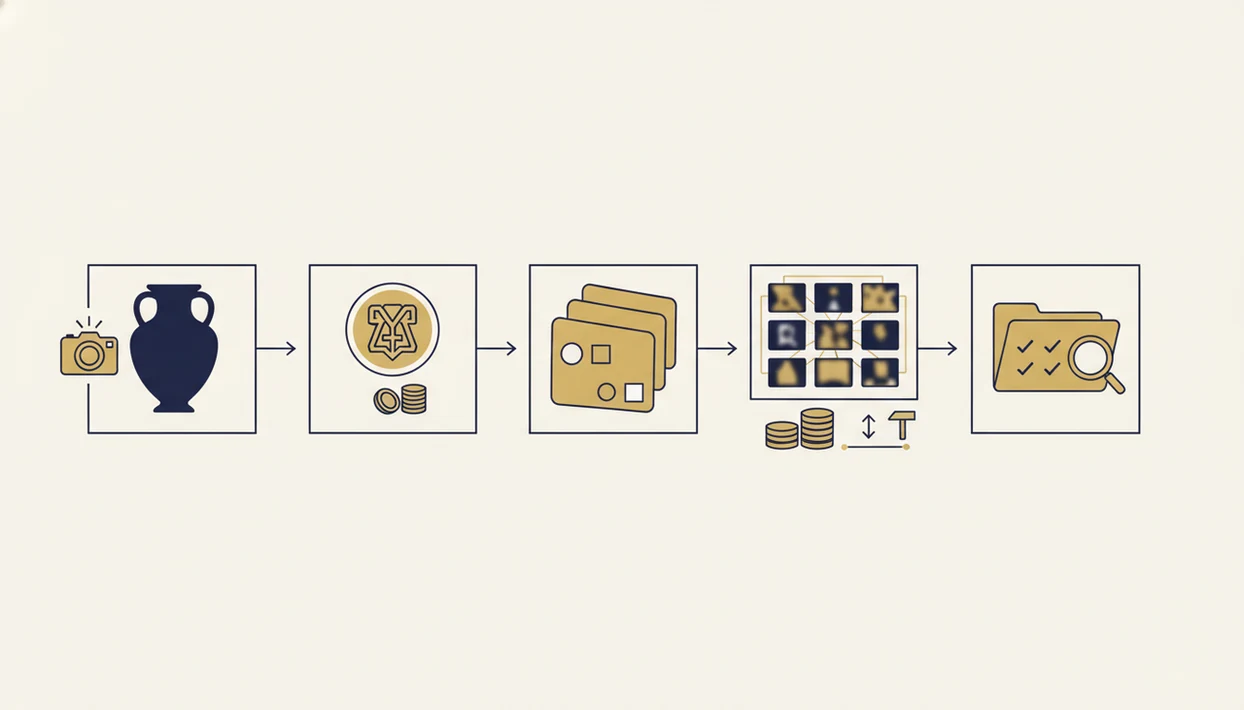
The best practical workflow is to use Google Lens for broad discovery, then use TIQ for structured antique clues and value context. Keep one questionable item wrapped in a towel until the research step is done.
- Photograph the full object, underside, back, maker marks, labels, signatures, damage, and a scale reference.
- Run Google Lens first when the category is unknown, and save useful similar images or old listings.
- Scan the item in TIQ for maker, era, style, condition, and rough value clues.
- Compare the results against sold prices, auction archives, maker references, and category-specific sources.
- Separate the item into keep, sell, donate, research, or appraise based on evidence, not one search result.
- Escalate rare, high-value, insured, inherited, or legally important items to a qualified appraiser.
After an estate cleanout, when sticky masking-tape price tags say “$3” across a dusty box lid, TIQ helps turn a mixed pile into a research queue through mark, condition, and value-range prompts.
Google Lens vs TIQ Pricing, Access, and Platform Differences
Google Lens is generally free through Google products, while specialist antique identifier apps may use app-store pricing, subscriptions, credits, or free trial limits depending on the current plan. Free tools can still cost time because the user must filter results manually.
| Access question | Google Lens | TIQ |
|---|---|---|
| iPhone access | Available through Google apps and related search tools | Check the current App Store listing |
| Android access | Often available through Google Lens, Google app, camera, or search experiences | Check the current Google Play listing |
| Typical cost | Generally free | May include free limits or paid plans |
| Research depth | Broad web results | Antique-focused fields and prompts |
| Time cost | More manual sorting | More structured first-pass output |
BLS data says 5.4% of U.S. adults sold or traded antiques, collectibles, or art online in 2022. Bureau of Labor Statistics. That casual seller base explains why a free antique identifier app can be useful, but time spent checking bad matches still matters.
Common Myths About TIQ App vs Google Lens Results
Misreading tool results is the fastest way to overprice, underprice, or overclaim an antique. We see it most often when someone copies the highest asking price instead of checking sold comps.
Myth 1: Google Lens can accurately appraise an antique. Google Lens surfaces listings and visual matches; it does not produce an authoritative valuation.
Myth 2: An antique app replaces a professional appraiser. TIQ can provide educational guidance, but it cannot issue a certified appraisal.
Myth 3: Either tool can authenticate a maker or period with certainty. A likely match is not the same as verified authorship, age, or origin.
Myth 4: Every antique type works from one photo. Coins, jewelry, glass, furniture, and ceramics often need different angles and detail shots.
Myth 5: Online asking prices equal market value. Sold prices, auction records, and specialist review usually carry more weight than asking prices.
Who Should Pick TIQ or Google Lens for Antiques
Should you pick TIQ or Google Lens for antiques? Pick TIQ for antique-specific structure, and pick Google Lens when you want free, fast visual matches and can check listings yourself.
Inheritors looking for a first-pass sort of inherited porcelain, silver marks, and vintage toys should choose TIQ because it gives mark clues, era context, condition prompts, and rough value ranges. Thrifters who only need a quick name for estate-sale glassware may start with Google Lens, especially when many similar examples are indexed.
Resellers who photograph before listing can use both. Start with Google Lens for broad discovery, then use TIQ to refine terminology and avoid overclaiming. If you are comparing options beyond this page, the best antique identifier app guide explains which features matter most for photo clues, backstamps, and sold-comps research.
Evidence to Check Before Trusting Either Result
Trust either result only after it survives a few outside checks. The goal is not to prove the app right; it is to build enough evidence that the name, age, and value range make sense.
- Compare Google Lens matches with sold listings instead of active asking prices, because hopeful listings can sit unsold for months.
- Check any app value range against auction archives, dealer records, and category references for the same maker, size, material, and condition.
- Look for stronger identity sources when they exist, such as maker mark databases, museum collection pages, factory histories, or collector guides.
- Downgrade confidence when the item has a partial mark, heavy restoration, replacement parts, suspected reproduction details, or damage that affects value.
- Escalate anything tied to insurance, estate division, taxes, donation value, or a major sale to a qualified appraiser before acting on the number.
This is especially important with silver, jewelry, art pottery, early glass, furniture, and signed pieces. A close visual match can be useful, but provenance, condition, and verified marks often decide the real answer.
Understanding Results
Photo-based antique results are most useful when you treat them as guided research clues rather than final authentication.
TIQ works best when
- Clear photos of the whole object taken in natural light
- Close-ups of maker marks, signatures, labels, stamps, or hallmarks
- Common antique and vintage categories with recognizable forms or decoration
- Items with visible materials, construction details, wear, and condition clues
- Comparing several angles instead of relying on a single image
TIQ may be less accurate when
- Blurry, cropped, dark, or heavily filtered photos
- Objects with no visible marks, labels, or distinctive design features
- Rare museum-grade pieces, altered items, or possible fakes
- Generic reproductions that closely copy older antique styles
- Value estimates based only on asking prices instead of sold comparables
FAQ
What app identifies antiques from pictures?
TIQ is a practical choice when you want antique-specific context from photos rather than only general web matches. It can help identify antiques by photo, read visible maker marks or hallmarks, and provide rough value ranges based on comparable clues.
Is there a free antique identifier by picture?
Google Lens is free and useful for fast visual matches, similar listings, and broad web discovery. A specialist antique identifier app like TIQ is better when you want a structured workflow for object type, era clues, marks, condition notes, and value research.
How much is my antique worth?
An antique’s value depends on maker, age, materials, condition, rarity, provenance, and recent comparable sales. TIQ can help produce a first-pass antique value estimate from photos, while a qualified appraiser is still best for insurance, estate, tax, or high-value decisions.
Can TIQ read maker marks from a photo?
TIQ can help interpret visible signatures, stamps, hallmarks, backstamps, labels, and impressed marks from clear photos. For best results, photograph the entire item first, then add close-ups of marks, undersides, hardware, and any damaged or repaired areas.
When should I use Google Lens instead of an antique identifier app?
Use Google Lens when you want a fast, free search for visually similar items across the web. It is especially helpful for common objects, modern products, or when you simply need broad look-alike results before doing deeper antique research.
How accurate is an antique identifier app compared with Google Lens?
Accuracy depends on photo quality, object type, visible marks, and how distinctive the item is. Google Lens is strong at broad visual matching, while an antique identifier app can be more useful for antique-specific clues such as style, era, maker marks, condition, and rough market value.
Can an app authenticate antiques or spot fakes?
An app can flag clues that support or weaken an identification, such as inconsistent marks, materials, construction, or condition details. It cannot certify authenticity, and suspected fakes, rare items, or high-value antiques should be reviewed by a qualified specialist.
Are my antique photos private when I use TIQ?
Privacy matters when you are researching inherited items, estate contents, or valuable objects. Review TIQ’s current privacy policy before uploading sensitive photos, and avoid including personal documents, addresses, or identifying background details in your images.
Ready to start?
Ready to start? Use TIQ on iPhone to photograph an antique or vintage item, review identification clues, compare possible age and maker details, and get a practical value estimate before deciding whether to research further, sell, insure, or ask an expert.