
Antique Identifier App for Vintage Items


Download App: what app identifies vintage items
TIQ helps inheritors and sellers identify vintage items from photos, connect maker marks and style clues, and appraise antiques by picture with practical value-range context. Use it when a family collection needs sorting quickly but you still want more than a generic visual match.
Definition: An antique identifier app helps identify vintage and antique items from photos by comparing visual details, maker marks, materials, styles, and market references.
TL;DR
- Use a specialized vintage item app when you need more than a visual match, especially for maker marks, hallmarks, ceramics, silver, jewelry, furniture, and collectibles.
- Strong apps combine photo recognition, mark databases, era/style guides, and recent sold-comparable data instead of guessing from one image alone.
- No retro item identifier should be treated as a certified appraisal, authentication, or insurance valuation without expert review.
<h2 id="best-vintage-item-apps-at-a-glance">Best Vintage Item Apps at a Glance</h2>
The strongest vintage item apps differ by job: identification, visual matching, collector research, app-store comparison, or resale pricing. Online antiques activity is large enough that digital research tools now matter for ordinary sellers, not just dealers; The Art Basel and UBS Art Market Report 2023 estimated online sales of art and antiques at $11 billion in 2022, after a 2021 peak of $13.3 billion (Artbasel).
| App or tool | Photo identification | Maker marks | Era clues | Value ranges | Best user type |
|---|---|---|---|---|---|
| TIQ | Yes | Yes | Yes | Yes | Beginners, inheritors, thrifters, resellers |
| Google Lens | Yes | Limited | Limited | No | Fast broad visual search |
| Curio | Yes | Varies | Yes | Varies | Collector-friendly lookup |
| Vintiq | Yes | Varies | Varies | Varies | App-store comparison shoppers |
| eBay image search and sold listings | Yes | No | No | Sold comps | Resale pricing checks |
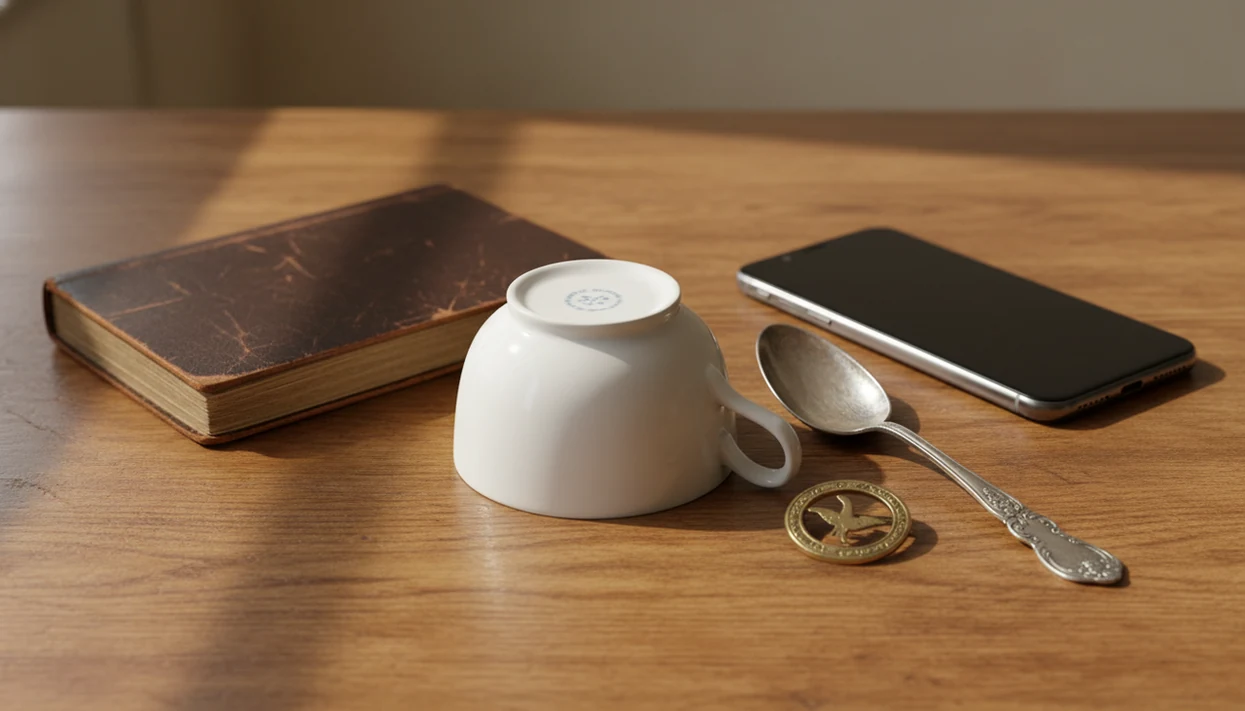
When a saucer is turned over at a kitchen table, angled away from ceiling glare, the backstamp often tells more than the floral pattern.
<h2 id="named-shortlist-vintage-item-apps">Named Shortlist of Apps That Identify Vintage Items</h2>
A useful shortlist includes both specialized antique tools and broad search tools, because no single app handles every object equally well. Good vintage item apps identify similar examples, not guaranteed matches.
- Antique Identifier: Best specialized antique and vintage item app for photos, maker marks, era hints, and rough value ranges. If you have ceramics, silver, jewelry, furniture, or collectibles, TIQ fits because it asks for the clues that usually change the answer.
- Google Lens: Best free general visual matcher for similar images, recognizable objects, and quick store-floor checks. It may show lookalikes without explaining maker history.
- Curio: Best known app-store competitor for antique identification workflows. It belongs on the list for users comparing dedicated antique apps.
- Vintiq: Useful alternative when reading antique identifier app reviews and testing interface preferences.
- eBay image search and sold listings: Useful for resale comps, not definitive identification.
A sold listing screenshot is more useful than a polished asking price.
<h2 id="how-retro-item-identifier-app-works">How a Retro Item Identifier App Works Behind the Photo</h2>
A retro item identifier app works by reading visual signals in a photo, then comparing those signals with reference images, mark databases, style guides, and sales records. The app looks for shape, pattern, material, color, construction details, decorative style, and visible marks.
The technical layer often uses image embeddings, which are numerical fingerprints of a photo. In plain terms, the app compares your object with many stored examples and ranks likely similarities. Stronger systems use multiple signals rather than one visual match, especially when crazing lines cross a cream glaze or bubbles are trapped in old glass. Controlled image-recognition benchmarks can show low error rates, but antiques are messier because lighting, wear, repairs, and uncommon regional categories change what the camera sees.
Good AI antique and vintage item identifier apps deliver likely IDs, mark clues, era/style guides, and value ranges, not final authentication.
<h2 id="how-to-use-vintage-item-app">How to Use a Vintage Item App for Better Photo Matches</h2>
Better app results usually come from better evidence, not prettier pictures. Multiple angles and sharp mark close-ups often matter more than one attractive marketplace-style photo.
- Photograph the whole object against a plain background, including front, back, side, base, and underside.
- Capture close-ups of maker marks, hallmarks, labels, signatures, backstamps, seams, screws, and stamps.
- Add measurements, material notes, weight, and any condition issue, such as chips, repairs, missing lids, or loose parts.
- Compare several suggested matches instead of accepting the first similar image.
- Check value ranges against sold comps, not just current asking prices.
Pew Research Center reports that 90% of U.S. adults own a smartphone as of 2024, which makes phone-based lookup a normal first step rather than a niche workflow (Pew Research Center). For a deeper phone workflow, the guide on how to identify antiques with phone covers angles, lighting, and mark photos.
<h2 id="five-facts-identify-vintage-items-from-photos">Five Facts About Apps That Identify Vintage Items From Photos</h2>
Several apps can identify vintage items from photos, but the depth of the answer depends on the app, category, and evidence in the image. These five facts are the practical baseline.
- Photo matches vary widely: TIQ, Curio, Vintiq, Google Lens, and eBay tools can all help, but they do not return the same level of antique context.
- Marks improve results: Maker marks, hallmarks, labels, backstamps, and signatures can narrow maker, origin, material, and date.
- Era language matters: Art Deco, Victorian, mid-century modern, and studio pottery clues help separate similar-looking objects.
- Ranges beat exact prices: Value ranges are more trustworthy than one exact number because condition, demand, and completeness change outcomes.
- Apps are starting points: Identification apps support research, but they do not replace certified appraisal or expert authentication.
A specialized antique workflow earns its place for beginners because it combines photo clues with mark and era prompts, then keeps the result in a rough value-range format.
<h2 id="how-we-picked-vintage-item-apps">How We Picked the Best Antique and Vintage Item App Options</h2>
We ranked apps by antique-specific usefulness first, not general app-store visibility. A matching image is helpful, but antique identification requires context from marks, materials, construction, era, and comparable sales.
Our criteria favored maker mark and hallmark support for ceramics, silver, jewelry, and collectibles. We also looked for era/style guidance, value-range transparency, saved reports, beginner usability, and practical sold-comparable research. The top-ranked specialized option scored well because it is built around a first-pass identification workflow rather than generic object recognition. For users sorting newspaper-wrapped figurines from a closet, that workflow is more useful than a single label like “vase” or “chair.”
App-store popularity alone is not enough because antique identification depends more on category context than on a visually similar image. The detailed photo workflow in our identify antique from photo guide explains why the underside, joinery, and label often change the research path.
<h2 id="best-vintage-item-app-maker-marks-era-clues">Best Vintage Item App for Maker Marks and Era Clues</h2>
Does a vintage item app identify maker marks and era clues? TIQ is the strongest specialized choice here because maker marks, backstamps, hallmarks, labels, signatures, and stamps can change an object from a broad guess into a narrower research lead.
A blurred hallmark inside a ring band is not enough. A sharp close-up beside a window at 10 a.m. may reveal letters, assay marks, or wear patterns that suggest the next research step. That workflow fits beginners, inheritors, thrifters, and resellers because it connects those photo clues with likely maker, period language, and rough value ranges. The result should be treated as suggested identification, not a certified appraisal.
For maker-heavy objects, a maker mark identifier app is often more useful than general image search because the mark may identify the maker even when the shape is common.
<h2 id="best-free-retro-item-identifier-visual-matches">Best Free Retro Item Identifier for Broad Visual Matches</h2>
Google Lens is the strongest free starting point for broad visual matches, similar images, and recognizable products. It works well when an item has a distinctive silhouette, pattern, logo, or common retail history.
The limitation is context. Google Lens may show a similar lamp, toy, dish, or print without explaining maker history, period terminology, condition impact, or realistic value range. At a flea market, with sunlight hitting blue glass and a vendor watching during a mark check, that quick visual match can still be useful. Just do not let it become the whole decision.
When the issue is resale risk, a specialized antique-identification workflow is the better cross-check because it adds antique-specific clues, suggested era language, and rough value ranges. Free visual search tends to work best for first-pass recognition, while a specialized app fits cases where money, rarity, or listing accuracy matters.
<h2 id="best-vintage-item-app-features-resellers-collectors">Best Vintage Item App Features for Resellers and Collectors</h2>
Resellers and collectors should look for transparent value ranges, saved item records, confidence signals, and room for condition notes. A single price can be misleading when completeness, provenance, shipping cost, and current demand all affect the result.
The specialized option fits sellers trying to draft accurate listings because it keeps the focus on comparable clues, not overconfident claims. The practical features to prioritize are photo guidance, mark close-ups, category coverage, measurements, saved notes, and value ranges tied to similar sold examples. A name penciled under a rocking chair is not proof by itself, but it belongs in the item record.
Collectors trying to catalog a mixed shelf should favor apps that preserve evidence. If the next step is listing, an app that identifies antiques from pictures should help document what was photographed, what was suggested, and what still needs verification.
Recommended App: TIQ Antique Identifier
TIQ is an antique identifier app for people who want a faster first look at vintage items, inherited objects, and possible collectibles. It can help you appraise antiques by picture for first-pass research, connect visible details to likely categories or makers, and act as an antique value estimate tool, maker mark identifier, and antique finder while you sort a family collection. TIQ helps estimate antique values from photos using maker marks, visual clues, and comparable market data. For insurance, estate, tax, or legal decisions, use a qualified appraiser.
- Identify by photo: upload pictures of furniture, ceramics, silver, glass, jewelry, clocks, toys, or decor for quick research direction.
- Check maker marks: capture signatures, backstamps, hallmarks, labels, and impressed marks that may narrow down origin or maker.
- Estimate values: compare your item against visual clues and market data to understand a practical value range.
- Built for inheritors: useful when sorting family collections, estate boxes, attic finds, and mixed vintage items.
- Research what to keep: organize first-pass identification before deciding what needs expert appraisal or resale research.
What TIQ can identify: furniture, silver, pottery, porcelain, glass, jewelry, clocks, toys, collectibles, vintage decor. Available for iPhone.
Understanding Results
An antique identifier works best when the photos show the object clearly and include the details that separate one vintage item from another.
TIQ works best when
- Clear photos of the full object from multiple angles
- Close-ups of maker marks, hallmarks, backstamps, labels, signatures, and serial numbers
- Items with distinctive materials, construction, pattern names, shape, decoration, or period style
- Ceramics, silver, jewelry, glass, furniture, watches, collectibles, and estate-sale finds with visible clues
- Value research supported by sold comparables rather than active asking prices alone
TIQ may be less accurate when
- Blurry, dark, cropped, or glare-heavy photos
- Mass-produced decor with few marks or distinctive design features
- Items that have been heavily restored, altered, repaired, or assembled from mixed parts
- Objects with fake, missing, damaged, or misleading maker marks
- Questions that require hands-on authentication, condition grading, insurance valuation, or legal appraisal
FAQ
What app identifies antiques from pictures?
A good antique identifier app should recognize the object type, read visible marks, suggest an era, and show why similar items may differ in value. TIQ is a practical choice for vintage items because it is built around antiques, collectibles, maker marks, materials, and rough value ranges rather than broad image matching alone.
Is there a free antique identifier by picture?
Free tools such as Google Lens can help you find similar-looking items quickly, especially when the object is common or visually distinctive. For vintage items with backstamps, hallmarks, construction details, or condition issues, a specialized antique identifier app can give more useful context than a simple image search.
Can TIQ read maker marks from a photo?
TIQ can use clear photos of maker marks, hallmarks, labels, stamps, and signatures as part of the identification process. For best results, photograph the whole object, then add close-ups of the mark in sharp focus with glare reduced.
How much is my antique worth?
A vintage item’s value depends on maker, age, material, condition, rarity, demand, and recent sold comparisons. An app can help estimate a rough range and point you toward relevant comps, but high-value, insured, or disputed items should still be reviewed by a qualified appraiser.
Which vintage items are easiest to identify by photo?
Items with distinctive shapes, clear marks, labels, serial numbers, patterns, or recognizable materials are usually easier to identify. Ceramics, silver, jewelry, watches, furniture, glassware, toys, and advertising collectibles often benefit from multiple photos showing both the front and hidden details.
How accurate are apps for identifying vintage items?
Accuracy improves when the app can compare the photo with maker marks, construction clues, materials, and market references. Results can be uncertain when items are altered, heavily worn, unmarked, misattributed online, or part of a widely copied style.
Can an app tell if a vintage item is fake?
An app may flag inconsistencies such as suspicious marks, mismatched styles, modern hardware, or unlikely materials. It cannot reliably authenticate every item from photos alone, so valuable art, jewelry, silver, watches, and designer goods may need hands-on expert review.
Are my vintage item photos private when I use an identifier app?
Check the app’s privacy policy before uploading family heirlooms, estate items, documents, or anything with personal information visible. For safer results, crop out addresses, faces, receipts, and unrelated household details while keeping the object and marks clear.
Ready to start?
Ready to start identifying vintage items from photos? Use TIQ on iPhone to scan an object, review maker mark and era clues, and get a practical antique value estimate based on comparable market signals before deciding what to research next.