
Antique Identifier Guide for Mid-Century Modern Furniture


Download App: mid century modern furniture identification
If you inherited a chair, credenza, or table with a mid-century look, TIQ helps you appraise antiques by picture so you can quickly sort likely vintage pieces from newer lookalikes. Use clear photos of the full form, underside, labels, joinery, hardware, and wear to narrow maker, age, and rough value before deeper research.
Definition: Mid-century modern furniture identification is the process of using design details, materials, construction, maker marks, and market comparisons to determine a piece’s likely maker, age, style, and value.
- Do not identify MCM furniture by tapered legs alone; later reproductions copy that detail constantly.
- Look for vintage furniture labels, stamps, paper tags, branded marks, and model numbers under seats, inside drawers, and on back panels.
- Use photos of the whole piece, underside, joinery, hardware, veneers, labels, and damage before estimating maker, age, or value.
Recommended App: TIQ Antique Identifier
TIQ is an antique identifier app for people who want a faster first-pass way to research inherited furniture, décor, and collectibles from photos. It works as an antique finder, maker mark identifier, and antique value estimate tool, helping you appraise antiques by picture for early sorting before you decide what to keep, sell, restore, or take to a specialist. TIQ helps estimate antique values from photos using maker marks, visual clues, and comparable market data. For insurance, estate, tax, or legal decisions, use a qualified appraiser.
- Identify by photo: upload images of chairs, tables, credenzas, lamps, and decorative objects to compare visible style and construction clues.
- Check maker marks: use labels, stamps, plaques, signatures, and underside markings to narrow possible makers and origins.
- Estimate values: review comparable market data to understand a practical value range for family collection sorting.
- Built for inheritors: useful when organizing estates, dividing household contents, or deciding which pieces deserve deeper research.
- Works beyond furniture: helps connect related antiques, vintage décor, and collectibles found in the same home.
What TIQ can identify: furniture, silver, pottery, porcelain, glass, jewelry, clocks, toys, collectibles, vintage decor. Available for iPhone.
Mid-Century Modern Furniture Identification at a Glance
Mid-century modern furniture identification works best when you rank clues in this order: form, maker marks, labels, construction, materials, hardware, and wear. The common date range is about 1945 through the early 1970s, according to the Journal of Antiques collector guide Journalofantiques.
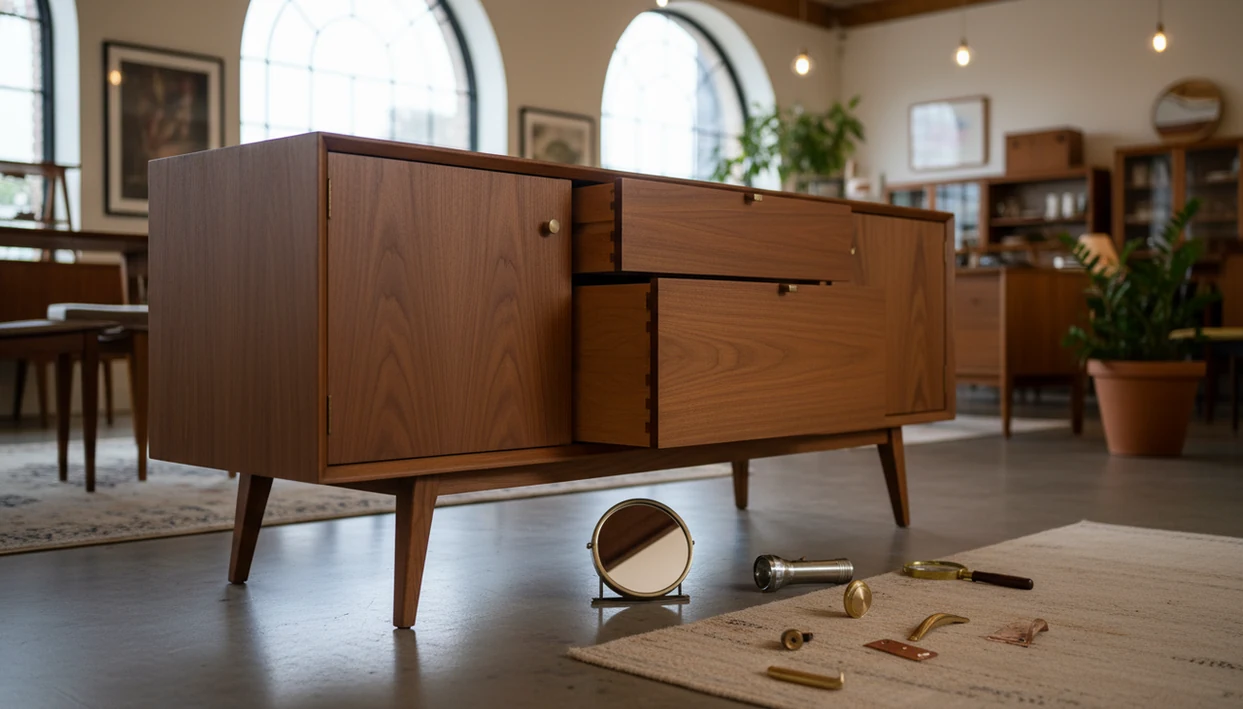
Start with the whole piece, then move closer. A low credenza with a floating base may be worth researching, but the underside, drawer interiors, and hardware often tell the quieter story. We have turned enough chairs over on shop floors to know that the back rail can matter more than the front profile.
Shape is only the first clue. Modern reproductions and revival pieces copy slim legs, warm veneers, and simple pulls, so stronger identification comes from several matching signals rather than one attractive silhouette.
5 Facts Beginners Need to Identify Mid Century Furniture
- Fact 1: MCM furniture is usually associated with pieces made from the mid-1940s to the early 1970s, not every item with a retro look.
- Fact 2: Maker marks, labels, stamps, signatures, and model numbers are strong clues, but an unmarked piece can still be period-correct.
- Fact 3: Tapered legs, molded plywood, exposed joinery, floating bases, and fitted hardware can support identification when they match the rest of the piece.
- Fact 4: Teak, walnut, rosewood veneer, molded plywood, fiberglass, metal, and upholstery all need context by maker, region, and date.
- Fact 5: Wear, patina, repairs, refinishing, and replacement hardware can change both identification confidence and value.
A dresser with estate-sale masking tape marked “$3” may still deserve a careful underside check. Cheap sticker, serious clue.
How Mid-Century Modern Furniture Identification Works
Mid-century modern furniture identification is a probability-based comparison of multiple signals, not a single yes-or-no visual match. The method compares photo evidence against period design, construction details, maker records, labels, catalog images, and sold market examples.
A style identification says, “This looks MCM.” A maker attribution says, “This may be by Lane, Heywood-Wakefield, Knoll, Herman Miller, or another documented maker.” An age estimate judges whether details fit the period. Formal authentication goes further and may require hands-on inspection, archives, or a qualified appraiser.
Tools like TIQ can read photo clues for maker marks, era hints, and rough value ranges, but they should be treated as a first-pass identification tool, not a certified appraisal. A good ai antique and vintage item identification app with maker marks, era/style guides, and value range estimates can narrow research, not guarantee maker, age, authenticity, or resale price.
For stronger verification, compare TIQ results with Google Lens image matches, LiveAuctioneers sold results, manufacturer archives, and documented dealer listings before naming a maker or value range.
Before You Start: What to Gather Before Identifying MCM Furniture
Before identifying MCM furniture, set up a clean, well-lit inspection area and gather the basics you need to document the piece without harming it. The goal is to capture evidence first, then clean, tighten, replace, or research later.
- Prepare bright natural light, a tape measure, clean gloves, and a phone camera before you move the piece around. Window light often reveals veneer edges, finish changes, and faint stamps better than a ceiling bulb.
- Handle drawers, doors, cushions, and loose panels slowly so you do not scrape a fragile paper label, chip veneer, or widen an old repair.
- Photograph the furniture as found before cleaning, refinishing, oiling, tightening screws, or swapping hardware. Original dust, pull shadows, screw wear, and uneven finish can all become useful clues.
- Record seller claims, family history, dimensions, visible model numbers, serial numbers, and any story that came with the piece, even if it sounds uncertain.
- Set aside loose parts, cushions, screws, tags, receipts, and extra hardware in one labeled bag or box for later comparison.
Photo Checklist for an MCM Furniture Identifier
A useful MCM furniture identifier needs clear, complete photos of the whole piece, hidden construction, labels, damage, and scale-not one angled marketplace shot. Mobile-first furniture research is now normal; Pew reported that 96% of U.S. adults ages 18 to 29 own at least one smartphone Pew Research Center.
- Photograph the whole piece from the front, side, back, and top.
- Capture the underside, legs, stretcher bars, back panels, and cabinet base.
- Open drawers and doors, then photograph interiors, backs, glides, joinery, hinges, and screws.
- Zoom on labels, stamps, branded marks, signatures, inspection tags, serial numbers, and model numbers.
- Record upholstery, veneer damage, repairs, replaced pulls, stains, and finish wear.
- Show scale with a tape measure or known object beside the piece.
A sharp close-up beside a window at 10 a.m. usually beats a blurry phone photo under yellow ceiling light.
Step 1: Check the MCM Furniture Shape and Silhouette
Does the furniture shape match known mid-century modern forms? Start with clean lines, low profiles, floating case pieces, sculptural frames, organic curves, and minimal ornament.
Tapered legs, splayed legs, thin case profiles, and light-looking bases are useful clues, but they are not proof. Many current retail pieces copy the silhouette while using newer hardware, different proportions, and simplified construction. A sideboard can look convincing from across the room and still be a recent mid-century-inspired design.
For beginners, silhouette comparison is often easier than maker research because the whole form is visible before drawers are opened. Compare the outline with period catalogs, documented maker examples, and sold listing screenshots, not just polished asking-price pages. If the shape leans more carved, heavy, or symmetrical, comparing it with Victorian furniture identification or Art Deco furniture identification may narrow the style faster.
Step 2: Inspect Vintage Furniture Labels and Maker Marks
Vintage furniture labels are often found on the underside, inside drawers, drawer backs, seat bottoms, cabinet backs, back rails, and under cushions. Check these areas before deciding a piece is anonymous.
Look for paper labels, metal tags, ink stamps, burned-in marks, branded marks, signatures, inspection tags, and serial or model numbers. A phone camera held over a maker’s mark can reveal letters that are hard to read at floor level, especially if you angle the piece away from lamp glare.
Labels strengthen an identification, but they do not prove authenticity by themselves. Tags fall off, move during repairs, get damaged by cleaning, or identify a retailer rather than the manufacturer. Some are faked. Treat a label as one research lead, then cross-check it against construction, material, period catalogs, and known examples.
For high-value names such as Herman Miller, Knoll, Lane, or Heywood-Wakefield, match the label style against documented examples from the same period. A correct-looking brand name in the wrong location, font, or material should lower confidence.
If the mark is partial, photograph it straight on and from a slight side angle. Pencil rubbings can damage fragile paper labels, so avoid them.
Step 3: Read Construction Clues in Mid-Century Furniture
Construction clues help separate original period manufacturing from cosmetic MCM styling. Machine-made parts do not automatically mean modern, because many mid-century pieces were factory produced.
| Clue area | Period-consistent signs | Caution signs |
|---|---|---|
| Drawers | Dovetails, clean box construction, fitted glides | Stapled repairs, mismatched drawer boxes |
| Case and base | Floating bases, stable frames, integrated stretchers | Newly added legs or weak bolt-on plates |
| Hardware | Fitted pulls, original hinges, age-consistent screws | Bright replacement screws or generic pulls |
| Materials | Molded plywood, bentwood, exposed joinery | Thin decorative trim added for effect |
Hidden construction should make sense with the visible style. If the cabinet has elegant walnut veneer but crude new brackets under the legs, pause before calling it period MCM. Our fuller furniture joinery identification guide covers drawer and frame clues in more detail.
Replacement legs or hardware can make a non-MCM piece look mid-century. That happens often.
Step 4: Compare MCM Materials, Veneers, and Upholstery
Materials can narrow age, region, and maker clues, but they rarely prove identification alone. Common woods and veneers include walnut, teak, rosewood, birch, beech, and oak, depending on the maker and country of production.
Do not dismiss veneer as cheap by default. Many respected MCM case pieces used high-quality veneer over stable substrates, with bookmatched fronts, careful edge banding, and thin plywood layers. A bookmatched walnut face can be more informative than a solid-wood claim in a seller description.
Other period materials include molded plywood, fiberglass, chrome, steel, aluminum, vinyl, wool, leather, and textured upholstery. Laminate tops also appear on many functional tables and desks. For deeper material checks, wood identification for antique furniture can help separate species clues from finish color.
Refinishing, reupholstery, and veneer repairs can hide age evidence. A newly covered chair may be period, but the fabric will not date the frame.
Step 5: Verify Mid-Century Furniture Age, Value, and Seller Claims
Verify a tentative MCM identification by comparing labels, model numbers, catalog images, sold listings, auction archives, and reputable dealer examples. Pew reports that most U.S. adults use the internet Pew Research Center, and U.S. Census Bureau e-commerce reports show online retail remains a measurable share of total retail sales U.S. Census Bureau, so online comparison is now part of ordinary resale research.
- Match any label, stamp, or model number against documented maker references.
- Compare the silhouette and dimensions with period catalogs or trusted dealer archives.
- Check sold listings, not active asking prices, before discussing value.
- Document condition, repairs, refinishing, replacement hardware, and missing parts.
- Escalate to a specialist when maker, provenance, or insurance value matters.
Value depends on maker, model, condition, originality, provenance, local demand, and timing. A sold listing screenshot is stronger than a polished marketplace page with an optimistic price. Apps such as TIQ can be a practical photo-based starting point for maker clues, era hints, and rough value ranges, not a certified appraisal.
Common Mistakes When Identifying Mid-Century Modern Furniture
The most common mistake is calling a piece MCM because it has the right look before checking whether the hidden evidence agrees. Treat style as the invitation to inspect, not the final answer.
- Start with construction before celebrating tapered legs, boomerang pulls, or a floating base. Drawer boxes, screw types, underside brackets, and back panels often reveal whether the design is period, altered, or simply styled that way.
- Use sold results, auction records, and documented dealer examples instead of active listings. An asking price shows hope; a sold price shows what someone actually paid.
- Look for changes that affect both identification and value, including replacement pulls, added legs, new hinges, refinishing, veneer patches, or fresh upholstery over an older frame.
- Question broad labels like “Danish-style” or “Scandinavian look.” Those terms may describe design influence, later revival furniture, imported retail pieces, or true period originals.
- Photograph labels, stamps, underside wear, finish shadows, and hardware marks before cleaning, sanding, oiling, or tightening anything. A wiped-away mark can be the clue you needed.
Common Myths About Mid-Century Modern Furniture Identification
- Myth: Any wooden furniture with tapered legs is MCM. Tapered legs are widely copied, so they need support from form, construction, material, and age clues.
- Myth: A piece must have a label to be authentic. Many legitimate pieces lost tags, were never marked, or have hidden marks in overlooked places.
- Myth: Perfect condition proves originality or authenticity. Pristine surfaces may indicate restoration, refinishing, careful storage, or newer manufacture.
- Myth: All MCM furniture is rare, collectible, or expensive. Some pieces are common, altered, damaged, or by lesser-known makers with modest demand.
- Myth: Danish-style, Scandinavian revival, and modern reproduction furniture are always period mid-century. Similar design language can appear decades later.
For mixed estate boxes, a vintage item identifier app can help triage furniture labels, smalls, and related objects into keep, sell, donate, research, or appraise piles.
See the broader workflow in how to identify antique furniture.
Understanding Results
Mid-century modern furniture identification is most reliable when photo results are interpreted alongside construction details, maker evidence, materials, and condition.
TIQ works best when
- Clear photos of the whole piece from front, side, back, and underside angles
- Close-ups of maker labels, stamps, paper tags, branded marks, and model numbers
- Visible drawer construction, joinery, hardware, leg mounts, veneers, and upholstery details
- Pieces with original hardware, finish, labels, or documented provenance
- Value checks supported by recent auction comparables for similar maker, model, size, and condition
TIQ may be less accurate when
- Single front-facing photos that show style but not construction or labels
- Newer reproduction furniture with copied tapered legs, warm veneers, or minimalist pulls
- Heavily refinished, reupholstered, repaired, or modified pieces with missing original clues
- Unmarked furniture where the design resembles many regional or factory-made examples
- Value estimates based only on asking prices rather than sold comparables
FAQ
What app identifies mid-century modern furniture from pictures?
An antique identifier app can help you compare a furniture photo against visible design, construction, label, and market clues. TIQ is a practical choice for inherited mid-century modern furniture because it can review whole-piece photos, underside details, maker marks, and comparable value signals in one workflow.
Can I appraise mid-century modern furniture by picture?
Yes, photos can support an early value estimate when they show the full piece, underside, joinery, labels, condition, and damage. Picture-based research is especially useful for sorting family collections before deciding what to keep, sell, restore, or show to a specialist.
Is there a free antique identifier by picture for mid-century furniture?
Some tools and search methods offer limited free photo-based identification, but results vary depending on photo quality and how distinctive the piece is. For mid-century furniture, the best results usually come from combining photo ID with maker labels, construction clues, and sold comparable examples.
Can TIQ read maker marks from a photo on vintage furniture?
TIQ can help interpret visible labels, stamps, plaques, signatures, model numbers, and underside markings from photos. Clear close-ups can narrow possible makers, but worn, missing, or generic marks may still require comparison with catalogs, dealer archives, or an expert.
How accurate is photo identification for mid-century modern furniture?
Photo identification is strongest when the piece has distinctive proportions, original hardware, readable labels, and clear construction details. Accuracy drops when a piece has been refinished, repaired, reupholstered, or copied by a later manufacturer.
Can a photo-based estimate replace a formal furniture appraisal?
A photo-based estimate is useful for early sorting, resale planning, and deciding which pieces deserve more research. For insurance, estate, donation, tax, or legal purposes, use a qualified appraiser who can inspect the furniture and document condition.
Can reproductions look like real mid-century modern furniture?
Yes, newer furniture often copies tapered legs, walnut veneer, low profiles, and minimalist shapes from original mid-century designs. To avoid mistakes, compare labels, drawer construction, screw types, wear patterns, hardware, and sold examples rather than relying on style alone.
Ready to start?
Ready to start identifying your mid-century modern furniture? Take clear photos of the whole piece, underside, drawer interiors, labels, hardware, joinery, veneer, and condition issues, then compare those clues before estimating maker, age, or value.