
How an Antique Identifier Separates Furniture Style from Period


Download App: furniture style vs period
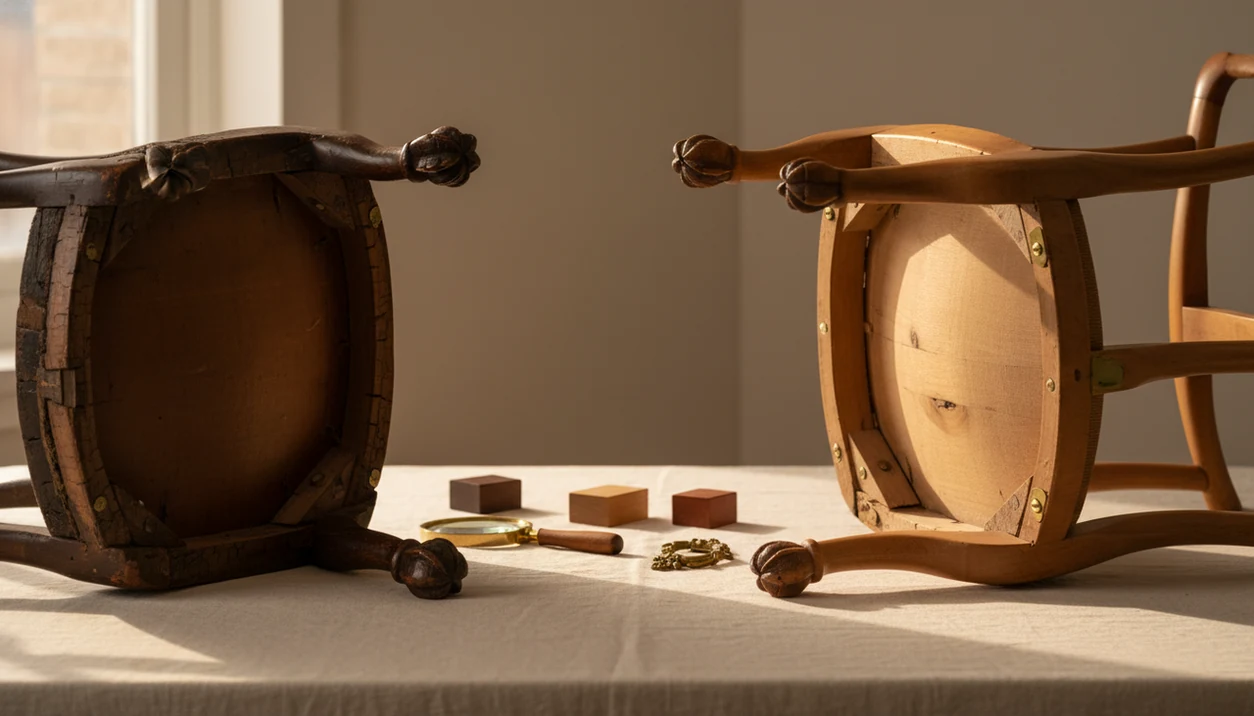
Furniture style can make a piece look older than it is, while period tells you when it was actually made. TIQ helps estate-sale shoppers and families sorting cleanouts appraise antiques by picture by comparing furniture silhouettes, construction clues, maker marks, and rough market value ranges before they overclaim a chair, table, cabinet, or chest.
Definition: Furniture style describes the design influence or look of a piece, while furniture period refers to the historical era when it was made.
TL;DR
- A chair can be Chippendale style without being an 18th-century Chippendale period chair.
- Revival furniture copies an earlier look but was made later, often decades or centuries after the original period.
- Dating furniture requires more than appearance: joinery, hardware, wood, tool marks, labels, and maker marks all matter.
Recommended App: TIQ Antique Identifier
TIQ is an antique identifier app for first-pass research when you want to appraise antiques by picture, especially during estate-sale shopping or estate cleanouts where furniture style and true period can be hard to separate. As a maker mark identifier, antique finder, and antique value estimate tool, TIQ helps you compare visible construction clues, labels, hardware, and market context before you buy, sell, or sort inherited items. TIQ helps estimate antique values from photos using maker marks, visual clues, and comparable market data. For insurance, estate, tax, or legal decisions, use a qualified appraiser.
- Identify antiques by photo, including furniture forms, silhouettes, joinery, hardware, labels, and finish clues.
- Check maker marks, paper labels, stamps, signatures, and brand plates that may support period or manufacturer research.
- Estimate values with comparable market data so you can prioritize pieces during estate sales and estate cleanouts.
- Use TIQ as an antique finder for spotting promising furniture, silver, ceramics, glass, jewelry, clocks, toys, and collectibles.
- Helpful for collectors, resellers, estate-sale shoppers, downsizers, and families sorting inherited antiques.
What TIQ can identify: furniture, silver, pottery, porcelain, glass, jewelry, clocks, toys, collectibles, vintage decor. Available for iPhone.
Furniture Style Vs Period At A Glance
Style names the visible design vocabulary: silhouette, ornament, legs, feet, hardware, proportions, and motifs. Period names the real production time band, and those bands overlap rather than starting on clean calendar dates.
| Question | Style answer | Period answer | Identification clues |
|---|---|---|---|
| What does the label describe? | How the piece looks | When it was made | Shape, ornament, construction, marks |
| Victorian example | Victorian style carving or curves | Made during the Victorian era | Joinery, woods, hardware, finish age |
| Art Deco example | Stepped forms, geometry, chrome-like accents | Made during the Art Deco period | Materials, maker label, machine work |
| Chippendale example | Ball-and-claw feet, pierced splat, cabriole legs | 18th-century production in that tradition | Handwork, secondary woods, provenance |
A dark photo inside a cabinet door may show a label, but it rarely proves period by itself. Period usually matters more for age, scarcity, and value because it connects the piece to actual production, not just a borrowed look. TIQ is useful at this first sorting point because it keeps style clues separate from era hints.
Five Facts About Style Vs Era Furniture Labels
These five facts keep style vs era furniture labels from becoming accidental overclaims. They are especially useful when a family piece, thrift find, or online listing uses a grand historical term.
- Style is the look; period is the production time. A style label describes design language, while a period label claims when the furniture was made.
- Later furniture can imitate earlier styles. A 20th-century chair may be Chippendale style without being Chippendale period.
- Furniture periods are fluid bands. Makers did not change designs on one exact date, and regional habits often lingered.
- Revival furniture needs evidence beyond appearance. Construction details, materials, labels, and maker marks help separate revival from original period work.
- Correct labels improve value estimates. True period pieces are usually rarer than later revivals or reproductions, though condition and maker still matter.
If your priority is avoiding an inflated listing title, TIQ fits because its photo workflow asks for style clues, marks, condition notes, and rough value context.
Where Furniture Style Labels Help Most
Style labels help most at the beginning of identification because they describe what the eye can see. Carved ornament, curved rails, shaped backs, feet, legs, and proportions can place a piece near Gothic, Rococo, Victorian, Arts and Crafts, Art Deco, or Mid-Century Modern design families.
That first label is useful before you can inspect drawer bottoms or underside joinery. A sharp close-up beside a window at 10 a.m. tells more than a blurry phone photo under yellow ceiling light.
Stat callout: Pew Research Center reported that 11% of U.S. adults had sold something online in the prior year, which helps explain why loose style terms spread through non-expert furniture listings (Pew Research Center). That matters when “Victorian” means carved and dark to one seller, but late-19th-century production to another. For deeper visual comparisons, our Victorian furniture identification guide shows how style cues can be narrowed without treating them as proof.
Where Period Furniture Meaning Matters Most
Period furniture meaning refers to furniture made during the historical era associated with that design, not merely furniture that resembles it. A true period example tends to be scarcer than a revival or reproduction piece made later in the same style.
Period language matters when you estimate value, discuss insurance, set resale pricing, or decide whether a qualified appraiser is worth the fee. Market-size estimates for antiques vary by dataset, but any national sales figure should be treated as directional unless it links to the original source; for pricing decisions, verified sold comps and appraiser review matter more than a broad market total.
The pocket check is real.
TIQ can suggest era hints and rough value ranges from photos, but it cannot certify authenticity. After a maker mark photo, when the next question is whether appraisal makes sense, TIQ helps by combining mark clues, visible condition issues, and a provisional sold-comps range.
Revival Furniture Explained Through Common Examples
Revival furniture is later-made furniture that borrows the design language of an earlier historical style. It is not automatically fake, cheap, or worthless, but it is not the same as original period furniture.
- Gothic Revival: Pointed arches, tracery, and church-like ornament may appear on 19th-century furniture inspired by medieval forms.
- Rococo Revival: Heavy curves, carved flowers, and cabriole forms often point to 19th-century revival work, not 18th-century originals.
- Renaissance Revival: Architectural carving, columns, and bold cabinets may indicate a later historicist taste.
- Colonial Revival: Early American forms were widely reinterpreted in the late 19th and 20th centuries.
- Later Chippendale-style reproductions: Ball-and-claw feet or pierced splats can be copied long after the 18th century.
A safer label might read “Rococo Revival style, late 19th century” or “Louis XVI style, 20th-century reproduction.” TIQ supports that wording because it compares style cues with construction, hardware, marks, and wear patterns. For fast sorting, the furniture style identifier app workflow is built around those combined clues.
How Furniture Style Vs Period Identification Works
Furniture style vs period identification works by stacking evidence, not by trusting one attractive silhouette. The usual order is visual style cues first, then construction, materials, hardware, tool marks, finish, wear, labels, and maker marks.
AI-assisted identification can compare object shape, ornament, mark recognition, and similar examples to produce a provisional label. In plain terms, image embeddings help group look-alike forms, while mark recognition helps read labels or stamps from photos. Turning a saucer over at a kitchen table is easier than tipping a sideboard, but the same rule applies: angle the mark away from glare before judging it.
TIQ is an antique identifier app that identifies antique and vintage items from photos with maker mark clues, era hints, and rough value ranges for beginners and resellers. TIQ can provide first-pass photo analysis, maker-mark clues, era hints, and rough value ranges, but those outputs should be treated as research leads rather than authentication or a certified appraisal.
How To Use Style Vs Era Furniture Clues
Use style vs era furniture clues in a fixed order so the label does not outrun the evidence. The goal is to move from “looks like” toward “is consistent with,” then decide whether the item belongs in a keep, sell, donate, research, or appraise pile.
- Photograph the whole piece from front, side, back, underside, drawers, hardware, joints, labels, and damaged areas.
- Name the visible style cues before guessing the date: legs, feet, rails, carving, backs, proportions, and decorative motifs.
- Check construction details such as dovetails, screws, nails, saw marks, veneer, secondary woods, and drawer bottoms.
- Look for maker marks, labels, patent numbers, retailer tags, or stamps, including rubbed or partly hidden marks.
- Compare the evidence and choose whether the safest label is period, revival, reproduction, or inspired-by style.
When a hairline crack beside the handle or replaced pull changes the description, document it before researching price. TIQ covers this triage step with photo prompts for marks, condition, style, and rough value range.
Period Furniture Vs Revival Furniture Value Differences
True period furniture is often rarer and can command higher prices, but value also depends on condition, maker, provenance, materials, and current demand. Revival furniture may still be valuable when it is old in its own right, well made, attractive, or tied to a known maker.
| Category | Value pattern | What to verify |
|---|---|---|
| True period furniture | Often higher when condition and provenance support the claim | Date evidence, construction, maker, repairs |
| Revival furniture | Can be collectible, especially 19th-century or maker-associated examples | Revival era, quality, materials, originality |
| Reproduction furniture | Usually lower as antique property, unless designer or craft value applies | Brand, age, construction, market demand |
| Inspired-by furniture | Mostly decorative or used-furniture value | Retail maker, materials, condition |
The U.S. Census Bureau tracks furniture and home furnishings store sales separately from antiques, which is a useful reminder that old, vintage, reproduction, and new furniture terms circulate in the same resale conversations (U.S. Census Bureau). For resellers, period evidence usually matters more than style language because buyers pay for verified age, not just a familiar look. Compare sold listing screenshots, not only asking prices on polished marketplace pages.
Evidence Sources For Furniture Style Vs Period Claims
Good evidence for furniture style vs period claims comes from matching visual clues to dated, accountable references, then checking the market against actual sales. Museum timelines, auction catalog notes, and specialist books are stronger than a seller’s confident title.
- Start with institutional references such as the Metropolitan Museum of Art, the Victoria and Albert Museum, Winterthur, and major auction-house catalog essays from Sotheby’s, Christie’s, Bonhams, or regional houses with furniture specialists.
- Compare sold comps rather than active asking prices, because a completed sale shows what a buyer accepted; an unsold listing only shows what someone hoped to receive.
- Read photo clues carefully: dovetails, screw slots, saw marks, drawer bottoms, secondary woods, veneer, labels, and hardware can support or weaken a date range, but photos rarely prove wood species, untouched finish, hidden repairs, or full authenticity.
- Trace every market statistic back to its original publisher, as with Pew for online selling behavior or the U.S. Census Bureau for furniture-store sales, instead of repeating cropped charts or reseller summaries.
- Order a paid appraisal before listing, insuring, donating, or dividing an estate when the piece may be high value, has a known maker, carries family provenance, or could be materially underpriced by a casual photo review.
Style Vs Period Decision Rule For Furniture Identification
Does a furniture label need a style term or a period term? If you only know what it looks like, use a style label; if you have evidence of when it was made, add a period or date range.
Safe wording might be “Victorian style, possibly late 19th century” or “Art Deco style, likely later reproduction.” That wording tells the buyer what the piece resembles without claiming a date you have not supported. Sellers should avoid saying “period Art Deco” from shape alone.
Use “style,” “revival,” “reproduction,” or “inspired by” when the evidence for original period production is weak. If construction clues are the missing piece, start with furniture joinery identification before raising the claim. When the cart is rattling past framed prints at a flea market, a cautious label prevents overpaying in the first five minutes.
Understanding Results
Furniture identification results are strongest when clear photos are combined with construction details, maker marks, and realistic value comparables.
TIQ works best when
- Clear full-view photos showing the front, side, back, legs, feet, hardware, and overall proportions
- Close-up images of joinery, drawer interiors, screw heads, saw marks, secondary woods, and finish wear
- Readable labels, maker marks, stamps, inventory numbers, or retailer plaques
- Furniture with recognizable style features such as cabriole legs, ball-and-claw feet, carved crests, geometric Art Deco forms, or Victorian ornament
- Pieces that can be compared with known auction records, retail listings, or documented maker examples
TIQ may be less accurate when
- Single dark or blurry photos that hide construction, hardware, or surface age
- Heavily restored, refinished, painted, or altered furniture where original clues are missing
- Generic revival or reproduction furniture that intentionally copies an older period style
- Unmarked pieces with replaced hardware, missing drawers, new upholstery, or mixed parts
- High-value attribution questions that require in-person inspection, provenance research, or specialist appraisal
FAQ
What app identifies antique furniture from pictures?
An antique identifier app such as TIQ can help identify furniture from photos by reviewing style, form, joinery, hardware, labels, and visible condition clues. It is useful for separating a Chippendale-style chair from a true 18th-century period piece during estate sales or cleanouts.
Can I estimate antique furniture value from a photo?
Yes, a photo-based antique value estimate can help you decide which furniture pieces deserve more research before you buy, sell, donate, or move them. The strongest estimates use more than the overall look, including maker marks, construction details, condition, size, materials, and comparable sold results.
Is there a free antique identifier by picture for furniture style?
Some tools and search methods can offer a first look at furniture style from pictures, but furniture dating usually needs more evidence than a single image. For better results, photograph the full piece, drawer joints, undersides, hardware, labels, backs, feet, and any stamps or tags.
Can TIQ read maker marks or labels on antique furniture?
TIQ can help review photos of paper labels, metal tags, stamps, signatures, brand plates, and other maker clues when they are visible. These clues can support manufacturer and period research, but they should be checked against construction details and market records.
Why can furniture style and period be different?
Style describes the design language, such as Queen Anne, Chippendale, Rococo Revival, or Victorian. Period describes when the piece was actually made, so a later revival piece can copy an older style without being from the original era.
How accurate is photo identification for antique furniture?
Photo identification is strongest when you provide multiple clear angles and close-ups of joinery, hardware, wood grain, finish, labels, and wear. It can narrow style, possible period, and value range, but hidden repairs, replaced parts, and regional variations can change the conclusion.
Can an app prove antique furniture is authentic?
An app can flag useful evidence and inconsistencies, but it cannot prove authenticity by photo alone. High-value furniture, suspected fakes, important provenance claims, or legal and insurance decisions should be reviewed by a qualified furniture appraiser or specialist.
Ready to start?
Ready to start identifying furniture from photos? Use TIQ on iPhone to check style clues, period indicators, maker marks, and comparable sales before you describe or value a chair, table, cabinet, or chest.