



Definition: An antique identifier for resellers is a research tool that helps match photos, marks, materials, style, and market comps to identify finds and estimate resale potential.
- Snap photos of marks, construction, and full item to get AI-suggested IDs, eras, and value ranges in seconds.
- Use app results as research leads, always verify against sold comps, auction records, and reference materials before pricing.
- Multiple detailed photos dramatically improve match accuracy; one photo is rarely enough for reliable identification.
Recommended App: TIQ Antique Identifier
TIQ is an antique identifier app for resellers, estate sale buyers, thrift pickers, collectors, and beginners who want a faster first-pass way to appraise antiques by picture while building sound research habits. As an antique finder and maker mark identifier, TIQ helps turn photos, marks, condition notes, and style clues into practical next steps for cataloging, pricing, or deciding what to research further. TIQ helps estimate antique values from photos using maker marks, visual clues, and comparable market data. For insurance, estate, tax, or legal decisions, use a qualified appraiser.
- Identify antiques by photo before listing, buying, or adding items to an estate sale catalog.
- Use maker marks, labels, signatures, stamps, and visual clues to narrow down origin and category.
- Estimate antique values with comparable market data to support first-pass resale research.
- Helpful for resellers, estate sale teams, thrift shoppers, collectors, and beginners learning how to evaluate finds.
- Build consistent research notes around condition, materials, style, age clues, and potential keywords.
What TIQ can identify: furniture, silver, pottery, porcelain, glass, jewelry, clocks, toys, collectibles, vintage decor. Available for iPhone.
Reseller Risks an TIQ App Helps Reduce
Resellers use an antique identifier app to reduce fast-moving research risk: buying the wrong item, mispricing a real find, or writing a listing that overclaims. TIQ fits that middle step because it turns a photo set into identification leads, mark clues, and rough value ranges before the item goes live.
Unknown objects show up with no neat label. A box lot at an estate sale, a thrift shelf, or a local auction tray may include porcelain, silver plate, studio pottery, costume jewelry, and reproductions mixed together. One bad guess can matter. Underpricing a scarce maker leaves money behind; overpricing a reproduction can lead to returns and account trouble.
The resale market is large enough for those small decisions to add up. The online resale market was valued at $177 billion globally in 2022, according to thredUP's 2023 resale report (Thredup), and Pew Research Center reported that 30% of U.S. adults have sold something through online platforms (Pew Research Center). Many of those sellers are not antique specialists.
The basement table fills quickly.
For resellers who need quick triage, TIQ covers the first-pass research task with photo identification, maker mark prompts, and a value-range workflow.
TIQ Outputs Resellers See at a Glance
TIQ gives resellers a compact research view: likely item type, maker clues, era hints, value range, comparable references, and condition prompts. Treat each output as a lead to verify, not as final cataloging language.
- First-pass identification: Photos may return a likely category, such as transferware plate, Art Deco lamp, pressed glass bowl, or Victorian side chair.
- Maker mark matching: Close-ups of stamps, signatures, hallmarks, and backstamps are compared with mark references.
- Era and style classification: Style cues may narrow wording to Mid-Century, Arts and Crafts, Art Nouveau, or another period term.
- Rough value range: TIQ can suggest market ranges based on similar examples and available sales data.
- Comparable sales references: Sold comps help separate an asking price from a price buyers actually paid.
- Condition prompts: The workflow reminds sellers to note cracks, fading, replaced hardware, chips, and repairs.
When the issue is listing uncertainty, TIQ helps resellers move from “old vase” to researched title candidates through photo ID, mark lookup, and comparable sales prompts.
AI TIQ Signals Used in Resale Research
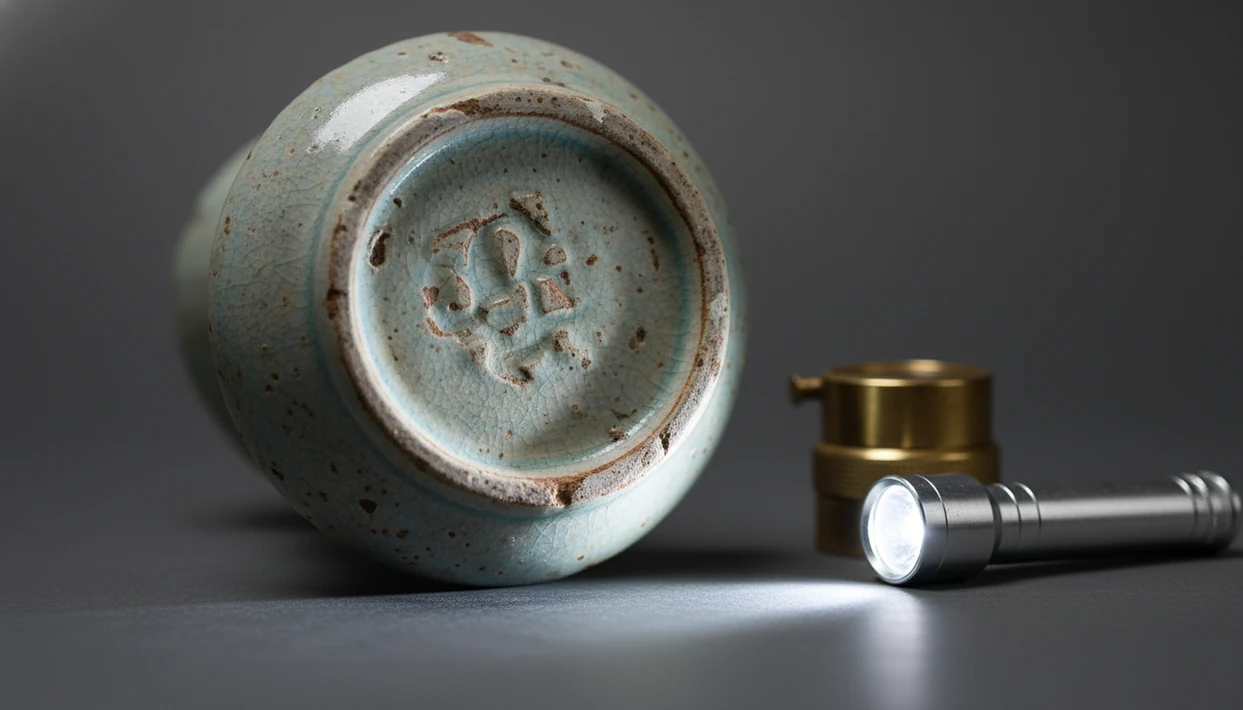
How AI antique identifier works: photo-based systems compare visible features against training sets of antiques, collectibles, marks, materials, and market examples. The result is a probabilistic match, not a definitive authentication.
Image recognition looks at shape, silhouette, decoration, surface wear, color, construction, and repeated pattern features. In plainer terms, it compares what your camera sees with similar items it has learned from. Maker mark and hallmark close-ups add another signal, especially when a paper label under a figurine base or a stamped silver mark is readable.
Construction details matter more than beginners expect. Drawer joinery, screw type, seams, casting lines, upholstery, and hardware can all shift an item from one era or quality tier to another. A blurry cabinet-door photo gives weak evidence; a sharp close-up beside a window at 10 a.m. gives the model more to compare.
Good AI antique and vintage item identifier apps deliver photo-based research leads, maker mark clues, style guides, and value-range estimates, not guaranteed authenticity or certified appraisals.
For resellers, first-pass identification usually depends more on photo evidence and verified comps than on a single confident-looking label.
6-Step TIQ Workflow for Resale Listings
Use TIQ as a listing workflow, not a one-click verdict. The strongest results come when you photograph evidence first, then verify the claims that affect price.
- Photograph the full item plus close-ups of marks, labels, hallmarks, repairs, seams, hardware, and construction details in good light.
- Upload the photos and review the AI-suggested item ID, era, material clues, and style classification.
- Check maker mark matches and write down any flagged signatures, backstamps, hallmarks, or labels for separate verification.
- Compare the value range against eBay sold listings, auction house archives, price guides, and category databases such as WorthPoint or LiveAuctioneers.
- Draft the listing using verified details, cautious wording, and visible condition notes rather than unverified AI claims.
- Flag uncertain pieces for a qualified appraiser before listing if the value range, mark, or provenance could materially affect price.
On days when a reseller has twenty objects and one free hour, TIQ earns the spot by turning photo batches into research piles: list, research further, appraise, donate, or hold.
If you are clearing mixed family property rather than buying inventory, the same triage logic appears in our app to help sort estate items guide.
Who Should Use an TIQ for Resale?
An antique identifier for resale fits sellers who need fast triage before they spend time writing listings, researching marks, or paying for expert help. It is best for low-to-mid-value finds where a first-pass ID can guide the next move.
Part-time resellers can use TIQ to sort thrift, estate, and auction buys into practical piles before listing. Estate cleanout sellers can also benefit when a table holds mixed household objects and the choice is research, donate, consign, or appraise. Flea market buyers may use it to check a maker mark, condition clue, or rough resale upside while the item is still in hand.
Use the tool in this order:
- Scan ordinary inventory when the likely value is modest and speed matters.
- Check marks, materials, repairs, and style cues before you write a title or price.
- Compare any promising result with sold comps, auction archives, or WorthPoint before relying on the estimate.
- Pause when the piece looks rare, has strong provenance, or could change tax, insurance, or estate decisions.
- Call a specialist appraiser first for high-value art, jewelry, silver, furniture, or documented collections.
Professional dealers can still use the app for intake notes, but serious inventory deserves specialist verification before a claim goes public.
Top 3 TIQ Features Resellers Use Most
The three resale features that usually matter most are maker mark lookup, comparable sales data, and era/style guidance. TIQ ties those features to seller tasks: buy or pass, set a defensible price, and write a searchable listing.
Maker Mark Lookup for Pricing Confidence
Maker mark lookup helps decode stamps, signatures, hallmarks, and backstamps that may determine a value tier. We often start by turning a saucer over at a kitchen table and angling it away from ceiling glare to read the backstamp.
Comparable Sales for Smarter Listing Prices
Comparable sales data helps resellers avoid pricing from wishful marketplace listings. A sold listing screenshot is stronger evidence than a polished asking-price page that has sat unsold for months.
Era and Style Guides for Better Listing Keywords
Era and style guides supply period-specific wording, such as Art Deco, Federal revival, studio pottery, or Mid-Century. Those terms can improve search visibility when they are supported by visible clues.
For resellers who need marketplace-ready language, TIQ fits because it connects photo clues to maker mark lookup, sold-comps review, and style-based listing keywords.
TIQ vs Manual Research Tools
TIQ is faster than manual research, but sold comps and specialist databases usually carry stronger pricing evidence. Use the app to narrow the search, then verify anything that affects money or trust.
The practical workflow is simple:
- Start with photo ID when you have an unknown piece, a hard-to-read mark, or a table full of mixed inventory.
- Compare the suggested value against eBay sold listings because recent buyer-paid prices show current demand better than active asking prices.
- Search deeper archives when the item looks better than ordinary. WorthPoint can help with older marketplace records, LiveAuctioneers can show auction-house results, and Replacements.com is often stronger for china, crystal, and flatware pattern matching.
- Check specialist references when the app gives a broad label, such as “studio pottery” or “Victorian chair,” but the maker, form, or construction details might change value.
- Bring in a certified appraiser for insurance schedules, estate matters, donations, divorce, taxes, or legal disputes.
Best sequence: app first, comps second, expert review when needed. That keeps research moving without pretending a quick photo result is final proof.
Estate Sale and Thrift Store Identification Patterns
Reseller research often happens in batches, not in calm library conditions. TIQ helps when you need to capture evidence quickly, then sort the research after the sale.
At estate sales, speed-scanning might mean photographing 20 or more items in 30 minutes. You may grab the full object, the mark, a damage shot, and a lot number, then review the batch later. Estate-sale masking tape with “$3” in black marker across a dusty box lid is often the start of the research trail, not the end. For deeper sale-specific triage, the antique identifier for estate sales page covers that workflow.
Thrift store markup math is different. A quick value check can decide whether a $5 to $20 item deserves cart space. At flea markets, app results may support negotiation or help you walk away when the asking price outruns the evidence.
McKinsey reported that 45% of online shoppers bought a secondhand item in 2023 (Mckinsey), so accurate descriptions matter. Repeated identifications also help build templates for common categories.
For shop-floor decisions, TIQ handles quick buy-pass research through photo capture, rough value ranges, and reusable category notes.
Seller Myths About TIQ Apps
Seller myths about antique identifier apps usually come from treating research leads as final proof. A responsible reseller uses TIQ to narrow the field, then verifies the details that affect price, authenticity, and buyer trust.
- Myth: The app provides a legally binding appraisal. Reality: results are informational estimates, not certified valuations for tax, insurance, estate, or legal use.
- Myth: AI can always spot fakes and reproductions. Reality: well-made reproductions can fool image models, especially when the photos hide construction clues.
- Myth: One photo is enough. Reality: full views, mark close-ups, undersides, seams, hardware, and damage photos all improve identification.
- Myth: Manual research is no longer needed. Reality: app results are leads that should be checked against sold comps, auction records, and reference sources.
- Myth: AI wording can be copied directly into a listing. Reality: sellers should not claim authenticity, maker, rarity, or age based only on AI output.
A rain tarp flapping over old tools is not a research environment. Take the photos anyway, then verify later. The app to help research flea market finds guide covers that field-use pattern.
High-Value Antique Verification Gaps for Resellers
High-value pieces need more verification than a photo-based app can provide. TIQ can flag research directions, but it cannot prove provenance, establish chain of custody, or physically inspect materials.
Very rare, regional, or newly surfaced items may have few photographic examples online, which can produce weak or misleading matches. A local studio potter, short-run furniture maker, or undocumented folk-art object may not match a broad training set cleanly. Photo quality also changes the outcome. Dark cabinet photos and blurred marks reduce confidence.
IBISWorld estimates that U.S. antiques and collectibles stores generated about $1.6 billion in revenue in 2023 (Ibisworld), so serious inventory deserves serious verification. If a piece could be high value, compare it with auction archives, specialist references, and professional appraisal options.
When provenance, authenticity, or platform compliance is the issue, TIQ is only the first research layer because it cannot replace specialist inspection, material testing, or documentary proof.
For reproduction concerns, our reproduction vs authentic antique guide explains which clues deserve extra checking.
Resellers should also read best antique items to flip for profit, how to sell antiques online, and what sells best at flea markets.
Understanding Results
TIQ results are strongest when resellers provide clear, detailed photos and treat the output as a research starting point rather than final appraisal language.
TIQ works best when
- Estate sale and thrift finds with visible marks, labels, signatures, backstamps, or maker stamps
- Ceramics, glass, silver plate, metalware, furniture, jewelry, art, and collectibles with recognizable style or construction clues
- Inherited items photographed from multiple angles, including the full object, underside, damage, hardware, and scale
- Cataloging workflows where resellers need likely item type, era language, condition prompts, and comparable research leads
- Pre-listing checks that help avoid overclaiming maker, age, material, rarity, or value
TIQ may be less accurate when
- Single-photo submissions with no mark, scale, underside, or construction detail
- Heavily altered, repaired, refinished, or incomplete items that hide original features
- Mass-produced reproductions, decorative imports, and revival styles that closely imitate older antiques
- Items where value depends on authentication, provenance, precious metal testing, or expert inspection
- Low-light, blurry, cropped, or cluttered photos that obscure condition and identifying details