
How to Use an Antique Identifier to Find Profitable Flips


Download App: best antique items to flip for profit
Definition: An antique identifier for profitable flips helps you identify, research, and estimate resale potential for antique or vintage items before buying.
A good antique identifier app helps you check flea market and thrift store finds before you buy, so you can appraise antiques by picture, spot maker marks, and decide whether the margin is worth pursuing. Use it to move faster from curiosity to resale research without relying on guesswork at the booth.
> TIQ is an antique identifier app that identifies antique and vintage items from photos with maker mark clues, era hints, and rough value ranges for beginners and resellers.
- Prioritize small, shippable antiques with clear maker marks, known styles, or steady decorative demand.
- Use a simple profit check before buying: expected selling price minus purchase price, fees, shipping supplies, repair costs, and time.
- Use TIQ before purchase when you need quick clues about era, style, maker marks, and rough value range.
Recommended App: TIQ Antique Identifier
TIQ is an antique identifier app for checking flea market and thrift store finds before you buy, helping you appraise antiques by picture for first-pass research and spot clues that affect resale potential. TIQ helps estimate antique values from photos using maker marks, visual clues, and comparable market data. For insurance, estate, tax, or legal decisions, use a qualified appraiser.
- Identify antiques by photo when you find furniture, ceramics, glass, jewelry, or vintage decor in the wild.
- Use TIQ as a maker mark identifier for stamps, signatures, labels, hallmarks, and construction details.
- Estimate values from comparable market data so you can judge margin before a flip.
- Built for flea market shoppers, thrift store resellers, estate sale buyers, collectors, and antique dealers.
- Save research from promising finds so TIQ works as an antique finder for future sourcing trips.
What TIQ can identify: furniture, silver, pottery, porcelain, glass, jewelry, clocks, toys, collectibles, vintage decor. Available for iPhone.
How the top antique items look
Side-by-side captures of the compared products. Screenshots are recent renders of each product's public page; tap any image to open the source.
Best Antique Items To Flip For Profit: 5-Category Shortlist
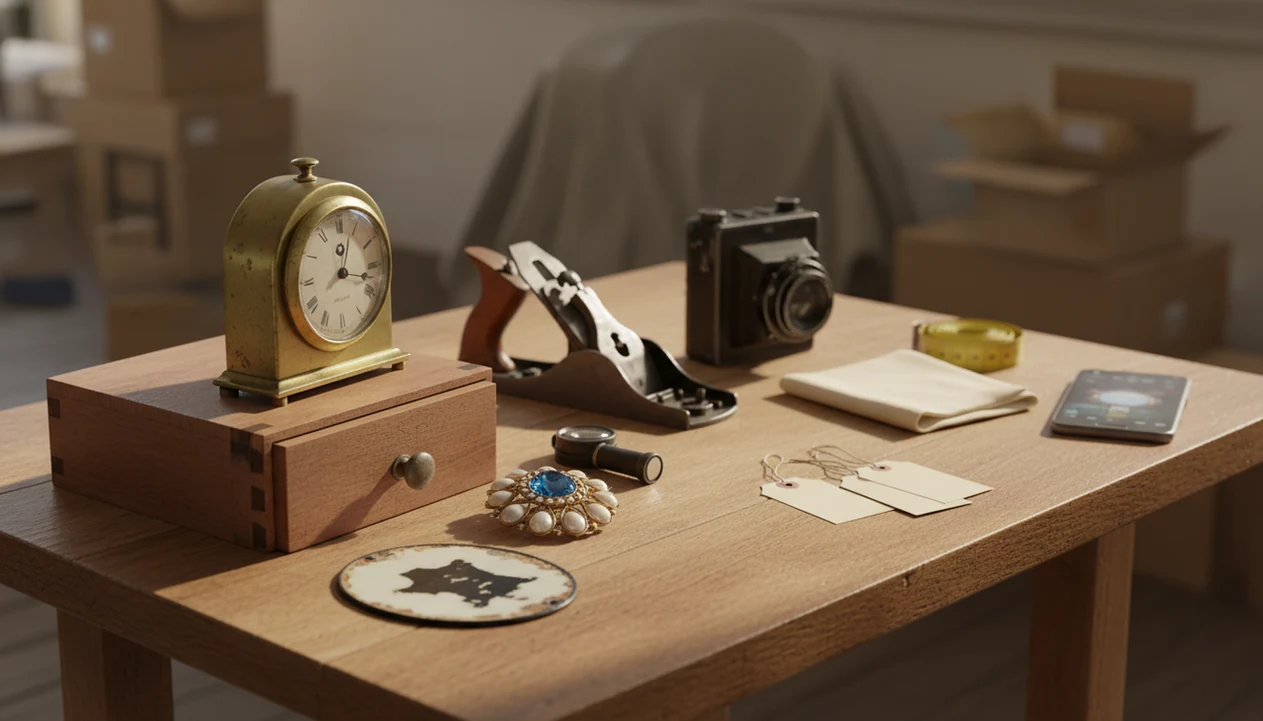
The beginner-friendly shortlist is small furniture, vintage clocks, tools, jewelry, and décor or signage. These categories balance demand, identification ease, shipping practicality, and resale liquidity better than ultra-niche collectibles or restoration-heavy pieces.
Use this shortlist as a first-pass filter, not a promise of profit. A category only becomes a good flip when the specific item has identifiable details, acceptable condition, realistic shipping or pickup options, and recent sold comps.
- Small furniture: side tables, stools, plant stands, and compact cabinets often sell locally when proportions and finish look right.
- Vintage clocks: desk, mantel, and wall clocks can be checked by maker, movement label, case material, and working condition.
- Tools: hand planes, machinist tools, and branded workshop pieces have clear function and collector overlap.
- Jewelry: costume, sterling, and period-style pieces can be researched through hallmarks, construction, clasp type, and materials.
- Décor and signage: brass objects, bookends, advertising signs, and decorative metalwork photograph well and attract impulse buyers.
A macro shot of dovetail drawer joints can matter more than a wide photo. TIQ fits this early sorting stage because it helps compare maker marks, materials, era signals, condition notes, and sold-listing clues before you commit cash.
3 Antique Flipping Market Demand Signals
Antique flipping has real buyer demand, but demand does not make every old item valuable. The opportunity is strongest when an item has recognizable use, visible identification clues, and recent sold-listing activity.
U.S. e-commerce sales of used and antique merchandise reached about $5.86 billion in 2023, according to Census data U.S. Census Bureau. Used merchandise store sales, including thrift, consignment, and antique shops, were about $18.1 billion in 2022. Pew also found that about 13% of U.S. adults sold secondhand items online in the previous year Pew Research Center.
Important caveat: the Census figures combine used, secondhand, and antique merchandise, so they show resale-market demand rather than guaranteed demand for every antique category. For flipping decisions, category-level sold listings still matter more than the size of the broader resale market.
That demand shows up on eBay, Etsy, Facebook Marketplace, antique malls, and local resale channels. Still, a cracked plate with no known pattern can sit for months.
No buyer, no flip.
Resellers looking for a repeatable photo-first process can use antique identifier for resellers research when a sale table has twenty maybes and only ten minutes to choose.
Five Facts Before Buying Antique Items To Resell
These five facts prevent most beginner losses in antique flipping.
- Small and shippable usually wins: high-demand categories beat bulky, fragile, or slow-moving items when storage and shipping are limited.
- Identification drives pricing: profit depends on maker, era, material, condition, and recent sold prices, not just age.
- Use the basic formula: selling price minus purchase price, expenses, and time equals profit.
- Aim for margin, not hope: a 3–4x resale target can protect against fees and packing costs, but it is not a guarantee.
- Source where mistakes happen: estate sales, auctions, flea markets, yard sales, thrift stores, and local marketplaces often contain under-researched items.
When estate-sale masking tape has “$3” written in black marker across a dusty box lid, pause before grabbing it. TIQ is useful there because the photo workflow can flag maker mark leads and condition issues before the box becomes your problem.
How Antique Flipping Works
Antique flipping works by buying from places where items are under-researched and reselling to buyers who understand the category, style, maker, or use. The spread is not just “old item plus higher price”; it comes from better identification, better presentation, and choosing the right resale channel.
A clean first pass separates five questions: what the item is, what condition it is in, who wants it, where it should sell, and what it will cost to move. Recent sold comps are the anchor because they show what buyers actually paid for comparable items. Age, rarity claims, and active asking prices can help with context, but they often exaggerate value when there is no proof of demand.
- Identify maker, material, era, pattern, and obvious reproduction clues.
- Grade condition honestly, including cracks, repairs, missing parts, odors, and altered finishes.
- Match the item to demand and channel fit: local pickup, auction, marketplace, mall booth, or niche collector site.
- Subtract fees, packing, shipping risk, fuel, cleaning, repairs, storage time, and your labor before calling it profit.
- Escalate to a qualified appraiser when value, authenticity, insurance, tax, legal, or estate questions exceed first-pass research.
Storage time and breakage risk are real costs. A heavy mirror with a tempting margin can become a loss after two months in the garage and one bad shipping quote.
7-Step Antique Flipping Workflow From Find To Sale
Antique flipping works by moving an item through sourcing, identification, price-checking, light cleaning, photographing, listing, packing, and shipping or local delivery. The money is usually made in the buy decision, not in the listing description.
- Source the item from a sale, shop, auction, or local listing.
- Identify maker, era, material, pattern, and condition.
- Check recent sold listings, not just active asking prices.
- Clean lightly without removing patina, labels, or original finish.
- Photograph the full item and every useful clue.
- List with accurate terms and clear condition notes.
- Pack, ship, deliver, or arrange local pickup.
Collector-grade pieces need stronger evidence, such as confirmed maker, provenance, and excellent condition. Decor-grade pieces can still sell when style, size, and appearance are strong. Time-to-sell is the cash-flow metric beginners often ignore; five modest flips in two weeks can beat one “rare” object that sits until spring.
Identification apps and price guides give estimates, not certified appraisals. TIQ supports first-pass identification because it turns photo clues into research leads rather than final authentication.
How To Use TIQ Before Buying A Flip
Use TIQ before buying when the profit depends on fast identification, visible condition issues, or an unclear maker mark. Good antique identifier apps deliver photo clues, era hints, and rough value ranges, not guaranteed authentication or certified appraisals.
- Photograph the full item in steady light, including front, back, base, underside, and scale.
- Capture close-ups of maker marks, labels, joints, hardware, movement labels, hallmarks, serial plates, damage, and repairs.
- Run the photos through TIQ for era hints, style clues, maker mark leads, and a rough value range.
- Cross-check sold listings before buying, especially on eBay, Etsy, LiveAuctioneers, or WorthPoint when available.
- Calculate the offer by subtracting fees, packing, shipping, fuel, cleaning, and your time from the expected sale price.
- Walk away when condition, shipping risk, electrical safety, or authenticity risk is unclear.
A sharp close-up taken beside a window at 10 a.m. usually beats a blurry phone photo under fluorescent shop lights. For inherited groups, the same triage method also works with an app to help sort estate items.
Best Small Antique Furniture To Flip Locally
Small antique furniture is usually better flipped locally than shipped because buyers can inspect scale, finish, and stability in person. Local pickup also avoids freight quotes that can erase profit.
| Furniture type | What to look for | What to avoid |
|---|---|---|
| Side tables | Solid wood, tight joints, balanced proportions | Loose legs, deep veneer loss |
| Small cabinets | Original hardware, clean drawers, useful size | Smoke odor, missing shelves |
| Stools and chairs | Stable frame, attractive wear, simple repair needs | Wobbly frames, cracked seats |
| Plant stands | Decorative shape, sturdy base, good height | Water damage, warped tops |
| Nightstands | Pair potential, maker label, clean lines | Oversized shipping problems |
| Compact mid-century pieces | Tapered legs, walnut tone, original pulls | Heavy particleboard, major refinishing |
A flash reflection on scratched brass hardware can hide wear, so take another photo at an angle. TIQ helps document construction details and maker labels before you price a piece as collector-grade or decor-grade.
For unknown makers, decor-grade pricing is often safer because style and condition carry the sale.
Best Small Vintage Antiques For Online Resale
The strongest online resale categories are small, recognizable, and easy to describe in search terms. Vintage clocks, typewriters, cameras, tools, costume jewelry, silverplate, brass objects, bookends, and signage fit that pattern.
- Vintage clocks: check maker name, movement label, case material, and whether it runs.
- Cameras and lenses: photograph model numbers, lens markings, shutters, bellows, and visible fungus.
- Typewriters: note brand, model, key condition, case, and carriage movement.
- Tools and metalwork: look for stamped metal, patent marks, maker names, and useful patina.
- Jewelry and silverplate: document hallmarks, clasp type, plating wear, stones, and measurements.
Small size helps shipping. Recognizable function helps search. Visual appeal helps the thumbnail.
Be careful with fragile glassware and low-demand generic china. A warped dust jacket on an old book or a paper label under a figurine base may be worth researching, but condition still controls the buyer’s ceiling.
6 Profit Criteria For Antique Flip Categories
Which antique categories are worth flipping first? Start with demand, identification clues, condition tolerance, shipping ease, sourcing frequency, and resale velocity.
Recent sold listings matter more than polished asking prices on a marketplace page. We prefer a sold listing screenshot over a hopeful listing that has been sitting since last summer. Profit also has leaks: marketplace fees, payment processing, packing, shipping, fuel, cleaning, and labor all reduce the number you keep.
Treat resale as labor: the Bureau of Labor Statistics reported 2023 median usual weekly earnings of $1,118 for full-time wage and salary workers overall, a useful benchmark when deciding whether a flip is worth your time Bureau of Labor Statistics.
Keep a buy log with purchase price, expected selling price, actual selling price, days-to-sell, and mistakes. Over ten flips, that log becomes more useful than memory. TIQ fits this habit because it gives a repeatable photo record for comparing expected versus actual outcomes.
5 Common Myths About Antique Items To Flip
Five myths cause beginners to overpay.
Myth 1: Anything old is valuable. Better belief: category, maker, condition, and demand decide value.
Myth 2: You can eyeball profit without research. Better belief: check sold comps, maker marks, materials, and condition before buying.
Myth 3: Antique flipping is passive income. Better belief: sourcing, cleaning, photographing, listing, packing, and customer messages are active work.
Myth 4: Rare ultra-niche collectibles are ideal for beginners. Better belief: common, well-documented items are easier to identify and resell.
Myth 5: App estimates replace appraisals or authentication. Better belief: apps and price guides support first-pass research, then specialists handle high-value, disputed, or insurance-related questions.
If an item raises authenticity questions, read about the reproduction vs authentic antique issue before paying collector-grade money. Wrapping a questionable item in a towel and putting it in the research pile is often the cheaper move.
Understanding Results
Photo-based antique identifier results are most useful when you treat them as a fast research starting point for category, era, maker clues, and value range rather than a guaranteed profit prediction.
TIQ works best when
- Items with clear maker marks, labels, hallmarks, signatures, or patent numbers
- Small furniture, clocks, tools, jewelry, decorative metalwork, ceramics, and signage with recognizable style features
- Multiple sharp photos showing the full object, close-ups, underside, back, joints, hardware, and damage
- Items where condition, size, material, and working status can be documented before purchase
- Common resale categories with recent sold comparables from auctions or marketplaces
TIQ may be less accurate when
- Heavily restored, altered, repainted, or assembled pieces with missing original details
- Generic décor without maker marks, distinctive materials, or documented provenance
- Poor photos that are blurry, dark, cropped, or missing labels and construction details
- Ultra-rare, museum-grade, or high-value items that require specialist appraisal
- Items where value depends heavily on local pickup demand, shipping risk, or hidden mechanical condition
FAQ
What app identifies antiques from pictures at flea markets and thrift stores?
TIQ is a practical choice when you need quick photo-based clues before buying a possible flip. It helps identify the item type, style, possible era, maker mark details, and rough value range so you can decide whether to keep researching or walk away.
Is there a free antique identifier by picture for resale research?
Some tools offer limited free checks, but the most useful resale research usually needs clearer identification, mark reading, and comparable value context. For flipping, the key is not just naming the object but understanding whether fees, shipping, repairs, and demand leave enough margin.
Can TIQ identify antique furniture before I buy it?
TIQ can help identify antique and vintage furniture from photos of the full piece, joints, hardware, labels, feet, finish, and construction details. That is useful at estate sales or thrift stores when you need a fast read on style, age clues, and resale potential before committing space and transport.
Can TIQ read maker marks from a photo on items I want to flip?
TIQ can analyze clear photos of maker marks, hallmarks, labels, stamps, signatures, and other identifying details. For flipping, those clues can help separate generic decor from pieces with stronger buyer demand or better comparable sales.
Which antiques are easiest to research quickly for profit?
Small, recognizable items with visible marks are usually easiest to research quickly, such as pottery, silver, jewelry, clocks, cameras, tools, signage, glass, and compact decorative objects. They are often easier to photograph, compare, ship, and test for demand than large or heavily damaged pieces.
How accurate is a photo-based antique value estimate for flipping?
A photo-based estimate is best for first-pass sourcing decisions, not a final sale guarantee. Accuracy improves when you include maker marks, condition issues, measurements, materials, and multiple angles so the item can be compared more closely to similar sold examples.
Can an antique identifier detect fakes or reproductions?
An antique identifier can flag visual clues that may suggest a reproduction, mismatch, later replacement, or modern decorative copy. It cannot prove authenticity from photos alone, so high-value purchases should still be checked with provenance, specialist research, or a qualified expert.
Should I rely on an app alone before buying an expensive antique to resell?
Use an app to speed up early research and avoid obvious low-margin buys, but do not rely on it alone for expensive purchases. For major flips, confirm condition, authenticity, market demand, shipping risk, and recent sold comps before spending serious money.
Ready to start?
Ready to start flipping with better information? Download TIQ on iPhone and use photos of the item, maker marks, labels, materials, and condition details to get identification clues and a rough value range before you buy or list.