
Antique Identifier for Thrift Store Finds


Download App: thrift store antique identification
Use a thrift store antique identifier to move faster from interesting find to informed buy: photograph marks, construction, condition, and comparable examples before you pay. With TIQ, shoppers can appraise antiques by picture in the aisle to spot promising pieces, avoid obvious mistakes, and save deeper research for items worth a second look.
Definition: A thrift store antique identifier helps shoppers research secondhand finds by photo, maker marks, style clues, age indicators, and comparable market data before buying.
- Start with maker marks, labels, backstamps, signatures, and construction details before trusting the overall style.
- Use photos and an antique identifier app as a research shortcut, not as a final authentication or appraisal.
- Check condition and sold comps before buying because age alone does not guarantee resale value.
Recommended App: TIQ Antique Identifier
TIQ is an antique identifier app built for fast first-pass research when you need to appraise antiques by picture in a thrift store aisle, at an estate sale, or during an estate cleanout. It works as an antique identifier, antique value estimate tool, maker mark identifier, and antique finder so you can spot promising items, check visual clues, and avoid overpaying. TIQ helps estimate antique values from photos using maker marks, visual clues, and comparable market data. For insurance, estate, tax, or legal decisions, use a qualified appraiser.
- Identify antiques by photo while browsing thrift stores, estate sales, flea markets, or donation piles.
- Check maker marks, signatures, labels, stamps, and backstamps for faster object research.
- Estimate values with comparable market data before deciding whether a find is worth buying or keeping.
- Useful for estate-sale shoppers, estate cleanouts, resellers, collectors, and families sorting inherited items.
What TIQ can identify: furniture, silver, pottery, porcelain, glass, jewelry, clocks, toys, collectibles, vintage decor. Available for iPhone.
Thrift Store Antique Identification Clues That Matter Most
The fastest thrift store antique identification checks are marks, construction, condition, and sold comparisons. Treat the aisle like a sorting table, not a courtroom.
- Maker marks and labels: Backstamps, signatures, tags, and paper labels often give the quickest route to maker, origin, or age clues.
- Construction details: Stitching, seams, zippers, drawer joints, hardware, paper labels, and finish quality can separate older work from newer reproductions.
- Style limits: Style alone is not proof, since many modern objects are made in retro or vintage-inspired designs.
- Condition issues: Chips, cracks, repairs, stains, missing parts, replaced hardware, and structural damage can change value sharply.
- Practical workflow: Inspect, photograph, search marks, compare era references, check sold comps, then use app-assisted research if the item still looks worth pursuing.
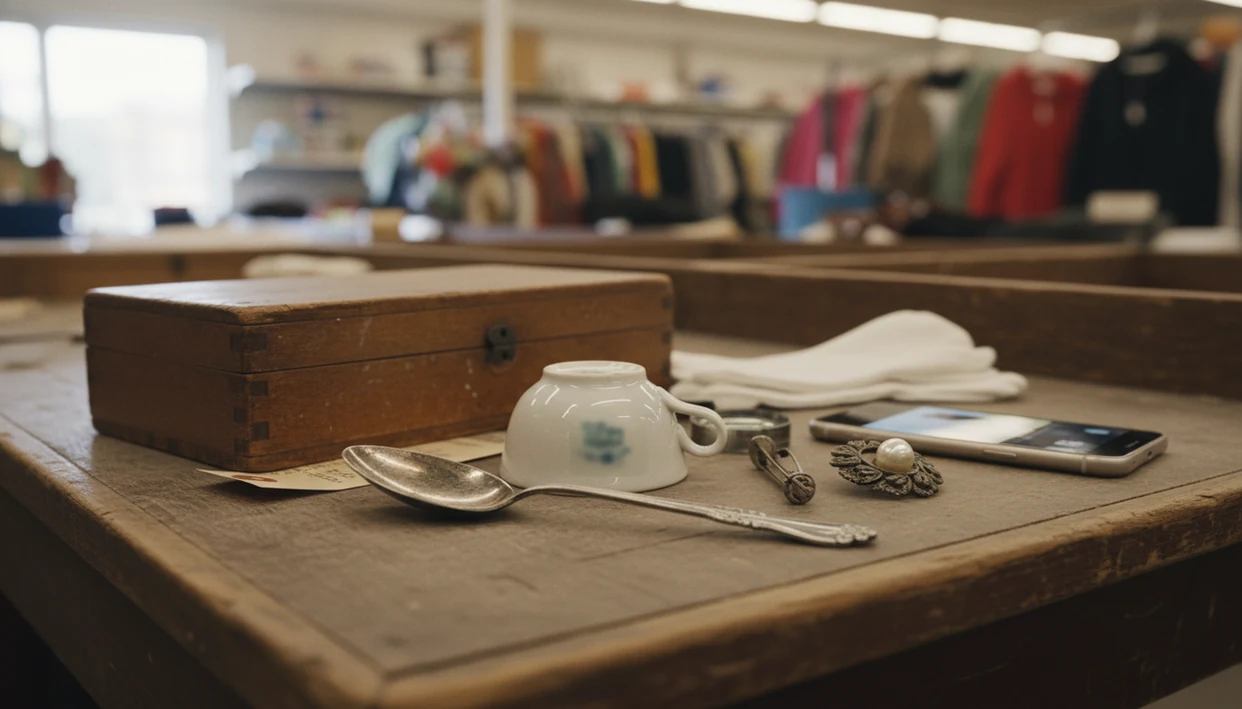
A lion passant on a silver spoon is worth pausing over. It still needs verification.
How Thrift Store Antique Identification Works
Thrift store antique identification works by stacking evidence from the object, not by trusting one photo, one label, or one hunch. A stronger read usually follows this order: object type, material, marks, construction, style period, condition, then comparable sales.
Identification answers what an item likely is. Valuation asks what someone recently paid for a similar example, in similar condition, through a similar selling channel. That gap matters when the shelf tag is low but the crack beside the handle is not visible until you tilt the piece.
Secondhand buying is common: Pew Research Center reported that 59% of U.S. adults had bought something secondhand in the previous 12 months (Pew Research Center). Stores also receive mixed inventory from donations, estates, returns, and cleanouts, so every shelf item needs object-level verification.
Before You Identify Thrift Finds in the Store
Before you identify thrift finds, prepare for bad lighting, little time, missing history, and return policies that may not help you. Bring a phone with a camera, a small flashlight, a notes app, a pocket measuring tape, and access to sold-price search.
Photograph the full item first. Then capture the underside, maker marks, labels, damage, hardware, seams, bases, backs, interiors, and scale. A coin held beside a tiny clasp tells more than a zoomed-in blur. Do not clean, polish, peel labels, tighten screws, or alter the object before researching it.
Set a maximum buy price before the “maybe it’s rare” feeling takes over. For beginners, a written buy ceiling is often better than aisle-by-aisle guessing because it leaves room for repair surprises, shipping costs, and slow resale.
The fluorescent lights lie sometimes.
How to Use a Thrift Store Treasure App Workflow
A thrift store treasure app workflow should move from physical inspection to photo research to sold comps. Use tools such as Google Lens, eBay sold listings, WorthPoint, or a dedicated antique identifier app for research leads, not final authentication or certified appraisals.
1. Inspect the whole object
- Start with the full item before searching by image, because damage or replacements may change the answer.
- Turn it carefully to check bases, backs, interiors, seams, feet, rims, and hardware.
2. Photograph marks and damage
- Capture marks, labels, damage, scale, and construction details in sharp light, ideally near a window rather than under ceiling glare.
3. Search marks and image matches
- Search maker marks and use an image-based antique identifier app as a starting point, then compare the result with physical clues.
4. Compare sold comps
- Check sold comps, not only asking prices, especially if you plan to resell through channels covered in antique identifier for resellers.
5. Decide before checkout
- Buy, pass, or save for later research before you reach the register.
Step 1: Identify Thrift Finds by Maker Marks and Labels
“Where should I look for marks when I identify thrift finds?” Start with undersides, backs, rims, clasps, drawer interiors, fabric tags, framed artwork backs, and metal bases.
Photograph the logo, words, numbers, country of origin, pattern names, signatures, hallmarks, and handwritten inventory marks. A framed print may have useful information on the backing paper, even if the front looks ordinary. In jewelry, the magnifying squint at a clasp hinge can reveal a metal mark, a maker stamp, or nothing at all.
Marks help because they may point to maker, region, production period, material, or pattern. However, marks can be copied, reused, misread, or found on common mass-market goods. A famous name is not the same as rarity. For deeper mark and photo sorting across donated inventory, the antique identifier for thrift stores workflow covers store-side triage.
Step 2: Check Flea Market Antique Research Details
Flea market antique research should test the first impression against construction and material evidence. Construction often reveals era more reliably than style, because manufacturing methods leave harder-to-fake clues.
Inspect seams, stitching, zippers, screws, drawer joints, backs, bases, glazing, finish, weight, and wear patterns. Furniture may show dovetail shape, secondary wood, screw type, or replaced pulls. Clothing can date partly through zipper placement and fabric labels. Ceramics need backstamps, clay color, glaze quality, and foot-ring wear. Jewelry needs clasp style, metal marks, stones, and solder work. Prints need paper, plate marks, framing, and backing materials.
Do not rely only on patina. Wear can be uneven, added, cleaned away, or misunderstood. The safer question is whether style, material, and manufacturing evidence all point in the same direction. If they conflict, the reproduction vs authentic antique question deserves more time.
Step 3: Separate Antique Identification From Value Estimates
Identification and value estimates answer different questions. Knowing an item’s likely category, maker, or era does not establish what a buyer will pay.
| Question | Identification | Value estimate |
|---|---|---|
| Main goal | What is the object likely to be? | What might it sell for now? |
| Evidence used | Maker, material, construction, style, marks | Condition, rarity, demand, provenance, sold prices |
| Common mistake | Trusting style alone | Trusting active listings |
| Better check | Compare confirmed examples | Compare recent sold comps |
| App role | Research lead | Rough range, not certified appraisal |
Use sold comps rather than active listings or polished marketplace pages. For eBay research, use sold-item filtering because eBay separates completed listings from items that actually sold (eBay sold listings guide). Check whether the compared item has the same maker, pattern, size, age, condition, and included parts. A sold listing screenshot is usually more useful than a hopeful asking price that has sat for months.
Rough value ranges from apps are starting points. They are not certified appraisals.
Common Thrift Store Antique Identification Myths
Most thrift identification mistakes come from treating one clue as the whole answer. These myths are common because they feel quick in the aisle.
- “If it looks old, it must be antique.” Retro design, factory distressing, and vintage-inspired decor can all look old. Cross-check materials, hardware, and construction.
- “A maker mark guarantees value.” A mark may identify origin, but demand, rarity, and condition still decide price.
- “AI identification apps can replace research.” Apps can suggest likely matches and search terms. You still need marks, construction checks, and comps.
- “Damage always makes an item worthless.” Some scarce items survive damage in the market, but common damaged goods may not be worth buying.
- “Every old object is rare.” Many old objects were mass-produced, heavily collected, or still easy to find.
For estate boxes, a grandparent’s drawer of souvenir teaspoons can hold one research item and twenty donation items. Sorting is the work.
Verification Checklist Before Buying Thrift Store Antiques
Before buying thrift store antiques, confirm the item still makes sense after a cold check. The strongest buys have matching evidence, tolerable condition, and sold comps that leave room for uncertainty.
- Confirm the object type, maker or possible maker, estimated era, material, and construction clues.
- Review condition for cracks, chips, odors, stains, missing parts, replaced components, unstable repairs, and pest damage.
- Compare at least a few sold examples when possible.
- Use a buy ceiling that allows for cleaning limits, shipping, platform fees, storage time, and slow resale.
- Pass when the evidence conflicts, damage is hidden, or comps are weak.
For estate cleanout piles, wrap a questionable item in a towel before putting it in the research pile rather than rushing it into a sell box. The same habit helps in thrift stores: protect the item, document the clue, and decide later if the evidence is thin. Larger sorting projects may fit an app to help sort estate items.
Sources for Thrift Store Antique Research
Good thrift store antique research uses different sources for different jobs: identification, valuation, and authentication. Because secondhand shopping is widespread and inventory is mixed, aisle verification matters before a low price turns into a bad buy.
- Start with identification sources such as hallmark guides, maker-mark databases, museum collection records, pattern archives, and manufacturer histories. Use them to name the object, material, maker, country, or production window.
- Check valuation sources with recent sold results, not active asking prices. Marketplace guidance on completed and sold listings supports this habit because unsold listings only show what someone hoped to receive.
- Separate authentication evidence from lookups. Provenance, expert examination, material testing, catalog raisonnés, and specialist opinions carry more weight than a similar-looking image match.
- Compare like with like by matching maker, size, pattern, age, condition, repairs, and included parts before trusting a price.
- Escalate valuable or risky finds to an auction house, category specialist, or qualified appraiser when the possible value is high, the mark is often faked, or the item needs insurance, donation, or estate documentation.
For resale channels, read what sells best at flea markets and how to sell antiques online.
Understanding Results
Photo-based results are strongest when the app can see the same clues an expert would check in person.
TIQ works best when
- Clear photos of maker marks, labels, signatures, backstamps, tags, bases, and hardware
- Objects with distinctive patterns, forms, materials, or construction details
- Items that have comparable examples in auction records, dealer listings, or museum references
- Multiple photos showing the whole item, close-ups, scale, condition, and any damage
TIQ may be less accurate when
- Single blurry photos taken under poor thrift store lighting
- Unmarked generic decor, modern reproductions, or vintage-inspired items
- Objects with hidden repairs, replaced parts, refinishing, or missing components
- Rare, regional, altered, or heavily damaged antiques that need specialist inspection
FAQ
What app identifies antiques from pictures while thrift shopping?
An antique identifier app should help you photograph the item, read visible marks, compare style clues, and estimate a rough value range before you buy. TIQ is a practical choice for thrift stores, estate sales, and estate cleanouts because it combines photo-based identification with maker mark and comparable-value research.
Can I appraise antiques by picture in a thrift store aisle?
Yes, you can use photos to get a quick antique value estimate before deciding whether a thrift find is worth buying. Photograph the full object, maker marks, damage, materials, and construction details so the result is based on more than overall style.
How much is my antique worth if I found it at a thrift store?
A thrift find’s value depends on maker, age, materials, condition, rarity, and recent sold comparisons. An antique identifier can help you estimate a rough value range quickly, but the best buying decisions also account for repair costs, missing parts, and whether similar items actually sell.
Is there a free antique identifier by picture for secondhand finds?
Free image search and marketplace searches can help you find lookalikes, especially for common decor and collectibles. A dedicated antique identifier app can be more useful when you need structured clues such as marks, era hints, category context, and comparable-value research in one workflow.
How accurate is photo-based thrift store antique identification?
Photo-based identification is strongest when your pictures show marks, labels, construction, materials, and condition clearly. It is best used as a fast research aid for narrowing possibilities, not as a final authentication for rare, altered, or high-value objects.
Can an antique identifier spot fakes or reproductions from photos?
It can flag clues that often suggest reproductions, such as modern screws, printed wear, inconsistent marks, or construction that does not match the claimed era. Some fakes require hands-on inspection, specialist knowledge, or material testing, so expensive finds should be reviewed by a qualified expert before purchase or resale.
Is it safe to upload photos of thrift finds and estate cleanout items?
For privacy, avoid including faces, addresses, paperwork, family photos, or personal documents in the image. When researching estate cleanout items, photograph the object and its marks against a plain background so you get useful identification clues without sharing unnecessary personal details.
Ready to start?
Ready to start? Take clear photos of the object, marks, labels, and damage, then use TIQ on iPhone to compare likely matches and value clues before deciding whether the thrift store find deserves deeper research.