


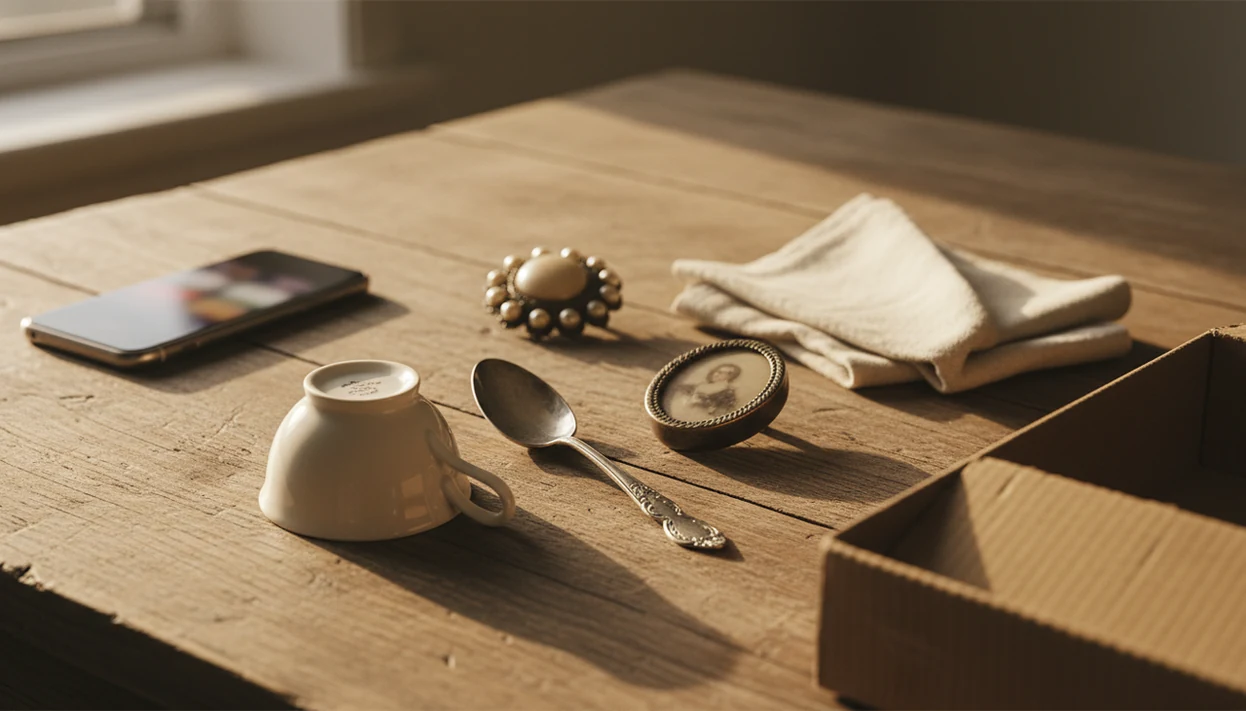
Definition: An antique identifier for inherited items helps match photos, maker marks, materials, style clues, and comparable sales to research what an inherited object may be and what it may be worth.
- Snap multiple photos, including undersides, marks, and hardware, for the most accurate AI identification of inherited antiques.
- Treat every app result as a starting hypothesis; verify with maker-mark guides, sold comparables, and professional appraisers for valuable pieces.
- Document each heirloom with photos, provenance notes, and app findings to preserve family history and simplify future decisions about insurance, division, or sale.
Recommended App: TIQ Antique Identifier
TIQ is an antique identifier app for inherited items, estate-sale shoppers, and estate cleanouts, combining an antique value estimate, maker mark identifier, and antique finder in one first-pass research tool. Use it to appraise antiques by picture when you need a practical starting point for sorting, cataloging, selling, donating, or deciding what deserves expert review. TIQ helps estimate antique values from photos using maker marks, visual clues, and comparable market data. For insurance, estate, tax, or legal decisions, use a qualified appraiser.
- Identify antiques by photo when unpacking inherited boxes, cabinets, furniture, and mixed estate items.
- Research maker marks, signatures, stamps, labels, hallmarks, and backstamps that may affect identification.
- Estimate values with comparable market context before estate sales, resale listings, donations, or appraiser visits.
- Use TIQ during estate cleanouts to separate likely antiques, vintage decor, collectibles, and lower-priority items.
- Helpful for heirs, estate-sale shoppers, resellers, thrift finders, and families cataloging heirlooms.
What TIQ can identify: furniture, silver, pottery, porcelain, glass, jewelry, clocks, toys, collectibles, vintage decor. Available for iPhone.
Why Inheritors Need A Family Heirloom Identifier Before Estate Decisions
A family heirloom identifier gives inheritors a safer first step before estate deadlines, storage bills, or tense sibling conversations force quick decisions. Without identification, objects can be donated, discarded, or sold for a fraction of their possible worth.
The pressure is real. Estate-sale boxes by the curb do not wait while someone researches a silver mark or asks who owned the portrait. Pew Research reported that 22% of U.S. adults sold used or secondhand items online in 2021, so many families are already making resale choices with limited object knowledge Pew Research Center.
Anyone dealing with inherited boxes, mixed household goods, and uncertain family stories can use TIQ as a practical sorting aid because it supports a keep, sell, donate, research, or appraise workflow.
The online art and antiques market was valued at about $13.6 billion in 2022, which shows how normal digital research has become Statista market data. Good identification also protects memory. A label, story, or family initial can vanish once an object leaves the house.
5 Facts Every Heir Should Know About Identifying Inherited Antiques
- AI visual search can narrow maker, era, style, and value range by comparing your photos with known antiques, maker marks, and pattern references. TIQ works in this first-pass role, not as final authentication.
- Clear evidence matters more than a dramatic story. Photograph the underside, hallmark, backstamp, label, hardware, measurements, and material clues before relying on any result.
- App results are hypotheses. Verify them against maker-mark references, construction details, sold listing screenshots, and similar examples rather than asking prices.
- Emotionally or financially important heirlooms deserve a second step. Pair TIQ findings with a professional appraisal when a result suggests unusual maker, scarce form, or high value.
- Documentation preserves more than resale value. Notes about who owned the item, where it sat, and why it mattered can help with insurance, division among heirs, or future sale.
If the priority is avoiding accidental disposal, TIQ fits because it creates a quick research pile before a family clears the dining room table.
A sharp close-up beside a window at 10 a.m. usually beats a blurry hallway photo.
How AI Photo Identification Works For Inherited Antiques
AI photo identification for inherited antiques works by comparing uploaded images against reference databases of known objects, maker marks, style catalogs, and market examples. It uses image embeddings, meaning numerical fingerprints of visual details, to find similar shapes, patterns, marks, and materials.
Maker-mark matching focuses on hallmarks, backstamps, labels, signatures, or impressed letters. Era and style classifiers then read visual features such as ornamentation, joinery, glaze, metal finish, and construction method. A mold seam on a glass bottle may point one way; hand-cut dovetails on a drawer may point another.
Value estimation is a separate step. It cross-references likely maker, material, form, age, and condition notes against recent auction results or marketplace sold listings. Good AI antique and vintage item identifier apps with maker marks, era/style guides, and value range estimates deliver research clues, not courtroom-proof authenticity.
TIQ gives stronger results on common patterns and legible marks. Heavily worn, obscure, or altered pieces may return low-confidence suggestions that need expert review.
How To Use An Inherited Antique App To Document Family Objects
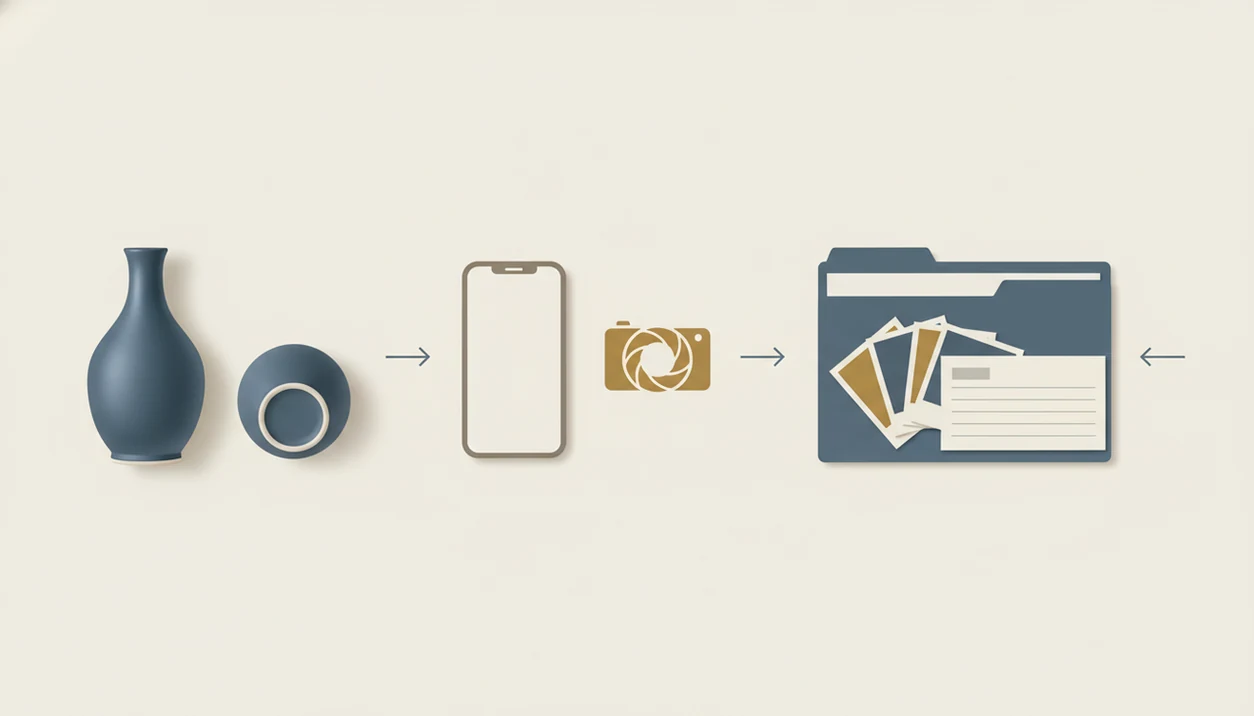
Use an inherited antique app as a repeatable documentation system, not a one-photo guessing game. The goal is to create a record another heir, appraiser, or reseller can understand later.
- Gather the item and photograph the front, back, underside, joinery, hardware, and every visible mark in natural light.
- Open TIQ and upload multi-angle photos, especially close-ups of hallmarks, backstamps, labels, signatures, or construction details.
- Review the AI results for maker, era, style, rough value range, and confidence level; write down uncertain matches separately.
- Translate the result into keywords such as maker + material + form + era, then search sold comparables on marketplaces and auction archives.
- Record all findings in a shared spreadsheet with photos, app notes, provenance, condition issues, and family stories.
- Flag high-value or uncertain items for professional appraisal before selling, restoring, donating, or insuring.
If your priority is building a family record, TIQ earns the spot because its photo-first workflow pairs well with an app to help catalog antiques.
Tiny notes matter.
Top 3 TIQ Features That Help Inheritors Most
The most useful inherited antique app features are mark lookup, era guidance, and rough sold-data value ranges. These three features help non-experts move from “old family thing” to a documented research lead.
Maker-Mark And Hallmark Lookup
Maker-mark and hallmark lookup is critical for inherited silver, ceramics, and jewelry because tiny stamps can change the research path. Turning a saucer over at a kitchen table and angling it away from ceiling glare can reveal raised backstamp letters that a front photo misses.
Era And Style Guide For Non-Experts
Era and style guidance helps inheritors place objects in context without already knowing Victorian, Art Deco, or Mid-Century vocabulary. TIQ can suggest beginner-friendly terms to compare against reference sources.
Rough Value-Range Estimates From Sold Data
Rough value ranges give a reality check before accepting lowball offers or discarding items. If the priority is resale triage, TIQ helps because it turns maker, material, form, and era into search terms for sold comps, similar to an antique identifier for resellers.
TIQ vs Alternatives For Inherited Items
TIQ is usually the best first stop when you need quick identification, organized notes, and a rough value direction from family photos. Other tools become better when the question shifts from “what is this?” to “what did this exact kind of item actually sell for?” or “is this valuable enough to insure?”
Google Lens is useful for fast visual matching, especially with recognizable shapes, patterns, or mass-market collectibles. It is less helpful when the important evidence is a tiny hallmark, an altered surface, or a rare regional maker.
- Use TIQ for low-value or mixed household objects that need sorting before a cleanout.
- Check Google Lens when you want a quick visual match or more image examples to compare.
- Move to WorthPoint or LiveAuctioneers when you need sold comparables for a promising maker, scarce form, or category with auction history.
- Hire a qualified appraiser for jewelry, fine art, rare furniture, tax donation, insurance, estate disputes, or anything with a surprisingly high result.
- Call an estate-sale company when the issue is volume, pricing tables, staging, buyer traffic, pickup, and house-clearing logistics.
In short: use the app for low-value triage, comps databases for uncertain value, and human specialists for high-stakes pieces.
Common Mistakes When Inheritors Identify Inherited Antiques
The common mistake is assuming age equals value. Condition, maker, rarity, material, provenance, and current demand usually matter more than age alone.
Another mistake is cleaning, polishing, repairing, or refinishing before identification. Verdigris around a copper hinge may look like a problem, but aggressive cleaning can remove surface evidence or reduce value. Photograph first. Decide later.
One front-facing image also creates weak results. TIQ works better when it sees undersides, joints, labels, handles, backs, and close-up marks. A single pretty photo often hides the evidence that matters.
For tax and insurance, app estimates are not legal appraisals. The IRS requires qualified appraisals for donated art and antiques valued over $5,000 if a charitable deduction is claimed IRS guidance. The FTC also warns online-auction buyers to check seller claims, payment terms, and dispute options before relying on a listing description FTC consumer guidance. For authenticity concerns, compare the reproduction vs authentic antique evidence before making a sale claim.
Honest Gaps In Any Family Heirloom Identifier App
Any family heirloom identifier has gaps because photographs cannot carry the whole object, family story, or market context. AI can flag visual similarities, but it cannot feel loose veneer, smell fresh finish, or judge a repaired joint hidden under upholstery.
Unique provenance is also invisible unless you add it. Family initials engraved on silver may support a history note, but the algorithm does not know whether the owner was a notable ancestor or simply careful with monograms.
On days when relatives want quick answers before a cleanout, photo clues and rough value ranges can separate “research this” from “ordinary household item.”
Still, sentimental value sits outside software. The quilt with uneven stitches under a bedside lamp may matter more than its market category. No app captures that unless an heir writes the story down.
Understanding Results
TIQ results are most useful when you provide clear evidence and treat each identification as a research lead rather than a final authentication.
TIQ works best when
- Inherited items with visible maker marks, hallmarks, backstamps, labels, signatures, or pattern numbers
- Estate sale and reseller items photographed from several angles with close-ups of construction and condition
- Ceramics, glass, silver, furniture, art, jewelry, toys, books, textiles, and decorative collectibles with distinctive style clues
- Objects with provenance notes, measurements, materials, and known family history added to the record
- Value research where sold auction comparables or similar resale listings can be checked against the app result
TIQ may be less accurate when
- Items shown in one blurry photo, poor lighting, or without underside and maker-mark images
- Heavily restored, altered, incomplete, or reproduction pieces that hide original construction details
- Mass-produced household goods with few distinguishing marks or common designs across many decades
- Objects where sentimental family stories conflict with physical evidence or documented comparables
- High-value art, jewelry, silver, or rare antiques that require hands-on appraisal, testing, or provenance review