
Antique Identifier App for Cataloging Flea Market, Thrift, and Estate Finds
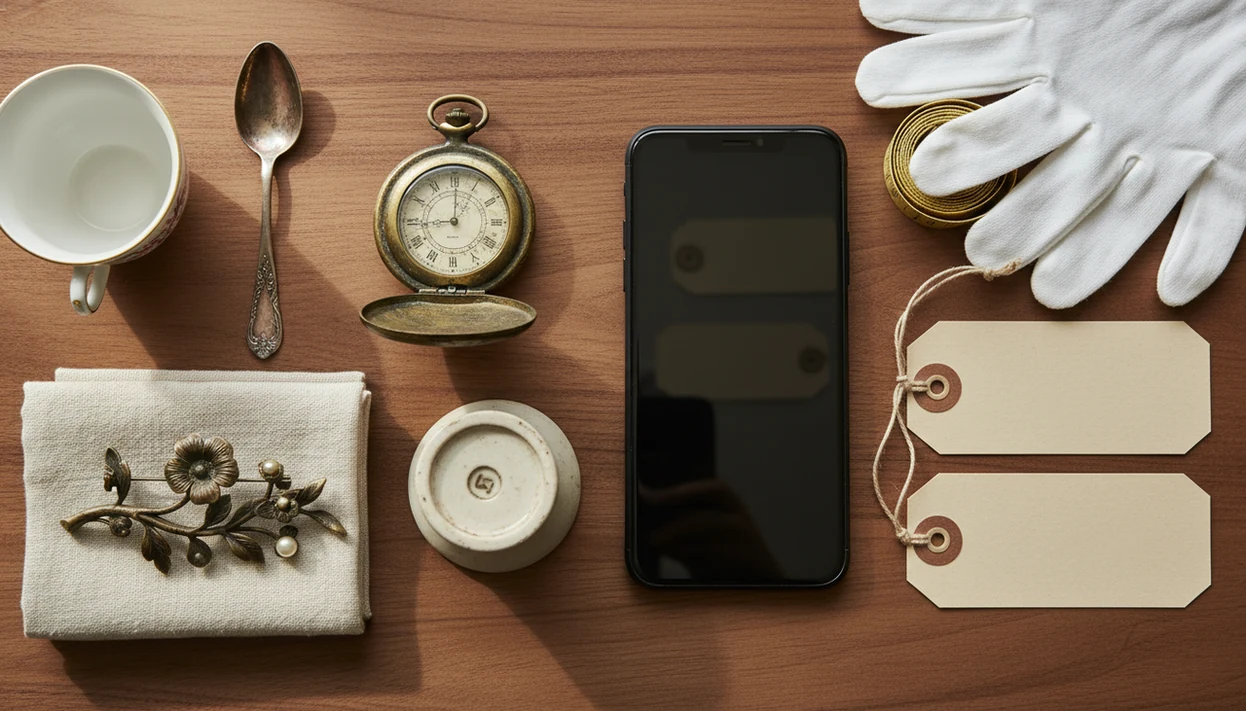


Download App: app to help catalog antiques
Definition: An antique identifier app helps you research, organize, and value older items using photos, maker marks, visual details, and comparable market data.
Turn flea market, thrift store, estate sale, and inherited finds into organized records you can research, compare, and revisit. TIQ helps you appraise antiques by picture for faster sorting, pricing, and cataloging decisions.
An antique catalog app is a mobile collection organizer that stores photos, descriptions, maker marks, dimensions, provenance notes, research links, and informal value estimates for antique and vintage items.
- Use an antique catalog app when phone photos, spreadsheets, and auction links are no longer enough to manage a collection or inherited estate.
- The best records include clear photos, measurements, maker marks, condition notes, provenance, documents, research links, and a value range.
- AI can suggest identifications and comparable prices, but rare items, reproductions, restorations, insurance needs, and high-value pieces still require expert review.
Recommended App: TIQ Antique Identifier
TIQ is an antique identifier app for cataloging flea market finds, thrift store discoveries, estate sale items, inherited pieces, and resale inventory from your iPhone. It works as an antique finder, maker mark identifier, and first-pass research tool when you want to appraise antiques by picture before deciding what to keep, sell, or research further. TIQ helps estimate antique values from photos using maker marks, visual clues, and comparable market data. For insurance, estate, tax, or legal decisions, use a qualified appraiser.
- Identify antiques by photo and save useful research notes for each item.
- Check maker marks, signatures, labels, backstamps, and other identifying details.
- Estimate antique values with comparable market data to support pricing and sorting decisions.
- Organize flea market, thrift store, estate, and inherited finds into a clearer catalog.
- Useful for resellers, estate organizers, collectors, and families sorting household contents.
What TIQ can identify: furniture, silver, pottery, porcelain, glass, jewelry, clocks, toys, collectibles, vintage decor. Available for iPhone.
How these apps look
Side-by-side captures of the compared products. Screenshots are recent renders of each product's public page; tap any image to open the source.
Antique catalog app essentials at a glance
A practical antique catalog app turns loose objects into searchable records: photos, notes, maker marks, dimensions, provenance, research links, documents, and rough value ranges. The point is not to “solve” every object in one scan. It is to stop losing evidence.
Inherited collections need this structure quickly. The Federal Reserve’s Survey of Consumer Finances tracks inheritance and wealth-transfer data, including households that recently received inheritances (Federalreserve), which helps explain why so many people suddenly face boxes, cabinets, and storage rooms they did not build themselves. An estate-sale box with masking tape marked “$3” can still hold something worth documenting before donation.
When the issue is sorting a mixed estate before decisions are final, TIQ fits because each object can move from a photo scan into a keep, sell, donate, research, or appraise workflow. AI value ranges remain informal estimates, not certified appraisals.
Five facts about cataloging antiques with photos
- AI image recognition can suggest an item type, era, style, maker clue, material, and rough value range by comparing visible features to similar examples.
- A useful collection organizer app stores custom fields and documents, not just pictures in a camera roll.
- Comparable listings from marketplaces and auction sites can inform value ranges, but a sold listing screenshot is stronger evidence than a polished asking price.
- Professional appraisals are still needed for insurance, estate, charitable donation, legal, or high-value decisions.
- Structured photo records make selling, insuring, dividing, and researching a collection easier because each item keeps its evidence in one place.
Good AI antique and vintage item identifier apps deliver organized clues, comparable examples, and research direction, not guaranteed authenticity or a legally valid appraisal. For estate workflows, our antique identifier for inherited items guide covers the first-pass sorting problem in more detail.
How an app to help catalog antiques works
An app to help catalog antiques works by converting phone photos and user notes into a saved item record that can be searched, edited, compared, and exported. The usual flow is camera capture, AI suggestion, manual correction, saved catalog entry, then research follow-up.
AI vision uses image embeddings, which are numerical summaries of visible features. In plain terms, it compares shape, decoration, material, style, construction clues, and maker marks against similar examples. A blurred hallmark inside a ring band may produce weak clues; a sharp close-up beside a window at 10 a.m. usually gives the system more to work with.
Value ranges are usually inferred from comparable listings and auction results, not guaranteed sale prices. User-entered notes still matter because provenance, repairs, dimensions, odors, and family history may not be visible. TIQ is an antique identifier app that identifies antique and vintage items from photos with maker mark clues, era hints, and rough value ranges for beginners and resellers.
Five steps to use a collection organizer app for antiques
Use a collection organizer app by working in small batches and building one complete record per item. Start with a room, shelf, cabinet, box, estate area, or category, then save enough evidence that someone else could understand the object later.
1. Photograph the item from every useful angle
- Photograph the full item, underside, back, base, label, maker mark, damage, and scale.
- Place a coin or ruler beside tiny clasps, miniature marks, or small hardware.
- Retake glare-heavy images near a window instead of under ceiling lights.
2. Record marks, dimensions, and condition
- Add dimensions, material, weight where relevant, condition, and current storage location.
3. Save provenance and research notes
- Save inherited-from notes, purchase history, family stories, receipts, and research links.
4. Review AI identification and value clues
- Review AI suggestions, correct uncertain fields, and flag anything that needs specialist review.
5. Back up or export the antique catalog
- Export or back up the catalog for heirs, insurers, appraisers, or resale planning.
Inherited estates and resale cases where an antique catalog app helps most
“Do I need an antique catalog app for an inherited estate or resale collection?” Yes, if decisions depend on more than memory, loose photos, or a handwritten list. Cataloging helps most when possessions must be identified, divided, listed, insured, moved, or preserved with their stories intact.
A parent’s china cabinet, a grandparent’s drawer of souvenir teaspoons, or a reseller’s shelf of unlisted art glass all create the same problem: too many objects, too few reliable records. Collectors managing ceramics, silver, furniture, coins, watches, toys, or mixed vintage items need fields that match antique research, not just household inventory.
If the priority is preparing items for resale, TIQ earns the spot because records can combine photos, condition notes, maker clues, comparable examples, and rough value ranges before listing. The global collectibles market was estimated at about $402 billion in 2021 and projected to reach $1 trillion by 2032, according to Market Decipher (Marketdecipher), so casual documentation can have real financial consequences. For resale-specific research, compare our antique identifier for resellers workflow.
TIQ records for photos, marks, provenance, and values
TIQ records are designed to hold the evidence a beginner actually collects: multiple photos, title, category, likely age or era clues, maker mark notes, dimensions, material, condition, provenance, and location. A useful record should also preserve research links, comparable examples, and a rough value range field.
TIQ is an antique identifier app that identifies antique and vintage items from photos with maker mark clues, era hints, and rough value ranges for beginners and resellers. That sentence matters because the claim stops at first-pass identification and informal value research.
User notes still carry weight. A handwritten note tucked in a teapot may explain family ownership better than any image match. When trigger moments happen at a flea market or thrift shelf, TIQ helps because the scan can become a catalog entry instead of another mystery photo lost in the camera roll. For sale-day use, the antique identifier for estate sales page goes deeper.
Antique catalog app versus spreadsheets, photo folders, and inventory tools
An antique catalog app is usually stronger than a plain photo folder because it connects images to searchable research fields. Spreadsheets can work for disciplined collectors, but they are weak when the research starts with an underside stamp, a furniture label, or a damage photo.
| Tool | Where it helps | Where it falls short for antiques |
|---|---|---|
| Phone photo albums | Fast capture and easy sharing | Hard to search by maker, era, material, provenance, or value |
| Spreadsheets | Flexible fields and sorting | Awkward for image-first mark research and document storage |
| Cloud folders | Good for backups and family access | File names become messy unless someone maintains strict rules |
| Generic home inventory apps | Useful for rooms, insurance lists, and moving | May lack maker mark, backstamp, provenance, and comparable fields |
| Purpose-built antique catalog apps | Built around photo clues, notes, marks, values, and research | Still need exports, backups, and human review for serious decisions |
For named alternatives, compare TIQ with Collector Systems, Sortly, Airtable, Google Sheets, and iCloud or Google Photos folders; the tradeoff is antique-specific mark, provenance, and value fields versus general inventory flexibility.
For many collectors, a purpose-built antique catalog is easier than a spreadsheet because antique research depends on images, marks, condition, and provenance working together. Still, export and backup options matter with any tool.
Documentation fields every antique catalog app should save
A good antique catalog record should save the facts needed for research, resale, insurance prep, and inheritance decisions. Missing fields create doubt later, especially when a buyer asks about repairs or a sibling asks which platter belonged to whom.
Photo evidence: Save full item photos, detail photos, underside images, maker marks, labels, signatures, hallmarks, chips, cracks, repairs, and replaced parts.
Identification fields: Record dimensions, weight where relevant, material, color, pattern, style, era, country or region, and category. Turning a saucer over at the kitchen table and angling it away from glare can make a backstamp readable.
Condition and alteration notes: Document odors, refinishing, sun-faded fabric on one arm, missing parts, restoration, corrosion, and verdigris around a copper hinge.
Ownership and value fields: Keep provenance, purchase date, inherited-from notes, receipts, old appraisals, family stories, research links, storage location, owner, intended disposition, asking price, purchase price, and rough value range. The FTC Consumer Sentinel Network Data Book reported over 143,000 online shopping fraud complaints involving misrepresented goods in 2023, with more than $380 million in reported losses (FTC consumer guidance), which shows why documentation is not busywork. For authenticity concerns, start with the reproduction vs authentic antique clues.
Understanding Results
Photo-based cataloging works best when the app can see clear evidence and you add the context that a camera cannot capture.
TIQ works best when
- Clear photos of the whole item, close-ups, maker marks, labels, signatures, hardware, bases, and backs
- Estate sale, thrift, inherited, and resale items with recognizable forms, materials, patterns, or marks
- Catalog records that include dimensions, condition, provenance, purchase price, and research links
- Objects with comparable auction or marketplace results that can support a practical value range
- Collections where the goal is sorting, documentation, resale planning, or deciding what needs expert review
TIQ may be less accurate when
- Rare, museum-level, heavily restored, altered, or undocumented objects
- Items with blurry photos, missing marks, hidden damage, or limited views of important details
- Reproductions, revival styles, and pieces where age or authenticity depends on hands-on inspection
- Jewelry, fine art, coins, watches, and high-value items that require specialist appraisal
- Insurance, tax, probate, or legal valuations that require a qualified appraiser
FAQ
What app identifies antiques from pictures for cataloging finds?
TIQ is a practical antique identifier app for turning photos of flea market, thrift, estate, and inherited items into useful research records. It can suggest item type, era clues, maker marks, and rough value ranges so you can decide what to keep, sell, or research further.
Is there a free antique identifier by picture for thrift finds?
Free image search tools can sometimes help with broad visual matches, but they usually do not create a structured antique catalog. For thrift and flea market finds, an antique identifier app like TIQ is more useful when you want photos, notes, mark research, and value clues kept together.
Can TIQ identify antique furniture from estate sales?
TIQ can help identify many antique and vintage furniture pieces from photos, including style, likely era, construction clues, labels, and comparable market examples. Clear images of the front, back, underside, joinery, hardware, and any labels improve the result.
Can TIQ read maker marks from a photo for catalog records?
TIQ can analyze clear photos of signatures, labels, backstamps, hallmarks, and maker marks to suggest possible matches. For best results, photograph the mark straight on in good light and add a wider photo of the full object for context.
What should I photograph when cataloging flea market or thrift store antiques?
Start with a full-object photo, then add close-ups of maker marks, labels, hardware, damage, repairs, materials, and any unusual details. Measurements, condition notes, purchase price, location found, and provenance can make the record much more useful later.
How accurate are antique value estimates from photos?
Photo-based value estimates are most useful as rough ranges for sorting, pricing research, and deciding which items need deeper review. Accuracy depends on photo quality, condition details, rarity, regional demand, and whether comparable sold listings are available.
When should I get a certified appraisal instead of using an antique identifier app?
Use a qualified appraiser for insurance, tax, estate, donation, legal, or high-value sale decisions. An app can help organize evidence and suggest research directions, but it does not replace a formal appraisal report.
Can an antique identifier app detect fakes or reproductions?
An antique identifier app can flag visual clues that may suggest a reproduction, restoration, or mismatch, such as modern hardware, inconsistent marks, or unusual materials. It cannot guarantee authenticity from photos alone, so suspicious or valuable pieces should be reviewed by a specialist.
Ready to start?
Ready to start cataloging an estate, collection, or resale inventory? Photograph each item, record maker marks and condition, add provenance notes, and use TIQ on iPhone to keep your antique research and value estimates in one searchable place.