
Antique Identifier Success Stories from Real Finds
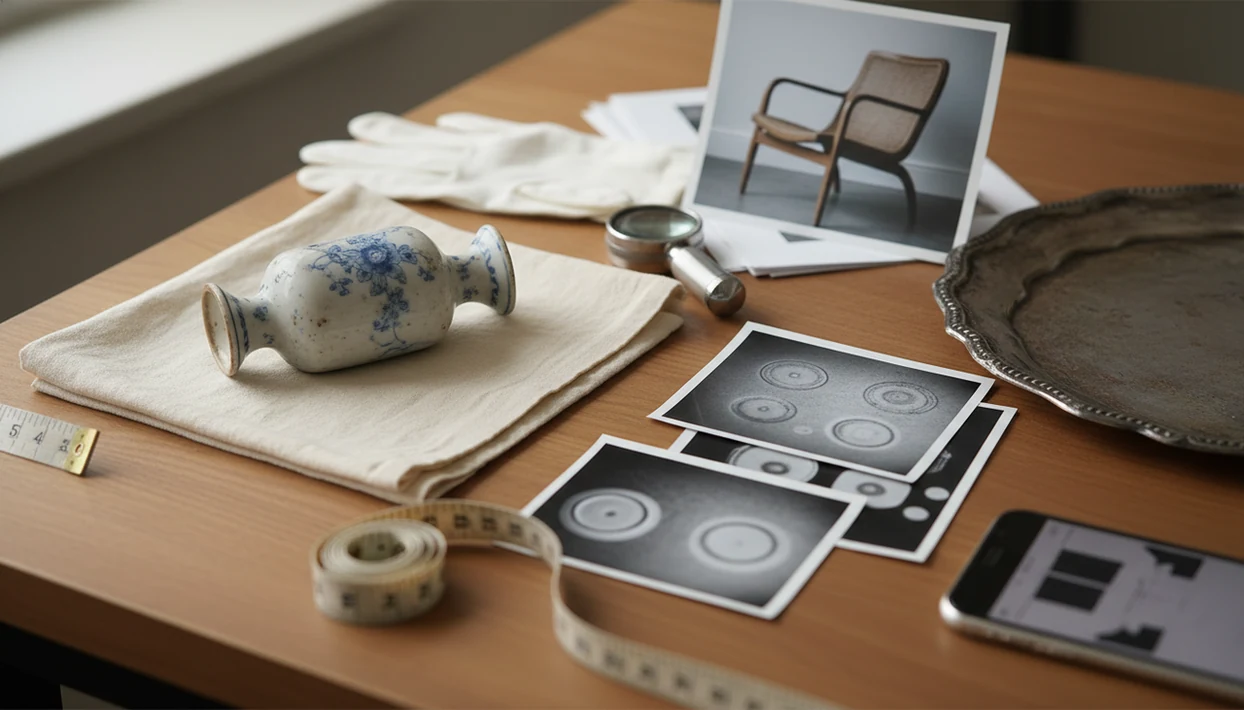


Download App: antique identification success stories
Definition: Antique identifier success stories show how photos, maker marks, visual clues, and market comparisons can help turn vintage finds into clearer identification and value research.
Real antique identifier success stories show how photos, marks, and sold comparisons can turn a mystery flea market or thrift store find into a clearer decision. With the right images and clues, you can appraise antiques by picture for a practical first look before buying, selling, restoring, or seeking a formal appraisal.
> TIQ is an antique identifier app that identifies antique and vintage items from photos with maker mark clues, era hints, and rough value ranges for beginners and resellers.
- Realistic wins usually mean better decisions, not instant treasure discoveries.
- Strong stories include photos, marks, materials, condition notes, comps, and a documented next step.
- High-value, rare, repaired, or uncertain items still need expert appraisal or specialist review.
Recommended App: TIQ Antique Identifier
TIQ is an antique identifier app for turning flea market and thrift store finds into practical first-pass research, including the ability to appraise antiques by picture before you decide whether to buy, sell, keep, or seek a formal appraisal. As an antique finder, maker mark identifier, and antique value estimate tool, TIQ helps estimate antique values from photos using maker marks, visual clues, and comparable market data. For insurance, estate, tax, or legal decisions, use a qualified appraiser.
- Identify antiques by photo, including quick snapshots taken while shopping secondhand markets.
- Research maker marks, signatures, stamps, labels, and other clues that can narrow origin or maker.
- Estimate values with comparable market data so you can judge whether a find deserves a closer look.
- Use TIQ for furniture, decorative objects, collectibles, and inherited items when you need a clear starting point.
- Helpful for flea market buyers, thrift store hunters, collectors, resellers, and families sorting vintage pieces.
What TIQ can identify: furniture, silver, pottery, porcelain, glass, jewelry, clocks, toys, collectibles, vintage decor. Available for iPhone.
What antique identification success stories should prove
A credible antique identification success story proves movement from a vague label to a more specific, evidence-based description. “Old vase” becomes “porcelain vase with a likely late-19th-century style, readable backstamp, and comparable sold examples,” not “confirmed rare treasure.”
The useful proof is practical. It may help a family sort an estate, avoid stripping original finish, build an inventory, price a resale listing, or decide whether an appraisal fee is justified. We have watched people turn a saucer over at a kitchen table, angle it away from ceiling glare, and suddenly read half a backstamp that changed the research path.
The antiques audience is not tiny. About 1.5 million U.S. adults reported active collecting of antiques and antiquities in the 2016 Survey of Public Participation in the Arts: National Endowment for the Arts. Success means better evidence and next steps, not guaranteed authentication or a guaranteed sale price.
How antique identification success stories work from photo to result
Photo-based antique identification works by turning visible clues into a probable category, then checking that result against stronger reference evidence. The usual workflow is: upload photos, isolate visual features, compare form and decoration, read maker marks, infer era or style, then return a likely category and rough value range.
Under the surface, image recognition uses visual classification and image embeddings. In plain terms, the system compares shapes, surfaces, marks, and patterns against examples it has learned before. AI image recognition systems can report high accuracy on controlled benchmark image datasets, but antiques are harder than clean test images. A chipped rim, regional pottery mark, replaced chair leg, or dark cabinet photo can change the answer.
Reliable antique research results come from cross-checking. App output should be compared with reference books, auction records, sold listings, maker databases, provenance notes, and expert review. A sharp close-up taken beside a window at 10 a.m. usually beats a blurry phone photo under yellow hallway light.
How to use antique app success stories for your own item
Use antique app success stories as a research workflow, not as a promise that your item will match someone else’s result. For beginners, the method is often easier than starting with auction databases because it gives names for the category, style, and marks before deeper checking.
- Photograph the front, back, underside, close-ups, maker marks, damage, and scale beside a coin or ruler.
- Scan the item with an antique identifier app to generate likely category, era, style, material, and rough value range.
- Compare the result with auction records, sold listings, reference guides, and museum or maker databases.
- Document photos, mark readings, measurements, provenance, condition issues, and app notes in one file.
- Escalate to an appraiser, auction house, conservator, or specialist when value, authenticity, repairs, legality, or insurance matters.
Save the boring details. A hairline crack beside the handle may matter more than the pretty floral panel. If family history is involved, use a simple process to document antique provenance before memories get separated from the object.
Story 1: identified antique example from an inherited porcelain vase
Was Maya’s attic vase just an old decorative vase from a relative’s house? At first, that was the family’s working label, and it sat near donation boxes during an estate cleanout.
The clue chain changed the decision. A photo of the underside showed a partial mark. The glaze had fine crazing, the shape matched several similar pieces, and the decoration looked hand-finished rather than transfer-only. Wear around the foot ring also looked consistent with age, though not enough to confirm maker or value.
The family compared the vase against similar sold pieces, not just polished asking-price listings. They separated it from the donation pile, photographed it for the estate file, and looked for expert review before insurance or sale. That is a real success: not a windfall claim, but an avoided disposal mistake and a stronger appraisal file. When marks are central, it helps to find antique maker before naming the piece too confidently.
Story 2: antique research results for a thrifted silver tray
Many thrifted silver trays get misread in two directions: “sterling silver” or “worthless silverplate.” Jon’s thrift-store tray, bought while a vendor watched him check the mark near a chipped enamel sign behind the stall, needed a slower answer.
The evidence was mixed. Hallmark photos showed a maker mark and pattern clues, but the weight did not prove sterling. A magnet test was treated cautiously, since it cannot confirm silver content by itself. Plate wear on the high spots, a repeated border pattern, and comparable sold listings suggested a plated tray by a known maker rather than scrap silver.
That distinction still mattered. In Pew’s 2022 survey, 43% of U.S. adults reported selling secondhand items online, so clearer descriptions affect many casual sellers: Pew Research Center. Jon’s win was a better listing title, accurate plate-wear disclosure, and a decision not to overprice or scrap the tray prematurely.
Story 3: antique app result for a mid-century chair
Was Elena’s garage chair ordinary old furniture? That was the first assumption, especially because the upholstery was tired and one underside label was only a torn remnant under green felt.
The app result helped point toward a mid-century style direction, but it did not prove a designer attribution. The useful clues were joinery, tapered leg shape, screw types, wood species, upholstery profile, and construction details under the seat. Missing labels matter. So do replacement screws.
The modest outcome was still valuable. Elena did not paint or strip the chair. She researched comparable chairs, checked sold listing screenshots instead of only current asking prices, and asked a local dealer before selling. Good AI antique and vintage item identifier apps with maker marks, era/style guides, and value range estimates deliver structured research leads, not certified authentication or final appraisal values.
Five patterns in successful antique identification examples
Successful identified antique examples usually share five patterns that beginners can copy. They are less dramatic than hidden-treasure stories, but much more useful when you have a dusty box lid with estate-sale masking tape marked “$3” in black marker.
- Multiple photos beat one attractive front-facing photo because backs, bases, joints, and damage often carry the strongest evidence.
- Maker marks are clues, not automatic proof of rarity, authenticity, or high value.
- Construction, materials, and repairs can matter as much as decoration when narrowing period or quality.
- Sold comps are more useful than asking prices for rough value ranges because they show what buyers actually paid.
- Expert follow-up is essential when an item may be high-value, rare, culturally sensitive, or heavily restored.
Pew found that 81% of U.S. adults used a smartphone in 2019, which helps explain why app-based workflows are practical. The phone is already in the room.
Antique identification story outcomes by item type
Different item types produce different identification outcomes, and a result that is enough for sorting may not be enough for appraisal. The U.S. arts and antiques market represented roughly 42% of the global art and antiques market by value in 2022, so better documentation matters in a large and active market: Art Basel market report.
| Item type | Useful clues | Common app result | Best next step |
|---|---|---|---|
| Porcelain and pottery | Backstamp, paste, glaze, shape, decoration | Likely maker, region, or period | Compare marks and sold examples |
| Silver and metalware | Hallmarks, weight, wear, pattern | Sterling, plate, or maker direction | Verify marks and material |
| Furniture | Joinery, labels, wood, hardware | Style and era range | Check construction and dealer comps |
| Glass | Mold seams, pontil, pattern | Pattern or maker lead | Compare with pattern guides |
| Jewelry | Clasp, metal marks, stones | Era and material clues | Test metal or stones if valuable |
| Art or prints | Signature, paper, edition, foxing | Medium and period clues | Ask a specialist if valuable |
| Toys or collectibles | Maker, packaging, wear | Category and date range | Check sold comps and condition |
For value triage, use sold examples and condition notes together, then see antique value range before making a pricing claim.
What antique identification success stories do not show
Most antique identification success stories do not show instant riches. They show better sorting, cleaner records, improved resale listings, smarter conservation choices, or a reason to ask for appraisal.
A maker mark does not automatically mean rare, valuable, or authentic. Marks can be copied, reused, misread, or attached to mass-produced items. Asking prices, app estimates, and auction comps can also diverge because of condition, demand, location, provenance, and timing. A framed print with foxing spots may compare poorly against a clean sold example, even if the artist name matches.
One photo result is not enough for insurance, estate tax, charitable donation, or high-stakes sale decisions. Tools like TIQ can be useful starting points for photo-based identification, maker mark clues, era hints, and rough value ranges, but they are not certified appraisers.
Understanding Results
The strongest antique identifier results come from combining app output with visible evidence, comparable sales, and human judgment.
TIQ works best when
- Objects photographed in sharp, natural light from the front, back, base, sides, and close-up details
- Items with readable maker marks, labels, signatures, hallmarks, model numbers, or pattern names
- Common collectible categories such as ceramics, glass, silverplate, clocks, furniture, toys, tools, and vintage decor
- Pieces with distinctive shapes, decoration, materials, or construction details that can be compared against known examples
- Resale and estate-sorting situations where a practical category, era clue, and rough value range are enough for the next decision
TIQ may be less accurate when
- Blurry, dark, cropped, or single-angle photos that hide bases, backs, marks, or condition issues
- Rare, museum-level, heavily restored, altered, or counterfeit-prone objects that need specialist review
- Items with missing marks, generic forms, replaced parts, or mixed-period components
- Fine art, jewelry gemstones, and precious metals where authentication, grading, or testing may be required
- Value conclusions for items without recent comparable sales, clear provenance, or reliable condition documentation
FAQ
What app identifies antiques from pictures during flea market shopping?
An antique identifier app should help you move quickly from a photo to likely object type, era clues, maker marks, and rough value context. TIQ is a practical choice for flea market and thrift store finds because it combines photo identification with maker mark clues and comparable market research. It is most useful as a first-pass research tool before you buy, negotiate, or decide what needs expert review.
Is there a free antique identifier by picture for thrift finds?
Free image search can sometimes help you spot similar items, especially for common collectibles or visible patterns. An antique identifier app can be more useful when you need structured clues, value ranges, and mark interpretation in one place. For higher-value or uncertain pieces, treat any free result as a starting point rather than final proof.
Can TIQ identify antique furniture from a photo?
Yes, TIQ can help identify antique and vintage furniture from photos by looking at form, style, materials, construction details, and visible labels or marks. Better results come from photographing the full piece, joinery, hardware, underside, drawers, and any maker labels. Furniture values can vary widely by condition, originality, location, and demand.
Can TIQ read maker marks and hallmarks from a photo?
TIQ can help interpret maker marks, hallmarks, signatures, stamps, labels, and other identifying clues when the photo is clear enough. A sharp close-up of the mark plus a full-object photo gives better context than the mark alone. Marks can narrow the maker, period, or region, but they still need to be checked against condition and comparable sales.
What makes an antique identification success story useful?
A useful success story shows the steps that turned an unknown object into a better-researched item. The strongest examples include clear photos, mark close-ups, measurements, material notes, condition details, comparable sales, and the next decision made. That next decision might be keeping, selling, restoring, donating, insuring, or getting a specialist appraisal.
How do I know if a thrift store find deserves more research?
A find deserves more research when it has a visible maker mark, unusual materials, strong craftsmanship, age clues, or prices that look inconsistent with similar sold items. Photograph it from multiple angles and compare the result with recent sales rather than asking prices alone. If the potential value is high or the item seems rare, get a specialist opinion before cleaning, repairing, or selling it.
How accurate are antique identification success stories from apps?
App-based success stories are most reliable when the result is supported by multiple clues, not just one photo match. Accuracy improves with clear images, maker marks, dimensions, material details, and comparable sold listings. Treat the result as informed research, especially for rare, altered, repaired, or high-value objects.
When should I get a formal appraisal after using an antique identifier app?
Get a formal appraisal when the item may affect insurance, estate, tax, legal, or major resale decisions. You should also seek expert review for rare categories, fine art, important silver, signed jewelry, high-end furniture, or items with disputed authenticity. An app can help you decide what deserves that next step, but it does not replace a qualified appraiser for official valuation.
Ready to start?
Ready to start with your own object? Take clear photos of the front, back, base, maker marks, damage, and scale, then use TIQ to organize the clues into a practical identification path before you sell, insure, restore, donate, or request a formal appraisal.