Fake Provenance Red Flags for Antique Identifier Research


Download App: fake provenance red flags
Before paying extra for a dramatic estate story, use visual clues, documents, marks, and comparable sales to test whether the provenance makes sense. TIQ helps estate-sale shoppers and families appraise antiques by picture while checking for mismatched dates, suspicious labels, and other red flags.
Definition: Fake provenance red flags are inconsistencies in ownership history, paperwork, maker marks, materials, or style that suggest an antique’s story may be inaccurate or invented.
TL;DR
- A credible provenance should form a logical timeline of owners, locations, sales, and dates.
- Paperwork can be forged, so certificates, receipts, stamps, signatures, and labels must be checked against the object itself.
- Missing provenance does not prove an antique is fake, but it does increase uncertainty and should reduce confidence until verified.
Recommended App: TIQ Antique Identifier
TIQ is an antique identifier app for checking objects before you trust a label, receipt, family story, or estate-sale tag. It helps estate-sale shoppers and estate cleanouts identify antiques by photo, compare visual clues, and appraise antiques by picture for first-pass research. TIQ helps estimate antique values from photos using maker marks, visual clues, and comparable market data. For insurance, estate, tax, or legal decisions, use a qualified appraiser.
- Identify antiques by photo when you need a fast read on age, category, style, and likely origin.
- Use TIQ as a maker mark identifier to research stamps, signatures, hallmarks, labels, and backstamps.
- Get an antique value estimate using comparable market data and visible condition details.
- Use TIQ as an antique finder when sorting inherited items, estate cleanouts, flea-market finds, and auction lots.
- Built for estate-sale shoppers, collectors, resellers, decorators, and families reviewing household objects.
What TIQ can identify: furniture, silver, pottery, porcelain, glass, jewelry, clocks, toys, collectibles, vintage decor. Available for iPhone.
Fake Antique Provenance Meaning and Buyer Risk
Fake antique provenance means the ownership trail behind an object cannot be verified, has been altered, or conflicts with the antique itself. Provenance is the chain of owners, documents, locations, dates, sales, and sometimes family notes that explain where an item has been.
A warning sign is not legal proof of fraud. It means the claim needs more checking before you treat it as value-adding evidence. Fake provenance can involve forged receipts, polished family legends, replaced labels, copied auction text, or a story that sounds precise but has no named people or records.
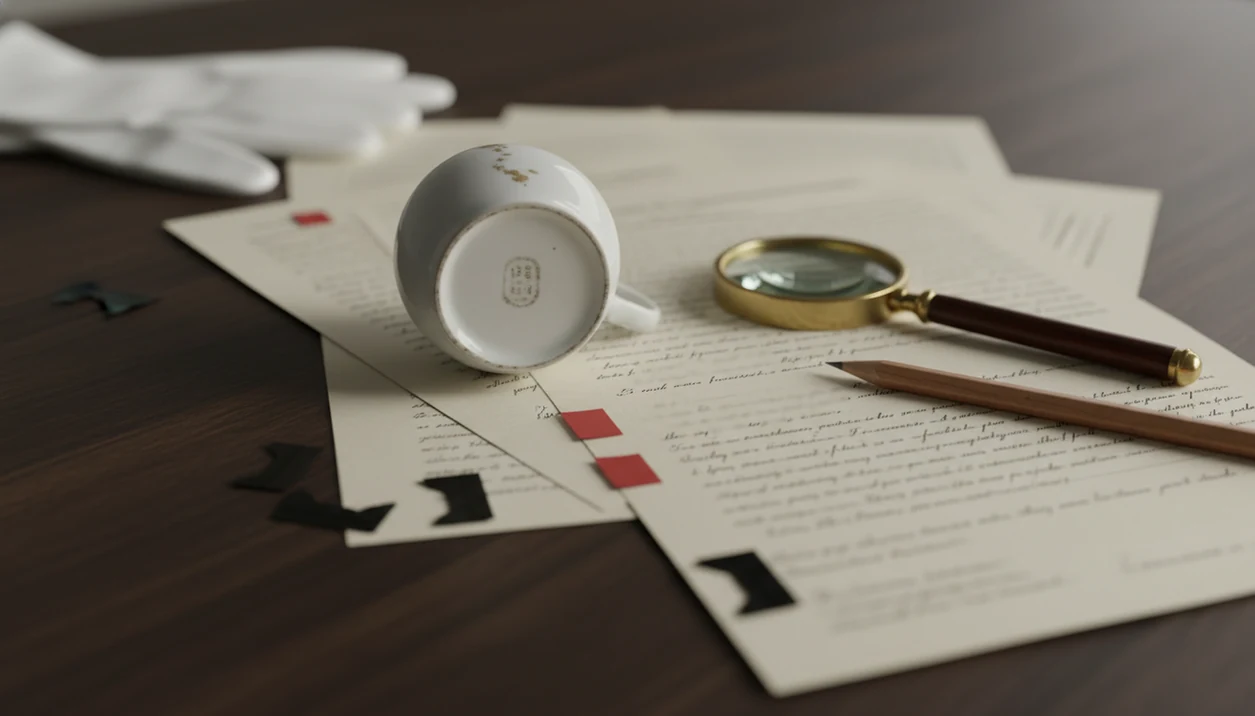
The object still matters. A maker mark, backstamp, construction detail, style period, or material clue may support part of the story, but not all of it. Turning a saucer over at a kitchen table and angling it away from ceiling glare can reveal a backstamp that changes the entire timeline.
Five Fake Provenance Red Flags Buyers Should Know
The most useful fake provenance red flags are contradictions between the story, the documents, and the object. These five warning signs are worth pausing for before you buy.
- Vague estate language: “From an important estate” carries little weight without names, dates, locations, or sale records.
- Timeline gaps: Missing decades, unexplained ownership breaks, or sudden jumps between countries can indicate an untested story.
- Too-neat paperwork: Documents that look unusually new, generic, or inconsistent with known business records deserve closer review.
- Object-story conflicts: A claimed 18th-century history does not fit if the maker mark, material, construction, or style points later.
- Pressure tactics: Urgency, secrecy, refusal to share documents, or “no need to verify” claims are provenance warning signs.
A cash-only sign near wooden crates is not suspicious by itself. A seller who rushes you away from reading the label is different.
Antique Object Clues Behind Fake Provenance Red Flags
Provenance checking works by testing a chain of claims against the physical object. The chain should connect owners, dates, locations, sales, and documents in a way that makes chronological sense.
Each claim needs cross-checking. Maker marks, hallmarks, labels, materials, joinery, wear patterns, repairs, and style periods can support or weaken the timeline. A side view of a chair leg profile may point to a later revival style, even when the family story says “early Victorian.” One matching clue is not enough if three other clues contradict it.
Good AI antique and vintage item identifier apps with maker marks, era/style guides, and value range estimates can deliver first-pass clues, not final authentication or certified provenance. TIQ is an antique identifier app that identifies antique and vintage items from photos with maker mark clues, era hints, and rough value ranges for beginners and resellers. For buyers, object evidence is often safer than story evidence because it can be photographed, compared, and rechecked.
Provenance Warning Signs in Stories, Timelines, and Seller Claims
“Is this antique story specific enough to verify?” A credible timeline names people, places, dates, sales, and transfers; a weak one leans on romance without records.
Phrases like “museum quality,” “from a famous family,” or “brought from Europe” are not evidence unless they connect to documents. A flawless celebrity-linked story can be suspicious when every owner is prestigious and no ordinary invoice, storage record, probate note, or dealer file exists. Real histories are often boring. Masking tape with “$3” written in black marker across a dusty box lid may tell you more than a grand speech.
European art and cultural property need extra care when ownership is unclear between 1933 and 1945. Nazi-era provenance research specifically flags gaps, suspicious transfers, and unclear ownership during that period for heightened scrutiny, according to Krannert Art Museum guidance Illinois. If the story involves wartime Europe, slow down.
Fake Antique Provenance Document Checks
Document checks compare the paper trail with the object, the claimed era, and known reference records. A certificate is evidence only when its details can be verified.
| Document clue | What to check | Why it matters |
|---|---|---|
| Receipt or invoice | Date, seller name, address, object description | Generic receipts can be reused or invented. |
| Certificate | Expert name, contact details, photos, measurements | No named specialist is a weak sign. |
| Label or tag | Wear, adhesive, typography, placement | Replaced labels can create false history. |
| Letterhead | Business dates, fonts, stamps, signatures | Modern printing may conflict with the claimed era. |
| Auction text | Lot number, archive match, sold result | Copied descriptions can make weak claims look formal. |
A rubbed maker mark from polishing may be innocent, but a fresh label beside heavy wear deserves attention. The GAO found that 27 of 40 tested online sellers made false or misleading cultural artifact claims, including fabricated or unverifiable provenance Gao. For more seller-risk patterns, the guide to antique scams online covers common listing tactics.
Quiet Antique History Verification Workflow
The safest way to verify antique history is to gather evidence quietly before challenging a claim. Work from photos, documents, and comparison sources first.
- Photograph the item from all sides, including backs, undersides, repairs, labels, hallmarks, and any documents.
- Compare the object with museum examples, auction archives, hallmark databases, maker-mark guides, and pattern references.
- Use AI cautiously for first-pass style, era, mark, and value-range clues, not final authentication.
- Ask the seller for names, dates, locations, prior invoices, and permission to verify documents.
- Escalate the review to an independent appraiser, conservator, specialist, or legal adviser for high-value or sensitive items.
A sharp close-up taken beside a window at 10 a.m. usually beats a blurry phone photo under a yellow bulb. Tools like TIQ can help sort photo clues before you decide whether to research, appraise, sell, or walk away. For photo limits, can AI authenticate antiques is the right next question.
Common Myths About Fake Provenance Red Flags
Several myths make buyers either too trusting or too suspicious. The better approach is to weigh the object, documents, and timeline together.
Lots of paperwork does not prove authenticity. Receipts, certificates, labels, signatures, and stamps can be forged, copied, or attached to the wrong item. Missing provenance also does not prove an antique is fake. Many genuine objects lost records through inheritance, moves, estate sales, and dealer turnover.
Provenance is not only for museum-level art. Everyday furniture, silver, ceramics, jewelry, clocks, glassware, and decorative antiques can carry embellished histories too. A single maker mark can support age or origin, but it cannot confirm the full backstory alone.
Small clues matter. A name penciled under a rocking chair may be useful, but only if it fits the chair’s construction, wear, and known family timeline. When physical evidence conflicts with a grand claim, the reproduction vs authentic antique question becomes part of the provenance check.
Understanding Results
Photo-based antique identifier results are most useful when they are treated as research leads that help you compare the object, documents, and claimed history.
TIQ works best when
- Clear photos of maker marks, backstamps, labels, signatures, and serial numbers
- Multiple angles showing construction, materials, wear, repairs, and underside details
- Items with distinctive style periods, known manufacturers, or comparable auction records
- Provenance checks where the object details can be compared against dates, places, and seller claims
TIQ may be less accurate when
- Blurry, dark, cropped, or glare-heavy photos that hide marks and surface details
- Generic objects with few maker clues or many reproductions in circulation
- Paper documents shown without the object, watermark, signature, or source context
- Claims involving famous owners, museum history, or major value increases without independent records
FAQ
What app identifies antiques from pictures when provenance seems questionable?
An antique identifier app can help you compare the object’s visible age, style, materials, maker marks, and condition against the story being told. TIQ is a practical choice for first-pass research because it lets you photograph the item, review likely category and era clues, and look for mismatches before you pay a provenance premium.
Is there a free antique identifier by picture for checking provenance clues?
Some tools offer free or limited photo-based antique identification, which can be useful for an initial check. For provenance research, focus on whether the app helps you examine marks, labels, construction details, and comparable examples rather than relying on a story alone.
How much is my antique worth if the provenance cannot be verified?
Unverified provenance usually reduces confidence and may lower what a cautious buyer is willing to pay. Estimate value from the object itself first, including age, maker, material, condition, rarity, and sold comparables, then treat the ownership story as a possible bonus only if it can be supported.
Can TIQ read maker marks from a photo to check an ownership story?
TIQ can help research visible maker marks, hallmarks, backstamps, labels, and signatures from photos. That can reveal whether a claimed date, maker, country, or ownership timeline is plausible, especially when a mark conflicts with the seller’s story.
What red flags should I check before trusting antique provenance?
Look for dates that do not line up, documents that appear newer than the object, vague estate stories, inconsistent signatures, mismatched labels, and marks that conflict with the claimed maker or period. A credible provenance should form a logical chain of owners, locations, sales, and dates.
How accurate is photo-based provenance research?
Photo-based research is useful for spotting inconsistencies, narrowing an item’s category, and deciding what to investigate next. It cannot fully verify ownership history on its own, especially when documents, archives, expert inspection, or scientific testing are needed.
Can an antique identifier prove an item is fake?
An antique identifier can highlight warning signs, but it should not be treated as final proof of fraud. Use it to gather clues, compare evidence, and decide whether the risk is high enough to request documentation, consult a specialist, or walk away.
Should I share provenance papers and receipts in app photos?
Photos of labels, receipts, signatures, and certificates can be helpful for research, but avoid sharing sensitive personal details when possible. Crop or cover addresses, phone numbers, account numbers, and private family information before uploading images.
Ready to start?
Ready to start? Photograph the object, maker marks, labels, paperwork, and any damage in clear light, then use TIQ to organize an initial identification, compare visible clues, and decide what needs expert verification before you buy or sell.