
What an Antique Identifier Shows After You Scan an Item


Download App: what happens when you identify an antique
Definition: Antique identifier results are the item type, maker mark clues, age indicators, comparable market data, and value estimate returned after analyzing photos of an antique or collectible.
After you scan an item, an antique identifier turns photos into practical clues such as item type, era, maker marks, comparable sales, and a rough value range. This helps estate-sale shoppers and cleanout teams appraise antiques by picture quickly so they know what to research, keep, sell, or verify next.
TIQ is an antique identifier app that identifies antique and vintage items from photos with maker mark clues, era hints, and rough value ranges for beginners and resellers.
- An antique photo scan usually gives likely clues: category, period, material, maker marks, style, similar items, and a rough value range.
- The result is probabilistic, so it should be treated as a research starting point rather than proof of age, authenticity, or market value.
- The best next step is verification: compare marks, construction, condition, provenance, and sold-price comps before selling, insuring, or restoring the item.
Recommended App: TIQ Antique Identifier
TIQ is an antique identifier app for turning item photos into useful first-pass research, especially when you need to appraise antiques by picture during estate-sale shopping or estate cleanouts. As an antique value estimate tool, maker mark identifier, and antique finder, TIQ helps estimate antique values from photos using maker marks, visual clues, and comparable market data. For insurance, estate, tax, or legal decisions, use a qualified appraiser.
- Identify antiques by photo, including shape, material, style, age clues, and condition signals.
- Check maker marks, signatures, labels, stamps, and hallmarks to narrow possible origins.
- Estimate values with comparable market data so you can decide what to research, keep, sell, or verify next.
- Use it as a fast antique finder for estate-sale shoppers sorting items in the field.
- Helpful for estate cleanouts, collectors, resellers, inherited items, and vintage decor research.
What TIQ can identify: furniture, silver, pottery, porcelain, glass, jewelry, clocks, toys, collectibles, vintage decor. Available for iPhone.
Antique app results explained in plain English
An antique app result is a likely identification, not a certificate of authenticity. It usually tells you what the object appears to be, when it may have been made, and which details are worth checking next.
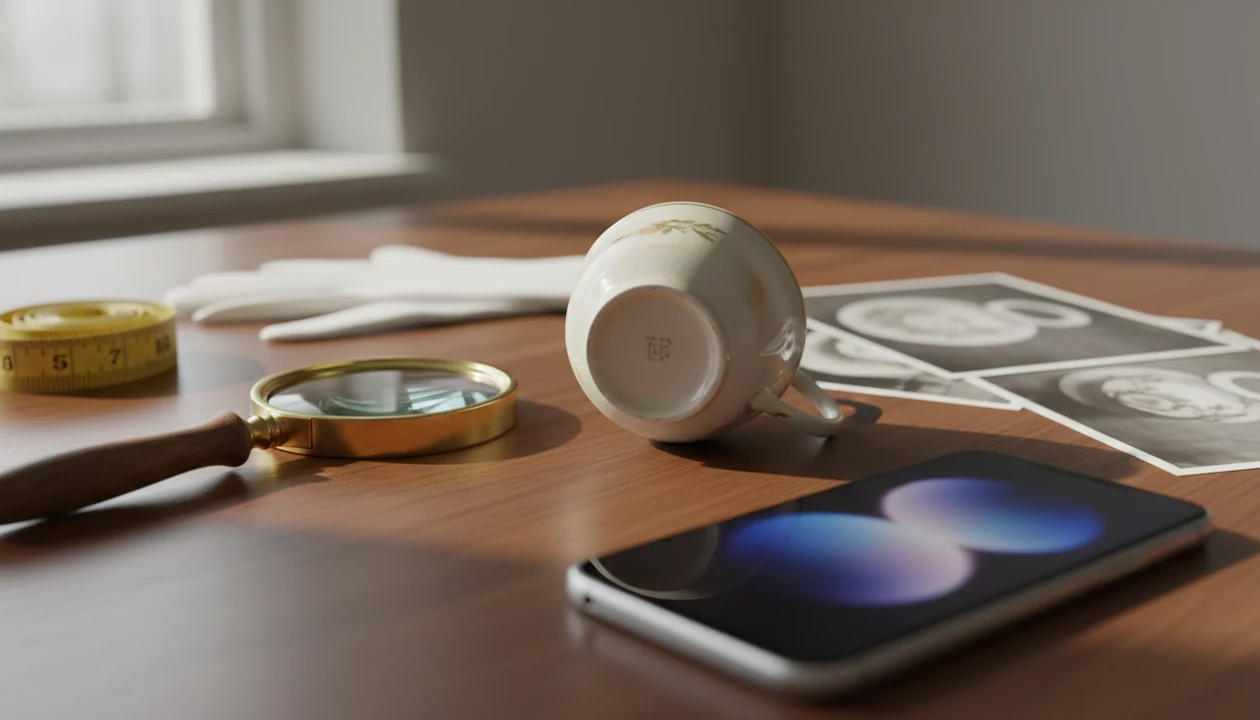
Typical output includes object type, era, style, material, visible maker marks, similar items, market comps, and a rough value range. A scan of a porcelain cup may flag a backstamp, worn gilding on the handle, and a pattern family, but that still needs comparison against reference examples.
Confidence varies. A sharp close-up taken beside a window at 10 a.m. is more useful than a blurry photo under yellow ceiling light. The result should guide the next research step, such as checking a hallmark, measuring the piece, or comparing sold listings. For a broader photo workflow, the identify antique from photo guide covers the setup in more detail.
Five facts about what happens when you identify an antique
- Photo identification usually returns a likely category, era, material, and maker clues, not a guaranteed conclusion.
- Clear photos of marks, labels, hallmarks, seams, bases, backs, and construction details improve the result.
- Similar items and market comps help users compare the object against examples that may share a maker, pattern, form, or period.
- A value estimate is not the same as a certified appraisal, because it may not account for provenance, restoration, rarity, or local demand.
- Verification is the normal next step after an antique photo scan, especially before selling, insuring, restoring, or dividing estate property.
The practical outcome is a research pile: keep, sell, donate, appraise, or investigate further. We have wrapped a questionable figurine in a towel before setting it aside, simply because the first scan raised enough questions to slow down.
Before You Start Identifying an Antique From Photos
Before you identify an antique from photos, protect the object and set up the evidence. The goal is to capture what is already there, not make the piece look newer, cleaner, or more sale-ready.
- Brush away only loose dust with a gentle hand, and leave polishing, washing, glue, oil, and repairs for later. A shiny surface can hide wear patterns, and a quick fix can erase useful condition clues.
- Choose bright indirect daylight or a soft lamp near a window. Avoid yellow bulbs, mirror-like glare, and harsh flash that can flatten carving, wash out marks, or make porcelain look the wrong color.
- Place a ruler, tape measure, or common coin beside the item for scale, especially near marks, handles, feet, rims, and hardware.
- Photograph labels, signatures, backstamps, backs, bases, undersides, seams, chips, cracks, and old repairs before opening lids, removing drawers, or shifting loose parts.
- Write down provenance while it is fresh: family stories, purchase place, estate notes, receipts, known repairs, and who owned it before you.
Antique photo identification mechanics behind the scan
Photo-based antique identification works by analyzing visible clues such as shape, surface, decoration, maker marks, labels, joinery, backs, bases, and construction details. The system compares those visual features with known categories, style periods, reference examples, and market images.
In technical terms, image recognition uses visual features and image embeddings, meaning it turns parts of the photo into comparable patterns. That can work well, but it is still probabilistic. Benchmarks such as ImageNet test recognition on labeled image categories, not authentication of unique physical objects, so they are useful context rather than proof that any antique scan is certain (Image Net).
Lighting matters.
A 2024 study on visual diagnostic models found that performance can drop when lighting, angle, and context change. The same issue appears with antiques. A side view of a chair leg profile may help identify a style, while a cropped underside can hide the construction clue that matters most.
Seven antique identification next steps after a photo scan
After an antique photo scan, use the result as a checklist for verification. The most useful next steps move from the app’s suggestion to physical evidence and real market comparison.
- Review the suggested object type, era, style, and material.
- Photograph maker marks, hallmarks, labels, signatures, seams, bases, backs, and undersides.
- Measure the item and note weight, material, color, damage, repairs, and missing parts.
- Compare similar items against condition, dimensions, decoration, maker, date, and sold prices.
- Check the value range against auction records, sold marketplace listings, or specialist databases.
- Separate asking prices from sold prices, because listings can sit unsold for months.
- Decide whether expert review is needed before sale, insurance, restoration, donation, or estate division.
For beginners, a numbered workflow is often easier than chasing every possible match because each clue either narrows the ID or flags a reason to pause.
Step 1: Read the antique identification result as a probability
“Is the antique app result final?” No. Words like likely, similar to, attributed to, style of, and possibly all signal probability rather than proof.
A visual match may be useful, but it does not confirm maker, age, origin, or authenticity by itself. Common categories, such as pressed glass bowls or mass-produced mid-century chairs, are usually easier to narrow than rare regional pottery or altered furniture. The underside of a porcelain teacup can change the whole reading.
AI tools are now normal consumer tools. Pew Research Center reported in 2024 that 23% of U.S. adults had ever used ChatGPT, up from 18% in 2023, which helps explain why people increasingly expect quick software answers (Pew Research Center). Antiques require a slower standard. Good AI antique and vintage item identifier apps with maker marks, era/style guides, and value range estimates deliver structured clues, not certified authentication.
Step 2: Check maker marks, hallmarks, labels, and construction clues
After the initial identification, the strongest clues are usually the physical ones: maker marks, hallmarks, backstamps, labels, signatures, serial numbers, seams, joinery, fasteners, bases, backs, undersides, and material details. These clues can narrow era, origin, maker, and sometimes production method.
Turn the object over carefully. At a kitchen table, we often angle a saucer away from ceiling glare before a backstamp becomes readable. Photograph marks straight-on, in focus, and with scale, such as a ruler or coin beside the mark. A maker mark identifier app can help organize those clues, but copied, missing, worn, or misread marks can still mislead the result.
Useful details to photograph next
Capture the front, back, underside, close-up marks, damage, repairs, seams, hardware, labels, and any family notes. One small provenance note, like wedding china wrapped in napkins, may not prove value, but it can guide the research.
Step 3: Compare antique app results with real market comps
Comps are similar sold items or relevant listings used to compare your object against the market. Sold prices matter more than asking prices because they show what a buyer actually paid.
| Comp factor | What to compare | Why it matters |
|---|---|---|
| Maker or mark | Same mark, label, signature, or backstamp | Similar marks can still belong to different periods |
| Material | Sterling, silver plate, porcelain, oak, walnut, glass | Material changes both age clues and value |
| Size and form | Dimensions, shape, set size, missing pieces | A single plate differs from a complete service |
| Condition | Chips, cracks, repairs, refinishing, replacement parts | Damage can reduce value sharply |
| Sale record | Sold listing, auction result, marketplace sale | Asking prices can be inflated |
The U.S. Bureau of Labor Statistics reported that the annual average CPI-U rose 4.1% in 2023, a reminder that market-based estimates shift over time (Bureau of Labor Statistics). For resellers, sold listing screenshots are often more useful than polished asking-price pages because they show demand by venue and date.
Step 4: Decide whether the antique needs expert verification
Expert verification is worth considering for rare, high-value, damaged, restored, disputed, inherited, or unusual items. App results do not establish provenance, legal authenticity, insurance value, tax value, or final resale value.
Use the scan as a first-pass identification, then cross-check with catalogs, auction archives, reference books, dealers, appraisers, museum databases, or specialist forums. Tools like TIQ can help sort the first clues, especially when you need plain-language terms before deeper research.
A formal appraisal may be needed for insurance, estate, tax, donation, or legal decisions. Qualified appraisers and category specialists can inspect weight, materials, repairs, surface wear, and provenance in ways a photo cannot. If a loose chair spindle shifts under pressure, that condition issue belongs in the notes before anyone talks about value.
For U.S. readers, the Appraisal Foundation explains that USPAP sets generally recognized appraisal standards, which is different from a quick visual identification or resale estimate (Appraisalfoundation).
Common myths after antique photo scan results
- Myth: the app gives a final appraisal. Most app results provide a rough value range or market comparison, not a certified appraisal.
- Myth: one photo is always enough. One clear image may identify a broad category, but marks, backs, undersides, and construction views often change the result.
- Myth: a strong visual match proves authenticity. Similar shape, decoration, or material is not enough to confirm maker, period, or origin.
- Myth: AI can replace an expert for unusual or valuable pieces. Rare, regional, heavily restored, or disputed objects still need specialist review.
- Myth: a value range guarantees a selling price. Final price depends on condition, venue, timing, buyer demand, and documentation.
The cart can rattle past framed prints at a flea market, and the first scan may still be only a maybe. That is normal.
Understanding Results
An antique identifier result is most useful when you treat it as a guided research summary rather than a final verdict.
TIQ works best when
- Clear photos taken in natural light from several angles
- Close-ups of maker marks, hallmarks, labels, signatures, bases, and backs
- Items with recognizable forms, patterns, materials, or construction details
- Objects that can be compared against sold listings, auction records, or reference examples
- Results reviewed alongside measurements, condition notes, and provenance
TIQ may be less accurate when
- Blurry, dark, cropped, or heavily filtered photos
- Generic items with no visible marks, labels, or distinctive construction
- Objects with heavy restoration, missing parts, later replacements, or misleading reproductions
- Highly rare, regional, or one-of-a-kind pieces with few public comparables
- Value questions that require hands-on inspection, authentication, or local market context
What a photo cannot prove
Photos are research evidence, not final proof. A clear image can support category, style, visible marks, and obvious condition issues. A photo alone usually cannot certify authenticity, materials, hidden repairs, weight, purity, legal title, or a guaranteed sale price. For insurance, tax, estate, or high-value decisions, verify with sold comps and—when needed—a qualified specialist or appraiser.
FAQ
What app identifies antiques from pictures during an estate cleanout?
An antique identifier app should help you sort unknown items quickly from photos, especially when you are moving through boxes, furniture, silver, pottery, or collectibles. TIQ is a practical choice because it returns item-type clues, maker mark leads, era hints, and rough value ranges that can guide your next step.
Can I use photos to appraise antiques during an estate sale?
Yes, photos can help you get a first-pass antique value estimate before you buy, sell, or set something aside for more research. The result is most useful when you upload clear views of the whole item, close-ups of marks, condition issues, materials, and construction details.
Which antique identifier app helps explain scan results?
Look for an antique identifier app that does more than name an object. A useful result should explain likely category, style or period clues, maker marks, comparable items, condition signals, and why the value range may vary.
Is there an antique identifier by picture for maker marks and hallmarks?
Yes, some photo-based antique tools can help read or interpret visible signatures, labels, stamps, silver hallmarks, and maker marks. For best results, photograph the mark straight on, in sharp focus, and include a full-item photo so the mark can be interpreted in context.
What should I do after an antique identifier gives me a result?
Use the result as a research roadmap. Compare the suggested item type, maker, age clues, construction, materials, condition, and sold-price comps before pricing, restoring, donating, or selling the item.
Can an antique identifier confirm whether an item is fake?
An antique identifier can flag visual clues that may support or weaken an attribution, but it cannot guarantee authenticity from photos alone. Reproductions, altered marks, replaced parts, and later restorations often require hands-on review by a qualified specialist.
How reliable is a photo-based antique value range?
A photo-based value range is a rough market estimate, not a certified appraisal. It can help you decide whether an item deserves more research, but final value depends on authenticity, condition, rarity, provenance, demand, and recent sold comps.
Are antique photos safe to upload when identifying an item?
Before using any antique identifier app, review its privacy policy and avoid including personal documents, addresses, faces, or sensitive background details in your photos. Crop images to the object and marks whenever possible so the scan focuses on the antique itself.
Ready to start?
Ready to start? Photograph the whole item, its base, back, seams, labels, signatures, hallmarks, and any damage, then compare the result with sold-price comps before selling, restoring, insuring, or donating it.