
Home / Item types
Singer sewing machine serial numbers and dates
Singer sewing machine serial numbers can identify a production allocation, factory, approximate date and often the machine class. Find the complete number stamped on the machine bed or metal plate, including every letter and zero, then match both prefix and numerical range in a factory-specific Singer table. The listed date is usually an allocation date, so treat it as an estimated manufacturing window.
Looking at shape and material...
While you wait: the TIQ app gives more accurate results, keeps your scan history and runs a reverse image search for similar items.


 Scan with your phone
to download
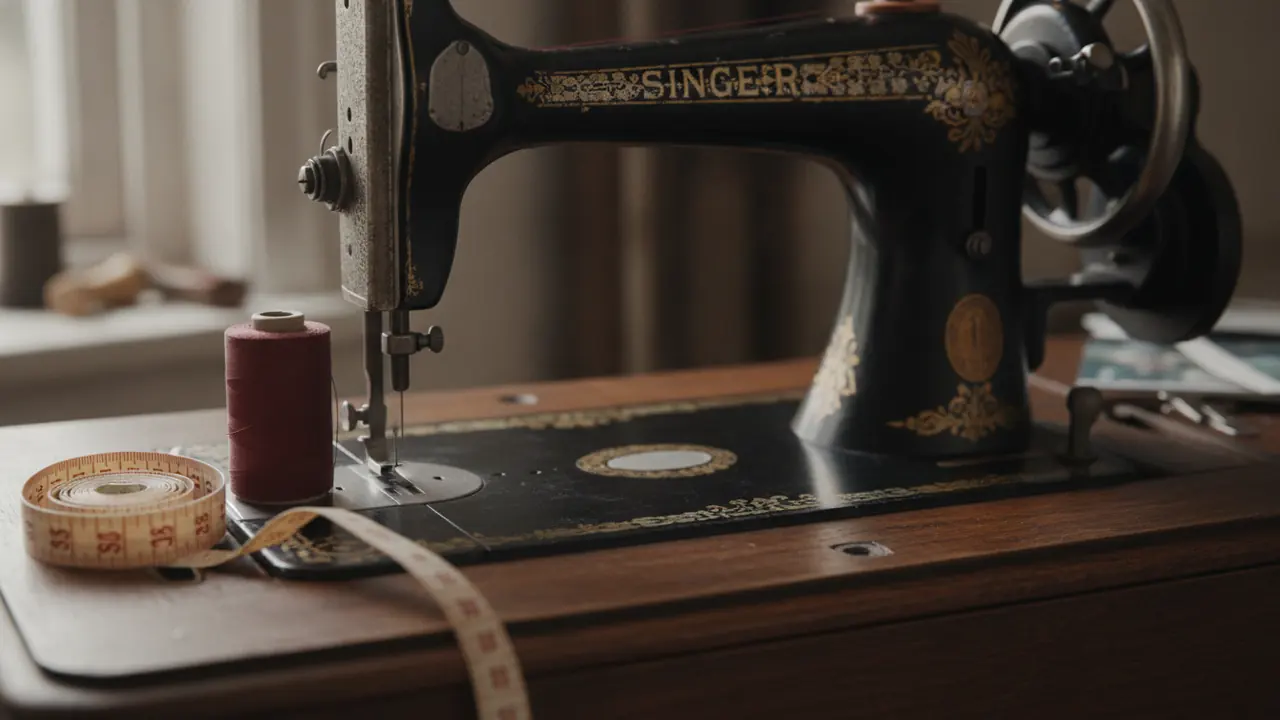
Where to find the serial number
On many early and treadle-era Singer machines, the serial number is stamped directly into the machine bed. Start on the right side near the needle plate, then inspect the front-right edge. The stamp may be shallow and partly hidden by grime.
Later electric machines vary. Check the bed, pillar and any front-facing metal plate. A label inside the cabinet may identify a cabinet style or dealer; it is not the machine head's serial number.
Copy the mark exactly as it appears:
- Include every letter before the digits.
- Preserve hyphens, spaces and leading zeroes.
- Record any separate class or model marking.
- Photograph the whole machine and a close view of the stamp.
Use side lighting if the stamp is faint. A flashlight held almost level with the bed casts shadows inside shallow characters. Take the picture before cleaning. Metal polish, solvents, sandpaper and wire wheels can erase light stamping, decals, plating and original finish.
Inspect the area around the number too. The font, spacing, depth and aging should look coherent. Fresh, bright cuts around a stamp deserve closer examination, especially if nearby metal is oxidized. Compare screw heads, paint and the opposite side of the bed. An odd stamp can also result from a misread character or replacement part, so it is a warning sign rather than proof of deception.
If you are documenting other objects from the same estate, the same photograph-first method works well for maker marks and labels.
How Singer serial-number dating works
Singer's surviving records generally date blocks of numbers allocated for production. The allocation date may precede assembly, shipment or retail sale. Some records are incomplete, and French production dates in particular can be approximate.
The International Sewing Machine Collectors' Society, usually abbreviated ISMACS, reproduces Singer allocation tables taken from Singer publications. Those tables are arranged by factory, prefix and numerical block. Entering only the letters is insufficient: AD-005000 and AD-290000 fall into different allocations and machine classes.
- Read the complete stamped number from the machine head.
- Decide whether it is an early unlettered sequence or a letter-prefix number.
- Open the table for the applicable prefix and factory.
- Find the numerical block containing your exact digits.
- Record the allocation date, factory and listed class.
- Compare that class with the machine's size, mechanism, decals and fittings.
A sound description might read: Serial block allocated in 1930; physical form is consistent with Singer class 66. Avoid converting an allocation date into an exact birthday unless dated factory documentation exists for that individual machine.
Also separate age terms from identification. A machine dated to the 1930s is vintage under common trade usage, while a nineteenth-century example is antique; the distinctions are covered in this guide to vintage versus antique.
Early unlettered Singer numbers
The earliest Singer sequences had digits without a letter prefix. These low numbers cover workshop production and the first factory period, although a range may include a model transition.
| Serial range | Approximate period | Recorded context |
|---|---|---|
| 1-100 | Late 1850 | Boston workshop production |
| 101-900 | 1850-1851 | New York City workshop |
| 901-1,711 | 1851-1852 | New York City workshop |
| 1,712-2,521 | 1852-1853 | Period leading into the first Singer factory, identified for 1853 |
| 2,522-3,400 | 1853-1854 | No. 1 and No. 2 machines; the No. 2 was introduced during this period |
Early databases include identifications such as No. 1, No. 2 and No. 2-LS Imperial. The serial range alone may cover more than one type. Study the physical construction before attaching a precise model name.
An unlettered marking is not automatically from the 1800s. Later production can have incomplete, confusing or factory-specific marks. If the number is suspiciously short, inspect it under angled light for a worn prefix or leading digits.
Letter prefixes, factory codes and allocation examples
A Singer letter prefix identifies a production series connected with factory records; it is not a consumer model name. One prefix can contain several classes, sometimes in adjacent blocks allocated only days or months apart.
| Serial number or prefix | Factory or location | Date or production span | Class or note |
|---|---|---|---|
| AD-000001-010000 | Prefix table allocation | January 28, 1930 | Class 66 |
| AD-010001-011000 | Prefix table allocation | February 11, 1930 | Class 44 |
| AD-287931-288930 | Prefix table allocation | November 18, 1930 | Class 18 |
| AD-288931-291930 | Prefix table allocation | November 18, 1930 | Class 95 |
| K-1-9,000 | Montreal | January 2, 1902 | Class 27-4 |
| K-9,001-9,750 | Montreal | January 2, 1902 | Class 15-30 |
| K-9,751-10,000 | Montreal | January 2, 1902 | Class 16-35 |
| K-10,001-11,000 | Canadian allocation | January 3, 1902 | Class 64 |
| K-962,001-1,012,000 | Canadian allocation | June 20, 1903 | Class 27 |
| W 1,500,000 | Bridgeport | 1954 | Factory table example |
| SA | Bonnières-sur-Seine, France | 1935-1958 | Match the full number within the SA table |
| SB | Bonnières-sur-Seine, France | 1935-1958 | Match the full number within the SB table |
| SC | Bonnières-sur-Seine, France | Unresolved in the displayed table | Production continued through 1968 |
| No prefix | Bonnières-sur-Seine, France | 1970-1986 | Later French production |
This is a set of worked examples, not a complete Singer prefix chart. It shows the trap in broad decade lists. AD numbers allocated during 1930 include classes 66, 44, 18 and 95. Two machines with an AD prefix can have very different mechanisms.
Do not infer the factory from a remembered letter alone. Match the whole serial number against the relevant plant table. Then use the class from that block as a hypothesis to check against the actual machine.
Useful source wording includes "allocated January 28, 1930," "approximately dated to 1930," and "prefix consistent with the French factory." ISMACS warns that complete records for French production have not survived.
Sources used for the dating method and examples include Singer factory publications reproduced by ISMACS, the ISMACS early serial-number database and its factory-specific AD and K series tables.
Confirm the model after dating the number
The serial block can identify a class, but it cannot prove that the cabinet, motor, decals and attachments have remained together since production. Confirm the machine from construction details before using a collector nickname.
| Name commonly seen | What to verify | Common mistake |
|---|---|---|
| Model 27 or 127 "Sphinx" | Class evidence and Egyptian-revival decoration appropriate to the machine | Treating Sphinx as the formal model number |
| Model 66 "Red Eye" | Class 66 construction and model-correct red teardrop-style decals | Identifying any black Singer with red decoration as a Red Eye |
| Model 99-13 | Smaller machine form, model evidence and correct electrical or cabinet fittings | Assuming a cabinet determines the model |
| Model 221 Featherweight | Construction, markings and serial allocation consistent with a 221 | Relying on black color or a carrying case |
Classes 15, 27, 44, 66, 72, 95 and 127 all appear in Singer allocation records. The class number carries more evidentiary weight than names such as Sphinx or Red Eye, which describe collector-recognized decorative patterns.
When the serial result and physical machine disagree, stop and recheck the number. A head may have replacement parts, or an old machine may have been installed in another cabinet. Misreading B as 8, or omitting a leading zero, can also put you in the wrong allocation.
Photographs should include both sides, the faceplate, bed, badge, underside, bobbin area, motor plate and cabinet mount. TIQ, an antique appraisal tool for iPhone, can use an overview and mark photo to suggest era, origin and comparable examples. For an antique appraisal app, the same team's Lens app identifies objects including antiques. Photo results are educational estimates, so reconcile them with the Singer allocation table and construction.
The broader process for comparing a mark, object form and documented examples is explained in identifying antiques from photos.
Decals, finish and cabinet checks
Original decoration can be a large part of a Singer's appeal. Look for wear that passes naturally across paint and decal, old finish over the decal edges, consistent aging on both sides and pattern placement documented for the class.
Possible reproduction decals often have very sharp edges, bright color, even gloss or visible transparent carrier film. Fresh gilding, uniformly bright hardware and a glassy black surface may indicate repainting. Restoration does not turn an authentic Singer head into a counterfeit, though it changes how originality and value should be described.
Before cleaning, photograph every decal and worn area. Dust can often wait. Aggressive polish cannot be reversed. Guidance for finished wood, including cautious testing in an inconspicuous place, appears in cleaning antique furniture.
Does the cabinet belong with it?
A cabinet can be factory-paired, period-correct, or a later replacement. Date the head from its serial number and assess the cabinet separately.
- Compare the bed dimensions with the cutout and hinge positions.
- Look for extra screw holes, filled holes or forced alterations.
- Inspect Singer labels, treadle irons, drawers, veneer and hardware.
- Check whether the head rises, closes and sits correctly.
- Note refinishing, replaced pulls and damaged veneer.
Original manuals, attachment boxes, presser feet, bentwood covers, knee controllers and model-specific fittings add completeness. Make sure the attachments correspond to the class. An attractive box of unrelated sewing feet is still an unrelated box.
Cabinet joinery and surface evidence can be assessed with the same methods used to identify antique furniture, but cabinet age cannot establish the date of the machine head.
What drives antique Singer value
Model, originality, condition and completeness usually have more effect on value than age alone. Many domestic treadle machines survive, while an early type, less common configuration or desirable portable model can draw more collector attention.
| Value factor | What raises interest | What tends to reduce it |
|---|---|---|
| Identification | Serial block, class, physical form and decals agree | A decorative nickname unsupported by the machine |
| Originality | Original paint, decals, badge, hardware and mechanisms | Repaint, reproduction decals or undisclosed replacement parts |
| Condition | Complete mechanism, sound finish and limited damage | Missing tension parts, bobbin components, needle plate or handwheel |
| Decals | Bright, substantially complete, model-correct original decoration | Aggressive cleaning, mismatched pattern or fresh decal film |
| Cabinet | Correct fit, original finish, intact veneer and working treadle | Structural damage, poor fit or heavy refinishing |
| Accessories | Correct manual, attachments, controller, cover and storage box | Incomplete or mixed accessories from another class |
| Provenance | Dated paperwork or documented industrial or exhibition history | Unsupported family stories presented as fact |
Mechanical completeness can outweigh superficial dirt. Proprietary bobbin parts, tension assemblies and attachments may be hard to replace correctly. Old electrical wiring deserves inspection before the machine is plugged in.
For price research, compare completed sales of the same class and similar condition. Record sale date, region, buyer's premium, cabinet, accessories and shipping arrangements. A heavy treadle cabinet has a local market shaped by collection costs; a portable machine can reach distant buyers more easily. Auction estimates and asking prices are not completed-sale evidence.
Describe restored elements openly: "authentic Singer head with reproduction decals and replacement cabinet" is more useful than "mint antique Singer." If you need a framework for selecting comparable sales, see how to estimate what an antique is worth.
A good final record contains the full serial number, allocation date, factory, probable class, decal pattern, cabinet status, missing parts and restoration. That record gives a buyer or appraiser enough information to compare the right machines.
Questions people ask
Can I date a Singer sewing machine with only the letter prefix?
No. The full prefix and numerical range must be matched in the applicable factory allocation table because one prefix can contain several classes and dates.
Is the Singer serial-number date the exact manufacture date?
Usually it is an allocation or issue date for a block of numbers. Assembly, shipment and sale may have occurred later, and some surviving records are incomplete.
Are old Singer sewing machines valuable?
Some are, especially scarce models, early variants and complete machines with original decals and fittings. Common treadle models may have modest value despite their age, particularly when cabinets are damaged or parts are missing.
What does AD mean on a Singer sewing machine?
AD is a Singer serial-number prefix used across multiple production allocations. The digits determine the specific date block and class; documented 1930 AD blocks include classes 66, 44, 18 and 95.
Does a Singer cabinet have its own serial number?
A cabinet may carry labels or numbers, but the machine should be dated from the serial number stamped on its head or bed. Cabinets were often replaced, refinished or paired with another machine.
Do reproduction decals make a Singer sewing machine fake?
No. Reproduction decals change the machine's originality and should be disclosed, while the underlying head may still be an authentic Singer with its original serial number.